

THE BLOG
Author Book Marketing & Website Design Tips
Why You Need an Author Blog on Your Website
Blogging strengthens author website SEO and long-term reader discovery.

Why you need an author blog on your website is simple: it helps new readers find you, trust you, and keep coming back. Your blog isn’t extra—it’s essential. It gives you a place to share what matters, build real connection, and let your writing speak before anyone buys a book. And of course, blogging regularly can improve your visibility through SEO for authors.
If you’re relying on social media alone to grow your platform, you’re building on borrowed land. Your blog is where you take up space that’s fully yours—and where your voice works for you long after you hit publish.
So if you’ve been wondering whether blogging is still worth your time as a writer, here’s exactly why it matters (and how it can quietly power your entire author brand).
Before we dive in, don’t forget to grab my FREE author website blueprint here!
5 Reasons Every Author Needs a Blog
Drive Traffic to Your Website (Without Paying for Ads)
A blog can also help writers boost author website traffic by bringing in readers through search engines. Your author website is your home base—but if no one’s visiting it, it’s not doing its job. Blogging gives search engines something to index (hello, Google!), which means more chances for new readers to stumble across your site organically. Share helpful, engaging content and use smart SEO tips for author blogs, and you’ll start to drive traffic to your author website without spending a cent on ads.
Grow Your Audience & Email List Organically
Every blog post is an opportunity to bring in new readers—and keep them coming back. End your posts with an email sign-up or freebie, and boom: now your blog is quietly doing the work of growing your audience as an author without screaming for attention. The best part? You’re connecting with readers through blogging in a way that feels natural and personal.
Showcase Your Voice, Expertise, and Personality
Books take time. A blog post? You can write and publish it in a day—and let your unique voice shine between book launches. Whether you're sharing writing tips, personal reflections, or process insights, blogging helps you build trust and credibility through consistency. It’s storytelling through blogging, and it reminds your readers why they love the way you write.
Bonus: this is where agents, editors, or clients can see how you think and what makes you different.
Give Readers Behind-the-Scenes Access They Crave
Let’s be real—readers love the extras. Think: how your characters came to life, why you scrapped that one ending, what your writing routine actually looks like. Blogging gives them that deeper connection, and posts like these are packed with behind-the-scenes author content that builds loyalty. Not sure where to start? Here are some blog post ideas for authors:
Behind the scenes: How I developed my latest character
10 books that inspired my writing style
What my writing routine really looks like
Deleted scene from [Book Title] (and why it got cut)
5 things I wish I knew before publishing my first book
A day in the life of an author (spoiler: it’s not all writing)
How I stay creatively motivated when I hit a wall
My favorite writing tools, playlists, or apps
What readers don’t see: the hardest part of writing this book
How I named my characters (and the Easter eggs you missed)
FAQs I get from readers—answered!
My biggest writing struggle and how I worked through it
The story behind my book cover design
Sneak peek: Excerpt from my upcoming release
How I organize my story ideas (plotting vs. pantsing)
What I’m reading right now (and what it’s teaching me)
Writing a series vs. a standalone: what I’ve learned
Why I chose self-publishing/traditional/hybrid (and how it’s going)
How I research for my books (yes, I Googled that weird thing)
Lessons I’ve learned from bad reviews (and how I handle them)

Create Evergreen Content That Sells Your Books for You
Your blog posts don’t disappear after a day like an Instagram Story. They live on, show up in search, and keep working for you—long after they’re published. Write a blog post that answers common reader questions, spotlights your book themes, or dives into your writing process, and you’ve just created evergreen content for authors that supports your book marketing 24/7.

What to Blog About as an Author
Not sure what to actually write about on your blog? The best blog content for writers is focused, intentional, and rooted in connection. Here are four categories that make it easy (and enjoyable) to share your voice without burning out:
Reader-Focused Content (Q&As, Character Deep Dives, Deleted Scenes)
Your readers want more than just the final product—they want to know your world. Create blog posts that let them peek behind the curtain: answer common questions, share character backstories, or post deleted scenes that didn’t make the final cut. These types of posts build loyalty and keep readers invested between book launches.
Writing Journey (Process Posts, Challenges, Wins)
This is where you get real. Talk about your drafting process, the plot hole you couldn’t escape, the moment you almost scrapped it all—but didn’t. Sharing your writing journey helps other writers feel seen and lets readers connect with the human behind the words. It’s honest, relatable, and totally on-brand.
Bonus: It makes great evergreen content you can repurpose into email or social.
Book Marketing & Behind-the-Scenes Insights
Document your book launch strategy, reflect on what worked (and what flopped), or show how you’re planning your next release. These posts are especially valuable if you’re an indie author or building your platform without a traditional publisher. It also positions you as someone who gets both the art and the business of writing.
Thought Leadership & Niche Topics
What do you want to be known for outside of your book titles? Maybe it’s the themes you write about, the genre you love, or the social issues you explore through fiction. Sharing your perspective on niche topics helps establish your voice in a broader conversation and invites new readers in—even before they’ve cracked open your book.
Related: How Do You Get a Book Deal? A Step-by-Step Guide for Writers & Authors
You’ve got a book to promote and zero time to waste. The Quick Start template is your best friend when you want to launch fast, look professional, and skip the tech rabbit hole. With ready-to-use pages and a minimalist, no-fluff layout, this template is built for speed without sacrificing strategy.
Perfect for time-crunched authors, this one includes all the essentials: book page, author bio, shop, newsletter opt-in, and even a “link in bio” page for Instagram traffic. It’s an easy website builder for writers who just want to get it done—and look good doing it.
Because done is better than perfect—and this template gets that.

How to Make Blogging Work Without Burning Out
Let’s be honest—writing books is already a full-time mental load. The idea of adding a blog to your plate might sound like a fast track to burnout. But it doesn’t have to be. With the right author blog strategy, you can keep your content flowing without draining your creative energy. Here’s how to make blogging work for you—not against you:
Start with 1–2 Posts a Month
You don’t need to publish weekly. You don’t even need a blog calendar with 47 content buckets. Start with one solid post a month—or two if you’re feeling ambitious. The goal is consistency, not volume. A small, sustainable rhythm is better than going all in... and ghosting your blog six weeks later.
Repurpose Content from Social or Newsletters
Already posting on Instagram? Sending out a monthly email? Great—don’t reinvent the wheel. Turn those captions, stories, or reader Q&As into blog posts. Most of your best content is already written—you just need to give it a longer shelf life.
Batch Write & Schedule in Advance
Got a free afternoon and a good flow going? Write two or three posts in one sitting and schedule them ahead of time. Batching content frees up mental space and gives you breathing room when life (or deadlines) get hectic.
Use SEO-Friendly Templates or Content Pillars
To make your blog easier to manage and more effective, use a few go-to formats—like “Writing Updates,” “Behind-the-Scenes,” or “5 Things I’m Loving.” These content pillars help you plan faster and keep your readers coming back for familiar, valuable posts. Add smart titles, keywords, and alt text to make each one part of your long-term evergreen content for writers strategy.

Tips to Get More Eyes on Your Blog Posts
You’ve written the blog post—now let’s make sure people actually read it. Blogging doesn’t stop at “publish.” A few simple tweaks to how you share and structure your content can dramatically boost your visibility as a writer and turn your blog into a powerful piece of your author platform strategy. Here’s how:
Share on Social with Purpose
Stop just dropping a link and hoping for clicks. Pull out a juicy quote, ask a question, or turn your blog post into a mini carousel. Make the content work for each platform. Social media is fast, your blog is evergreen—together, they’re magic.
Link to Your Blog from Your Email Newsletter
Your newsletter subscribers are your biggest fans—they want to hear more from you. Add a section that highlights your latest blog post, include it as a P.S., or use it as the main focus of your next email. One click from a loyal reader is worth 100 from strangers.
Use Keywords in Titles, Headers, and Image Alt Text
Want your post to show up in search? Keywords matter. Use them in your blog post title, your H2s and H3s, and don’t forget the image alt text. This helps Google figure out what your post is about and puts your words in front of the right audience.
Embed Blog Posts in Your Book Pages or Link in Bio
Don’t hide your blog in a corner of your site—put it everywhere. Add links to relevant posts on your book sales pages, mention your blog in your About section, and create a “Link in Bio” page that features your newest or most popular articles. Let your blog work across your whole platform—not just on your blog tab.
Your Blog Is the Bridge Between You and Your Readers
Your blog isn’t just a content box to check—it’s a way to build trust, deepen connection, and show up with intention. It gives your readers a reason to stick around between book launches, and gives you a platform you actually own.
It’s not about being perfect—it’s about being present. You don’t need viral blog posts or fancy content calendars. You just need to show up, write like yourself, and offer something real. Consistency beats perfection—every time!
The more often readers see your name, your voice, and your point of view, the more likely they are to buy your book, subscribe to your list, or share your work. Keep showing up, and your blog will quietly do the heavy lifting.
Ready to build a blog that supports your author career?
Start with a strategic website + built-in blog template on Squarespace—so you can focus on writing while your platform works for you.
Before you go…check out my Squarespace Author Templates !
Visit the Author Website Template Shop: TEMPLATE SHOP

5 Best Squarespace Author Website Templates and How to Customize Them
Explore author website templates on Squarespace and customize them easily.
If you're looking for the easiest way to get your site live, you can start with a Squarespace author website template designed specifically for writers.
The best Squarespace templates for authors aren’t just pretty—they’re built to sell books, grow your list, and make you look like the professional writer you already are. Many writers begin by exploring different author website templates before choosing a design.
Whether you’re just getting started or running your own literary empire, these templates are designed to do the heavy lifting for you—no tech headaches or no wasted time required. Let’s break down the exact templates you need, who they’re for, and how to customize the heck out of them to make them on brand for you.
Which Squarespace author website template is right for you?
Just getting started?
Start with the One Page Author Website Template — the fastest, simplest way to get your site live without the overwhelm.
→ View the One Page Template
Launching your first book?
Go with the Debut Author Website Template — everything you need to look professional and start building your readership from day one.
→ View the Debut Template
Want something more flexible long-term?
Choose the Gilbert Author Website Template — a refined, professional site designed to grow with your author career.
→ View the Gilbert Template
If you're new to the platform, this Squarespace for authors guide explains how writers can build their sites step by step.

Skip the overwhelm
You can use my done-for-you author website templates to launch your site in a day.
You can have your entire author website set up in a day using one of my templates!
Meet the Templates: Choose the Right Fit for Your Author Journey
Whether you’re gearing up for your debut or juggling five series and a growing fanbase, there’s no one-size-fits-all solution. That’s why these Squarespace templates for authors are designed for exactly where you are right now (Designed specifically for authors (not generic business templates).
1. The Debut – For the First-Time Author
Preparing for your first book launch? The Debut template is designed to help you establish a refined, professional presence from the very start.
With a clean, intentional layout, it includes space to introduce your upcoming work, share your author story, and begin building a loyal reader base through email.
Thoughtfully structured and easy to use, it allows you to present yourself with confidence—without unnecessary complexity.
A strong beginning, designed to look like you’ve already arrived.
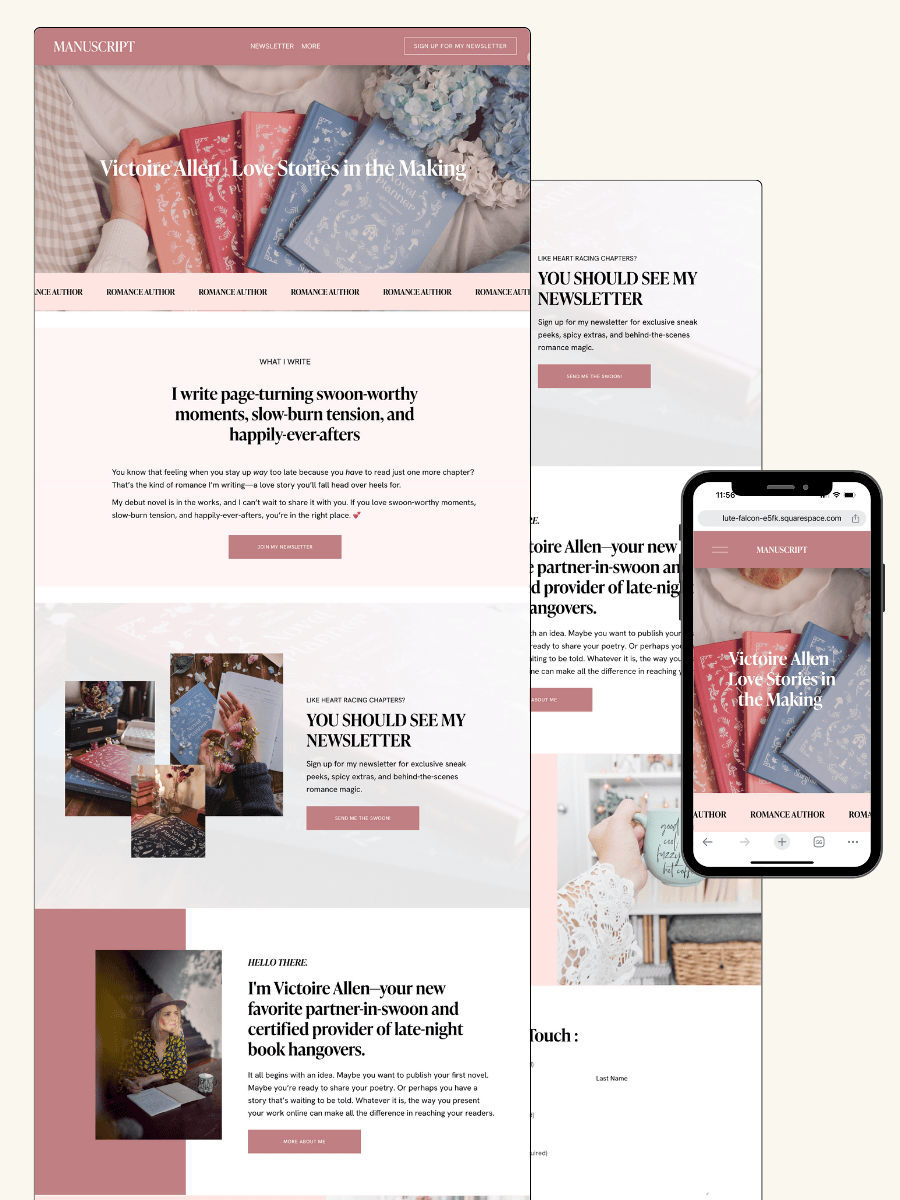
2. The Manuscript – For the Author in Progress
Still working on your book? That’s exactly when your website should start working for you. The Manuscript template is designed for authors who understand that building an audience begins long before publication day.
Whether you're drafting your first novel or deep into revisions, this template gives you a professional platform to show up with confidence now—not later.
With space for your author bio, email list growth, early book teasers, and a clean, intentional layout, it helps you connect with readers and start building momentum from the very beginning.
You don’t need a finished book to look like a professional author—you just need the right foundation.
5. The Gilbert Author Website Template

Refined, open, and quietly impactful—The Gilbert Author Website Template is designed for authors who want a timeless, professional presence that feels both elevated and easy to maintain.
Whether you're launching your first book, expanding your catalog, or building a lasting author brand, Gilbert provides a clear, structured foundation to support it all with confidence.
Built with strategy in mind, it includes dedicated space for your author story, email list growth, thoughtfully organized book pages, and intentional calls-to-action that guide readers naturally through your site. Every detail is purposeful—so you present as established from day one.
Sophisticated without being overwhelming, Gilbert is a website that grows alongside you—supporting your work today and adapting as your career evolves.
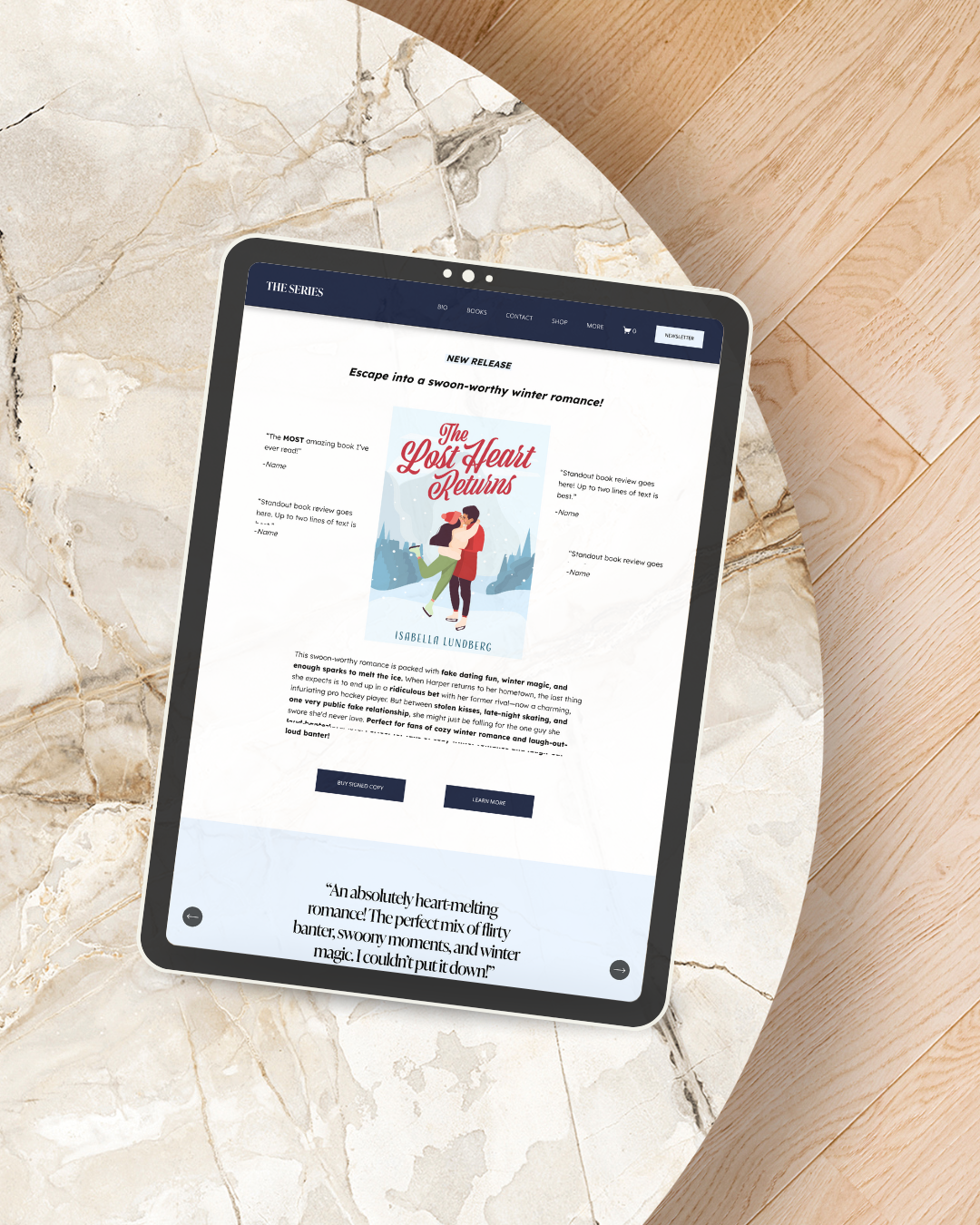
4. The Series – For the Established Author
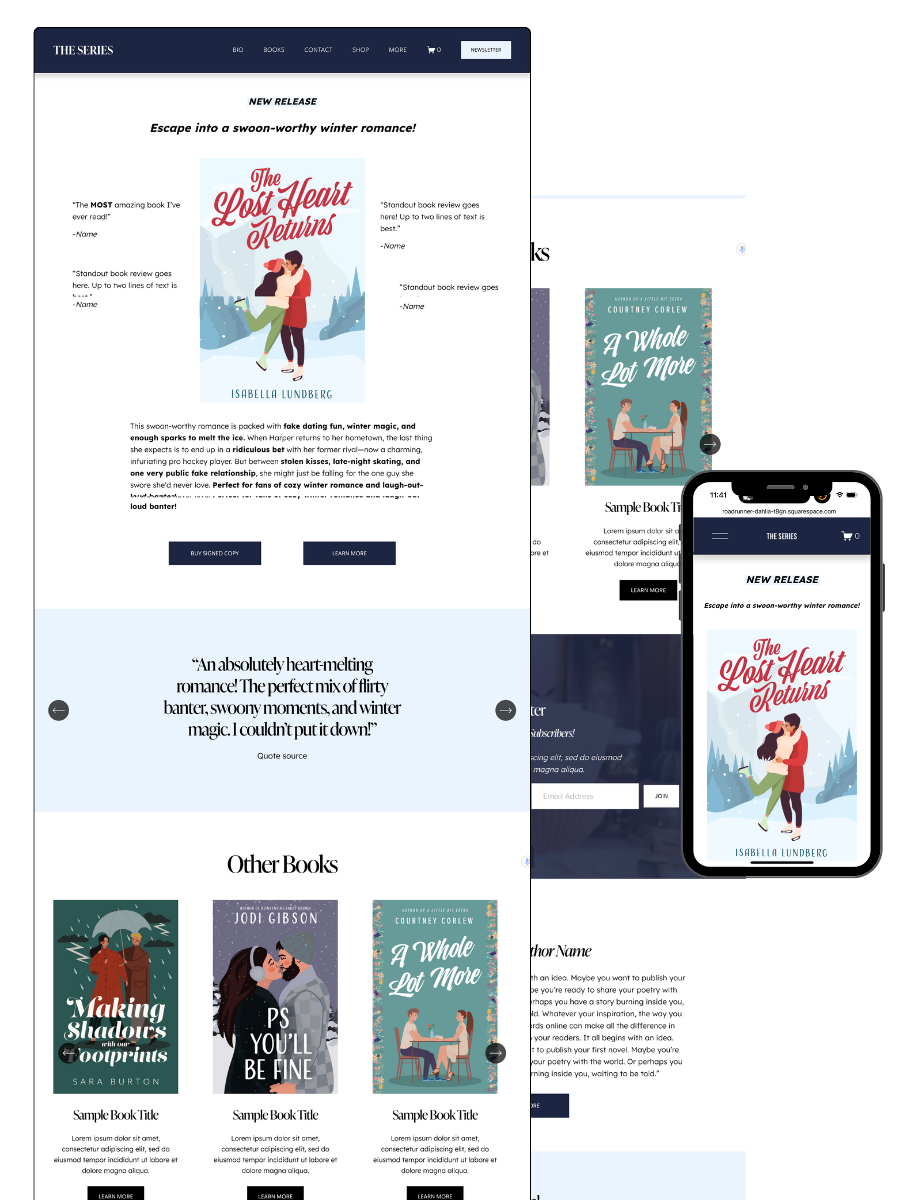
If you’ve got more than one book out (or on the way), The Series template is designed to keep it all working together—not feeling scattered.
Made for authors with multiple titles or series, it gives you clear, organized spaces for each book, built-in paths for readers to buy or subscribe, and the flexibility to expand as your catalog grows.
In short: your site won’t outgrow you. It grows with you.
This is for the author who’s building something bigger—and wants a website that can keep up.
5. The One-Page Author Website Template

Streamlined, refined, and intentionally designed—The One-Page Author Website Template offers a sophisticated solution for authors who value simplicity without sacrificing impact.
Whether you're introducing your work or creating a central point of connection, this single-page layout brings clarity and cohesion to your online presence.
Featuring thoughtfully placed sections for your story, email list, and book showcase, along with strategic calls-to-action, it guides readers effortlessly through your content in one continuous flow.
Efficient yet powerful, this is simplicity done well—built to support your work as it grows.
How to Customize Your Author Template Like a Pro (No Coding Required)
Don’t let the word “template” fool you. With a few intentional tweaks, you can turn a pre-designed site into a one-of-a-kind author brand website that screams you.
The best part? No coding or endless YouTube tutorials. Here’s how to make your template look and feel custom.
1. Update Your Fonts, Colors, and Logo to Match Your Brand
Start with the vibe. Your template gives you a solid foundation, but your fonts and colors bring your author voice to life visually. Whether you’re going moody and mysterious or light and whimsical, Squarespace makes it stupidly easy to change it all with a few clicks. Add your logo, upload your brand palette, and boom—you’ve got a customizable author website template that feels like it was made just for you.
2. Add Your Book Covers, Sales Copy, and Testimonials
This is where things get real—because books = business. Drop in your cover art, write sales copy that makes people need your story, and add reviews, blurbs, or social proof to build trust. Each of Kate’s templates is already designed to feature your book beautifully—you just need to plug in your brilliance.
3. Personalize Your About Page to Build Reader Connection
Spoiler: readers want to know the human behind the pen. Your About page isn’t just filler—it’s prime real estate to share your origin story, values, or writing rituals. Make it weird, heartfelt, bold—whatever feels most you. It’s a small section with major impact.
4. Embed Your Email List Opt-In and Lead Magnet
If you’re not building your email list yet, this is your sign to start. Every template comes with built-in sections to embed your opt-in form—just connect your email platform and upload your lead magnet (free chapter, exclusive content, spicy extras—whatever). This turns your site into a list-building machine without lifting a finger after setup.
5. Create a Blog or Events Page to Keep Content Fresh
Want better SEO? Want to give readers a reason to come back? Start a blog. Or an events page. Or both. Whether you’re posting writing updates, behind-the-scenes stories, or announcing your next book signing, this is how you keep your site active—and Google happy.
Tips for Making Your Author Website Work Harder for You
Launching your author website is just the beginning. If you want your site to do more than sit there looking cute, it needs to work. That means bringing in readers, growing your list, and driving sales—without you hovering over it 24/7. Here’s how to squeeze every drop of strategy out of your site:
Add SEO Titles, Descriptions & Alt Text
You don’t have to be an SEO expert to get your site ranking—just smart. Add custom titles and meta descriptions to every page (especially your book pages and blog posts), and don’t forget to use alt text for your images. This helps Google understand what your site’s about and gets your books in front of more eyeballs organically.
Pro tip: Use keywords like your book genre, your author name, and phrases your readers are actually Googling.
Use the Newsletter Page to Grow Your List on Autopilot
Set it and forget it (kinda). With a dedicated newsletter page built into your template, you’ve got a permanent home for your opt-in. Connect it to your email platform, drop in a juicy freebie, and let your list grow while you write, rest, or plan your next plot twist.
Link Your “Link in Bio” Page to Drive More Clicks from Social
Stop wasting your Instagram bio real estate on generic link tools. Use the “Link in Bio” page built into your template to drive traffic directly to the stuff that matters: book launches, your newsletter, your shop, or even your blog. It looks better, loads faster, and keeps people in your world—not bouncing to third-party sites.
Keep Your Book Pages Updated with New Releases
Your book page isn’t static. Every time you release something new (a bonus scene, a novella, your next bestseller), add it. Readers love seeing your growth, and it makes your site feel fresh, relevant, and alive. Plus, keeping everything in one spot makes it easier for fans to binge-buy your backlist.
Final Thoughts: Build Your Author Brand with Confidence
You don’t need to spend months buried in website tutorials. You just need a smart, strategic start—and that’s exactly what these templates were built for. Your books deserve more than a basic online presence. They deserve a home that’s as professional, compelling, and conversion-ready as your writing.
This isn’t about fluff. It’s about building an author brand that sells books, grows your audience, and positions you as the real deal.
Grab your perfect-fit template and launch your author website today. Your future readers are already looking for you—make sure they find a site that shows you're worth the click.
👉 Browse the Templates!
Before you go…check out my Squarespace Author Templates !
Visit the Author Website Template Shop: TEMPLATE SHOP
Setting Up Your Author Website to Sell Books Directly
Design an author website that supports direct sales and reader trust.

Setting up your author website to sell books directly isn’t optional—it’s the move if you’re done handing over control (and cash) to middlemen who didn’t write a damn word of your book. You’re not here to beg for clicks on Amazon or rely on some algorithm to "maybe" show your masterpiece.
This post breaks down how to sell more books straight from your website—fast, fierce, and on-brand—with Squarespace and a done-for-you website template that doesn’t just look pretty, it converts!
👉🏻Before we jump in, if you’re looking for a streamlined, efficient way to get your author website up and running you HAVE TO check out my author website templates! Specifically designed for authors ready to stand out and make an unforgettable first impression from the first click!

Core Features Your Squarespace Author Website Needs
So you’ve got a website—cute. But does it actually sell your book? If it’s missing these four things, the answer is probably nope. Let’s fix that!
1. Book Landing Pages That Sell
A good landing page tells readers what your book is about. A great landing page makes them smash that buy button like their life depends on it. You need clear, punchy website copy for authors that hooks them in, builds curiosity, and shows exactly why your book is worth their time (and money). Think bold headlines, strong calls-to-action, glowing reviews, and no distractions. This isn’t a resume—it’s a sales page.
Related: Grab my Author Website Blueprint (for Free!) here!
2. Email List Building & Lead Magnets
One of the most powerful tools authors have for selling books is email marketing. Social media comes and goes. Your email list? That’s money in the bank. Every author website needs a juicy opt-in offer (free chapter, bonus content, behind-the-scenes tea—whatever gets your reader excited). This is how you build a real connection and actually follow up. Because one-time traffic is cute, but long-term buyers are better. Some writers use built-in tools like Squarespace Email Campaigns to send newsletters to their audience.
Psst! Grab my FREE email newsletter booster guide here!
3. Easy, Mobile-Friendly Shopping Experience
If your checkout process is clunky or hard to use on a phone, congrats—you just lost a sale. Your site needs to work flawlessly on mobile with a frictionless path from “I want this book” to “Boom. Purchased.” That means secure payments, clear pricing, fast load times, and no 12-step process just to buy a paperback.
4. Blog + SEO for Book Discoverability
You want new readers to find you without having to hustle 24/7? Enter: blogging + SEO for author websites. Create smart, search-optimized content that ranks on Google and leads readers straight to your book. Blog about your genre, writing process, character insights—anything your readers obsess over. Then watch that free traffic roll in.

Why Squarespace Is the Best Website Platform for Authors
Not all website platforms are created equal. Some are clunky. Some are confusing. And some make you want to throw your laptop across the room. Squarespace? It’s the calm in the chaos—especially when paired with a template built to sell your book on autopilot. Here’s why it’s the GOAT for authors:
Built-In Ecommerce Without the Overwhelm
You don’t need a Shopify store or a degree in tech to sell your book. Squarespace gives you everything you need to start making money—secure checkout, product pages, inventory tools—all baked right in. No plugins. No headaches. Just a simple setup that gets your book in readers’ hands, fast.
Mobile-Responsive, Visually Stunning Templates
Let’s be honest: people judge your book by your website. If your site looks like it was built in 2009, it’s not giving bestseller energy. Squarespace templates are sleek, modern, and 100% mobile-friendly—so your site looks amazing on every device. And if you’re using one of my author templates? Chef’s kiss. Instant credibility and conversion-ready design without lifting a finger.
Easy-to-Use Tools for Non-Techy Authors
You’re a writer, not a web developer. Squarespace gets that. Its drag-and-drop builder is simple AF. No coding. No chaos. Just intuitive tools that let you update your site, add a new book, or launch a lead magnet between chapters—without calling your cousin who “kinda knows HTML.”
SEO & Blogging Features You’ll Actually Use
Squarespace has all the SEO essentials built right in, so your site doesn’t just look good—it shows up on Google, too. Plus, blogging is seamless. Want to share behind-the-scenes stories, character deep dives, or book launch updates? You can do it all right here, without needing five different platforms.
How to Set Up a High-Converting Author Website on Squarespace
Alright, let’s talk execution. If you’re serious about turning your author site into a legit book marketing machine, these are the exact steps to follow. The good news? Squarespace makes it simple. The better news? I’ve already done the heavy lifting for you with customizable author website templates that are built to sell books while you write your next chapter.
Step 1 – Choose the Right Squarespace Author Template
✨ AKA: Choose the one that makes you look like the pro you are
Let’s not waste time designing from scratch. Grab a done-for-you template made specifically for authors who want to sell books from their website—not just look cute online. My templates are optimized for conversion, designed with built-in book sales pages, lead magnet spots, and email capture—because your site should do more than sit there. It should sell.
👉 Browse Squarespace Templates for Authors
Step 2 – Customize Your Brand, Fonts, and Color Palette
Make it yours. Add your author brand colors, upload that fire author photo, and swap in your fonts. With Squarespace, it’s all drag-and-drop—zero design experience needed. You’ll go from “default demo” to damn, that looks good in one afternoon.
Step 3 – Add Your Book Pages and Set Up Ecommerce
Here’s where the money magic happens. Use your template’s built-in product pages to feature each book with a clear, compelling landing page for books. Add the blurb, testimonials, formats (paperback, ebook, signed copy—yes, you can!), and a big, bold BUY NOW button. Connect Stripe or PayPal, and boom—you’re in business.
Step 4 – Connect Your Email List and Add a Lead Magnet
Your website should work harder than your Instagram DMs. Add an email signup form, deliver your juicy freebie (first chapter? deleted scene? exclusive bonus content?), and start building a reader base that actually wants to hear from you. This is long-term marketing gold, and Squarespace makes it ridiculously easy to automate.
Step 5 – Optimize for SEO & Add a Blog
Now that your site looks amazing and sells like a pro, it’s time to make sure people can find it. Squarespace gives you the tools to optimize every page for search engines, and your blog? That’s your secret weapon. Write content your readers are already Googling (writing tips, book updates, character inspiration), and use smart keywords to turn your site into a traffic magnet.

Promote Your Books Like a Pro (From Your Website!)
You didn’t build a website just to let it sit there looking pretty. It’s time to use it. When done right, your site becomes the engine behind your entire book marketing strategy—selling books, building hype, and turning browsers into loyal readers. Here’s how to make that magic happen:
Build a Book Sales Funnel That Nurtures Your Readers
If your entire “strategy” is posting and praying… we need to talk. A proper book sales funnel for authors starts with your lead magnet (see: Step 4), builds trust through email, and nudges readers toward buying—without being pushy. Your website should guide people from curious to can’t-click-buy-fast-enough with intentional design, smart copy, and automated email flows.
👉🏻Pro tip: Add a freebie pop-up, an automated welcome sequence, and a low-friction sales page for a funnel that works while you write.
Use Your Blog to Drive Organic Traffic
Your blog isn’t just a journal—it’s a traffic magnet. When you use SEO for author websites strategically, your posts can rank on Google and bring new readers straight to your book pages without lifting a finger (or spending a dime). Write about topics your audience is already searching: genre-specific lists, behind-the-scenes writing process, character inspo, or book launch updates.
👉🏻Keyword goldmine: Think “best fantasy books by indie authors” or “how I wrote my first thriller”—then link back to your own book. Yes, it works.
Integrate Social Media and Paid Ads Strategically
Love it or hate it, social media still sells books. But your posts should always lead somewhere—hint: your website. Link your bio to your book sales page, run Facebook/Instagram ads to a lead magnet, or use Pinterest to drive traffic to your blog. The point? Your website is the hub. Social is just the spark.
👉🏻Bonus points if you embed your Instagram feed on your homepage to keep your site fresh and connected.
Track Book Sales with Analytics
Want to know what’s actually working? You need data. With built-in book sales analytics on Squarespace and tools like Google Analytics or Fathom, you can track what pages convert best, where your traffic is coming from, and how many people are clicking “Buy Now.” No more guessing—just strategy, backed by numbers
Final Tips for Authors Selling Books Directly
Selling your books directly doesn’t have to be complicated—it just needs to be intentional.
Focus on simplicity and real connection: clean design, clear messaging, and a reader experience that makes buying a no-brainer.
Don’t wait for “perfect” because spoiler: perfect doesn’t pay the bills. Start with what you have, use tools that do the heavy lifting (like a killer website template), and refine as you go.
Most importantly? Let your website work for you while you write. It should be building your list, selling your books, and growing your brand around the clock—so you can stay in your creative zone while your site handles the business.
FAQ – Selling Books from Your Own Website
Got questions? Let’s clear them up—fast. Here’s what most authors want to know when they’re ready to sell their books directly (and skip the middleman).
Can I sell ebooks directly from my Squarespace website?
Yes—and you absolutely should. With Squarespace, you can sell digital downloads like ebooks with zero fuss. Just upload your file, set the price, and you’re in business. No third-party platforms taking a cut, no complicated tech—just direct sales and full profit in your pocket.
Do I need a shopping cart to sell my book?
Not necessarily. Squarespace gives you built-in ecommerce features that make it easy to sell both physical and digital books without needing a clunky shopping cart plugin. You can add simple “Buy Now” buttons or product pages with seamless checkout flows that don’t scare readers off.
Can I use Squarespace if I’m not tech-savvy?
100%. Squarespace is built for people who’d rather write novels than mess with code. Everything is drag-and-drop, intuitive, and easy to update—even if you’ve never touched a website before. And if you use one of my pre-built templates for authors? You’ll be set up faster than your character arc in Act Two.
How do I market my book from my author site?
Start with a killer landing page for your book, build your email list with a lead magnet, write blog posts that drive organic traffic, and use social or paid ads to bring people in. Your website becomes the hub of your book launch strategy—no more random posting or hoping people find you.
What’s better: Amazon or direct book sales?
Both have their place—but selling directly gives you more control, more profit, and way more connection with your readers. Amazon is great for discoverability, but your website is where you build a brand, grow your list, and keep 100% of the relationship (and most of the revenue). Ideally? Do both. But make sure your website is your home base.
Don’t forget: Looking at real author website examples can help writers understand how to present and sell their books online.
Before you go…check out my Squarespace Author Templates !
Visit the Author Website Template Shop: TEMPLATE SHOP
SEO for Authors – Get Found Online & Sell More Books!
SEO basics every author should know when designing an author website.
Learning SEO can help writers boost author website traffic over time. If you want more readers to find your books, Google needs to know you exist. Think about it—when someone searches for a book like yours, wouldn’t it be nice if your name popped up? That’s where SEO comes in!
And no, you don’t need to be some tech genius to make it work. With a few simple tweaks—like using the right keywords, optimizing your website, and making Google love your content—you can get more eyes on your books, grow your audience, and sell more copies!
No complicated jargon, no overwhelm—just straightforward SEO strategies for authors and writers that work!
Before we dive in, download my FREE author website checklist!

What is SEO and Why Do Authors Need It?
Let’s be real—your book can’t change lives if no one knows it exists. That’s where SEO (a.k.a. Search Engine Optimization) comes in. SEO is what helps people find you on Google when they’re searching for books like yours.
How Does Author SEO Work?
Authors can use several strategies to drive traffic to their author website, including SEO and content marketing., SEO is one of them. Search engines (like Google) scan the internet 24/7, trying to match people’s searches with the best possible content. The better your website and content are optimized, the higher you rank in search results—which means more readers finding you, more books sold, and more fans who love your work (whoop whoop!).
Here’s what Google looks for when deciding where to rank your website:
Relevant keywords – The words and phrases people are actually searching for.
Quality content – Helpful, interesting content that keeps readers engaged.
Fast, mobile-friendly websites – Because nobody has time for slow-loading pages.
Links from other websites – A.k.a. “credibility points” that tell Google you’re legit.
Why SEO Matters for Authors
Writing a book is one thing. Getting people to buy it? That’s another. SEO helps your website, blog, and book pages show up when people search for:
Books in your genre
Topics you write about
Your name (if you don’t rank for your own name, we need to fix that ASAP!)
Without SEO, you’re relying on hope, or word of mouth to get discovered. With SEO? You’re giving your book a fighting chance to be found, read, and loved!
SEO Myths That Hold Writers Back (Let’s Bust Them!)
“SEO is only for big companies.” Nope! Even indie authors can rank on Google.
“I need to be an expert to do SEO.” If you can write a book, you can handle SEO.
“Social media is enough.” Platforms change, but Google searches never stop.
If you want people to find you, SEO needs to be part of your strategy. And don’t worry—I’ll walk you through exactly how to do it.
Don’t have a website yet? No problem! Book a Website in a Day and get a custom author website in ONE DAY!
The Foundation of Author SEO – Optimizing Your Website
1. Choosing the Right Keywords – What Are Readers Searching For?
SEO starts with knowing what your readers are typing into Google. If someone is searching for “best fantasy books with strong female leads” and you’ve written the perfect book for them—but your site doesn’t use those words anywhere—you’re invisible.
Here’s how to find the right keywords:
Think like your ideal reader—what would they type to find a book like yours?
Use Google Autocomplete (start typing in Google and see what it suggests).
Try free tools like Ubersuggest or Answer the Public for keyword ideas.
Look at Amazon categories and book descriptions—what words are authors in your genre using?
Once you’ve found your keywords, use them naturally throughout your site—especially in page titles, blog posts, and book descriptions.
2. Metadata Matters – Optimizing Page Titles, Meta Descriptions & URLs
Metadata is your website’s elevator pitch to search engines. It’s the first thing people see in search results, so it needs to be clear, engaging, and keyword-rich.
Page Titles: Include your main keyword and be descriptive. Example:
“Best Fantasy Books for Teens | Author Jane Doe” (clear and searchable)
“Magical Worlds Await – Read My Novel” (too vague, doesn’t tell Google what the page is about)
Meta Descriptions: This is the preview text under your page title in search results. It should be engaging, informative, and include your keywords. Example:
“Discover the best fantasy books with strong female leads. Explore my latest novel, get writing tips, and join my email list for exclusive content.”
URLs: Keep them short, readable, and keyword-rich. Example:
www.yoursite.com/fantasy-books-for-teens instead of www.yoursite.com/page123
3. Structuring Your Website for SEO – Easy Navigation = Higher Rankings
If your author website is cluttered or difficult to navigate, visitors won’t stay long, and search engines won’t rank it highly. A well-structured author website improves both user experience and your author SEO.
Here’s how to structure your site for better rankings:
Clear navigation: Keep your menu simple with essential pages like About, Books, Blog, and Contact.
Internal linking: Link between pages on your site. If you mention your book in a blog post, link to your book page.
Mobile-friendly design: Most visitors will be on their phones. If your site isn’t mobile-friendly, rankings and engagement will suffer.
Fast-loading pages: Slow websites hurt SEO. Compress images, limit unnecessary plugins, and choose a fast hosting provider.
Related: How to Design an Engaging Author Website on Squarespace
4. The Power of Blogging for SEO – Keep Your Site Active & Rank Higher
Maintaining a blog on your author website can help bring in readers through search engines. Search engines favor websites that are updated regularly. A blog is one of the best ways to keep your site fresh and relevant.
Write content based on what your readers are searching for. Example: “How to Write a Fantasy Novel” or “Best Mystery Books for Fans of Agatha Christie.”
Use keywords naturally—don’t force them in.
Link to your own pages, such as book pages, your about page, or past blog posts, to keep visitors engaged.
Share your posts on social media to drive more traffic, which can help improve rankings.
Even one post a month can make a big difference in keeping your site active and ranking well.
Social Media & SEO – How They Work Together
Social media and SEO aren’t separate strategies—they feed into each other.
While social platforms don’t directly impact search rankings, they increase visibility, drive traffic to your site, and help you get discovered by new readers. The key is knowing how to use them together effectively.
Driving Traffic to Your Author Website
Your website should be the place where all your social media efforts lead. Instead of relying solely on social platforms (where algorithms change constantly), direct followers to your website where they can sign up for your email list, explore your books, and engage with your content on your terms.
Ways to drive social media traffic to your site:
Link to your blog posts, book pages, and newsletter signups in your bio.
Use call-to-actions in posts to encourage visits (“Read the full story on my site!”).
Share new website content across your platforms consistently.
Social Media SEO Best Practices
Social platforms have search functions too. Optimizing your social media content helps you show up when people are searching for books, authors, and writing-related topics.
Hashtags: Use genre-specific and reader-friendly hashtags like #HistoricalFictionReads or #IndieAuthor instead of just #Books.
Keywords in Captions & Profiles: Treat your social bio like an SEO-friendly tagline. Instead of “Author of fantasy books,” try “Fantasy author creating epic worlds & unforgettable characters.”
Links: Regularly update your bio link to direct traffic to relevant book pages, new blog posts, or special offers.
Check out this article all about using social media to drive traffic to your author website!
Repurposing Content for Maximum Visibility
Creating content from scratch every time is exhausting. Instead, repurpose your website content into bite-sized social media posts to reach more people.
Turn blog posts into Twitter threads or LinkedIn articles.
Share key points from your latest post as an Instagram carousel.
Convert book excerpts into short-form videos on TikTok or Reels.
Use Pinterest to pin your blog posts and drive long-term traffic to your site.
By integrating SEO with social media, you’re expanding your reach while making sure the content you’ve already created works harder for you.

SEO Strategies for Self-Published vs. Traditionally Published Authors
Whether you're self-published or working with a traditional publisher, SEO can help you get more visibility, attract readers, and sell more books. The approach, however, looks a little different depending on your publishing path.
SEO for Self-Published Authors
When you self-publish, you're responsible for your book’s marketing, and SEO is a game-changer for getting your book in front of the right readers.
Here’s how to boost your rankings on Amazon, Google, and book directories:
Amazon SEO: Choose keywords and categories wisely so your book appears in relevant searches. Use keyword-rich descriptions and add search-friendly phrases to your book title and subtitle when possible.
Google SEO: Optimize your author website, book landing pages, and blog posts with keywords your audience is searching for.
Book Directories: Get your book listed on Goodreads, BookBub, and genre-specific directories—each listing increases your chances of discovery.
Reviews Matter: The more positive reviews your book gets, the more platforms like Amazon and Goodreads will recommend it to new readers.
SEO for Traditionally Published Authors
Even with a publisher handling some of your marketing, your online presence still matters. Readers, journalists, and event organizers will Google your name, so your website and personal branding should be optimized to rank high in search results.
Here’s how to use SEO for personal branding and book launches:
Optimize your author website with strong metadata, blog posts, and book pages to keep it ranking well.
Create content around your book launch—interviews, guest blogs, and podcast appearances all contribute to SEO by earning backlinks to your site.
Ensure your publisher’s book page links back to your own site, so people searching for your book also find you.
SEO Tools & Resources for Authors
SEO doesn’t have to be overwhelming. These tools make it easier to track rankings, find the right keywords, and improve your visibility:
Google Search Console – Tracks how your site appears in search results and helps you improve performance.
Ubersuggest – A free tool for keyword research and content ideas.
Publisher Rocket – Helps self-published authors find high-ranking Amazon keywords.
Yoast SEO (for WordPress users) – Optimizes blog posts and web pages for search engines.
Answer the Public – Generates content ideas based on what people are searching for.
No matter how you publish, SEO is a long-term investment in your success. The more you optimize, the easier it is for readers to find your work, follow your journey, and become lifelong fans.
If you’d rather outsource to an SEO professional, I’d recommend checking out this SEO Setup service.
How to Get Started with SEO Today
SEO isn’t just about ranking higher on Google—it’s about making it easy for the right readers to find you, follow you, and buy your books. Small tweaks like optimizing your website, using smart keywords, and creating fresh content can have a big impact over time.
The best part? Once set up, SEO keeps working in the background while you focus on writing!
But if you’re ready to go beyond DIY and want a custom, professionally designed author website that’s not only beautiful but also built with SEO in mind, I can help. Let’s create a website that reflects your brand, engages readers, and helps your books get discovered.
Before you go…check out my Squarespace Author Templates !
Visit the Author Website Template Shop: TEMPLATE SHOP
How Do You Get a Book Deal? A Step-by-Step Guide for Writers & Authors
Publishing guidance for writers building a professional author website.

So, you want a book deal—a real, publisher-backed, advance-paying book deal that lands your work on bookshelves? Let’s be honest, getting traditionally published isn’t easy, but it’s absolutely possible with the right strategy. The good news? You don’t need to be a celebrity or have millions of followers to make it happen—you just need to know what publishers are looking for and how to get your manuscript in front of the right people.
Whether you’re wondering how to get a literary agent, what goes into a killer query letter, or how book deals actually work, this guide breaks it all down step by step!
The best time to create your website? Before your book is published! Check out the DIY pre-launch author website template here!
1. Traditional Publishing vs. Self-Publishing – Which One is Right for You?
Before deciding on your publishing path, it’s important to understand the key differences between traditional publishing and self-publishing.
With a traditional book deal, a publisher takes on the costs of editing, cover design, printing, and marketing, giving your book access to bookstores and industry connections. The downside? It’s a long process, highly competitive, and you’ll have less control over your book’s final version, pricing, and royalties.
Self-publishing, on the other hand, allows you to keep full creative and financial control, set your own deadlines, and earn higher royalties—but it also means handling (and funding) everything yourself, from editing to marketing.
If you want the credibility and support of a publisher and don’t mind waiting, pursuing a book deal might be the right choice. If you prefer speed, flexibility, and full ownership of your work, self-publishing could be a better fit.
Ultimately, the best choice depends on your goals, timeline, and how much control you want over your publishing journey.
Related: Before You Self-Publish: Experts Answer Your Top Questions on Editing, Marketing & Design
2. How to Get a Literary Agent (And Why You Need One)
If you're aiming for a traditional book deal, securing a literary agent is one of the most important steps in the process. Most major publishers don’t accept unagented submissions, meaning your manuscript won’t even make it past the slush pile without an agent to pitch it for you.
But an agent does more than just get your foot in the door—they negotiate your contract, sell foreign and film rights, and advocate for your best interests throughout your publishing career.
How to Find the Right Literary Agent
Not all agents represent all genres, so researching agents who specialize in your type of book is key. Start by looking at Manuscript Wish List (MSWL), QueryTracker, and Publishers Marketplace to find agents actively looking for books like yours. Make a list of agents who seem like a good fit, and pay attention to their submission guidelines—each agent has different preferences for queries, sample pages, and proposals.
Query Letters 101: How to Make Yours Stand Out
Your query letter is your first (and sometimes only) chance to impress an agent, so it needs to be strong. A solid query includes:
A compelling hook – One or two sentences that capture the heart of your story.
A short book summary – A brief, engaging description of your plot without giving away everything.
A bio – A quick introduction to who you are and why you’re the right person to write this book.
Personalization – Mention why you’re querying this specific agent (e.g., they represent similar books).
What Happens After Signing With an Agent?
Once you land an agent, they’ll likely ask for revisions to fine-tune your manuscript before submitting it to publishers. Then, they’ll create a submission strategy, pitch your book to editors, and negotiate offers if a publisher bites.
While there are no guarantees, a strong agent increases your chances of getting a book deal, better contract terms, and more opportunities for your career. Having an agent is like having a business partner who believes in your work—and getting the right one can be a game-changer.
3. How to Submit a Book to a Publisher
Once you’ve polished your manuscript and secured a literary agent, the next step is submitting your book to publishers.This process involves pitching your work to acquisitions editors who decide whether your book is a good fit for their publishing house. Most fiction submissions require a completed manuscript, while nonfiction books often sell on a book proposal that outlines the concept, marketability, and your platform as an author.
Follow Submission Guidelines Carefully
Each publisher has specific submission guidelines that must be followed to the letter. These guidelines outline what materials to include, the format required, and where to send them. Some publishers want the full manuscript, while others request just a few sample chapters and a synopsis. Ignoring these guidelines can get your submission rejected before it’s even read.
What Publishers Look for in a Manuscript
Publishers aren’t just looking for great writing—they want books that will sell. Here’s what matters most in a submission:
Marketability – Does your book have a clear audience, strong genre fit, and commercial appeal?
Strong Writing & Unique Voice – Is your manuscript polished and compelling?
Author Platform – For nonfiction, do you have a built-in audience that will help sell the book?
How Long Does It Take to Hear Back?
The waiting game can be one of the hardest parts of the publishing process. Responses from publishers can take anywhere from a few weeks to several months, depending on their schedule and interest. While you wait, the best thing you can do is keep writing, start your next project, or build your author platform so you're ready when your book finally finds the right home.
4. What Publishers Look for in a Book Deal
Landing a book deal isn’t just about writing a great story—it’s about convincing a publisher that your book is worth investing in. Publishers take financial risks with every book they acquire, so they look for projects that have a strong chance of selling well and connecting with readers. Here’s what makes a book stand out to acquisitions editors.
Marketability: Does Your Book Fit a Clear Genre and Audience?
Publishers want books that are easy to categorize and market. If your book fits into a clear genre with a built-in readership, it has a better chance of getting picked up. They consider:
Genre trends – Is your book in a genre that’s currently selling well?
Comparable titles – Can your book be pitched as “perfect for fans of X”?
Audience demand – Is there a clear reader base looking for books like yours?
Platform & Reach: Do You Have an Audience?
For nonfiction especially, publishers expect authors to bring an existing platform—which means having an email list, social media following, or established credibility in your niche. Even fiction authors benefit from an online presence, as it shows publishers you have an audience eager to read your work.
Compelling Story or Concept: What Makes Your Book Different?
Publishers are constantly evaluating what makes a book stand out in a crowded market. They want something fresh—whether it’s a unique premise, a timely topic, or an unforgettable voice. If your book can be pitched in a way that makes people instantly curious, excited, or emotionally invested, you’re on the right track.
Professionalism & Writing Quality: Are You Ready for the Industry?
Even the best ideas won’t get far if the manuscript is messy or the pitch is weak. Publishers expect:
A clean, well-edited manuscript that shows you’ve put in the work.
A strong, concise pitch that clearly communicates what your book is about.
A polished query letter that follows industry standards and makes them want to read more.
At the end of the day, publishers are looking for books that are not just well-written, but well-positioned for success.The stronger your pitch, platform, and positioning, the better your chances of getting that book deal.
Related: 15 Ways Authors Can Use Social Media to Drive Traffic to Their Website & Grow Their Newsletter
5. Understanding Publishing Contracts & Royalties
Getting a book deal is exciting, but before signing anything, it’s crucial to understand the terms of your publishing contract. A book deal isn’t just about getting published—it’s a business agreement that determines how much you’ll get paid, how your book will be distributed, and what rights you keep (or give away). Here’s what every author should know before signing on the dotted line.
What’s Included in a Book Deal Contract?
A traditional publishing contract outlines the financial terms and rights associated with your book. The key components include:
Advance – The upfront payment an author receives, which is paid against future royalties.
Royalties – The percentage of book sales the author earns after the advance is recouped.
Rights – Specifies whether the publisher has exclusive rights to print, digital, audiobook, and foreign editions.
How Much Do Authors Get Paid?
Traditional publishing pays differently than self-publishing. Most authors receive an advance (ranging from $1,000 to six figures), but won’t earn additional money until their book sells enough copies to "earn out" the advance. After that, they receive royalties, which typically range from:
10–15% of hardcover sales
5–10% of paperback sales
25% of ebook sales
Since advances are based on estimated sales, some books never earn out, meaning the author doesn’t receive additional payments beyond the advance.
Key Contract Terms to Look Out For
Publishing contracts are legally binding, so understanding the fine print is essential. Watch for:
Royalty structure – Ensure you understand how royalties are calculated.
Reversion clauses – Defines when rights revert back to the author (important for future republishing).
Deadline requirements – The timeline for manuscript delivery, revisions, and publication.
Subsidiary rights – Determines whether the publisher controls audiobook, film, or international rights.
Why You Need an Agent or Lawyer to Review Your Contract
Publishing contracts can be complex and heavily favor the publisher.
This is where having a literary agent or publishing lawyer makes a huge difference. An agent negotiates better terms, higher advances, and protects your rights—things that could affect your career for years to come. If you don’t have an agent, hiring a lawyer to review the contract before signing could save you from costly mistakes down the road.
Understanding your contract gives you power and control over your writing career. Don’t rush the process—make sure the deal works for you before saying yes.
Tips to Increase Your Chances of Getting a Book Deal
Getting a book deal isn’t just about writing a great manuscript—it’s about making sure agents and publishers see you as a professional, marketable author. While talent is important, taking the right steps to position yourself in the industry can significantly boost your chances of landing a deal. Here’s how to stand out from the competition and increase your chances of getting published.
Build an Author Platform
Even fiction writers need an online presence. Publishers want authors who can help promote their books, and having an author website, blog, or engaged social media following shows that you’re serious about connecting with readers. A simple author website with an about page, book info, and a blog or newsletter signup can go a long way in proving that you’re ready for the industry.
Attend Writing Conferences
One of the best ways to get on an agent’s radar is meeting them in person at a writing conference. Many conferences offer pitch sessions where you can present your book idea directly to agents and publishers. Even if you don’t land an agent immediately, attending these events helps you build relationships and gain insights into the industry. Some top conferences include Writer’s Digest Conference, AWP, ThrillerFest, and regional SCBWI events for children’s writers.
Polish Your Manuscript Before Querying
First impressions matter, and a well-edited manuscript stands out. Before sending your work to agents or publishers, consider hiring a professional editor or joining a critique group to refine your manuscript. Even small mistakes in grammar, pacing, or structure can be enough for an agent to pass on your submission. Investing in edits before querying increases your chances of getting a request for a full manuscript. *Formatting your manuscript correctly is one of the key steps before self-publishing a book.
Network with Other Writers
Publishing is a small world, and connections matter. Joining a writing group, attending workshops, or engaging with the writing community online can lead to valuable opportunities. Many authors land agents through referrals from other writers who have already gone through the process. The more you engage with the writing world, the more doors you’ll open.
What to Do If You Don’t Get a Book Deal
Rejections are a normal part of the publishing journey—even bestselling authors have faced them. Not landing a book deal doesn’t mean your book isn’t good enough—it just means it hasn’t found the right fit yet. If traditional publishing isn’t working out, here are some next steps to keep your book moving forward.
Revise & Requery – Should You Try Again?
If you’ve sent out multiple queries with no requests for full manuscripts, it may be time to rework your query letter, first pages, or manuscript itself. Consider:
Feedback from agents – If you received personalized rejections, pay attention to any patterns.
Query letter tweaks – Is your pitch clear, compelling, and marketable?
Manuscript revisions – If your book isn’t getting requests, consider working with a developmental editor or critique partner before requerying.
Querying new agents – Maybe you just haven’t found the right match yet. Research and submit to another round of agents.
Explore Small Presses & Indie Publishers
If traditional publishing houses aren’t biting, smaller independent presses may be a great alternative. Many indie publishers accept unagented submissions, meaning you can submit directly without needing a literary agent. Small presses often provide more creative control, higher royalties, and a more personal publishing experience—but may require more marketing effort on your part.
Consider Self-Publishing – Taking Control of Your Book’s Future
Not getting a book deal doesn’t mean your book can’t succeed. Self-publishing puts you in control of everything—editing, cover design, pricing, and marketing. While it requires more work upfront, self-published authors keep higher royalties and have direct access to platforms like Amazon KDP, Draft2Digital, and IngramSpark.
If you choose to self-publish, investing in a professional author website and marketing plan can help your book gain traction, attract readers, and sell successfully. Many authors who start out self-publishing eventually land traditional deals later because of their success.
Is a Book Deal Right for You?
Getting a book deal takes patience, persistence, and a strong understanding of what publishers are looking for.
From crafting the perfect query letter to securing a literary agent and negotiating contracts, traditional publishing is a long game—but one that can pay off with the right strategy. If this path feels right for you, keep writing, revising, and submitting—every "no" gets you closer to the right "yes."
No matter where you are in your publishing journey, having a strong online presence can set you apart.
A professional author website not only establishes credibility but also helps agents, publishers, and readers find you. Ready to build your platform? Let’s create a website that makes you stand out!
Before you go…check out my Squarespace Author Templates !
Visit the Author Website Template Shop: TEMPLATE SHOP
Don’t forget: There are also many websites for writers that provide helpful resources throughout the writing and publishing process.
The Best Websites for Writers & Authors – Essential Online Resources for Every Stage of Your Writing Journey
A curated list of writer website examples and essential tools.

Okay, you’ve already got a million things on your mind—plot twists, character arcs, that one villain who won’t cooperate—the last thing you need is to waste hours hunting down the right resources to help you write, publish, or market your book.
The good news? You don’t have to!
Whether you need writing communities for feedback, self-publishing platforms to get your book out into the world, or marketing tools to make sure readers actually find it, this list has you covered. Writers preparing to release their first book often review steps to take before self-publishing a book.
No more endless searching—just the best websites every writer and author should know about, all in one place!
To get you started, check out all my FREE author resources here!
Best Websites for Writing Inspiration & Idea Generation
Some days, the words flow effortlessly. Other days? You stare at a blank page, willing inspiration to strike. The good news? You don’t have to wait for the muse to show up. These websites are packed with prompts, creative exercises, and expert-led workshops to get your ideas flowing and your stories off the ground.
1. Writing Prompts & Creativity Boosters
Writer’s block? Meet your match. Whether you need a quick writing challenge or a story prompt that sparks an entire novel, these sites deliver fresh ideas to help you break through creative roadblocks.
Reedsy Prompts – Weekly writing challenges with feedback from a thriving writer community.
Squibler– A treasure trove of unique prompts, from quirky one-liners to full-blown story concepts.
The Story Shack – Generates random story ideas, character names, and plot twists at the click of a button.
Sometimes, all it takes is one great prompt to unlock a story you never saw coming.
2. Online Writing Courses & Workshops
If you want to take your writing skills up a notch, learning from the best is a smart move. These platforms offer expert-led courses covering everything from story structure and character development to genre-specific writing techniques and publishing advice.
MasterClass – Learn from bestselling authors like Neil Gaiman, Margaret Atwood, and Dan Brown.
Coursera – Free and paid courses from universities on creative writing, storytelling, and plot development.
Udemy – Affordable, self-paced writing courses on every topic imaginable.
LitReactor – Interactive workshops led by published authors, with real-time feedback from instructors and peers.

Best Writing Communities & Forums
Writing may be a solo journey, but that doesn’t mean you have to do it alone. Whether you’re looking for honest feedback, motivation, or a community that just gets the writer’s struggle, these online spaces are where you’ll find your people.
1. Online Spaces for Writers to Connect & Get Feedback
A good writing community can be the difference between a manuscript collecting dust and a polished book ready for publication. The best forums and critique groups offer constructive feedback, networking opportunities, and a much-needed dose of motivation when imposter syndrome kicks in.
Absolute Write – A massive forum covering everything from writing advice to publishing discussions.
Scribophile – A critique community where you give feedback to earn feedback, ensuring quality engagement.
Critique Circle – A structured feedback exchange for writers serious about improving their craft.
The Writing Cooperative – A Medium-based community offering tips, resources, and writing support.
If you’re feeling stuck, getting feedback from fellow writers who’ve been there can help push your story forward.
2. Social Media Groups for Writers
Social media isn’t just for scrolling—it’s also a goldmine for finding beta readers, accountability partners, and critique swaps. Whether you prefer Facebook, Discord, or Twitter (now X), these platforms have thriving writer communities where you can connect, learn, and grow.
Facebook Groups: “10 Minute Novelists,” “Writers Helping Writers,” and “Beta Readers & Critique Partners” are great places to share work and get support.
Discord Servers: Writing-focused servers like “The Writer’s Block” and “Storyteller’s Tavern” offer live discussions, critique channels, and writing sprints.
Twitter Chats: Hashtags like #AmWriting, #WritersCommunity, and #WritingTips connect you with thousands of writers sharing insights, challenges, and opportunities.
Writing is always better when you have a community cheering you on. Find your people, share your work, and watch your writing thrive.
Best Websites for Self-Publishing & Author Platforms
Gone are the days when traditional publishing was the only path to getting your book out into the world. Self-publishing has opened doors for authors to take full control of their careers, and the right platforms can help you reach readers without gatekeepers standing in your way. But publishing is only half the battle—building your author platform is what turns a one-time book launch into a long-term, successful writing career.
1. Self-Publishing Platforms
If you want your book to reach readers worldwide, choosing the right self-publishing platform is key. Whether you’re launching an ebook, paperback, or hardcover, these platforms make it easy to distribute, sell, and manage your books online.
Amazon Kindle Direct Publishing (KDP) – The go-to platform for self-published authors, offering access to Amazon’s massive marketplace, Kindle Unlimited, and print-on-demand services.
Draft2Digital – A user-friendly alternative to KDP, allowing you to distribute ebooks to multiple retailers (Apple Books, Barnes & Noble, Kobo) with one upload.
IngramSpark – Best for wide distribution, allowing you to print books and get them into libraries, bookstores, and online retailers.
Lulu – A great option for print-on-demand books, workbooks, and special edition releases.
Each platform has its strengths, so choosing the best fit depends on where and how you want to sell your books.
2. Building an Author Platform
Publishing a book is just the first step—building an author platform is what keeps readers coming back for more. Having a dedicated author website makes you look professional, helps you connect with your audience, and gives you full control over your online presence (unlike social media, where algorithms decide who sees your content).
3. Best Website Builders for Authors
Squarespace – A sleek, user-friendly platform with built-in SEO tools, perfect for showcasing books and growing your audience.
WordPress – Highly customizable, great for authors who want more control and advanced blogging capabilities.
Wix – Drag-and-drop simplicity with beautiful templates designed for creatives.
While DIY website builders work for some, a custom author website can take your brand to the next level. A professionally designed site not only makes you stand out but ensures your website is optimized for SEO, book marketing, and reader engagement. If you're serious about growing your audience, investing in a custom-built, high-converting author website is a smart move.
No matter how you publish, your author platform is what turns first-time readers into lifelong fans. The stronger your presence, the easier it is for readers to find, follow, and support your work.
Best Websites for Book Marketing & Promotion
Writing a book is only half the journey—getting it into readers’ hands is the real challenge. With millions of books published each year, standing out requires smart marketing and strategic promotion. The good news? There are powerful book discovery platforms, promotional sites, and SEO strategies that can help you reach the right audience and sell more books.
Book Discovery & Promotional Sites
Whether you’re running a launch campaign or trying to boost ongoing sales, these platforms help connect your book with new readers through targeted promotions, reviews, and email lists.
BookBub – One of the most effective book marketing platforms, offering discounted book promotions to millions of avid readers.
Goodreads – A must for authors, allowing you to list your book, run giveaways, and engage with readers through reviews and recommendations.
StoryGraph – A fast-growing alternative to Goodreads where readers discover new books based on their reading preferences.
Written Word Media – Offers a variety of paid book promotion services that help authors gain visibility across multiple genres.
Getting featured on these sites can drive serious traffic to your book pages and help build a loyal readership.
SEO & Blogging for Authors
Google is one of the most overlooked book marketing tools. A well-optimized blog can help authors rank in search results, attract new readers, and establish credibility in their genre. Instead of relying solely on social media (where posts disappear fast), blog content keeps working for you long-term.
How Blogs Help Authors Get Discovered
Answer reader searches. A post like “Best Historical Fiction Books for Fans of Outlander” can attract your ideal audience.
Drive traffic to your book pages. Every blog post is an opportunity to link to your book, author bio, and newsletter signup.
Boost search rankings. The more useful content you publish, the more likely Google is to send traffic your way.
SEO-Friendly Content Ideas for Author Websites
Behind-the-scenes insights into your writing process
Book recommendations related to your genre
Writing tips and publishing advice
Character deep dives or exclusive bonus content
Personal stories that connect you with readers
A strong SEO strategy paired with smart book promotion makes it easier for readers to discover you—without constantly chasing social media trends. The key is building a long-term presence that keeps working for you, even when you're focused on writing your next book.
Best Websites for Writing Productivity & Tools
Writing takes discipline, focus, and the right tools to help you stay on track, eliminate distractions, and improve your craft. Whether you're working on a novel, editing a manuscript, or looking for freelance gigs, these websites and apps can boost your productivity and make your writing life easier.
1. Writing Software & Distraction-Free Tools
If you find yourself getting lost in endless tabs and notifications, these tools help you focus, organize your work, and refine your writing.
Scrivener – The go-to software for authors, offering powerful organizational features for drafting, structuring, and researching your book.
Hemingway Editor – Highlights complex sentences and passive voice, helping you write with clarity and impact.
Grammarly – A grammar and spell-checking assistant that catches mistakes and enhances readability.
FocusWriter – A minimalist, full-screen writing tool designed to keep you free from distractions.
The right tools can streamline your writing process and help you get words on the page—faster and more efficiently!
2. Freelance Writing & Job Boards
If you're looking to make money with your writing while working on your book, these platforms connect writers with paid opportunities in blogging, content writing, and ghostwriting.
ProBlogger – A top job board for bloggers and content writers looking for freelance gigs.
Upwork – A massive marketplace where writers can find clients in need of articles, ebooks, and web content.
Freelancer – Similar to Upwork, offering freelance jobs across various writing niches.
Contena – A premium platform that curates high-paying writing jobs for professional freelancers.
Freelance writing is a great way to generate income, sharpen your skills, and build your author brand while working on your book.
Final Thoughts – The Best Online Resources for Writers & Authors
Don’t let these tools sit on a list—dive in, explore, and start using them to your advantage! Join a writing community, test out a new productivity tool, or optimize your book marketing strategy.
Every step you take helps build your career as an author.
And if you're serious about establishing your brand and reaching more readers, a professional author website is your most valuable asset. A custom-built site makes you stand out, gives you control over your online presence, and ensures that when readers (or publishers) search for you, they find a site that reflects your work and personality. Ready to take that next step?
Let’s create a website that puts you—and your books—on the map.
Before you go…check out my Squarespace Author Templates !
Visit the Author Website Template Shop: TEMPLATE SHOP
The Perfect Website Template for Authors Without a Book (Yet!)
Choose an author website template that grows with your writing career.

Think you don’t need a website until your book is published? Think again! Successful authors start marketing their books long before they hit the bookshelves—and that starts with a website or website template for authors designed specifically for writers who don’t have a finished book.
Your website is a great place to start building your audience, growing your email list, and establishing your brand as an author before you even type “The End.” If you’ve been putting off your website because you’re “not ready,” this is your sign to get started now—and I’ve got the perfect author website template to make it as simple as possible! Many writers eventually explore author website templates when building their online presence.
Before we get started, take a look at these free resources for authors!
1. The Power of Pre-Launch Book Marketing
Your book isn’t the only thing that needs a solid foundation—your author brand does too.
The sooner you start showing up as a writer, the easier it is to attract readers who’ll be waiting for your book when it’s finally published. A website lets you own your space online, grow your audience, and build connections before your book even exists.
Just look at Colleen Hoover—she didn’t wait for a publishing deal to start sharing her work. She built a loyal fanbase online, and when her books hit the shelves, they flew off. Andy Weir did the same with The Martian, posting chapters online and turning engaged readers into a built-in audience before the book ever became a bestseller.
The takeaway? You don’t need a finished book to start marketing. You just need a place to show up, share your journey, and start turning casual visitors into future readers. And the easiest way to do that? With a website template that positions you as an impactful author from day one!
Related: 10 Creative Newsletter Incentives to Grow Your Author Email List
Introducing ‘The Manuscript" Website Template for Authors Without a Book

Your website should actively work for you, helping you build your audience and establish your brand while your book is still in the works. That’s why this template is built around two key pages designed to make the biggest impact:
✨ A Homepage That Captures Attention – No book cover? No problem. Your homepage is strategically designed to introduce you as the author, spark interest in your upcoming book, and encourage visitors to stick around—whether that means following your journey, signing up for updates, or joining your email list.
✨ A High-Converting Newsletter Page – Ask any bestselling author, and they’ll tell you: their email list is their most valuable marketing tool. This page makes it effortless to collect emails and grow a reader community—whether you’re sharing updates on your writing process, teasing future releases, or preparing for launch day.
The best part? This author website template is built to grow with you, including essential pages that make marketing easier now and in the future:
✔️ About Page – Tell your story and connect with readers.
✔️ Book Page – Ready when your book is, so you can start promoting as soon as you’re ready.
✔️ Contact Page – A direct line for readers, media, and publishers to reach you.
✔️ Shop Page – Perfect for selling signed books, merch, or future releases.
✔️ Link in Bio Page – An easy way to direct traffic from Instagram, TikTok, and other platforms.
Not using all these pages yet? No worries—you can hide them from your site’s navigation until you're ready to go live!
This template takes the stress out of launching an author website, giving you everything you need to start marketing now—without wasting time on complicated tech or expensive custom design!
How to Get Started with the Template in Minutes
Some writers build their sites using Squarespace templates for authors to quickly launch a professional website. Getting your author website up and running doesn’t have to be overwhelming—this template is designed to make the process quick, easy, and completely customizable to fit your unique brand. Follow these simple steps, and you’ll have a professional author website ready to go in no time.
Step 1: Access Your Template
Once you’ve purchased the template, it will be transferred to you within two business days. You’ll receive an email with everything you need to log in and start editing. No complicated setup—just instant access to your new website template.
Step 2: Customize It to Fit Your Brand
Your website should feel uniquely you. Here’s how to make it stand out:
Update your homepage with your name, writing niche, and a compelling bio that draws readers in.
Choose your colors and fonts to match your aesthetic (or stick with the beautifully pre-designed setup).
Swap in your own images or use the included ones to create a polished, professional look.
Tweak the copy—even if you don’t have a book yet, you can add a tagline or a short “coming soon” message to build excitement.
Step 3: Add Your Key Marketing Tools
To make sure your website template works for you, integrate these must-have features:
✅ Email Signup Form – Add your newsletter opt-in to the homepage and dedicated newsletter page so visitors can join your list.
✅ Social Media Links – Make it easy for readers to follow you by linking your Instagram, Twitter, TikTok, or Facebook.
✅ Blog or Writing Portfolio – If you plan to share updates, short stories, or behind-the-scenes content, this is where you can start posting.
✅ Future Book Page – Even if your book isn’t finished, set up a “Coming Soon” page to start generating interest now.
Step 4: Preview, Test & Launch
Before making your site live, do a quick check-through:
Click through all your pages to make sure everything looks and functions perfectly.
Test your email signup to ensure it’s capturing leads properly.
View your site on desktop and mobile to make sure it looks great everywhere.
Once you're happy with everything, the final step is learning how to publish your website on Squarespace and start sharing your new website with your audience!
Other Pre-Launch Book Marketing Strategies
Your website is the foundation of your author brand, but it’s just one piece of the puzzle. To build real momentum before your book is even finished, you need to start getting visible, building relationships with future readers, and creating excitement around your work. Here’s how to make that happen:
1. Social Media Marketing: Show Up and Share the Journey
You don’t need a finished book to start talking about it. Social media is your chance to bring readers along for the ride—share your writing process, inspiration, behind-the-scenes moments, and even those frustrating editing days.
What to Post:
Snippets of your work-in-progress
Writing struggles and wins (because people love the real stuff!)
Book mood boards or aesthetic reels
“Ask Me Anything” sessions about your book
Polls and Q&As to involve your audience in decisions (cover concepts, character names, etc.)
Pro Tip: Start using a hashtag or phrase related to your book early on—so when it launches, people already associate it with you.
2. Email Marketing: Build a List of Future Book Buyers
Your email list is your most valuable marketing asset. Unlike social media (where posts get lost in the algorithm abyss), emails land directly in your readers’ inboxes—making it the best way to keep them engaged and ready to buy when the time comes.
How to Grow Your List:
Offer a freebie (like a short story, bonus chapter, or exclusive writing tips).
Add a signup form to your website, especially on your homepage and blog posts.
Promote your list on social media with sneak peeks or exclusive content for subscribers.
What to Send:
Personal updates about your writing progress
Exclusive first looks at book covers, character art, or blurbs
Behind-the-scenes content that makes readers feel like insiders
Early access to preorder links or special launch bonuses
Pro Tip: Your email list doesn’t need to be huge—it just needs to be full of the right people. A small, engaged list of readers who love your work is better than a big list of people who don’t care.
Get my free guide: How to Get More Newsletter Signups on Your Author Website
3. Collaborations & Networking: Get in Front of New Readers
You don’t have to market your book alone. The book world is full of communities, fellow authors, and industry pros who can help amplify your reach.
Ways to Collaborate:
Guest blog or podcast appearances – Share writing tips or talk about your book journey.
Cross-promotions with other authors – Team up for giveaways or social media shoutouts.
Engage in writing communities – Join Facebook groups, Twitter chats, or Discord servers where your ideal readers hang out.
Partner with bookstagrammers & booktokers – Start building relationships with influencers who might help promote your book later.
Pro Tip: Marketing is about relationships. The more you genuinely connect with other writers, readers, and influencers, the more doors will open for your book.
4. Beta Readers & ARC Teams: Build a Buzz Before Your Book Drops
Even before your book is published, you can start gathering beta readers (who give feedback) and Advanced Reader Copy (ARC) teams (who help spread the word).
How to Find Beta & ARC Readers:
Post a call for signups on your website and social media.
Ask engaged email subscribers if they’d like early access.
Connect with writing groups or author communities where readers love discovering new books.
Why This Works:
Beta readers help you fine-tune your book before it’s published.
ARC readers leave early reviews and build excitement leading up to launch
Get Started with Your Author Website Today
There’s no better time to start your author website than… well, right now! If you want readers ready and waiting when your book drops, you need to start showing up before it’s finished.
This plug-and-play pre-book launch website template for authors makes it ridiculously easy to create a polished, professional site in minutes—no tech stress, no second-guessing. Just a simple way to grow your audience, build anticipation, and set yourself up for success.
Before you go…check out my Squarespace Author Templates !
Visit the Author Website Template Shop: TEMPLATE SHOP
How Authors Can Use Their Website to Drive Direct Book Sales
Learn how author website design supports direct sales without relying on third-party platforms.
Ugh… social media. I get it, social media seems to rule everything from book promotions to reader interactions, and I bet you (like many authors) are feeling the pressure to become a full-fledge influencer. The allure of viral posts and massive amounts of followers just dying to buy your books is hard to resist, but it often pulls authors away from what really matters—telling your stories and building longterm connections with your readers.
Your Author Website is the destination not Social Media
Fortunately, you don’t need to chase social media trends and likes to sell books. In fact, some of the most successful indie authors are moving away from social media as their main sales platform and embracing the power of their own author websites. By focusing on creating a home for your work, building a newsletter, and using e-commerce features on your website, you can sell your books directly to your readers, free from the constraints of ever-changing social media trends.
If you’re an indie author looking to use your website as a platform for book sales, a well-designed Squarespace template can make all the difference. In this post, I’ll share actionable tips to help you drive book sales directly from your site—no social media “fame” required.
Why Sell Books Directly from Your Author Website?
Before diving into the technical side, let’s talk about why selling books directly from your website is such a powerful strategy.
You Keep More Profits: When you sell through platforms like Amazon or a bookstore, you’re usually splitting a large percentage of your earnings. By selling directly from your website, you cut out the middleman and keep a bigger portion of your revenue.
You Own the Relationship: Selling through third-party platforms means you’re often at the mercy of their algorithms and rules. When you sell from your website, you get to control the relationship. You capture email addresses, understand your readers’ purchasing habits, and build long-term connections.
Direct Feedback & Reader Interaction: When readers buy directly from you, they feel more connected to the author behind the story. This gives you the opportunity to provide personalized offers, signed books, or even bundle unique items with their purchase.
Now that we’ve established the benefits, let’s explore how Squarespace can help you make this shift.
Author Website Inspiration
Check Out The Squarespace Author Templates
Visit the Author Website Template Shop: TEMPLATE SHOP
Launch Your Author Website in a Day (Without the Tech Overwhlem)
*No more starting from scratch.
A simple, done-for-you Squarespace template built specifically for authors with a WIP.
Launch Your Author Website in a Day (Without the Tech Overwhlem)
*No more starting from scratch.
A simple, done-for-you Squarespace template built specifically for debut and self-published authors.
The Power of using Squarespace Templates built specifically for Authors
Squarespace is known for its user-friendly design, making it perfect for indie authors who want a professional website without the hassle of coding. Whether you’re a seasoned website builder or new to the game, my Author Squarespace templates are designed to simplify the process while still giving you full control over customization. If you're still exploring design ideas, you may also enjoy these author website examples.
As an author, one of your primary goals should be to make it as easy as possible for readers to find, buy, and enjoy your books. Here’s how you can do just that:
Choose an Author Website Template with E-Commerce Features
Not all templates are created equal, especially when it comes to selling products. When selecting a Squarespace template, make sure to choose one with built-in e-commerce functionality. My Squarespace Author Website Templates are designed with this in mind, offering features specifically created to help indie authors turn casual visitors into loyal buyers.
Look for these key features:
A Shop Page: This is where your books will live. You can organize different book formats (eBooks, paperbacks, hardcovers) and allow customers to easily browse and purchase directly from your website.
Easy Checkout: Streamlining the checkout process is essential. You want the buying experience to be smooth and fast. Squarespace templates come with built-in e-commerce tools that integrate with payment platforms like PayPal and Stripe.
Inventory Management: If you’re offering signed copies or limited-edition books, Squarespace’s inventory management system helps you keep track of what’s available, so you never accidentally oversell.
Integrate Newsletter Opt-Ins Throughout Your Site
One of the most powerful tools you can use as an author is your newsletter. In fact, many authors find that their most loyal readers (and biggest book buyers) come from their email list, not from social media.
To grow your list, you’ll want to strategically place newsletter opt-in forms throughout your site. My author website templates come with pre-built options for this, but here are a few key places to include them:
Homepage: This is your first impression. Make sure you have a compelling call-to-action (CTA) inviting visitors to join your newsletter to stay updated on your latest book releases, exclusive content, or even a sneak peek of upcoming work.
Book Sales Page: Add a simple opt-in for readers who might not be ready to buy yet, but are interested in future releases. Offering a free sample chapter in exchange for their email can be a powerful incentive.
Checkout Process: Don’t forget to include an option to sign up for your newsletter during checkout. It’s a low-pressure way to capture emails from people who are already buying your book.
Leverage Pre-Order Campaigns
Pre-orders are a fantastic way to drum up excitement before your next release, and with Squarespace’s e-commerce capabilities, you can easily set up a pre-order page directly on your site. Not only does this give you control over the process, but it also allows you to start building sales before the book even launches.
Here’s how to create a pre-order campaign:
Create a Dedicated Pre-Order Page: Use one of Squarespace’s landing page templates to create a pre-order page that highlights the book’s cover, description, and any special bonuses for early buyers (like signed copies or exclusive chapters).
Offer Bonuses for Early Buyers: Give readers an extra incentive to buy during the pre-order window. For example, you can offer a free digital download, a signed bookmark, or even an invitation to an exclusive online event for your pre-order customers.
Use Social Media to Promote It (Sparingly): While this guide focuses on selling through your website, there’s still value in using social media to promote your pre-order. Share sneak peeks, countdowns, or testimonials from early readers to get people excited.
Use your Author Website to Create Exclusive Bundles and Offers
Another great way to drive sales is by offering exclusive bundles and upsells that readers can only get on your website. This not only encourages direct purchases but also helps you stand out from retailers like Amazon.
Here’s how you can structure a few bundle ideas:
Book + Merch: Pair your book with custom merch like signed postcards, bookmarks, or even character-inspired artwork.
Book + Digital Content: Offer a package deal that includes the book and additional digital content, like an exclusive short story, a behind-the-scenes look at your writing process, or a book club discussion guide.
Book Box: If you have a series or multiple formats (like eBook and paperback), offer a “Book Box” bundle where readers can get multiple items at a discounted rate.
Use Blogging to Drive Traffic to Your Book Sales Page
Blogging is a fantastic tool for bringing new traffic to your website. Every blog post is an opportunity to connect with readers, share your thoughts, and ultimately, guide them to your books. Plus, well-optimized blog content can improve your site’s SEO, making it easier for readers to find you.
Here’s are some simple blog post ideas:
Create Posts Related to Your Book: Write about topics that tie into the themes of your book or your writing process. For example, if you write historical fiction, you could create posts about the historical period your book is set in. At the end of each post, include a CTA encouraging readers to check out your book.
Repurpose Social Media Content: If you’ve been sharing content on social media, you can repurpose those ideas into longer blog posts. For example, if you’ve shared writing tips or updates on your book’s progress, turn those into full blog articles with links to your book sales page.

Looking for a website designer for your author website?
Let me guess… You’ve already spent hours piecing together advice from reading blog-after-blog explaining website design principles and yet you’re still unsure about what exactly should be on your website. You’re ready to connect with your readers and can’t wait to be featured at book readings, conferences and podcasts. Perhaps you’ve realized that DIYing your author website may not be for you. No worries, I’m here to help!
Check out Website Design Services here: Author Website Design Services
Your Author Website can be used to build a community, not just make a Sale
At the end of the day, selling directly from your website isn’t just about driving book sales—it’s about building a lasting connection with your readers. By creating a space where they can engage with your work, learn more about your writing, and join your community through your newsletter, you’re setting yourself up for long-term success that doesn’t rely on the whims of social media.
With Squarespace’s e-commerce features and my author website templates designed specifically to grow your newsletter and book sales, you’ll have everything you need to turn your website into a powerful hub for your author business.
Your stories are worth more than a fleeting social media post. Start building genuine, lasting connections—and sell more books—by focusing on the community you can grow directly on your site. After all, we are all looking for more connection with one another.
If you're exploring ways authors can sell books directly from their website, this guide walks through the strategy step-by-step.
YOU MIGHT ALSO LIKE:
https://guidedwebdesign.com/blog/sell-directly
Check Out The Squarespace Author Templates
Visit the Author Website Template Shop: TEMPLATE SHOP

THE DEBUT - Squarespace Author Website Template

THE HEMINGWAY - Squarespace Author Website Template
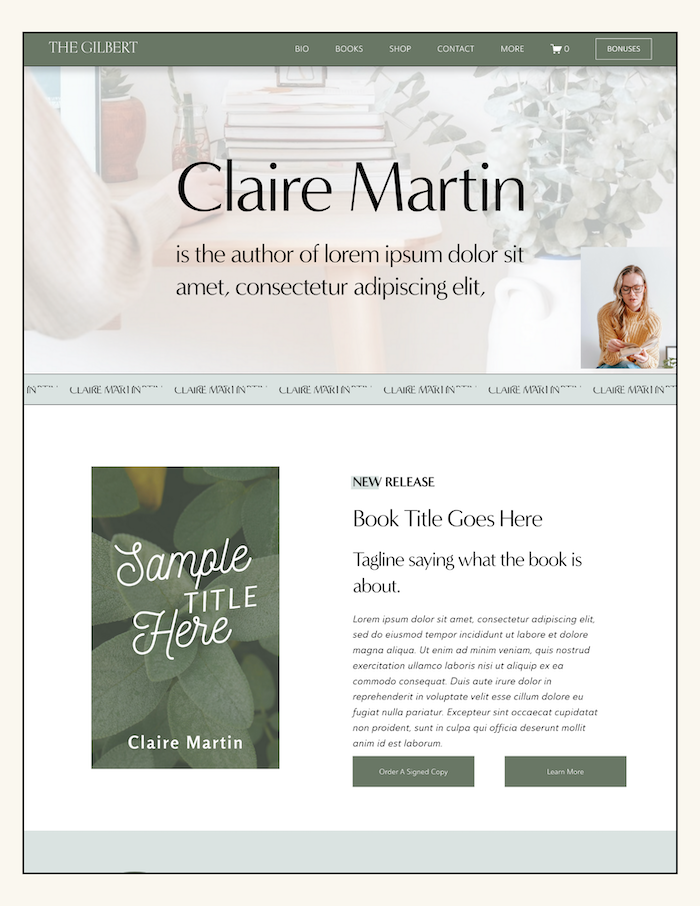
THE GILBERT - Squarespace Author Website Template
What’s the Point of an Author Website If No One Visits? (And How to Fix It!)
Improve traffic using smart author website design and SEO fundamentals.

6 Reasons Your Author Website Isn’t Getting Traffic
1. You’re Not Actively Driving Traffic to Your Website
Your website won’t magically attract visitors just because it exists—you need a strategy to bring people in. If you’re not consistently directing readers to your website, it’s no surprise they aren’t showing up.
👉🏻 Fix it: Start sharing your website everywhere—on social media, in your email list, inside your books, and even on your Amazon author page. The more you remind people about your website, the more likely they are to visit.
2. Your Website Isn’t Optimized for SEO
If readers can’t find you on Google, you’re missing out on organic traffic—people actively searching for books like yours. SEO (Search Engine Optimization) helps your site appear in search results, driving consistent, long-term traffic. Learning SEO for authors can help your site appear in search results when readers look for books like yours.
👉🏻 Fix it: Use SEO best practices like adding relevant keywords, writing blog content, and optimizing your metadata(titles, descriptions, and alt text) to make it easier for readers to discover you.
3. There’s No Clear Reason for Readers to Visit
Authors can use several strategies to drive traffic to their author website. If your website is just a static “About Me” page and a list of books, why would readers come back? There’s no incentive to keep them engaged.
👉🏻Fix it: Offer something exclusive—a free short story, a behind-the-scenes look at your writing process, or bonus book content like a character Q&A or deleted scenes. Give readers a reason to visit your website and return.
4. Your Social Media Isn’t Driving Traffic
If you’re constantly posting about your books on social media but never linking back to your website, your followers won’t think to visit. Your social media should act as a traffic funnel, guiding readers toward your site where they can explore your work, sign up for your newsletter, and buy your books.
👉🏻 Fix it: Regularly post content that directs followers to your website—whether it’s a blog post, a freebie, or an event announcement. Use strong CTAs (Calls to Action) like “Read the full excerpt on my website!” or “Join my newsletter for an exclusive chapter!”
5. Your Website Loads Too Slowly or Isn’t Mobile-Friendly
Most readers will visit your website from their phone, and if it’s slow or hard to navigate, they’ll leave immediately. A cluttered, slow-loading site can hurt your credibility and SEO rankings—Google won’t even show your site in search results if it loads too slowly.
👉🏻Fix it: Use a clean, mobile-friendly design, compress large images, and test your website speed using tools like Google PageSpeed Insights. If your site takes longer than 3 seconds to load, it’s time for a refresh.
6. You’re Not Capturing Visitors with a Strong Call-to-Action (CTA)
Getting visitors to your website is only half the battle—once they’re there, you need to guide them toward action. If there’s no clear next step, they’ll leave without engaging.
👉🏻Fix it: Add strong, visible CTAs like “Download a free chapter,”“Join my newsletter for exclusive content,” or “Pre-order my next book now!” Make it easy for readers to engage, subscribe, and take the next step in your author journey.
5 Proven Strategies to Get More Readers to Your Website
1. Create Blog Content That Attracts Readers
Maintaining a blog on your author website can help attract readers through search and regular updates. Blogging isn’t just for writers sharing their journey—it’s a powerful tool to attract new readers through search engines. Blog posts that are SEO-optimized can bring fresh traffic to your site month after month. Think beyond personal updates—write content readers are actively searching for. Example: “Best Books Like [Your Book Title]” or “How I Created My Fantasy World.” These types of posts show up in search results, attract book lovers, and introduce new readers to your work.
2. Offer a Freebie That Requires a Website Visit
Readers need a compelling reason to visit your website, and nothing works better than exclusive content they can’t get anywhere else. Offer a free prequel, deleted scene, or book-related bonus that requires an email sign-up to access. Example: “Download my free prequel novella—only available on my website!” This not only drives website traffic but also grows your email list, giving you a way to stay connected with your audience.
3. Leverage Pinterest for Long-Term Traffic
Unlike Instagram or Twitter, Pinterest is a search engine, meaning posts continue driving traffic for months or even years. If you write blog posts, have a lead magnet, or offer book extras, create Pinterest-friendly graphics to promote them. Use eye-catching images with text overlays linking to your website, and pin consistently to drive steady, organic traffic.
4. Optimize Your Book Listings with Website Links
Readers discover your books on Amazon, Goodreads, and other platforms, but they might not know you have a website packed with extras. Add your website link to your author bio, book descriptions, and even inside your books. Example: “Want a bonus scene? Visit [YourWebsite.com] to read more!” This simple tweak funnels curious readers straight to your website where they can explore more of your work.
5. Collaborate with Other Authors for More Exposure
Other authors aren’t your competition—they’re potential partners in reaching more readers. Guest blogging, social media shoutouts, or newsletter swaps introduce your books to an entirely new audience. Team up with authors in similar genres to cross-promote—for example, offering a "Book Bundle Giveaway" where readers must visit both websites to enter. The more exposure, the more traffic!
Your Author Website Deserves an Audience—Here’s How to Make It Happen!
Your author website shouldn’t be a lonely corner of the internet—it should be an active, engaging space where readers discover your books, sign up for your newsletter, and get excited about your work.
If no one’s visiting, the good news is you have the power to change that. By implementing SEO, strategic social media promotion, and enticing content that draws readers in, you can turn your website into a go-to destination for fans and new visitors alike.
Now’s the time to make your website work for you. Start with one strategy today—whether it’s creating an exclusive freebie, optimizing your book listings, or pinning your first blog post to Pinterest. Small actions lead to big results!
Want an author website that’s built to attract readers and grow your fanbase? Let’s create an author website for you that drives traffic and turns visitors into loyal book buyers. Click below to get started!
Before you go…check out my Squarespace Author Templates !
Visit the Author Website Template Shop: TEMPLATE SHOP

THE ATWOOD - Squarespace Author Website Template
THE HEMINGWAY - Squarespace Author Website Template
THE GILBERT - Squarespace Author Website Template
15 Ways Authors Can Use Social Media to Drive Traffic to Their Website & Grow Their Newsletter
Drive traffic to your author website using social media strategies.
How authors can use social media to drive website traffic isn’t just about posting book updates and hoping for the best—it’s about strategically leading readers off social platforms and onto your author website and email list, where you have full control of the conversation.
The truth? Social media algorithms change, visibility fluctuates, and followers come and go, but your website and newsletter are your direct, reliable connection to readers who actually want to hear from you.
There are many strategies authors can use to boost author website traffic. and in this guide, you’ll learn author-specific strategies to turn casual social media scrollers into engaged website visitors and loyal email subscribers—so you can sell more books, build your readership, and grow your career without relying on an algorithm!
Before we start, check out my FREE newsletter sign-up booster to help grow your list!
Why Social Media Should Lead Readers to Your Website & Email List
Relying solely on social media to connect with readers is like building your house on rented land—platforms change, algorithms shift, and your reach is never guaranteed. But your author website and email list?
Those are yours forever. Readers who visit your website or subscribe to your newsletter are far more engaged than passive social media followers, meaning they’re more likely to buy your books, leave reviews, and become lifelong fans. Building a mailing list through email marketing is one of the most effective ways to bring readers back to your website.
Plus, social media visibility is unpredictable, but once a reader is on your website, you control the experience, guiding them to explore your books, sign up for exclusive content, and deepen their connection with you as an author.
If you’re serious about growing your audience and selling more books, your goal should always be to lead readers off social media and onto platforms you own.
Optimizing Your Social Media to Drive Website & Newsletter Sign-Ups
1. Add a Clear Call-to-Action (CTA) to Every Post
Every time you post on social media, tell readers exactly what to do next—whether it’s visiting your website, signing up for your newsletter, or grabbing a freebie. Instead of just talking about your book, guide readers toward an action that strengthens your connection.
Example: “Want a free prequel to my book? Download it now on my website!”
A strong CTA ensures that your social media engagement leads to real results—like growing your email list and increasing book sales.
2. Turn Your Social Media Bio into a Traffic Magnet
Your bio is prime real estate—don’t waste it on generic text like “Author of [Book Title].”
Instead, use it to drive traffic to your website or newsletter with a compelling hook. Example: “Get a free bonus chapter—subscribe now!”And since most platforms only allow one link, use a link-in-bio tool (like Linktree, Milkshake, or Beacons) to create a mini landing page with multiple website links—directing readers exactly where you want them to go.
3. Pin a High-Performing Post That Promotes Your Newsletter
A pinned post is the first thing visitors see when they land on your profile—so make it count!
Pin a tweet, Instagram post, or Facebook update that explains why readers should sign up for your newsletter and how it benefits them.
Example: “Love my books? Get exclusive behind-the-scenes content & a free short story—subscribe now!” This ensures that even new visitors to your profile immediately see a clear path to your website and email list.
4. Use Instagram & Facebook Story Highlights to Promote Your Freebie
Instagram and Facebook Stories disappear after 24 hours, but you can save them as Highlights to keep them visible forever. Create a dedicated Highlight for your freebie that includes a step-by-step guide on how readers can claim it.
Example: "Swipe up to get my free novella!" Use engaging visuals, short video clips, and a clear call-to-action to make it easy for readers to take the next step toward your website.
5. Share Exclusive Content That Requires a Website Visit
Give your followers a reason to leave social media and visit your website by teasing exclusive book content they can’t get anywhere else. Post snippets of deleted scenes, alternate endings, or character backstories, and direct them to your website for the full experience. Example: “What happens after the epilogue? Read the bonus scene here: [YourWebsite.com]” This not only drives traffic but also keeps readers engaged between book releases.
6. Host a “Website-Only” Book Giveaway
Instead of a standard “comment to win” giveaway on social media, require readers to visit your website or sign up for your newsletter to enter. This strategy increases website traffic, grows your email list, and attracts highly engaged readers. Example: “Win a signed copy of my latest book—enter now on my website!” Use a giveaway tool like KingSumo or Rafflecopter to streamline entries and maximize engagement.
7. Offer a Social Media-Exclusive Discount on Your Website
Create urgency and exclusivity by offering a limited-time book discount that followers can only access by visiting your website. This works especially well for pre-orders, signed copies, or bundle deals. Example: “For the next 48 hours, get my signed book for 20% off—only on my website!” Promote it with a countdown timer, Stories, and pinned posts to drive immediate action.
8. Instagram – Use Reels & Stories to Tease Content on Your Website
Instagram is perfect for short, engaging content that hooks readers and directs them to your website for more. Use Reels, Stories, and Carousels to tease behind-the-scenes book content, deleted scenes, or writing updates. Example: “5 secrets about my book only newsletter subscribers know—sign up now!” Add “Link in bio” prompts or Story swipe-up links to make it easy for followers to click through.
9. Facebook – Use Groups & Pages to Engage Readers
Your Facebook author page and reader groups are great places to build community and drive traffic to your website. Share exclusive content, first-look reveals, and special announcements that require readers to visit your site. Example: “Join my email list for first dibs on my next book’s title reveal!” You can also host Facebook Live Q&As and include a website call-to-action at the end.
10. Twitter/X – Start Engaging Threads That End with a Website CTA
Twitter/X thrives on conversational, storytelling-style posts that build curiosity. Start a Twitter thread breaking down an interesting aspect of your book, writing process, or publishing journey, then end with a link to your website for the full story. Example: “Here’s how I built my fantasy world from scratch (THREAD) 👇 Read the full breakdown here: [YourWebsite.com]” This format keeps readers engaged while seamlessly leading them to your site.
11. TikTok – Create “Hidden Content” Strategies to Drive Traffic
TikTok is gold for authors who want to generate curiosity and drive followers to their website for exclusive content. Create videos teasing “hidden” book details, character secrets, or alternate endings and tell viewers to find them only on your website. Example: “The plot twist that almost happened in my book? Read it on my website!” Pair this with a strong call-to-action in your caption to increase clicks.
12. Pinterest – Turn Blog Posts & Freebies into Traffic Machines
Unlike other social media platforms, Pinterest is a long-term traffic driver that can keep bringing visitors to your site months after posting. Create Pinterest-friendly graphics for blog posts, book bonuses, or newsletter freebies and optimize them with keywords related to your genre and audience. Example: “Download my free fantasy world-building guide—perfect for readers and writers!” Pinterest acts as a visual search engine, making it a powerful way to attract new readers to your site.
13. Offer an Irresistible Reader Magnet
The fastest way to grow your email list? Give readers something they actually want. A high-value freebie like a bonus chapter, exclusive novella, or behind-the-scenes character Q&A makes signing up a no-brainer. Think about what would excite your readers—something they can’t get anywhere else. Whether it’s an alternate ending, a deleted scene, or an in-depth world-building guide, the key is making your newsletter feel exclusive and rewarding.
14. Use Strategic Pop-ups & Sign-up Forms
Make sure your newsletter sign-up is impossible to miss by placing eye-catching forms on your homepage, blog, and book pages. Readers shouldn’t have to search for it—it should be front and center. Example: “Love my books? Get exclusive extras by joining my newsletter!” Use exit-intent pop-ups (ones that appear when visitors are about to leave your site) to capture their attention at the right moment.
15. Make Your Newsletter a VIP Experience
Nobody signs up for a newsletter just to get generic updates. Instead of sending boring “Here’s what I’m up to” emails, turn your newsletter into a VIP experience that makes readers feel special. Offer first looks at cover reveals, exclusive sneak peeks, and early access to book releases before anyone else gets them. When readers know they’re getting something valuable, they’ll not only subscribe—but stay engaged for the long haul.
Let’s Turn Your Social Media Followers into Website Visitors & Subscribers!
Social media should be more than just a place to post about your books—it should be a traffic machine that helps you grow your email list and sell more books. By using clear calls-to-action, teaser content, exclusive website offers, and platform-specific strategies, you can turn followers into engaged website visitors and loyal newsletter subscribers. Another good idea is diving into the world of SEO. Learning SEO for authors can help your website appear in search results when readers look for books like yours.
Want an author website that’s optimized for traffic and email growth? I design high-converting author websites that make it easy to capture leads and boost engagement.
Click below to check out my done-for-you author website design services and let’s turn your site into your ultimate book-selling, audience-building machine.
Before you go…check out my Squarespace Author Templates !
Visit the Author Website Template Shop: TEMPLATE SHOP
THE ATWOOD - Squarespace Author Website Template
THE HEMINGWAY - Squarespace Author Website Template
THE GILBERT - Squarespace Author Website Template
10 Creative Newsletter Incentives to Grow Your Author Email List
Lead magnet ideas that support author website templates and list growth.
One of the most underutilized marketing tools in your toolkit? Your email list.
Unlike social media, where algorithms decide who sees your posts, your email list is a direct, guaranteed way to reach your readers—the ones most likely to buy your books, leave reviews, and become lifelong fans. But here’s the catch: no one’s signing up just because you say “Get my updates!” (yawn).
Readers need a juicy, can’t-miss reason to hand over their email, and that’s where creative, high-value incentives come in. Newsletter incentives are a powerful strategy within email marketing for authors. Forget the boring stuff—this post is packed with unique, irresistible ideas that will have readers excited to join your list and stay engaged for the long haul!
Before we start, check out my FREE newsletter sign-up booster to help grow your list!
Also, not sure which newsletter sofware to use? Some authors use built-in tools like Squarespace Email Campaigns to manage their newsletters.
10 Creative Newsletter Incentives to Get More Subscribers
1. A “Write Your Own Adventure” Challenge
Give your readers the power to shape part of your next book by letting them name a character, choose a setting, or influence a minor plot twist. Make this an exclusive subscriber event, where they vote through an email poll, ensuring only your most engaged readers get a say. This not only builds excitement around your book but also creates a personal investment for readers who will be eager to see their choices reflected in the final story.
2. A Digital Annotated Chapter
Offer an exclusive annotated version of a chapter from your book, complete with your behind-the-scenes notes, inspirations, and alternate plot ideas. This gives fans an intimate look at your creative process, making them feel like insiders. Example: “See my original notes and thoughts behind the first chapter of [Book Title]!” This is an excellent incentive for craft-conscious readers who love diving deeper into storytelling techniques.
3. Personalized Book Recommendations from You
Readers love discovering new books, so why not create a custom reading guide based on your genre, writing influences, or personal favorites? This could be a “10 Books to Read If You Loved [Your Book Title]” list or a personalized recommendation guide based on a short reader quiz. Not only does this provide valuable content, but it also establishes your credibility as a trusted voice in your genre.
4. An Interactive “Solve the Mystery” or Riddle Challenge
If you write mystery, thriller, or fantasy, send readers an exclusive puzzle, coded message, or riddle that they must solve to unlock a hidden reward—like a sneak peek at your next book or an exclusive scene. Example: “Solve this riddle to access a secret page on my website with a never-before-seen excerpt!” This taps into readers’ curiosity, making them more engaged with your emails and excited to participate.
5. A Printable “Reading Journal” or Book Tracker
Give your subscribers a beautifully designed reading log or book tracker that lets them keep track of their reading habits. Customize it to fit your genre—like a “Magical Realms Reading Log” for fantasy readers or a “Love Story Tracker” for romance fans. This isn’t just a freebie—it’s a useful, evergreen tool that will keep your name in front of your audience every time they use it.
6. A Monthly “Ask Me Anything” (AMA) Session
Build a deeper connection with your audience by hosting an exclusive monthly AMA session just for your subscribers. Readers can submit questions about your books, writing process, or even fun personal topics, and you can respond via a blog post, email Q&A, or a live video session. Readers love personal interaction with authors, and this helps turn casual readers into loyal superfans.
7. A Custom “Book Soundtrack” Playlist
Bring your book to life through music by curating a Spotify or YouTube playlist inspired by your characters, setting, or themes. This could be a “Soundtrack for [Your Book Title]” featuring songs that fueled your writing process or reflect your characters’ emotions. Fans will love experiencing your story in a new way, making them more immersed in your world.
8. “Write With Me” – A Mini Writing Workshop or Prompt Challenge
For authors with a crossover audience of aspiring writers, offering a mini writing challenge can be an engaging way to build your community. Example: “Join my 3-day writing challenge inspired by my novel’s world-building techniques!”This could be a series of emails with prompts, video lessons, or downloadable PDFs that offer interactive value beyond just promoting your books.
9. A Personalized "Reader Horoscope" or Character Match Quiz
Give your subscribers a fun and interactive experience by creating a custom “Reader Horoscope” based on your book’s themes or a “Which Character Are You?” quiz. Example: “Find out which of my characters matches your personality—take the quiz and get a custom description in your inbox!” Use a tool like Typeform or Interact to make it easy to engage, and require an email sign-up to receive the results. This kind of incentive is highly shareable, meaning your current subscribers may even forward it to their friends, helping you grow your list organically!
10. A Fun “Book Club Guide” for Your Novel
Help readers deepen their experience with your book by offering a book club discussion guide filled with thought-provoking questions, behind-the-scenes insights, and bonus content. Example: “Download my exclusive book club guide for [Your Book Title]—discussion questions, fun facts, and secret details you won’t find anywhere else!” This is perfect for fans who love analyzing stories and discussing them in groups.
How to Effectively Deliver Your Newsletter Incentive
A killer newsletter incentive is only valuable if readers actually receive it and stay engaged. The goal isn’t just to get people to sign up—it’s to turn them into long-term, loyal subscribers who open your emails and stay excited about your books. Here’s how to make sure your incentive does its job.
📩 Set Up an Automated Welcome Email
Nothing kills excitement like signing up for an awesome freebie… and then waiting days to receive it. Set up an automated welcome email that delivers your incentive instantly—whether it’s a download link, an exclusive excerpt, or a subscriber-only video. This not only keeps new subscribers engaged right away but also makes a strong first impression, setting the tone for future emails.
📢 Promote It Everywhere
Your incentive only works if people know about it! Promote your newsletter sign-up across multiple touchpoints—add pop-ups or banners on your website, plug it into your social media bios and posts, and even include a call-to-action in the back of your book. Example: “Enjoyed this story? Get a bonus scene by subscribing to my newsletter at [YourWebsite.com]!” The more places you promote it, the more sign-ups you’ll get.
💡 Keep Engaging Subscribers
Your newsletter incentive is just the beginning of your relationship with readers—now you need to keep them engaged. Follow up with exclusive content, sneak peeks, and personalized emails that make your subscribers feel like VIPsrather than just another name on a list. Show them that signing up was worth it, and they’ll keep opening (and loving) your emails.
Let’s Grow Your Author Email List the Smart Way!
Your email list isn’t just another marketing tool—it’s your most valuable direct connection to readers. By offering unique, irresistible incentives, you’ll attract more engaged subscribers, increase email open rates, and turn casual readers into lifelong fans.
Want an author website that makes growing your email list effortless? I design high-converting, reader-focused author websites that help you get more signups and sell more books! Check out my custom website design services or if you're more of a “DIYer”- browse my templates!
Before you go…check out my Squarespace Author Templates !
Visit the Author Website Template Shop: TEMPLATE SHOP
THE ATWOOD - Squarespace Author Website Template
THE HEMINGWAY - Squarespace Author Website Template
THE GILBERT - Squarespace Author Website Template
How to Get Your Followers to Actually Visit Your Author Website
Turn followers into visitors using author website design and CTAs.

You’ve built a following on social media, but let’s be real—likes and comments don’t sell books.
The real magic happens when readers visit your author website, sign up for your email list, and actually buy your books.
The problem? Most authors struggle to get their followers off Instagram, TikTok, and Facebook and onto their website. But don’t worry—this isn’t another list of generic tips like “share your link in your bio.”
Instead, we’re diving into unique, creative strategies to make your website irresistible—so readers want to click, explore, and stay. Good news,there are several strategies authors can use to drive traffic to their author website.
Before we start, check out my FREE newsletter sign-up booster to help grow your list!
10 Unique Ways to Get Your Followers to Your Author Website
1. The “Hidden Chapter” Strategy
Want to make readers need to visit your website? Offer something they can’t resist—like a bonus chapter, deleted scene, or exclusive epilogue that’s only available on your website. Tease it on social media and in your emails, then send them to a password-protected page that only subscribers can access. This not only drives traffic but also grows your email list—win-win!
2. Turn Your Website into an Interactive Experience
Readers love to engage with the worlds you create, so give them a reason to visit your site with fun quizzes, character polls, or writing challenges. Try something like “Which Character From My Novel Are You?” and require website visits to participate. Use tools like Typeform or Interact to create an immersive experience that keeps readers coming back for more.
3. Leverage Your Email List with “Exclusive Access”
Don’t just link to your book sales page—make your email list feel like an exclusive VIP club by offering early access, insider content, or members-only discounts that require a visit to your website. Example: “Get a sneak peek of my next novel—only available to website visitors!” This creates urgency while reinforcing your website as a hub for valuable content.
Related: Email Marketing for Authors: How to Grow, Engage, and Convert Your Readers
4. Host a “Website-Only” Giveaway
Want to grow your website traffic and email list at the same time? Run a giveaway that’s only accessible on your website. Instead of a generic “comment to win” social media contest, require entries through your website. Offer prizes like signed books, exclusive swag, or character-inspired art, and use tools like KingSumo or Rafflecopter to keep it simple.
5. Make Your Blog a Must-Read Destination
Instead of writing just another blog post, make your website the go-to place for behind-the-scenes content, book inspirations, and personal updates readers won’t find anywhere else. Try juicy topics like “The Real-Life Inspiration Behind My Novel’s Villain” or “5 Secrets About My Book That Only True Fans Will Notice”. Tease them on social media but require a website visit to read the full story.
6. Embed Exclusive Audiobook Snippets or Read-Alouds
Turn your website into a listening experience by recording a short audiobook snippet or read-aloud of your book—but make it only available on your site. Fans love hearing the author’s voice, and this adds a personal, VIP touch. Example: “Listen to me read Chapter 1 before anyone else—only on my website!” It’s a simple but powerful way to drive traffic.
7. Use QR Codes in Physical Books & Merch
Get creative by adding QR codes inside your book, on bookmarks, or book swag that link directly to bonus content, a secret message, or an exclusive reader area. Readers can scan the code at signings or after finishing your book to access special content they can’t find anywhere else. Example: “Scan this to unlock a secret letter from the main character!”
8. Create an Exclusive Reader Community
Build a members-only space on your website where fans can interact, get exclusive content, and be part of your inner circle. This could be a private blog, a secret forum, or a special “fan club” section with behind-the-scenes access. Use MemberSpace or Patreon-style gated content to make it feel exclusive and exciting—something readers want to be part of!
Related: How to Strategically Add Book Reviews to Your Website!
9. Turn Social Media Posts Into Website Traffic Magnets
Instead of dropping book quotes without context, turn your social media posts into teasers that drive website traffic. Example: “This moment between my characters? It changes everything. Read the full scene here: [YourWebsite.com]” If using Instagram, put the link in bio and add urgency: “Only available this week!” The more intrigue, the more clicks!
10. Optimize Your Website for Search (So Readers Can Find You!)
Your website isn’t just for existing fans—it should help new readers discover you! Most readers Google authors and books, so make sure your site is optimized with SEO-friendly keywords like “[Your Name] books,” “[Your Book Title] summary,” or “Best books like [Your Genre]”. Optimize your blog, book pages, and about page to attract organic traffic and expand your readership beyond social media. Learning SEO for authors can help your website appear in search results when readers are looking for books like yours.
Why Getting Readers to Your Website Matters
Getting readers to your website isn’t just a vanity metric—it’s the difference between having a thriving, independent author brand and being at the mercy of social media algorithms. Here’s why your website should be the go-to destination for your audience:
Your Website is Yours
Social media is great for engagement, but let’s face it—algorithms change, accounts get suspended, and posts disappear into the void. Your website? You own it. It’s a stable, evergreen space where readers can always find you, no matter what happens on Instagram, Facebook, or TikTok.
Direct Connections = More Book Sales
When readers visit your website, they’re already one step closer to buying your book than a random social media follower. A well-designed author website guides visitors toward your books, email list, and special offers, turning casual browsers into loyal fans—and paying customers.
Build a Lasting Audience (That You Actually Control!)
Relying solely on social media to reach readers is risky—you don’t own those platforms, and you’re only as visible as the algorithm allows. But when readers visit your website and sign up for your email list, you now have a direct line to them, no middleman required. Growing your email list through your website ensures that you can stay connected with your audience for years to come. Building an email list through email marketing is one of the most reliable ways to bring readers back to your website.
Let’s Get More Readers to Your Website!
Your author website should be the heart of your book marketing strategy, not an afterthought. By offering exclusive content, interactive experiences, and incentives that readers can’t resist, you’ll turn casual followers into website visitors—and website visitors into loyal fans.
Need an author website that actually works? I design high-converting, reader-focused author websites that not only look amazing but drive real engagement and book sales. Whether you need a custom-built author website or a DIY-friendly template, I’ve got you covered.
Click below to get started and create an author website that keeps readers coming back!
Text here
Before you go…check out my Squarespace Author Templates !
Visit the Author Website Template Shop: TEMPLATE SHOP
THE ATWOOD - Squarespace Author Website Template
THE HEMINGWAY - Squarespace Author Website Template
THE GILBERT - Squarespace Author Website Template
Before You Self-Publish: Experts Answer Your Top Questions on Editing, Marketing & Design
Expert insights to help authors plan professional author websites before publishing their first book.

So you’ve started writing your book and you want to self-publish…now what?
Let me guess—you’ve been struck with inspiration and have eagerly started writing your book. You already know waiting years for traditional publishing isn’t for you, so self-publishing feels like the perfect fit. While there are many steps to self-publishing (including finishing that first draft you’re working so hard on), this post breaks down four key steps to help you get your book out into the world with pride:
Working with an Editor
Using Social Media to Market your Book
Designing Book Covers that Sell
Author Website Design & Strategy
Ready to learn from the experts who’ve been there and done it? Let’s dive in and get your book one step closer to success!
Working with an Editor with Mandi Andrejka of Inky Pen Editorial Services

Meet Mandi Andrejka, a full-time freelance editor with a background in English lit, creative writing, and years of experience in the book world. Whether working with independent authors or traditional publishers, she brings a unique blend of creativity and strategy to every manuscript she edits. One of the most important steps before publishing is working with an editor to refine your manuscript.
-
A good sign that you’re ready to bring on a professional editor is when you’ve incorporated all the feedback you can from friends and family to revise your manuscript and are starting to feel like you’re stuck or don’t know what to do next. If there are still things you’re tweaking or playing around with, then keep at it! The time to work with an editor will come when you’re ready.
Another sign that you’re ready to work with a professional editor is that you’ve taken care of some technical cleanup: Is your manuscript within its genre’s suggested word-count range? Have you fixed any typos or minor errors in the document? Those are easy elements for you to tackle yourself before bringing in a professional for editorial work.
-
Let’s say you’ve completed those early steps in your own self-editing work. Woo-hoo! You’re ready to work with an editor! …What does that mean exactly?
The editorial process can vary among editors, publishers, freelancers, and others in the industry, however in general there are four main stages:
Developmental Edit
Line Edit
Copyedit
Proofread
Want to learn more about each of these steps?
Check out Mandi’s guest blog post: Making Your Manuscript Shine
-
There are lots of resources available to help you do just that!
Many freelance/independent editors (myself included) are members of associations, such as theEditorial Freelancers Association or Professional Editors Network, and you can search for editorsin those groups via their directory or place your own job posting to have editors apply to you.
You can also look to social media! You can follow editorial hashtags or search for editor profiles and check out their posts to see if they seem like a good fit for you.
Lastly, don’t forget to check the books of your favorite indie authors!
Many self-published authors include credits and/or acknowledgments for their publishing team in the front or back of their books. It doesn’t hurt to check your favorite authors’ books to see if their editor(s) may be right for you as well!
-
Once you’ve identified a few editors you’re interested in working with, do some research!
Make sure they work in your book’s genre and age category. Many editors list their full offering of services and rates on their website, so you can take a look in advance to see if they’re in your financial range. If not listed, you can certainly reach out to ask for an estimate!
Other things to look for in an editor? Experience—do they have professional training or background in publishing? Have they taken classes or received a degree related to publishing/editing? Have they worked with authors or publishers that put out the quality of work you’re looking for?
-
At the end of the day, an editor’s goal is for you to come away from working with them feeling like your book has gotten to the place you want it to be and that you’ve become a stronger writer for it.
Want to dive into the topic of working with an editor more? Read Mandi’s full article here: Making Your Manuscript Shine with Mandi Andrejka
Marketing Your Book on social media with Jenn Depaula of Mixtus Media

Meet Jenn Depaula, a marketing and social media expert with over 24 years of experience helping authors and creatives shine online. From working with New York Times bestselling authors to self-published newcomers, Jenn has guided countless clients to success.
-
Social media is really an awareness building tool - it’s how people can connect with you and become aware that you and your book exist. It’s really an introductory tool.
Think of it like you’re walking down the street and you see someone holding a book that you loved. You would stop and say, “I loved this book! Are you enjoying it?” And you start a conversation - you see what they are interested in (or they see what YOU are interested in) and a connection is made.
When we connect with readers as a fellow reader (and as a fellow human being) FIRST, they like who you are as a person and consider you a friend.
Friends want to support their friends - so when they find out that you are a writer and you’re working on a book (or have a book) they are excited to read and share it with their friends.
-
The first thing I would focus on sounds kind of crazy but it’s true: dumb it down and repeat.
We sometimes approach our content like it needs to fit every single answer or bit of information inside a single post. Nope - focus on ONE point - whether that’s one unique character trait, one situation, one location, one tip, one question answered - and repeat.
Repetition is the key to marketing. It takes a minimum of 8 impressions in order for people to take action. Not everyone is going to see your post when you post it. So repeating your content (maybe changing up the presentation, like turning a Reel into a Carousel post, or changing up the background image, etc.) is going to help you save time but it’s also going to get branded in your readers mind.
Next, I would suggest cycling through three types of posts: connection posts, promotional posts, and nurturing posts.
Connection posts do just that - they connect us with our readers. Share what you're currently reading, discuss your favorite genres, or reveal the stories that inspired your writing journey, offer tips or insights. For example, you might share a photo of your current read with a quick thought about what drew you to it, or post about a reading habit that others might relate to.
For Promotional Posts, it’s not an author saying, “Buy my book!” It’s more about focusing on the experience readers will have with your book. You can highlight the emotional journey they will experience, you can share specific insights or lessons from your book, or you can feature compelling quotes or scenes that caption the feelings and emotions your story holds. If your book isn’t ready yet, offer a free incentive to get readers on your newsletter list (like a collection of your favorite books in your genre, a short story, a prequel to your current book, etc.) to begin to build your newsletter list and nurture those connections.
And finally Nurturing Posts help you build community. By starting discussions about topics related to your genre, creating interactive content like polls and asking for feedback, asking questions about books or reading habits is a great way to build a solid and growing community.
But what really rounds all of these post types out is to have a call-to-action (CTA) for every single post. We never want to assume that readers will know what you want them to do next. We need to be intentional with every single post. So I like to cycle through three types of CTAs:
1 - driving them to your website to read a blog post, to your sales page, etc. , 2 - to your newsletter incentive. I have found that readers take action if they are offered a free download (to get them on your newsletter list) rather than being prompted to purchase your book in your CTA. We always want to drive social media connections off of social and into or newsletter list to stay in touch with them. And the 3rd CTA is for engagement: as a question, tell them to “save for later” or share it with a friend. These three CTAs help us accomplish our goals on social media and drive traffic where we want it to go.
-
We have multiple resources, but the two that I would highlight are our membership -The Author Circle- and our digital product Stand Out Social Media for Authors.
I love The Author Circle because it’s a library of resources that help you find readers on and off of social media, and it’s an incredible community of authors that you can engage, connect with, and learn from. Authors are your greatest allies in publishing! :)
And our Stand Out Social Media for Authors provides you with the content strategy that will work specifically for you and your book as well as a system to simplify creating content. It’s a fantastic tool to help authors get started growing their author platform.
We also have book marketing tools as well as newsletter building tools to help authors with their overall marketing strategy. Everything can be found at JenndePaula.com :)
Loving learning about book marketing? Visit Jenn Depaula’s website to learn more!
Working with a Book Cover Designer with Ashton Smith of Ashton Smith Designs

Meet Ashton Smith, a book cover designer who’s been obsessed with beautiful books since her middle school library days. From running a book blog to selling books and designing for a publishing house, Ashton now brings her creative talents to indie authors online.
-
While DIY book covers are great options for an author looking to cross "publishing a book" off their bucket list, if you want to market your book to a broader audience, a DIY design isn't going to set you up for success.As much as we would all like to recite the age-old adage to "not judge a book by its cover," we must face that it's probably something we follow for everything except books.
The good news is that the continuing rise of self-publishing in the book world means that access to professional book cover designers is no longer limited to traditional publishing. When you invest in a professional designer, not only are you investing in their technical graphic design skills, but you're also able to tap into their wealth of knowledge about the publishing market and design trends.
-
Before working with a book cover designer you'll need to prepare the following:
Finalized Cover Copy: This will include the main pieces of copy that will go on your cover, such as a synopsis and author bio. Some authors may also include a quote from the book and/or advanced reader reviews. Research other books in your genre to see what is standard.
ISBNs: These affect the final barcode printed on your cover, which your cover designer will get when they create your final files with your chosen self-publishing service.
Printing Specs: Decide what formats you'd like to publish your book in (ebook, paperback, hardcover, and or/audiobook) and the final size of your book. Sizing standards can vary based on country and genre, so you can research what will be best for your story or consult your cover designer during your project intake process.
These are just a few of the main things you'll need when working with your designer. Download my free guide, The Complete Cover Prep Checklist, for the full list. It walks you through gathering all the necessary information before the design phase.
-
When working with a cover designer, you'll want to reach out to them ahead of your ideal start date for the design process. Timeline length varies by designer, but you can expect the actual design process to take around 6-8 weeks. Be aware that your dream designer may book out way ahead in the year, so it's better to communicate early to ensure your project stays on track to release on your chosen publishing date.
Investing in strong book cover design can make a significant difference in how readers perceive your book. Want to dive into the topic of book cover design more? Check out Ashton’s full article here: book cover design blog post.

Example of Ashton Smith’s Book Covers
Building a Website Readers can’t resist with Kate Cross of Guided Web Design

Meet Kate Cross, a web designer who helps authors create stunning websites that connect them with their ideal readers. Now, Kate specializes in building websites that aren’t just beautiful but work hard behind the scenes to grow your audience while you focus on writing your next masterpiece
-
For self-published authors, your website is the heart of your marketing efforts. Not only does your website allow you to create a space where you can create long-term relationships with your readers, but you can even sell your books directly from your website.
-
I highly suggest at a bare minimum that indie authors include a home page, about page, book sales page and contact page. Though, if you want to have a website that works as hard as you do, you’re going to want to add a separate newsletter signup page, and a shop page with your books listed in that shop. This allows you to have a website that can market and sell your books as you sleep!
For a more in-depth explanation of the exact pages and content your author website should have, download my free guide: Author Website Blueprint!
-
This is the top question I’m asked when I discuss websites with indie authors and here are my top aesthetic tips.
Less is more when it comes to your website copy (even book reviews should be brief and to the point). People skim websites…looking for information that pops off the screen.
Stock Images: If you choose to use stock images on your website (these can create a cool vibe around your books) be sure to use images by the same photographer. My favorite stock image website is Unsplash because it allows you to find images grouped into collections by the photographer. Why does this matter? Images in the same collection will naturally have a similar look & aesthetic meaning they will create a cohesive look across your website.
Headshots: Yes… you need to put at least one picture of yourself on your website! Your readers want to see you and I highly suggest investing in professional headshots for this purpose, or watching some youtube tutorials on how to take awesome headshot pictures with your cell phone.
Applying Branding: Your brand designer will give you fonts, colors and a logo for your website. But how do you actually apply these to your website? Honestly…this depends on YOU and what kind of vibe you want.
Want lots of color on your website, then go for it! Want your website to be more simple and just have splashes of color? Then use the bright colors for buttons and keep the rest white and black. It’s really up to you.Just make sure that your website is easy to read and feels right for your brand.
PRO TIP: Fancy script fonts should only ever be used sparingly for one or two words.
Mobile Optimize your website: Don’t forget to check how your website looks on mobile before publishing. You’ll likely have to design the mobile separately from the desktop view.
Need help with designing your author website? Check out my author website templates or website design services.
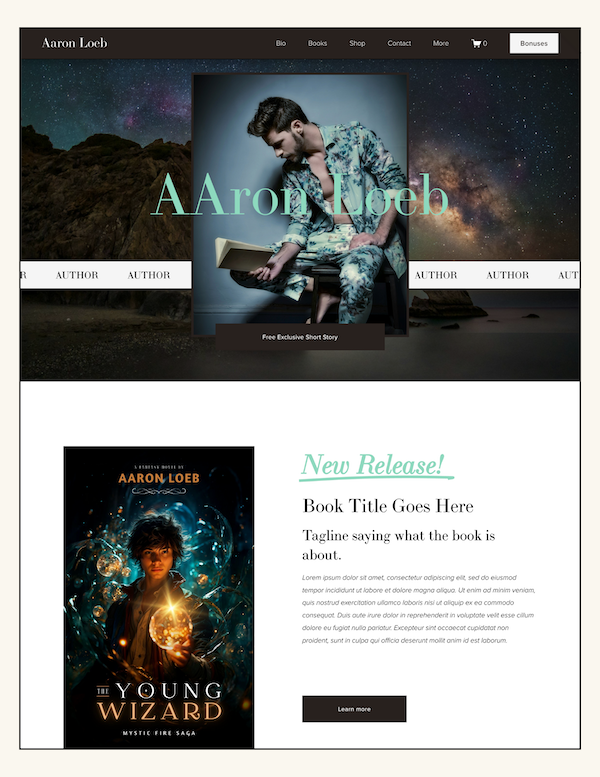
Author Website Design by Kate Cross of Guided Web Design
Actually Publishing your Book:
Once you’ve set yourself up for success with a book that’s been beautifully edited, a book cover that wows and a website & marketing plan that will allow eager readers to follow your publishing journey, it is now time to actually publish your book. There are so many options for this step but the three most popular these days seem to be:
Visit the above websites to learn more about what you can expect! You can pick your format (print or ebook) and other ful options like how you’ll actually get paid (woo woo!) You’ll have to do a little research and decide which self-publishing platform works best for you.
You can do it!
Self-publishing a book is an exciting journey, but it can feel overwhelming without a roadmap. The good news? You don’t have to do it alone. By connecting with industry experts, like Mandi Andrejka, Ashton Smith, and Jenn Depaula, (or myself) you gain valuable insights that will help you navigate each stage of the process with confidence. Taking these steps can help authors sell more books by presenting a more polished final product.
Remember, self-publishing is not just about completing tasks—it’s about creating an experience for your readers and establishing your presence as an author. With the right tools, team, and strategies, your book can shine in the marketplace. So take a deep breath, embrace the learning process, and know that each step brings you closer to sharing your story with the world.
RESOURCES MENTIONED IN THIS ARTICLE:
EDITING SERVICES
BOOK & BRAND DESIGN
The Complete Cover Prep Checklist
BOOK MARKETING
Stand Out Social Media for Authors.
AUTHOR WEBSITE DESIGN
Author Website Design Services
YOU’LL ALSO LOVE:
Email Marketing For Authors: How to Grow your readership
Before you go…check out my Squarespace Author Templates !
Visit the Author Website Template Shop: TEMPLATE SHOP
THE ATWOOD - Squarespace Author Website Template
THE HEMINGWAY - Squarespace Author Website Template
THE GILBERT - Squarespace Author Website Template
Making Your Manuscript Shine with Mandi Andrejka
Guidance for authors refining their manuscripts and preparing for professional author website launches.

GUEST CONTRIBUTOR: Freelance Editor Mandi Andrejka of Inky Pen Editorial Services
WEBSITE: https://www.inkypenediting.com/
Getting ready to work with an editor
So you’ve finished your novel! Congratulations! You may be hoping that the hard work is over and it’s all smooth sailing from here, but the truth is there’s still plenty to be done. The good news is that you’re not alone in this part of your publishing journey! Hiring an editor is an important step before self-publishing your book.
Once you’ve written your first draft, ideally the next steps are that you’ll begin revising the manuscript through your own rounds of self-edits and get additional feedback from outside readers, even at an informal level—this could be from friends or family members or from writing groups and critique partners. A good sign that you’re ready to bring on a professional editor is when you’ve incorporated all the feedback you can to revise your manuscript and are starting to feel like you’re stuck or don’t know what to do next. If there are still things you’re tweaking or playing around with, then keep at it! The time to work with an editor will come when you’re ready.
*Remember you should launch your website well before your book actually comes to market! Some writers use the manuscript template to highlight their book before it’s available for purchase.
Another sign that you’re ready to work with a professional editor is that you’ve taken care of some technical cleanup: Is your manuscript within its genre’s suggested word-count range? Have you fixed any typos or minor errors in the document? Those are easy elements for you to tackle yourself before bringing in a professional for editorial work.
Let’s say you’ve completed those early steps in your own self-editing work. Woo-hoo! You’re ready to work with an editor! …What does that mean exactly?
The editorial process can vary among editors, publishers, freelancers, and others in the industry, however in general there are four main stages. They may go by different names or have some overlap depending on how an individual editor or publishing house operates, but I’m going to break this down the way I’ve come to define it through my experiences as formerly an in-house editor and now a full-time freelance editor. At the very least, this will give you the basic overview and language used when referring to editorial work.
Developmental Edit: This first/broadest stage of editing is sometimes called a content edit and focuses on the big-picture stuff. Developmental edits aim to strengthen the book’s foundation, making sure the key elements are working: plot, characterization, structure, pacing, etc. While the editing needs of every book are different, don’t be surprised if a lot of heavy revising gets done during this stage—the further along you work into the editorial process, the more things should become solidified and the less heavy lifting will be needed.
Line Edit: Sometimes referred to as substantive edits, line edits still focus on content work but at a narrower scope. Rather than looking at overall character arcs or storylines, line edits focus more on the beats and pacing of a specific scene, chapter, or even sequence. Dialogue is also often honed during line editing. Because the nature of line edits focuses on detail work, this sort of edit is typically held off until the developmental editing has been finished. You don’t want to edit the dialogue for a scene if that scene ends up getting cut! Line edits are another stage of editing that involve significant revisions.
Copyedit: By the time we reach a copyedit, it’s assumed that the manuscript is in relatively solid shape. There should not be major changes happening during or after a copyedit, however one goal of a copyedit is to review for consistency and continuity issues, so there may be the occasional minor tweaking done. A copyedit also includes reviewing for repetitive phrasing or sentence structure, ensuring timeline and timing components are all aligned, and fixing minor grammar/punctuation issues.
Proofread: The last stage of the editing process! By the time you’ve reached a proofread, the draft is considered pretty much nailed down and content should not be changing unless there’s a true or significant error that needs fixing. A proofread is the manuscript’s final polish and includes reviewing for remaining grammar, spelling, punctuation, or formatting issues as well as any lingering typos.
Not sure where to find an editor? There are lots of resources available to help you do just that!
Many freelance/independent editors (myself included) are members of associations, such as the Editorial Freelancers Association or Professional Editors Network, and you can search for editors in those groups via their directory or place your own job posting to have editors apply to you. You can also look to social media! You can follow editorial hashtags or search for editor profiles and check out their posts to see if they seem like a good fit for you. Lastly, don’t forget to check the books of your favorite indie authors! Many self-published authors include credits and/or acknowledgments for their publishing team in the front or back of their books. It doesn’t hurt to check your favorite authors’ books to see if their editor(s) may be right for you as well!
Once you’ve identified a few editors you’re interested in working with, do some research!
Make sure they work in your book’s genre and age category. Many editors list their full offering of services and rates on their website, so you can take a look in advance to see if they’re in your financial range. If not listed, you can certainly reach out to ask for an estimate!
Other things to look for in an editor?
Experience—Do they have professional training or background in publishing? Have they taken classes or received a degree related to publishing/editing? Have they worked with authors or publishers that put out the quality of work you’re looking for? Don’t be afraid to ask for a sample edit! This is typically a couple pages (or a chapter) that the editor will edit to give you a taste of their style and approach. It also gives them a chance to see your writing, allowing you both to determine if you’ll be a good fit to work together. (A sample edit should be provided for free—if an editor requires payment for a sample edit, I recommend looking elsewhere!)
After that, you can work with your editor to identify where you’re looking for help on your manuscript, and they’ll provide their own info on what you can expect to receive from them. Ultimately, you should be choosing an editor you feel a connection to, someone you can collaborate with and feel comfortable working with. My philosophy is that editors are here to help you make your book the best it can be. We’re not here to “fix” your book or change it into something you don’t want it to be. At the end of the day, an editor’s goal is for you to come away from working with them feeling like your book has gotten to the place you want it to be and that you’ve become a stronger writer for it. Found this article Helpful? Well don’t forget to check out these websites for writers that offer tools and guidance throughout the publishing process.
Before you go…check out my Squarespace Author Templates !
Visit the Author Website Template Shop: TEMPLATE SHOP
THE ATWOOD - Squarespace Author Website Template
THE HEMINGWAY - Squarespace Author Website Template
THE GILBERT - Squarespace Author Website Template
Creating a Book Cover That Sells with Ashton Smith
Learn how strong book covers complement author website design and improve reader trust.

GUEST CONTRIBUTOR: Book & Brand Designer Ashton Smith
WEBSITE: https://www.ashtonmsmith.com/
Book cover design is one of several important decisions authors face before self-publishing a book. In recent years, self-publishing popularity has skyrocketed in the author community. Andrew Albanese and Jim Milliot noted in an article for Publisher's Weekly that "in both 2022 and 2023, self-published titles outpaced traditionally published books by more than two million titles." Even though it is more likely in the last couple of years that the book you picked up is self-published, there is a lingering stigma surrounding these books of being lower quality, unprofessional, and overall, just bad reads because of one thing: bad book covers.
While DIY book covers are great options for an author looking to cross "publishing a book" off their bucket list, if you want to market your book to a broader audience, a DIY design isn't going to set you up for success. Your cover design should align with your overall author branding. As much as we would all like to recite the age-old adage to "not judge a book by its cover," we must face that it's probably something we follow for everything except books.
The good news is that the continuing rise of self-publishing in the book world means that access to professional book cover designers is no longer limited to traditional publishing. When you invest in a professional designer, not only are you investing in their technical graphic design skills, but you're also able to tap into their wealth of knowledge about the publishing market and design trends. And simply said: A strong cover can help authors sell more books by attracting readers’ attention.
You may be asking yourself, "But, Ashton, won't I lose out on some creative control when I bring another person onto the project?" The answer is, "Nope!" Self-published authors are the creative directors of their books, which means you get all the benefits of a graphic designer's talent while retaining as much creative control as possible. Cover designers (including myself) got into this line of work because we are just as passionate about books as authors! Working with a freelance designer ensures a super collaborative process from start to end, and you can weigh in on the direction and any necessary changes. Let's take a look at a project I recently finished with an author:
Kylie came to me after a nine-book stint with an Australian division of a Big Five publisher because she had never received covers that accurately represented her young adult fantasy book based on Chinese mythology. With the extensive information she gave me on the world and her characters, we developed a cover that utilized story-accurate imagery and gave small nods to the main character throughout the design. She also had the freedom to take the first draft I created and give me notes on the edits she wanted to make to represent her story best.
Now, all of this may sound great, but you may be asking what you'll need in preparation for working with a cover designer. That information will include:
Finalized Cover Copy: This will include the main pieces of copy that will go on your cover, such as a synopsis and author bio. Some authors may also include a quote from the book and/or advanced reader reviews. Research other books in your genre to see what is standard.
ISBNs: These affect the final barcode printed on your cover, which your cover designer will get when they create your final files with your chosen self-publishing service.
Printing Specs: Decide what formats you'd like to publish your book in (ebook, paperback, hardcover, and or/audiobook) and the final size of your book. Sizing standards can vary based on country and genre, so you can research what will be best for your story or consult your cover designer during your project intake process.
These are just a few of the main things you'll need when working with your designer. Download my free guide, The Complete Cover Prep Checklist, for the full list. It walks you through gathering all the necessary information before the design phase.
When working with a cover designer, you'll want to reach out to them ahead of your ideal start date for the design process. Timeline length varies by designer, but you can expect the actual design process to take around 6-8 weeks. Be aware that your dream designer may book out way ahead in the year, so it's better to communicate early to ensure your project stays on track to release on your chosen publishing date.
Ready to take the next step toward your dream book cover? Visit my website to view some of my previous work and submit a project-inquiry.
Before you go…check out my Squarespace Author Templates !
Visit the Author Website Template Shop: TEMPLATE SHOP
THE ATWOOD - Squarespace Author Website Template
THE HEMINGWAY - Squarespace Author Website Template
THE GILBERT - Squarespace Author Website Template
Best Author Websites and Why They Work!
Explore author website examples that convert readers and learn what makes these designs successful.
Let’s get straight to it—having an amazing and strategic author website is no longer optional. It’s a must have if you want to grow your audience, sell more books, and create a professional online home for your books.
Here’s why your author website matters:
It builds an online presence and helps you connect with readers.
It boosts your book sales and highlights your personal brand as an author.
It gives you a professional hub where everything about your work lives.
In this post, I’m going to showcase three stunning author websites from across the internet and break down exactly why they work so well. These websites aren’t just pretty—they’re designed to engage readers, drive action, and help authors succeed. Reviewing real author website examples can help writers see what works well in practice.
Oh, and before you go any further, don’t forget to grab my free Author Website Blueprint. It’s your go-to guide that breaks down the all the content AND every page your author website needs to captivate and connect with readers.
What Makes an Author Website “The Best”?
Not all author websites are created equal. The best ones check a few key boxes:
User-Friendly Design: Readers should feel at home navigating your site. A clutter-free, intuitive design is key.
Mobile Responsiveness: With so many readers accessing websites on their phones, your site needs to look great and function seamlessly on all devices.
SEO Optimization:Your site should rank well on search engines so readers can find you when they Google your name or books.
Strong Calls-to-Action (CTAs):Whether it’s to buy your books, join your newsletter, or book an event, clear CTAs guide visitors to take the next step.
Thoughtful Branding:Your site’s design should reflect your unique voice and style as an author.
Easy Navigation:Readers shouldn’t have to hunt for what they need—whether that’s your books, blog, or events.
Strong layout and visual hierarchy are key parts of effective author web design. Now, let’s take a closer look at three standout author websites that nail all these elements and more.
Related: 12 Must-Have Features for an Unforgettable Author Website on Squarespace
3 Examples of Stunning Author Websites
Example 1: Joy Harjo
What Makes It Great:
Eye-catching homepage that instantly introduces Joy and her work.
Dedicated book pages with summaries, reviews, and easy-to-find purchase links.
Strong CTAs to explore her poetry, music, and books.
Key Features to Highlight:
Personal and relatable author bio page.
Mobile-responsive design for a seamless experience on any device.
SEO-optimized pages that rank for keywords like "Joy Harjo books" and "poet laureate."
Why It Works: Joy’s website is an amazing mix of engaging design, user-friendly navigation, and strategic CTAs. It’s everything a reader could want from an author’s website and more.
Example 2: Alyssa Cole
What Makes It Great:
Clean, modern layout that’s super easy to navigate.
Blog section for sharing updates and connecting with readers.
A media page perfect for press inquiries, interviews, and events.
Key Features to Highlight:
Prominent CTAs for book promotions.
Professional branding that reflects the author’s voice.
Separate book pages optimized for search engines and detailed book descriptions.
Why It Works: This site combines sleek design with powerful functionality. It’s designed to be both visually stunning and incredibly useful for readers and fans.
Example 3: Rupi Kaur
What Makes It Great:
Interactive features like book previews, downloadable recordings of her poetry, and event calendars.
A portfolio showcasing other works, like articles or speaking engagements.
Personal storytelling that gives readers a behind-the-scenes look at the author’s journey.
Key Features to Highlight:
Highly optimized for mobile devices.
Strong visuals and branding that set the author apart.
Well-placed CTAs for pre-orders, newsletter signups, and contact forms.
Why It Works: This website is a masterclass in creating an immersive reader experience. It’s all about connection, and it delivers in spades.
Key Takeaways from the Best Author Websites
Looking at these examples, it’s clear what makes a truly standout author website:
1. A Clear, Engaging Homepage
First impressions matter, so make your homepage count. Introduce yourself, your books, and your unique brand as an author.
2. Dedicated Book and Blog Pages
Separate pages for your books and blog not only improve SEO but also make it easy for readers to find exactly what they’re looking for.
3. Strong Branding
Your website should visually reflect who you are as an author. Whether it’s bold and contemporary or soft and poetic, your design should feel like you.
4. Mobile Responsiveness
With so many readers browsing on mobile, a responsive design isn’t just a nice-to-have—it’s essential.
5. Effective CTAs
Guide visitors to take the next step: buy your book, sign up for your newsletter, or reach out for an event.
Related: Author Website Design Deep Dive: Answering the 14 Most-Asked Questions
A well-designed site can ultimately help authors sell more books by building stronger reader connections.
Tips for Building Your Own Best Author Website
If you’re ready to create your own website that wows readers, here’s how to get started:
Use a Clean, Professional Design
Choose a layout that prioritizes user experience. Avoid clutter and focus on highlighting your work.
Focus on Essential Pages
At a minimum, include:
Homepage: Introduce yourself and your work.
About Page: Share your story and connect with readers.
Books Page: Showcase your work with summaries, reviews, and purchase links.
Blog Page: Share updates, insights, and behind-the-scenes content.
Contact Page: Make it easy for readers and media to get in touch.
Optimize for SEO
Use keywords your readers might search for, like "author website design" or "[Your Name] books." Meta descriptions, alt tags for images, and clean URLs are your best friends here.
Include Features That Boost Engagement
Newsletter Sign-Up Forms: Offer a freebie (like a short story or chapter) to encourage sign-ups.
Media Kits or Press Pages: Make it easy for journalists and bloggers to feature you.
Testimonials and Reviews: Build credibility with social proof.
Invest in Professional Design Services
If you’re feeling overwhelmed, don’t worry. A professional website designer can help you create a site that’s not only beautiful but also highly functional and strategic.
Conclusion
A well-designed author website is your ultimate tool for growing your audience, increasing book sales, and showcasing your unique author brand. The best part? It’s all doable with a little strategy and the right tools.
Ready to create a site that works as hard as you do? Check out my author website design services and let’s make your dream author website a reality!
Before you go…check out my Squarespace Author Templates !
Visit the Author Website Template Shop: TEMPLATE SHOP
THE ATWOOD - Squarespace Author Website Template
THE HEMINGWAY - Squarespace Author Website Template
THE GILBERT - Squarespace Author Website Template
Email Marketing for Authors: How to Grow, Engage, and Convert Your Readers
Email strategies that work seamlessly with author website templates and long-term audience growth.

If you’re an author, email marketing is one of the most powerful tools in your arsenal. Why? Because it:
Builds lasting relationships with your readers.
Drives book sales and makes launches more successful.
Creates a direct communication channel that’s completely yours (no algorithms to worry about!).
But here’s the thing: a successful email marketing strategy starts with a professional author website. Your website is the foundation that helps you grow your list, connect with readers, and convert them into loyal fans.
Want to boost your email marketing efforts? Many authors grow their list faster by offering newsletter incentives to new subscribers.
Grab my free Newsletter Sign-Up Booster and start turning your website visitors into subscribers today!
Why Email Marketing Is Essential for Authors
You Own the List
Unlike social media, your email list belongs to you. You’re not at the mercy of changing algorithms or platform rules. When you build your list, you’re investing in a marketing tool that’s entirely in your control.
Direct Access to Readers
Your emails land directly in your readers’ inboxes—no middleman. This allows you to share your updates, news, and launches without competing against endless distractions on social media.
Promote Books and Build Relationships
Emails are perfect for sharing updates, giving readers a peek behind the curtain, and launching new books. Use your list to connect on a personal level and turn casual readers into lifelong fans.
Higher ROI
Email marketing consistently outperforms other channels in engagement and conversions. It’s a proven way to grow your author career while maximizing the impact of your marketing budget.
Related: How Author S.C. Muir Sells Books Through Email Marketing
Building an Email List: The First Step
Start with a Professional Author Website
Your author website is the hub where email list growth begins. Here’s what you need:
Strategic Sign-Up Forms: Place CTAs in high-traffic areas like your homepage, blog, and book pages.
Lead Magnets: Offer readers something valuable in exchange for their email, such as:
Free chapters or short stories.
Exclusive content or bonus materials.
Reader guides or checklists.
Dedicated Landing Pages: Use custom pages designed to maximize conversions.
Custom Design: A professional, well-designed site builds trust and encourages sign-ups.
Related: View Website Design Services for Authors
Choose the Right Email Platform
Selecting the right email marketing software is key to managing your email marketing effectively. Popular options for authors include:
MailerLite: Affordable and easy to use, with excellent automation features.
ConvertKit: Built for creators, offering powerful segmentation and automation.
MailChimp: A classic social media software with a free tier for beginners.
Flodesk: Known for its beautiful templates and simplicity.
Some writers use built-in tools like Squarespace Email Campaigns to manage their newsletters. Look for features like automation, segmentation, and user-friendly templates to make your email marketing a breeze.
How to Engage Readers Through Email Marketing
Create Compelling Content for Your Newsletter
Wondering what to share with your subscribers? Here are a few ideas:
Book Updates: Announce launches, cover reveals, or pre-order details.
Behind-the-Scenes Stories: Share insights into your writing process.
Exclusive Content: Offer sneak peeks, deleted scenes, or bonus chapters.
Personal Insights: Write about your journey as an author to build connections.
Recommendations: Share books or resources your readers might love.
A strong email list also helps authors sell directly to readers through their website.
Related: 6 Things Your Author Media Kit Should Have
Use Segmentation to Tailor Your Emails
Segmentation helps you send the right messages to the right readers. Here’s how to divide your list:
New Subscribers vs. Long-Time Fans: Send a welcome sequence to newcomers while offering exclusive content to loyal readers.
Genre or Series Interest: Tailor content to readers based on their preferences.
Buyers vs. Non-Buyers: Share special promotions or updates with those who haven’t purchased your books yet.
How to Turn Email Subscribers into Loyal Fans and Buyers
Add Strong Calls-to-Action (CTAs)
Encourage readers to take action with clear, compelling CTAs.
For example:
“Pre-order my new book here!”
“Download your free story now!”
“Join my VIP reader list for exclusive updates.”
Automate Your Email Sequences
Automation makes it easier to nurture your subscribers and keep them engaged. Let’s break down key email sequences:
Welcome Sequence: Introduce yourself, share your story, and highlight your books. This is the first impression you’ll make, so keep it warm and engaging.
Launch Sequence: Build excitement for new books by sharing teasers, reviews, and pre-order links. Create urgency with countdowns and limited-time offers.
Nurture Sequence: Keep readers engaged by sending regular updates, behind-the-scenes content, and recommendations. Consistency is key to staying top of mind.
How a Professional Author Website Boosts Your Email Marketing Success
A well-designed website supports your email marketing strategy by:
Creating a Strong First Impression: A polished site builds trust and credibility.
Strategically Placing Sign-Up Forms: Pop-ups, embedded forms, and landing pages maximize conversions.
Providing a Seamless User Experience: Make it easy for readers to find what they need and join your list.
Reflecting Your Unique Branding: Your site should feel authentic and tailored to your voice.
Improving SEO: A well-optimized site attracts new readers who can join your list.
Tips for Authors to Optimize Email Marketing
Use Catchy Subject Lines: Increase open rates with curiosity-inducing headlines.
Keep Emails Short and Engaging: Focus on content that resonates with your readers.
Be Consistent: Choose a sending schedule that works for you (weekly, bi-weekly, or monthly).
Track Metrics: Monitor open rates, click-through rates, and subscriber growth to measure success.
Test and Tweak: Experiment with content, CTAs, and subject lines to find what works best.
Conclusion
Email marketing is a game-changer for authors. It helps you:
Build meaningful relationships with your readers.
Drive book sales and grow your author career.
Create a loyal fan base that sticks with you for the long haul.
And remember, it all starts with a professional author website. A beautifully-designed site sets the stage for successful email marketing by capturing leads, building trust, and showcasing your unique brand.
Ready to grow your email list and connect with your readers? Start with a stunning, custom-designed author website. Explore my author website template shop and take the first step toward building your author website today!
Before you go…check out my Squarespace Author Templates !
Visit the Author Website Template Shop: TEMPLATE SHOP
THE ATWOOD - Squarespace Author Website Template
THE HEMINGWAY - Squarespace Author Website Template
THE GILBERT - Squarespace Author Website Template
Launch Your Author Website in a Day (Without the Tech Overwhlem)
*No more starting from scratch.
A simple, done-for-you Squarespace template built specifically for debut and self-published authors.