

THE BLOG
Author Book Marketing & Website Design Tips
Before You Self-Publish: Experts Answer Your Top Questions on Editing, Marketing & Design
Expert insights to help authors plan professional author websites before publishing their first book.


So you’ve started writing your book and you want to self-publish…now what?
Let me guess—you’ve been struck with inspiration and have eagerly started writing your book. You already know waiting years for traditional publishing isn’t for you, so self-publishing feels like the perfect fit. While there are many steps to self-publishing (including finishing that first draft you’re working so hard on), this post breaks down four key steps to help you get your book out into the world with pride:
Working with an Editor
Using Social Media to Market your Book
Designing Book Covers that Sell
Author Website Design & Strategy
Ready to learn from the experts who’ve been there and done it? Let’s dive in and get your book one step closer to success!
Working with an Editor with Mandi Andrejka of Inky Pen Editorial Services

Meet Mandi Andrejka, a full-time freelance editor with a background in English lit, creative writing, and years of experience in the book world. Whether working with independent authors or traditional publishers, she brings a unique blend of creativity and strategy to every manuscript she edits. One of the most important steps before publishing is working with an editor to refine your manuscript.
-
A good sign that you’re ready to bring on a professional editor is when you’ve incorporated all the feedback you can from friends and family to revise your manuscript and are starting to feel like you’re stuck or don’t know what to do next. If there are still things you’re tweaking or playing around with, then keep at it! The time to work with an editor will come when you’re ready.
Another sign that you’re ready to work with a professional editor is that you’ve taken care of some technical cleanup: Is your manuscript within its genre’s suggested word-count range? Have you fixed any typos or minor errors in the document? Those are easy elements for you to tackle yourself before bringing in a professional for editorial work.
-
Let’s say you’ve completed those early steps in your own self-editing work. Woo-hoo! You’re ready to work with an editor! …What does that mean exactly?
The editorial process can vary among editors, publishers, freelancers, and others in the industry, however in general there are four main stages:
Developmental Edit
Line Edit
Copyedit
Proofread
Want to learn more about each of these steps?
Check out Mandi’s guest blog post: Making Your Manuscript Shine
-
There are lots of resources available to help you do just that!
Many freelance/independent editors (myself included) are members of associations, such as theEditorial Freelancers Association or Professional Editors Network, and you can search for editorsin those groups via their directory or place your own job posting to have editors apply to you.
You can also look to social media! You can follow editorial hashtags or search for editor profiles and check out their posts to see if they seem like a good fit for you.
Lastly, don’t forget to check the books of your favorite indie authors!
Many self-published authors include credits and/or acknowledgments for their publishing team in the front or back of their books. It doesn’t hurt to check your favorite authors’ books to see if their editor(s) may be right for you as well!
-
Once you’ve identified a few editors you’re interested in working with, do some research!
Make sure they work in your book’s genre and age category. Many editors list their full offering of services and rates on their website, so you can take a look in advance to see if they’re in your financial range. If not listed, you can certainly reach out to ask for an estimate!
Other things to look for in an editor? Experience—do they have professional training or background in publishing? Have they taken classes or received a degree related to publishing/editing? Have they worked with authors or publishers that put out the quality of work you’re looking for?
-
At the end of the day, an editor’s goal is for you to come away from working with them feeling like your book has gotten to the place you want it to be and that you’ve become a stronger writer for it.
Want to dive into the topic of working with an editor more? Read Mandi’s full article here: Making Your Manuscript Shine with Mandi Andrejka
Marketing Your Book on social media with Jenn Depaula of Mixtus Media

Meet Jenn Depaula, a marketing and social media expert with over 24 years of experience helping authors and creatives shine online. From working with New York Times bestselling authors to self-published newcomers, Jenn has guided countless clients to success.
-
Social media is really an awareness building tool - it’s how people can connect with you and become aware that you and your book exist. It’s really an introductory tool.
Think of it like you’re walking down the street and you see someone holding a book that you loved. You would stop and say, “I loved this book! Are you enjoying it?” And you start a conversation - you see what they are interested in (or they see what YOU are interested in) and a connection is made.
When we connect with readers as a fellow reader (and as a fellow human being) FIRST, they like who you are as a person and consider you a friend.
Friends want to support their friends - so when they find out that you are a writer and you’re working on a book (or have a book) they are excited to read and share it with their friends.
-
The first thing I would focus on sounds kind of crazy but it’s true: dumb it down and repeat.
We sometimes approach our content like it needs to fit every single answer or bit of information inside a single post. Nope - focus on ONE point - whether that’s one unique character trait, one situation, one location, one tip, one question answered - and repeat.
Repetition is the key to marketing. It takes a minimum of 8 impressions in order for people to take action. Not everyone is going to see your post when you post it. So repeating your content (maybe changing up the presentation, like turning a Reel into a Carousel post, or changing up the background image, etc.) is going to help you save time but it’s also going to get branded in your readers mind.
Next, I would suggest cycling through three types of posts: connection posts, promotional posts, and nurturing posts.
Connection posts do just that - they connect us with our readers. Share what you're currently reading, discuss your favorite genres, or reveal the stories that inspired your writing journey, offer tips or insights. For example, you might share a photo of your current read with a quick thought about what drew you to it, or post about a reading habit that others might relate to.
For Promotional Posts, it’s not an author saying, “Buy my book!” It’s more about focusing on the experience readers will have with your book. You can highlight the emotional journey they will experience, you can share specific insights or lessons from your book, or you can feature compelling quotes or scenes that caption the feelings and emotions your story holds. If your book isn’t ready yet, offer a free incentive to get readers on your newsletter list (like a collection of your favorite books in your genre, a short story, a prequel to your current book, etc.) to begin to build your newsletter list and nurture those connections.
And finally Nurturing Posts help you build community. By starting discussions about topics related to your genre, creating interactive content like polls and asking for feedback, asking questions about books or reading habits is a great way to build a solid and growing community.
But what really rounds all of these post types out is to have a call-to-action (CTA) for every single post. We never want to assume that readers will know what you want them to do next. We need to be intentional with every single post. So I like to cycle through three types of CTAs:
1 - driving them to your website to read a blog post, to your sales page, etc. , 2 - to your newsletter incentive. I have found that readers take action if they are offered a free download (to get them on your newsletter list) rather than being prompted to purchase your book in your CTA. We always want to drive social media connections off of social and into or newsletter list to stay in touch with them. And the 3rd CTA is for engagement: as a question, tell them to “save for later” or share it with a friend. These three CTAs help us accomplish our goals on social media and drive traffic where we want it to go.
-
We have multiple resources, but the two that I would highlight are our membership -The Author Circle- and our digital product Stand Out Social Media for Authors.
I love The Author Circle because it’s a library of resources that help you find readers on and off of social media, and it’s an incredible community of authors that you can engage, connect with, and learn from. Authors are your greatest allies in publishing! :)
And our Stand Out Social Media for Authors provides you with the content strategy that will work specifically for you and your book as well as a system to simplify creating content. It’s a fantastic tool to help authors get started growing their author platform.
We also have book marketing tools as well as newsletter building tools to help authors with their overall marketing strategy. Everything can be found at JenndePaula.com :)
Loving learning about book marketing? Visit Jenn Depaula’s website to learn more!
Working with a Book Cover Designer with Ashton Smith of Ashton Smith Designs

Meet Ashton Smith, a book cover designer who’s been obsessed with beautiful books since her middle school library days. From running a book blog to selling books and designing for a publishing house, Ashton now brings her creative talents to indie authors online.
-
While DIY book covers are great options for an author looking to cross "publishing a book" off their bucket list, if you want to market your book to a broader audience, a DIY design isn't going to set you up for success.As much as we would all like to recite the age-old adage to "not judge a book by its cover," we must face that it's probably something we follow for everything except books.
The good news is that the continuing rise of self-publishing in the book world means that access to professional book cover designers is no longer limited to traditional publishing. When you invest in a professional designer, not only are you investing in their technical graphic design skills, but you're also able to tap into their wealth of knowledge about the publishing market and design trends.
-
Before working with a book cover designer you'll need to prepare the following:
Finalized Cover Copy: This will include the main pieces of copy that will go on your cover, such as a synopsis and author bio. Some authors may also include a quote from the book and/or advanced reader reviews. Research other books in your genre to see what is standard.
ISBNs: These affect the final barcode printed on your cover, which your cover designer will get when they create your final files with your chosen self-publishing service.
Printing Specs: Decide what formats you'd like to publish your book in (ebook, paperback, hardcover, and or/audiobook) and the final size of your book. Sizing standards can vary based on country and genre, so you can research what will be best for your story or consult your cover designer during your project intake process.
These are just a few of the main things you'll need when working with your designer. Download my free guide, The Complete Cover Prep Checklist, for the full list. It walks you through gathering all the necessary information before the design phase.
-
When working with a cover designer, you'll want to reach out to them ahead of your ideal start date for the design process. Timeline length varies by designer, but you can expect the actual design process to take around 6-8 weeks. Be aware that your dream designer may book out way ahead in the year, so it's better to communicate early to ensure your project stays on track to release on your chosen publishing date.
Investing in strong book cover design can make a significant difference in how readers perceive your book. Want to dive into the topic of book cover design more? Check out Ashton’s full article here: book cover design blog post.

Example of Ashton Smith’s Book Covers
Building a Website Readers can’t resist with Kate Cross of Guided Web Design

Meet Kate Cross, a web designer who helps authors create stunning websites that connect them with their ideal readers. Now, Kate specializes in building websites that aren’t just beautiful but work hard behind the scenes to grow your audience while you focus on writing your next masterpiece
-
For self-published authors, your website is the heart of your marketing efforts. Not only does your website allow you to create a space where you can create long-term relationships with your readers, but you can even sell your books directly from your website.
-
I highly suggest at a bare minimum that indie authors include a home page, about page, book sales page and contact page. Though, if you want to have a website that works as hard as you do, you’re going to want to add a separate newsletter signup page, and a shop page with your books listed in that shop. This allows you to have a website that can market and sell your books as you sleep!
For a more in-depth explanation of the exact pages and content your author website should have, download my free guide: Author Website Blueprint!
-
This is the top question I’m asked when I discuss websites with indie authors and here are my top aesthetic tips.
Less is more when it comes to your website copy (even book reviews should be brief and to the point). People skim websites…looking for information that pops off the screen.
Stock Images: If you choose to use stock images on your website (these can create a cool vibe around your books) be sure to use images by the same photographer. My favorite stock image website is Unsplash because it allows you to find images grouped into collections by the photographer. Why does this matter? Images in the same collection will naturally have a similar look & aesthetic meaning they will create a cohesive look across your website.
Headshots: Yes… you need to put at least one picture of yourself on your website! Your readers want to see you and I highly suggest investing in professional headshots for this purpose, or watching some youtube tutorials on how to take awesome headshot pictures with your cell phone.
Applying Branding: Your brand designer will give you fonts, colors and a logo for your website. But how do you actually apply these to your website? Honestly…this depends on YOU and what kind of vibe you want.
Want lots of color on your website, then go for it! Want your website to be more simple and just have splashes of color? Then use the bright colors for buttons and keep the rest white and black. It’s really up to you.Just make sure that your website is easy to read and feels right for your brand.
PRO TIP: Fancy script fonts should only ever be used sparingly for one or two words.
Mobile Optimize your website: Don’t forget to check how your website looks on mobile before publishing. You’ll likely have to design the mobile separately from the desktop view.
Need help with designing your author website? Check out my author website templates or website design services.
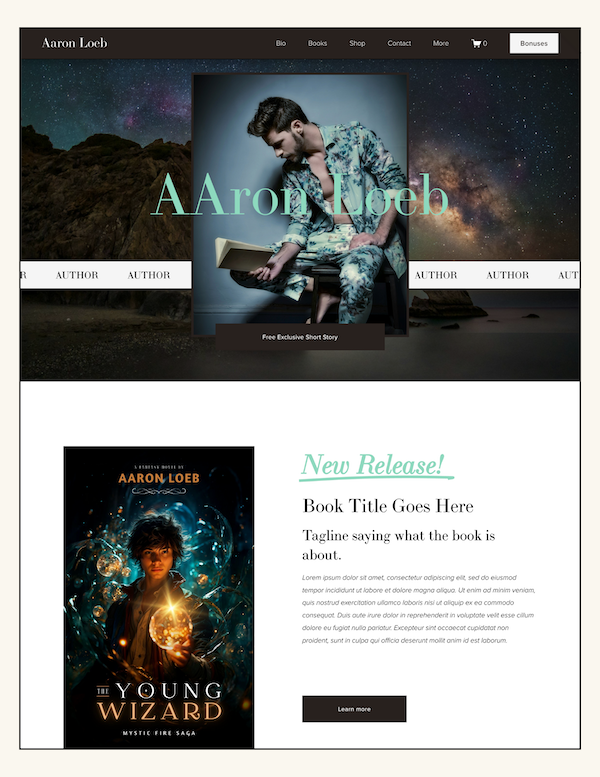
Author Website Design by Kate Cross of Guided Web Design
Actually Publishing your Book:
Once you’ve set yourself up for success with a book that’s been beautifully edited, a book cover that wows and a website & marketing plan that will allow eager readers to follow your publishing journey, it is now time to actually publish your book. There are so many options for this step but the three most popular these days seem to be:
Visit the above websites to learn more about what you can expect! You can pick your format (print or ebook) and other ful options like how you’ll actually get paid (woo woo!) You’ll have to do a little research and decide which self-publishing platform works best for you.
You can do it!
Self-publishing a book is an exciting journey, but it can feel overwhelming without a roadmap. The good news? You don’t have to do it alone. By connecting with industry experts, like Mandi Andrejka, Ashton Smith, and Jenn Depaula, (or myself) you gain valuable insights that will help you navigate each stage of the process with confidence. Taking these steps can help authors sell more books by presenting a more polished final product.
Remember, self-publishing is not just about completing tasks—it’s about creating an experience for your readers and establishing your presence as an author. With the right tools, team, and strategies, your book can shine in the marketplace. So take a deep breath, embrace the learning process, and know that each step brings you closer to sharing your story with the world.
RESOURCES MENTIONED IN THIS ARTICLE:
EDITING SERVICES
BOOK & BRAND DESIGN
The Complete Cover Prep Checklist
BOOK MARKETING
Stand Out Social Media for Authors.
AUTHOR WEBSITE DESIGN
Author Website Design Services
YOU’LL ALSO LOVE:
Email Marketing For Authors: How to Grow your readership
Before you go…check out my Squarespace Author Templates !
Visit the Author Website Template Shop: TEMPLATE SHOP

THE ATWOOD - Squarespace Author Website Template

THE HEMINGWAY - Squarespace Author Website Template
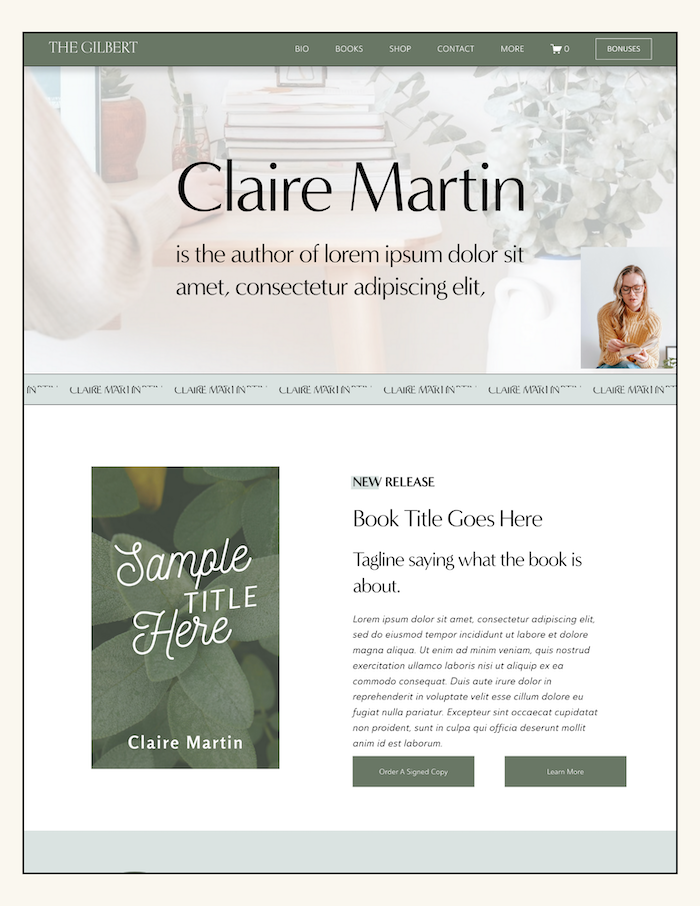
THE GILBERT - Squarespace Author Website Template
Making Your Manuscript Shine with Mandi Andrejka
Guidance for authors refining their manuscripts and preparing for professional author website launches.

GUEST CONTRIBUTOR: Freelance Editor Mandi Andrejka of Inky Pen Editorial Services
WEBSITE: https://www.inkypenediting.com/
Getting ready to work with an editor
So you’ve finished your novel! Congratulations! You may be hoping that the hard work is over and it’s all smooth sailing from here, but the truth is there’s still plenty to be done. The good news is that you’re not alone in this part of your publishing journey! Hiring an editor is an important step before self-publishing your book.
Once you’ve written your first draft, ideally the next steps are that you’ll begin revising the manuscript through your own rounds of self-edits and get additional feedback from outside readers, even at an informal level—this could be from friends or family members or from writing groups and critique partners. A good sign that you’re ready to bring on a professional editor is when you’ve incorporated all the feedback you can to revise your manuscript and are starting to feel like you’re stuck or don’t know what to do next. If there are still things you’re tweaking or playing around with, then keep at it! The time to work with an editor will come when you’re ready.
*Remember you should launch your website well before your book actually comes to market! Some writers use the manuscript template to highlight their book before it’s available for purchase.
Another sign that you’re ready to work with a professional editor is that you’ve taken care of some technical cleanup: Is your manuscript within its genre’s suggested word-count range? Have you fixed any typos or minor errors in the document? Those are easy elements for you to tackle yourself before bringing in a professional for editorial work.
Let’s say you’ve completed those early steps in your own self-editing work. Woo-hoo! You’re ready to work with an editor! …What does that mean exactly?
The editorial process can vary among editors, publishers, freelancers, and others in the industry, however in general there are four main stages. They may go by different names or have some overlap depending on how an individual editor or publishing house operates, but I’m going to break this down the way I’ve come to define it through my experiences as formerly an in-house editor and now a full-time freelance editor. At the very least, this will give you the basic overview and language used when referring to editorial work.
Developmental Edit: This first/broadest stage of editing is sometimes called a content edit and focuses on the big-picture stuff. Developmental edits aim to strengthen the book’s foundation, making sure the key elements are working: plot, characterization, structure, pacing, etc. While the editing needs of every book are different, don’t be surprised if a lot of heavy revising gets done during this stage—the further along you work into the editorial process, the more things should become solidified and the less heavy lifting will be needed.
Line Edit: Sometimes referred to as substantive edits, line edits still focus on content work but at a narrower scope. Rather than looking at overall character arcs or storylines, line edits focus more on the beats and pacing of a specific scene, chapter, or even sequence. Dialogue is also often honed during line editing. Because the nature of line edits focuses on detail work, this sort of edit is typically held off until the developmental editing has been finished. You don’t want to edit the dialogue for a scene if that scene ends up getting cut! Line edits are another stage of editing that involve significant revisions.
Copyedit: By the time we reach a copyedit, it’s assumed that the manuscript is in relatively solid shape. There should not be major changes happening during or after a copyedit, however one goal of a copyedit is to review for consistency and continuity issues, so there may be the occasional minor tweaking done. A copyedit also includes reviewing for repetitive phrasing or sentence structure, ensuring timeline and timing components are all aligned, and fixing minor grammar/punctuation issues.
Proofread: The last stage of the editing process! By the time you’ve reached a proofread, the draft is considered pretty much nailed down and content should not be changing unless there’s a true or significant error that needs fixing. A proofread is the manuscript’s final polish and includes reviewing for remaining grammar, spelling, punctuation, or formatting issues as well as any lingering typos.
Not sure where to find an editor? There are lots of resources available to help you do just that!
Many freelance/independent editors (myself included) are members of associations, such as the Editorial Freelancers Association or Professional Editors Network, and you can search for editors in those groups via their directory or place your own job posting to have editors apply to you. You can also look to social media! You can follow editorial hashtags or search for editor profiles and check out their posts to see if they seem like a good fit for you. Lastly, don’t forget to check the books of your favorite indie authors! Many self-published authors include credits and/or acknowledgments for their publishing team in the front or back of their books. It doesn’t hurt to check your favorite authors’ books to see if their editor(s) may be right for you as well!
Once you’ve identified a few editors you’re interested in working with, do some research!
Make sure they work in your book’s genre and age category. Many editors list their full offering of services and rates on their website, so you can take a look in advance to see if they’re in your financial range. If not listed, you can certainly reach out to ask for an estimate!
Other things to look for in an editor?
Experience—Do they have professional training or background in publishing? Have they taken classes or received a degree related to publishing/editing? Have they worked with authors or publishers that put out the quality of work you’re looking for? Don’t be afraid to ask for a sample edit! This is typically a couple pages (or a chapter) that the editor will edit to give you a taste of their style and approach. It also gives them a chance to see your writing, allowing you both to determine if you’ll be a good fit to work together. (A sample edit should be provided for free—if an editor requires payment for a sample edit, I recommend looking elsewhere!)
After that, you can work with your editor to identify where you’re looking for help on your manuscript, and they’ll provide their own info on what you can expect to receive from them. Ultimately, you should be choosing an editor you feel a connection to, someone you can collaborate with and feel comfortable working with. My philosophy is that editors are here to help you make your book the best it can be. We’re not here to “fix” your book or change it into something you don’t want it to be. At the end of the day, an editor’s goal is for you to come away from working with them feeling like your book has gotten to the place you want it to be and that you’ve become a stronger writer for it. Found this article Helpful? Well don’t forget to check out these websites for writers that offer tools and guidance throughout the publishing process.

Before you go…check out my Squarespace Author Templates !
Visit the Author Website Template Shop: TEMPLATE SHOP
THE ATWOOD - Squarespace Author Website Template
THE HEMINGWAY - Squarespace Author Website Template
THE GILBERT - Squarespace Author Website Template
Creating a Book Cover That Sells with Ashton Smith
Learn how strong book covers complement author website design and improve reader trust.

GUEST CONTRIBUTOR: Book & Brand Designer Ashton Smith
WEBSITE: https://www.ashtonmsmith.com/
Book cover design is one of several important decisions authors face before self-publishing a book. In recent years, self-publishing popularity has skyrocketed in the author community. Andrew Albanese and Jim Milliot noted in an article for Publisher's Weekly that "in both 2022 and 2023, self-published titles outpaced traditionally published books by more than two million titles." Even though it is more likely in the last couple of years that the book you picked up is self-published, there is a lingering stigma surrounding these books of being lower quality, unprofessional, and overall, just bad reads because of one thing: bad book covers.
While DIY book covers are great options for an author looking to cross "publishing a book" off their bucket list, if you want to market your book to a broader audience, a DIY design isn't going to set you up for success. Your cover design should align with your overall author branding. As much as we would all like to recite the age-old adage to "not judge a book by its cover," we must face that it's probably something we follow for everything except books.
The good news is that the continuing rise of self-publishing in the book world means that access to professional book cover designers is no longer limited to traditional publishing. When you invest in a professional designer, not only are you investing in their technical graphic design skills, but you're also able to tap into their wealth of knowledge about the publishing market and design trends. And simply said: A strong cover can help authors sell more books by attracting readers’ attention.
You may be asking yourself, "But, Ashton, won't I lose out on some creative control when I bring another person onto the project?" The answer is, "Nope!" Self-published authors are the creative directors of their books, which means you get all the benefits of a graphic designer's talent while retaining as much creative control as possible. Cover designers (including myself) got into this line of work because we are just as passionate about books as authors! Working with a freelance designer ensures a super collaborative process from start to end, and you can weigh in on the direction and any necessary changes. Let's take a look at a project I recently finished with an author:
Kylie came to me after a nine-book stint with an Australian division of a Big Five publisher because she had never received covers that accurately represented her young adult fantasy book based on Chinese mythology. With the extensive information she gave me on the world and her characters, we developed a cover that utilized story-accurate imagery and gave small nods to the main character throughout the design. She also had the freedom to take the first draft I created and give me notes on the edits she wanted to make to represent her story best.
Now, all of this may sound great, but you may be asking what you'll need in preparation for working with a cover designer. That information will include:
Finalized Cover Copy: This will include the main pieces of copy that will go on your cover, such as a synopsis and author bio. Some authors may also include a quote from the book and/or advanced reader reviews. Research other books in your genre to see what is standard.
ISBNs: These affect the final barcode printed on your cover, which your cover designer will get when they create your final files with your chosen self-publishing service.
Printing Specs: Decide what formats you'd like to publish your book in (ebook, paperback, hardcover, and or/audiobook) and the final size of your book. Sizing standards can vary based on country and genre, so you can research what will be best for your story or consult your cover designer during your project intake process.
These are just a few of the main things you'll need when working with your designer. Download my free guide, The Complete Cover Prep Checklist, for the full list. It walks you through gathering all the necessary information before the design phase.
When working with a cover designer, you'll want to reach out to them ahead of your ideal start date for the design process. Timeline length varies by designer, but you can expect the actual design process to take around 6-8 weeks. Be aware that your dream designer may book out way ahead in the year, so it's better to communicate early to ensure your project stays on track to release on your chosen publishing date.
Ready to take the next step toward your dream book cover? Visit my website to view some of my previous work and submit a project-inquiry.
Before you go…check out my Squarespace Author Templates !
Visit the Author Website Template Shop: TEMPLATE SHOP
THE ATWOOD - Squarespace Author Website Template
THE HEMINGWAY - Squarespace Author Website Template
THE GILBERT - Squarespace Author Website Template
How Fantasy Author S.C. Muir Uses Her Author Website to Connect with Readers
A real-world author website example showing how design supports reader connection.
The Overview
Author Websites & Social Media: Muir uses Instagram, TikTok, and Pinterest to drive traffic to her website & books, finding TikTok most effective for engagement and sales.
Selling Signed Copies: Her website is the primary place for selling signed copies, with a direct link between TikTok interactions and book purchases.
Building a Reader Community with Newsletters: Muir’s main website goal is to grow her newsletter, allowing her to build long-term reader relationships.
Newsletter Engagement: Her newsletter subscribers are highly engaged, often responding to events and street team invites, and most stay subscribed for 8+ months.
Incentives for Sign-Ups: Muir offers exclusive content (e.g., character art, cover designs, and early access) to encourage newsletter subscriptions.
DIY Author Website Design Challenges: Muir found balancing aesthetics and professional functionality difficult when setting up her website.
Mobile Optimization is Essential: Muir emphasizes mobile optimization, a lesson learned after discovering her website didn’t initially look great on mobile.
Advice for Indie Authors: Muir advises having a website as a central landing page and encourages overcoming the fear of imperfection.
Encouragement for Website Creation: Muir believes authors should embrace website creation and seek help from peers to build a functional and effective online presence.
*Looking at real author website examples can help writers understand what works well when building their own site.
How Fantasy Author S.C. Muir Uses Her Author Website to Connect with Readers
WHO: S.C. Muir
Website URL: scmuirauthor.com
Genre: Fantasy Romance
Indie author S.C. Muir is making waves in the fantasy romance genre with her captivating Dual Mage Series, which follows a prince of fire and a princess of death as they navigate an arranged marriage, societal divisions, and the rise of a dual mage who can wield two types of magic at once. Currently, Muir has two books in the series published, with a third slated for release in early 2026.
“I’ve always been a writer,” Muir shares, reflecting on her long-standing love for storytelling. “I wrote my first book when I was about eight.” Though the first book in the Dual Mage Series“Death By Fire” started as a fun personal project, it quickly grew, and the idea for her trilogy sprang to life.
How S.C Muir is Currently Marketing Her Books
When it comes to marketing her books, S.C. Muir takes a multi-platform approach, primarily leveraging social media. “I mostly use a mix of Instagram, TikTok, and a little bit of Pinterest,” she says. These platforms serve as the primary driver of traffic to her books available on Amazon, Barnes & Noble, and her author website.
Out of the three, Muir finds that TikTok has had the greatest impact. “I think it’s TikTok,” she notes when asked which platform drives the most traffic to her website. Muir uses her website mainly to sell signed copies of her books, and she sees a direct link between her TikTok interactions and book sales. “Just based on interactions I’ve had in my comment section on TikTok, I always get comments like, ‘I just bought your book,’ and then I see the order pop up!”
The Importance of a Newsletter sign-up on your author website
For Muir, her author website isn’t just about selling books—it’s about building long-term relationships with her readers, primarily through her email newsletter. When asked what the main goal of her website is, she says: “Definitely getting visitors up on my newsletter,” Muir recognizes the power of newsletters in driving sales: “The amount of times I have bought books from my favorite author’s newsletters, I do it all the time!”
She goes on to explain that newsletters give authors a direct line of communication with their readers. “If I mention in my newsletter ‘I’m going to be at X event, I’m looking for people to join my street team,’ a lot of my newsletter subscribers actually sign up for those things. They interact with you; they have signed up to see these communications from you—they want to hear from you.”
Her strategy has paid off, with most of her subscribers staying engaged for the long term. “I’ve had my website for 1.5 years, and most of my subscribers have been on my newsletter for 8 or more months.”
To incentivize newsletter sign-ups, Muir offers exclusive content to her readers. “First looks at character art, book cover designs, access to advanced copies, etc.”
Muir currently uses MailerLite as her email service provider. “It’s super user-friendly,” she says, though she has noted that the aesthetics aren’t the best.
Many authors also use email marketing to stay connected with readers and share updates about new releases.
Challenges with DIY Author Website Design
Like many indie authors, Muir faced her own challenges when setting up her website. “I think the thing that was hardest for me was aesthetics,” she admits. “I don’t have an aesthetic eye, so trying to find the balance between professional and too professional was difficult for me.”
Choosing the right platform also proved tricky. “Figuring out which website hosting to use was confusing. That was a lot. There are so many that it was hard to know which one to choose.”
In terms of content to include on her website, Muir found guidance by looking at what other authors in her niche were doing. “I looked at other authors’ websites in my niche and I tried to imitate that on my website,” she explains. For her, the essentials included: “Home page, things about my books, an about me section, a shop, and a newsletter sign-up.”
Yes, Author Websites need to look great on mobile
One of the most surprising lessons Muir learned while designing her website was the importance of mobile optimization. “Haha yes, I didn’t even realize that there was a difference,” she laughs, recalling an early misstep. “I sent my website to a friend so that she could check if all the links worked, and she sent me a screenshot of my mobile website, and she was like, ‘This is horrible, haha.’ I had no idea you had to design your website on mobile separately.”

This experience taught her an important lesson: it’s crucial to make sure your website looks good on mobile devices. Most people visiting author websites aren’t using a computer to look at them; they are using their phone. So make sure that you are making the mobile version of your website look just as great, if not even better than the desktop version.
Author Website Advice for Fellow Indie Authors
For any authors who are nervous about launching their first website, Muir offers clear advice: “I think it’s definitely imperative for authors to have a website, whether you’re selling a million copies a year or selling five copies. No matter where you are at, having a central landing page that links to everything is super imperative.”
Having a website gives authors a professional presence online and helps readers easily find them. “If you google your author name, sometimes a website might be one of the things that pops up.”
She also encourages authors to get past their fear of imperfection. “Getting over the fear, recognizing it doesn’t have to be perfect—you can always make it better.” Her advice? “Look at other author’s websites and get ideas, and find a platform that is easy for YOU. Not just what is easy for someone else.”
Future Plans for Her Author Website
Looking ahead, Muir has plans to expand her website’s functionality. “I’d really like to add an events page, now that I’m doing a lot more events, so then it’s not just a post on social media,” she says. She’s also considering adding an event wrap-up section to her blog to give readers a behind-the-scenes look at her appearances.
Advice to other authors launching their websites: Just Go for It
In conclusion, S.C. Muir encourages fellow authors to embrace the challenge of creating a website. “There is a lot of fear about stepping out of your comfort zone and setting it up, which is totally understandable,” she acknowledges, but she urges authors to take the plunge. “I encourage authors to embrace it and just go for it. Reach out to other authors and ask questions.” A well-designed website can ultimately help authors sell more books by creating a stronger relationship with readers.
With the right mix of social media, email marketing, and a well-designed website, S.C. Muir has built a strong platform to market her books and connect with her readers—and she believes other authors can do the same.
FREE!
Want to Sell More Books? It All Starts with Your Newsletter!
What’s Inside?
Discover the secret sauce top authors use to build loyal reader lists and skyrocket their book sales! 🚀 Download my free guide: Author Newsletter Booster: How to Get More Newsletter Signups on Your Author Website and start building your fanbase today.
Enter your email below to access the guide:

Want to save time launching your author website? Check Out The Squarespace Author Templates
Visit the Author Website Template Shop: TEMPLATE SHOP
THE ATWOOD - Squarespace Author Website Template
THE HEMINGWAY - Squarespace Author Website Template
THE GILBERT - Squarespace Author Website Template
How Fantasy Author J.E. Harter Uses Her Author Website
An author website example highlighting layout choices that support branding and engagement.

The Overview
Her Website = Hub for Loyal Fans
J.E. Harter sees her website as a place to stay in touch with her readers, where they can easily sign up for her newsletter and stay connected. It’s not the first place she gets new readers, but it’s essential for keeping her biggest fans in the loop with exclusive content like sneak peeks and cover reveals! If you're exploring inspiration for your own site, browsing author website examples can be incredibly helpful.Keep It Simple (and Free) to Start
Harter recommends starting with a free website (hello, budget-friendly!) to get the basics up and running—your bio, books, and a newsletter signup. You don’t need all the bells and whistles right away. Just get your feet on the ground and grow from there!Get That Newsletter Going!
Her website is all about getting readers onto her newsletter list—it's the only way readers can sign up! She uses fun calls-to-action on social media, offering free incentives (think sneak peeks and special reveals) to encourage sign-ups.Upgrade When You’re Ready
Harter plans to eventually switch to a paid website and focus more on SEO. She suggests taking your time, building your audience first, and then upgrading your site when it makes sense.Make Sure It Looks Good on Mobile
J.E. knows how important it is to have a site that looks great on every device. Her pro tip? After making changes, always check how your site reads on mobile to make sure it’s looking its best for your readers!Essential Pages to Include
On her site, she’s got a dedicated page for each of her books, an "About Me" section, a reviews page, and a newsletter sign-up. It’s clean, simple, and all about helping readers find what they’re looking for. Even without a shop (yet!), she’s made it super easy for fans to buy her books by linking out to where they can purchase.
How Fantasy Author J.E. Harter Uses Her Author Website
WHO: J.E. Harter
Website URL: https://jeharterauthor.wixsite.com/j--e--harter-author
Book Purchase Links: https://jeharterauthor.wixsite.com/j--e--harter-author/copy-of-press-reviews
J.E. Harter has been writing since childhood, with an unwavering passion that stretches back to when she was very young. "I have always been writing since I was a little kid, it was something I was always very committed to. I didn’t just write a page or so of writing, I would actually write books from a very young age, so it has always been something that I’ve enjoyed doing," she recalls.
It wasn’t until two and a half years ago that she began work on her debut novel, The Butcher and The Bard. The idea came while she was watching The Witcher. "I was watching The Witcher actually, and I thought it would be cool if there was a female version of Geralt, so that’s who my main character is about." With a blend of fantasy and a fierce female lead, Harter’s book has attracted readers intrigued by her take on a strong female protagonist.
How J.E. Harter is Currently Marketing Her Books
As an indie author, Harter relies on social media to connect with readers and promote her work. She finds social platforms essential for reaching her audience. "I would say certainly social media is important, I would say it’s almost impossible as a self-published author not to use social media, unless you are so well established that people know who you are."
She primarily uses Instagram, TikTok, and reposts her Instagram content to Facebook. "The majority of people find me via TikTok or Instagram," she explains. "I can connect to readers that way, share my favorite books, things that I’m reading, share my writing process and advice with people there, which I think is really helpful. I also talk about the tropes of my book and other avenues to capture people's attention." By engaging readers in this way, Harter keeps her audience connected to her writing journey and characters.
In addition to social media, Harter uses a monthly newsletter to stay in touch with her most loyal readers. "I don’t think I’m getting new readers, but my most loyal readers sign up for the newsletter, those are people who are mostly guaranteed to buy the next book whatever I write," she explains. The newsletter serves as a way to give these readers something special, such as exclusive content like title reveals, cover reveals, and even sneak peeks. "I always send out the blurb, the title reveals, or cover reveals. I even sent out the first chapter of my third book to my newsletter last month and this month again, as a kind of sneak peek."
FREE!
Want to Sell More Books? It All Starts with Your Newsletter!
Snag the free guide
Discover the secret sauce top authors use to build loyal reader lists and skyrocket their book sales! 🚀 Download my free guide: Author Newsletter Booster: How to Get More Newsletter Signups on Your Author Website and start building your fanbase today.
Enter your email below to access the guide:

How J.E. Harter’s Author Website Fits Into Her Book Marketing Efforts?
When it comes to using her website as a marketing tool, Harter sees it more as a necessary hub than a primary driver of sales. For her, the website primarily functions as a place for readers to sign up for her newsletter and as a central landing page. "Typically, people get to my website through social media, and the only way for them to sign up for my newsletter is through my website," she says, emphasizing how social media plays the main role in directing people to her site. She uses calls-to-action on her social accounts to entice readers to visit. "I usually say things like: Here are some free incentives if you sign up for the newsletter."
*Interviews like this help illustrate what makes some of the best author websites so effective.
Where Are Most People Buying Her Books?
For most of Harter’s readers, Amazon is the go-to platform for purchasing her books. "Definitely Amazon. I think most people are going to purchase on Amazon, it’s just so much easier for everyone. If you have Prime, you get free shipping and it comes in like two days."
However, Harter also notes that mindful readers, those who really want to support indie authors directly, are trying to buy from alternative sources. "Mindful readers who are really trying to support the indie author themselves are trying to buy direct as much as possible," she shares, adding that she’s considering adding a store element to her website in the future.
Advice to Fellow Authors About Launching Their First Author Website:
Harter’s advice for new authors setting up a website is practical and budget-friendly. "My current website is a free website from Wix. It was really simple to set up and honestly, for an aspiring author or a brand-new indie author, I don’t see anything wrong with having a free website to just get your feet on the ground."
She emphasizes the importance of keeping things simple when you're first starting out. "Create a free website, get your basic bio, talk about your books, whatever else, get that newsletter going because that’s going to be really helpful. That’s all you need to start with if it feels intimidating."
Looking ahead, Harter plans to eventually switch to a paid website and explore more advanced SEO options as her audience grows. "In a year or so, depending on how book sales are going, I might switch to the paid version so that way I can work on some SEO stuff on my author website," she adds.
What J.E. Harter Included on Her Author Website?
When designing her website, Harter focused on giving each book its own space. "I tried to give each book its own separate page," she says. On the homepage, she displays pictures of her books with a small snippet of information to direct visitors to detailed book pages. Her site also includes an "About Me" page, a reviews page, and a newsletter subscription at the bottom of the homepage. Although she doesn't have an online shop yet, Harter has a purchase page that links to various places where people can buy her books, making it easy for readers to find the right platform for their purchase.
J.E. Harter’s journey as an indie author highlights the importance of balancing social media, newsletters, and a website. While her site may not yet be a primary driver for new readers, it remains a crucial tool for connecting with loyal fans and presenting herself professionally to a wider audience. Her practical advice to fellow authors emphasizes starting small and expanding as your readership grows.
Future Plans for Her Author Website and Some Tips for Authors:
As for future website improvements, Harter is focused on optimizing SEO and making sure her site is user-friendly on mobile. "When the time comes, look into your website’s SEO. That is something that I feel like really does help any website." She also advises authors to check their website on multiple devices. "Always double-check after you’ve made some changes on your website. Look at it on a couple of devices to make sure it is reading the way that you like it."
In the end, Harter’s approach shows that an author website doesn’t need to be complicated to be effective. A thoughtful website strategy can also help authors sell more books by creating a direct connection with readers.Starting with a simple, free site allowed her to establish an online presence, showcase her books, and begin building a connection with readers through her newsletter. As her audience grows, she plans to expand and optimize her site, but her experience proves that the most important step for new authors is simply getting started.
FREE!
Want to Sell More Books? It All Starts with Your Newsletter!
What’s Inside?
Discover the secret sauce top authors use to build loyal reader lists and skyrocket their book sales! 🚀 Download my free guide: Author Newsletter Booster: How to Get More Newsletter Signups on Your Author Website and start building your fanbase today.
Enter your email below to access the guide:
Want to save time launching your author website? Check Out The Squarespace Author Templates
Visit the Author Website Template Shop: TEMPLATE SHOP
THE ATWOOD - Squarespace Author Website Template
THE HEMINGWAY - Squarespace Author Website Template
THE GILBERT - Squarespace Author Website Template
6 Things Your Author Media Kit Should Have
Essential elements authors should include on their website media kit pages.

One of the major benefits of launching your author website is that you will now have an easy way to send out your media kit to potential podcasts, interviewers, conferences and more! If you’re new to the world of book marketing, you may not know what a media kit is! In sum: A media kit is a collection of promotional materials that provides information about an author to help reporters, bloggers, and other media outlets write articles.
In general, there are a few things that your media kit page should include:
Your Official Bio
Approved Photos
Book Reviews
Links to Interviews You’ve Done
Link to Your NewsletterOpt-in
Social Links
Let’s dive in and understand why each of these six sections of your media kit are important. I’ll be using screenshots from: The Atwood: Squarespace Author Template so you can see an example of an author media kit in action. Remember, you don’t need to have a huge and complex media kit when you first launch your website. You can add depth to this page over time. These six elements are a fantastic starting point!
Author Media Kit Must Have #1 : The Official Bio
The first element of a media kit is an official bio. As with any bio, you’re meant to do some bragging here! Go ahead and mention your publications and accolades. The most important thing though, is to keep this official bio brief. Some of the best I’ve seen are usually only around 5 sentences.
Author Media Kit Must Have #2 : Approved Photos
The next section your author media kits needs is an approved photos section. Not only is including professional photos of you an excellent way to optimize your personal branding as an author, but it also demonstrates your professionalism and dedication to your craft.
If you don’t have the budget for professional photos, I am a huge believer in DIYing your photos until you can afford to have professional headshots taken. Confession: When I first started my website design business, I actually DIYed my website photos and didn’t update them for a few months until I started making consistent income. I ordered an IPhone tripod and used youtube to learn how to take professional photos on my IPhone and I think they came out great!
Need to DIY your author media kit photos? Here is the exact youtube video I watched:
Professional Headshots Using Portrait Mode On Your IPhone
Author Media Kit Must Have #4 : Book Reviews
Be sure to include a handful of standout book reviews. You don’t need many though. Try to stick to no more than five. Three is plenty! If J.K. Rowling happened to write a positive review of your book, you’d definitely want that to live in this section. Even if major book celebrities have yet to read your book, I’m sure you have raving fans across the internet! Go ahead and grab some of those awesome reviews and/or comments from instagram / Tiktok and put a couple of them on this page.
Author Media Kit Must Have #5 : Links to Interviews
If you’ve already been interviewed on a podcast or by a media outlet create a section with simple links to those interviews. This section does not need to be complicated. It can have a simple header and then the title of the interview hyperlinked.
**Make sure that you select having the hyperlinked text link “open in a new tab”. That way your website visitor doesn’t have to go hunting back through their web history looking for your website again after they finish listening to your interviews.
Author Media Kit Must Have #6 : Link to newsletter
I think it’s an awesome idea to leave a link to your opt-in on your media kit page. I’m sure you’ve created an exciting incentive for your readers, so why not share that with potential interviewers. As a bonus, you will now have potential interviewers on your email list and what better way to show how engaged you are with your audience than by dropping into their inbox a couple times a month.
Author Media Kit Must Have #7 : Social Links
No doubt about it, we live in a time where publishers and journalist want to see what an author’s social media presence looks like. I’ve noticed many book marketers talking about how authors need to be building personal brands on social media and hence, having links to your social media accounts are a great way for journalists to get to know you better.
Other Elements Worth Including
The great thing about having your media kit on your author website, is this can be updated and built out over time. You can add in more sections as you feel you need them.Here are a couple of examples of extra sections that you may want to include when you’re ready.
Firstly, another section dedicated to your book. So far we only have a "book reviews” section. But you may want to add a section to your media kit that includes your book cover image. Make sure this is a flat image, so journalists can download it. You can also include a link to a book excerpt if you have one to provide.
The second noteworthy section would be a nice addition below the “interviews”section of your media kit page. This section would be dedicated to sample questions and answers for potential interviewers. Why provide this? Well, unfortunately, not all interviewers will have time to read your whole book, so they’ll want a resource to be able to ask you questions that you’re excited to answer.

Check out Website Design Services here: Author Website Design Services
Looking for a website designer for your author website?
Let me guess… You’ve already spent hours piecing together advice from reading blog-after-blog explaining website design principles and yet you’re still unsure about what exactly should be on your website. You’re ready to connect with your readers and can’t wait to be featured at book readings, conferences and podcasts. Perhaps you’ve realized that DIYing your author website may not be for you. No worries, I’m here to help!
Check Out The Squarespace Author Templates
Visit the Author Website Template Shop: TEMPLATE SHOP
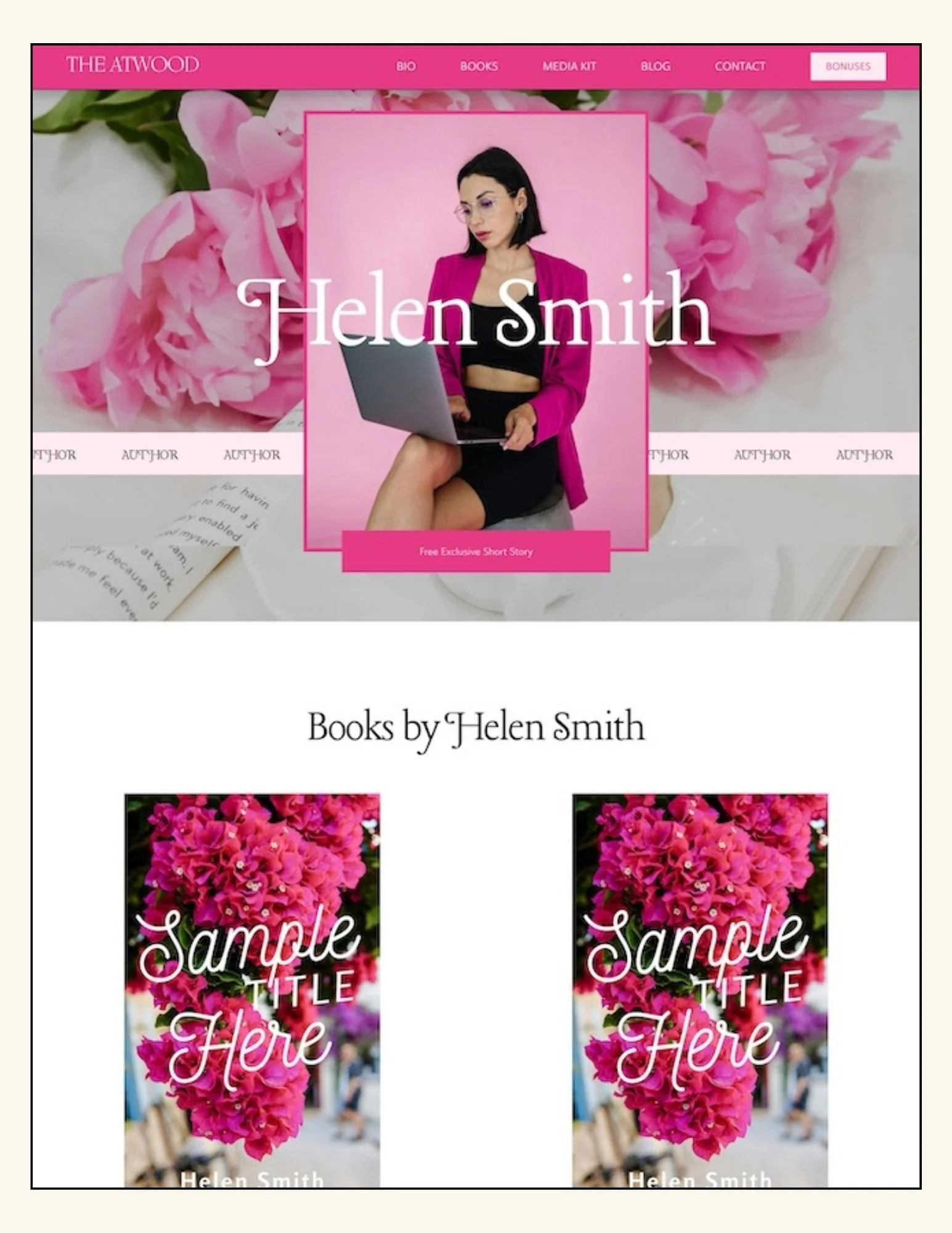
THE ATWOOD - Squarespace Author Website Template
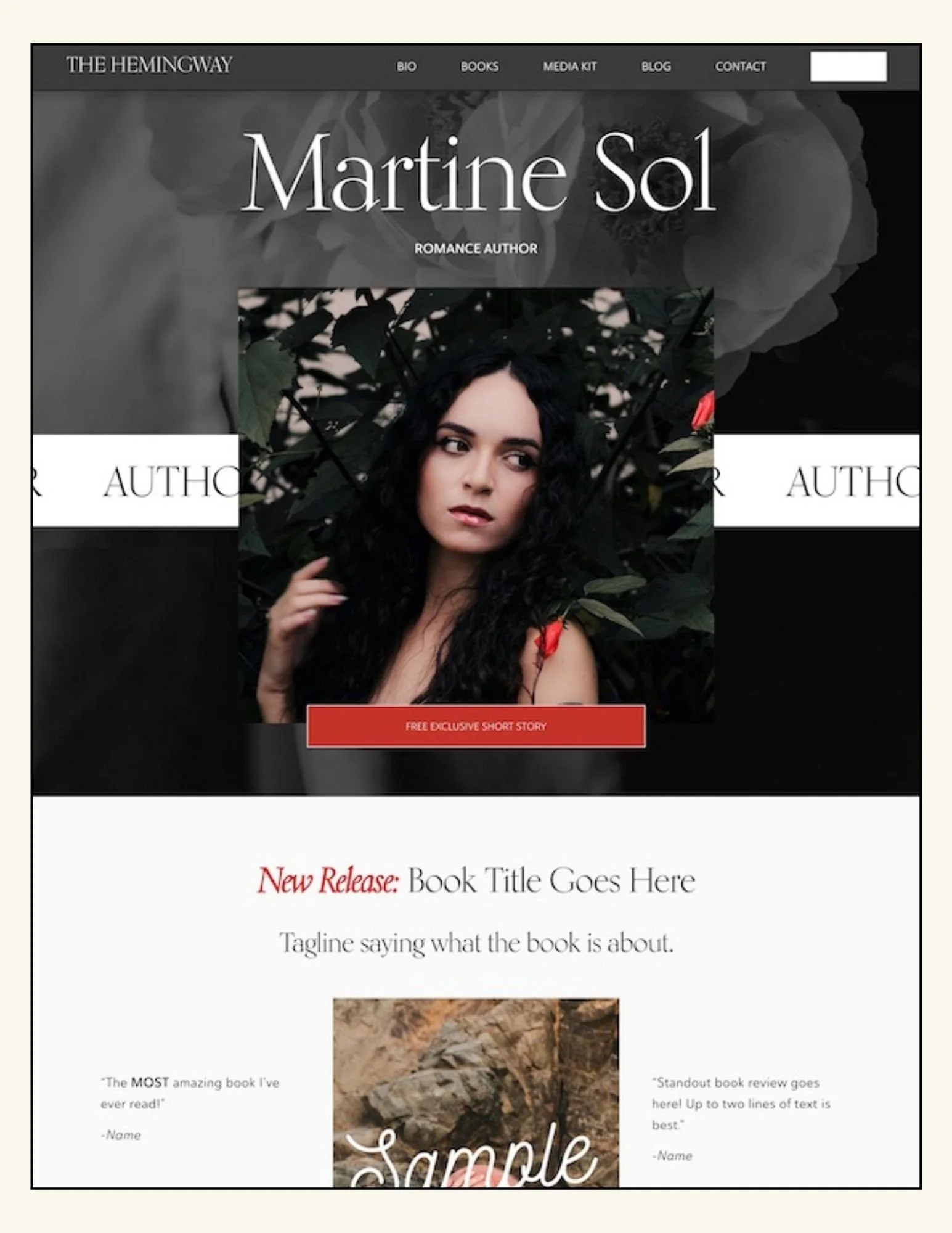
THE HEMINGWAY - Squarespace Author Website Template
THE GILBERT - Squarespace Author Website Template