

THE BLOG
Author Book Marketing & Website Design Tips
What’s the Point of an Author Website If No One Visits? (And How to Fix It!)
Improve traffic using smart author website design and SEO fundamentals.

6 Reasons Your Author Website Isn’t Getting Traffic
1. You’re Not Actively Driving Traffic to Your Website
Your website won’t magically attract visitors just because it exists—you need a strategy to bring people in. If you’re not consistently directing readers to your website, it’s no surprise they aren’t showing up.
👉🏻 Fix it: Start sharing your website everywhere—on social media, in your email list, inside your books, and even on your Amazon author page. The more you remind people about your website, the more likely they are to visit.
2. Your Website Isn’t Optimized for SEO
If readers can’t find you on Google, you’re missing out on organic traffic—people actively searching for books like yours. SEO (Search Engine Optimization) helps your site appear in search results, driving consistent, long-term traffic. Learning SEO for authors can help your site appear in search results when readers look for books like yours.
👉🏻 Fix it: Use SEO best practices like adding relevant keywords, writing blog content, and optimizing your metadata(titles, descriptions, and alt text) to make it easier for readers to discover you.
3. There’s No Clear Reason for Readers to Visit
Authors can use several strategies to drive traffic to their author website. If your website is just a static “About Me” page and a list of books, why would readers come back? There’s no incentive to keep them engaged.
👉🏻Fix it: Offer something exclusive—a free short story, a behind-the-scenes look at your writing process, or bonus book content like a character Q&A or deleted scenes. Give readers a reason to visit your website and return.
4. Your Social Media Isn’t Driving Traffic
If you’re constantly posting about your books on social media but never linking back to your website, your followers won’t think to visit. Your social media should act as a traffic funnel, guiding readers toward your site where they can explore your work, sign up for your newsletter, and buy your books.
👉🏻 Fix it: Regularly post content that directs followers to your website—whether it’s a blog post, a freebie, or an event announcement. Use strong CTAs (Calls to Action) like “Read the full excerpt on my website!” or “Join my newsletter for an exclusive chapter!”
5. Your Website Loads Too Slowly or Isn’t Mobile-Friendly
Most readers will visit your website from their phone, and if it’s slow or hard to navigate, they’ll leave immediately. A cluttered, slow-loading site can hurt your credibility and SEO rankings—Google won’t even show your site in search results if it loads too slowly.
👉🏻Fix it: Use a clean, mobile-friendly design, compress large images, and test your website speed using tools like Google PageSpeed Insights. If your site takes longer than 3 seconds to load, it’s time for a refresh.
6. You’re Not Capturing Visitors with a Strong Call-to-Action (CTA)
Getting visitors to your website is only half the battle—once they’re there, you need to guide them toward action. If there’s no clear next step, they’ll leave without engaging.
👉🏻Fix it: Add strong, visible CTAs like “Download a free chapter,”“Join my newsletter for exclusive content,” or “Pre-order my next book now!” Make it easy for readers to engage, subscribe, and take the next step in your author journey.

5 Proven Strategies to Get More Readers to Your Website
1. Create Blog Content That Attracts Readers
Maintaining a blog on your author website can help attract readers through search and regular updates. Blogging isn’t just for writers sharing their journey—it’s a powerful tool to attract new readers through search engines. Blog posts that are SEO-optimized can bring fresh traffic to your site month after month. Think beyond personal updates—write content readers are actively searching for. Example: “Best Books Like [Your Book Title]” or “How I Created My Fantasy World.” These types of posts show up in search results, attract book lovers, and introduce new readers to your work.
2. Offer a Freebie That Requires a Website Visit
Readers need a compelling reason to visit your website, and nothing works better than exclusive content they can’t get anywhere else. Offer a free prequel, deleted scene, or book-related bonus that requires an email sign-up to access. Example: “Download my free prequel novella—only available on my website!” This not only drives website traffic but also grows your email list, giving you a way to stay connected with your audience.
3. Leverage Pinterest for Long-Term Traffic
Unlike Instagram or Twitter, Pinterest is a search engine, meaning posts continue driving traffic for months or even years. If you write blog posts, have a lead magnet, or offer book extras, create Pinterest-friendly graphics to promote them. Use eye-catching images with text overlays linking to your website, and pin consistently to drive steady, organic traffic.
4. Optimize Your Book Listings with Website Links
Readers discover your books on Amazon, Goodreads, and other platforms, but they might not know you have a website packed with extras. Add your website link to your author bio, book descriptions, and even inside your books. Example: “Want a bonus scene? Visit [YourWebsite.com] to read more!” This simple tweak funnels curious readers straight to your website where they can explore more of your work.
5. Collaborate with Other Authors for More Exposure
Other authors aren’t your competition—they’re potential partners in reaching more readers. Guest blogging, social media shoutouts, or newsletter swaps introduce your books to an entirely new audience. Team up with authors in similar genres to cross-promote—for example, offering a "Book Bundle Giveaway" where readers must visit both websites to enter. The more exposure, the more traffic!

Your Author Website Deserves an Audience—Here’s How to Make It Happen!
Your author website shouldn’t be a lonely corner of the internet—it should be an active, engaging space where readers discover your books, sign up for your newsletter, and get excited about your work.
If no one’s visiting, the good news is you have the power to change that. By implementing SEO, strategic social media promotion, and enticing content that draws readers in, you can turn your website into a go-to destination for fans and new visitors alike.
Now’s the time to make your website work for you. Start with one strategy today—whether it’s creating an exclusive freebie, optimizing your book listings, or pinning your first blog post to Pinterest. Small actions lead to big results!
Want an author website that’s built to attract readers and grow your fanbase? Let’s create an author website for you that drives traffic and turns visitors into loyal book buyers. Click below to get started!
Before you go…check out my Squarespace Author Templates !
Visit the Author Website Template Shop: TEMPLATE SHOP

THE ATWOOD - Squarespace Author Website Template

THE HEMINGWAY - Squarespace Author Website Template
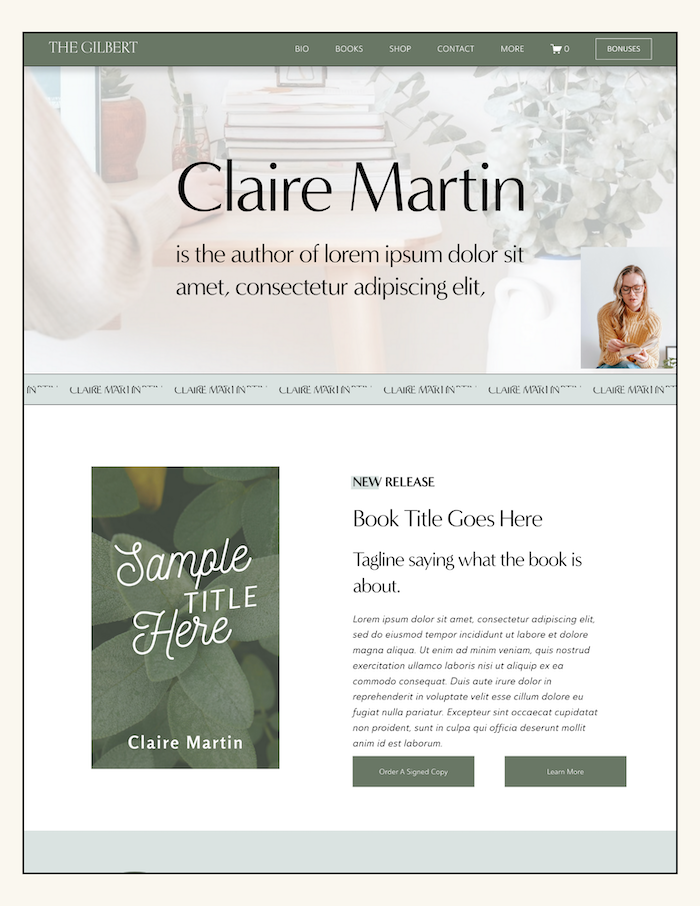
THE GILBERT - Squarespace Author Website Template
15 Ways Authors Can Use Social Media to Drive Traffic to Their Website & Grow Their Newsletter
Drive traffic to your author website using social media strategies.

How authors can use social media to drive website traffic isn’t just about posting book updates and hoping for the best—it’s about strategically leading readers off social platforms and onto your author website and email list, where you have full control of the conversation.
The truth? Social media algorithms change, visibility fluctuates, and followers come and go, but your website and newsletter are your direct, reliable connection to readers who actually want to hear from you.
There are many strategies authors can use to boost author website traffic. and in this guide, you’ll learn author-specific strategies to turn casual social media scrollers into engaged website visitors and loyal email subscribers—so you can sell more books, build your readership, and grow your career without relying on an algorithm!
Before we start, check out my FREE newsletter sign-up booster to help grow your list!
Why Social Media Should Lead Readers to Your Website & Email List
Relying solely on social media to connect with readers is like building your house on rented land—platforms change, algorithms shift, and your reach is never guaranteed. But your author website and email list?
Those are yours forever. Readers who visit your website or subscribe to your newsletter are far more engaged than passive social media followers, meaning they’re more likely to buy your books, leave reviews, and become lifelong fans. Building a mailing list through email marketing is one of the most effective ways to bring readers back to your website.
Plus, social media visibility is unpredictable, but once a reader is on your website, you control the experience, guiding them to explore your books, sign up for exclusive content, and deepen their connection with you as an author.
If you’re serious about growing your audience and selling more books, your goal should always be to lead readers off social media and onto platforms you own.
Optimizing Your Social Media to Drive Website & Newsletter Sign-Ups
1. Add a Clear Call-to-Action (CTA) to Every Post
Every time you post on social media, tell readers exactly what to do next—whether it’s visiting your website, signing up for your newsletter, or grabbing a freebie. Instead of just talking about your book, guide readers toward an action that strengthens your connection.
Example: “Want a free prequel to my book? Download it now on my website!”
A strong CTA ensures that your social media engagement leads to real results—like growing your email list and increasing book sales.
2. Turn Your Social Media Bio into a Traffic Magnet
Your bio is prime real estate—don’t waste it on generic text like “Author of [Book Title].”
Instead, use it to drive traffic to your website or newsletter with a compelling hook. Example: “Get a free bonus chapter—subscribe now!”And since most platforms only allow one link, use a link-in-bio tool (like Linktree, Milkshake, or Beacons) to create a mini landing page with multiple website links—directing readers exactly where you want them to go.
3. Pin a High-Performing Post That Promotes Your Newsletter
A pinned post is the first thing visitors see when they land on your profile—so make it count!
Pin a tweet, Instagram post, or Facebook update that explains why readers should sign up for your newsletter and how it benefits them.
Example: “Love my books? Get exclusive behind-the-scenes content & a free short story—subscribe now!” This ensures that even new visitors to your profile immediately see a clear path to your website and email list.
4. Use Instagram & Facebook Story Highlights to Promote Your Freebie
Instagram and Facebook Stories disappear after 24 hours, but you can save them as Highlights to keep them visible forever. Create a dedicated Highlight for your freebie that includes a step-by-step guide on how readers can claim it.
Example: "Swipe up to get my free novella!" Use engaging visuals, short video clips, and a clear call-to-action to make it easy for readers to take the next step toward your website.
5. Share Exclusive Content That Requires a Website Visit
Give your followers a reason to leave social media and visit your website by teasing exclusive book content they can’t get anywhere else. Post snippets of deleted scenes, alternate endings, or character backstories, and direct them to your website for the full experience. Example: “What happens after the epilogue? Read the bonus scene here: [YourWebsite.com]” This not only drives traffic but also keeps readers engaged between book releases.
6. Host a “Website-Only” Book Giveaway
Instead of a standard “comment to win” giveaway on social media, require readers to visit your website or sign up for your newsletter to enter. This strategy increases website traffic, grows your email list, and attracts highly engaged readers. Example: “Win a signed copy of my latest book—enter now on my website!” Use a giveaway tool like KingSumo or Rafflecopter to streamline entries and maximize engagement.
7. Offer a Social Media-Exclusive Discount on Your Website
Create urgency and exclusivity by offering a limited-time book discount that followers can only access by visiting your website. This works especially well for pre-orders, signed copies, or bundle deals. Example: “For the next 48 hours, get my signed book for 20% off—only on my website!” Promote it with a countdown timer, Stories, and pinned posts to drive immediate action.
8. Instagram – Use Reels & Stories to Tease Content on Your Website
Instagram is perfect for short, engaging content that hooks readers and directs them to your website for more. Use Reels, Stories, and Carousels to tease behind-the-scenes book content, deleted scenes, or writing updates. Example: “5 secrets about my book only newsletter subscribers know—sign up now!” Add “Link in bio” prompts or Story swipe-up links to make it easy for followers to click through.
9. Facebook – Use Groups & Pages to Engage Readers
Your Facebook author page and reader groups are great places to build community and drive traffic to your website. Share exclusive content, first-look reveals, and special announcements that require readers to visit your site. Example: “Join my email list for first dibs on my next book’s title reveal!” You can also host Facebook Live Q&As and include a website call-to-action at the end.
10. Twitter/X – Start Engaging Threads That End with a Website CTA
Twitter/X thrives on conversational, storytelling-style posts that build curiosity. Start a Twitter thread breaking down an interesting aspect of your book, writing process, or publishing journey, then end with a link to your website for the full story. Example: “Here’s how I built my fantasy world from scratch (THREAD) 👇 Read the full breakdown here: [YourWebsite.com]” This format keeps readers engaged while seamlessly leading them to your site.
11. TikTok – Create “Hidden Content” Strategies to Drive Traffic
TikTok is gold for authors who want to generate curiosity and drive followers to their website for exclusive content. Create videos teasing “hidden” book details, character secrets, or alternate endings and tell viewers to find them only on your website. Example: “The plot twist that almost happened in my book? Read it on my website!” Pair this with a strong call-to-action in your caption to increase clicks.
12. Pinterest – Turn Blog Posts & Freebies into Traffic Machines
Unlike other social media platforms, Pinterest is a long-term traffic driver that can keep bringing visitors to your site months after posting. Create Pinterest-friendly graphics for blog posts, book bonuses, or newsletter freebies and optimize them with keywords related to your genre and audience. Example: “Download my free fantasy world-building guide—perfect for readers and writers!” Pinterest acts as a visual search engine, making it a powerful way to attract new readers to your site.
13. Offer an Irresistible Reader Magnet
The fastest way to grow your email list? Give readers something they actually want. A high-value freebie like a bonus chapter, exclusive novella, or behind-the-scenes character Q&A makes signing up a no-brainer. Think about what would excite your readers—something they can’t get anywhere else. Whether it’s an alternate ending, a deleted scene, or an in-depth world-building guide, the key is making your newsletter feel exclusive and rewarding.
14. Use Strategic Pop-ups & Sign-up Forms
Make sure your newsletter sign-up is impossible to miss by placing eye-catching forms on your homepage, blog, and book pages. Readers shouldn’t have to search for it—it should be front and center. Example: “Love my books? Get exclusive extras by joining my newsletter!” Use exit-intent pop-ups (ones that appear when visitors are about to leave your site) to capture their attention at the right moment.
15. Make Your Newsletter a VIP Experience
Nobody signs up for a newsletter just to get generic updates. Instead of sending boring “Here’s what I’m up to” emails, turn your newsletter into a VIP experience that makes readers feel special. Offer first looks at cover reveals, exclusive sneak peeks, and early access to book releases before anyone else gets them. When readers know they’re getting something valuable, they’ll not only subscribe—but stay engaged for the long haul.
Let’s Turn Your Social Media Followers into Website Visitors & Subscribers!
Social media should be more than just a place to post about your books—it should be a traffic machine that helps you grow your email list and sell more books. By using clear calls-to-action, teaser content, exclusive website offers, and platform-specific strategies, you can turn followers into engaged website visitors and loyal newsletter subscribers. Another good idea is diving into the world of SEO. Learning SEO for authors can help your website appear in search results when readers look for books like yours.
Want an author website that’s optimized for traffic and email growth? I design high-converting author websites that make it easy to capture leads and boost engagement.
Click below to check out my done-for-you author website design services and let’s turn your site into your ultimate book-selling, audience-building machine.
Before you go…check out my Squarespace Author Templates !
Visit the Author Website Template Shop: TEMPLATE SHOP
THE ATWOOD - Squarespace Author Website Template
THE HEMINGWAY - Squarespace Author Website Template
THE GILBERT - Squarespace Author Website Template
10 Creative Newsletter Incentives to Grow Your Author Email List
Lead magnet ideas that support author website templates and list growth.

One of the most underutilized marketing tools in your toolkit? Your email list.
Unlike social media, where algorithms decide who sees your posts, your email list is a direct, guaranteed way to reach your readers—the ones most likely to buy your books, leave reviews, and become lifelong fans. But here’s the catch: no one’s signing up just because you say “Get my updates!” (yawn).
Readers need a juicy, can’t-miss reason to hand over their email, and that’s where creative, high-value incentives come in. Newsletter incentives are a powerful strategy within email marketing for authors. Forget the boring stuff—this post is packed with unique, irresistible ideas that will have readers excited to join your list and stay engaged for the long haul!
Before we start, check out my FREE newsletter sign-up booster to help grow your list!
Also, not sure which newsletter sofware to use? Some authors use built-in tools like Squarespace Email Campaigns to manage their newsletters.
10 Creative Newsletter Incentives to Get More Subscribers
1. A “Write Your Own Adventure” Challenge
Give your readers the power to shape part of your next book by letting them name a character, choose a setting, or influence a minor plot twist. Make this an exclusive subscriber event, where they vote through an email poll, ensuring only your most engaged readers get a say. This not only builds excitement around your book but also creates a personal investment for readers who will be eager to see their choices reflected in the final story.
2. A Digital Annotated Chapter
Offer an exclusive annotated version of a chapter from your book, complete with your behind-the-scenes notes, inspirations, and alternate plot ideas. This gives fans an intimate look at your creative process, making them feel like insiders. Example: “See my original notes and thoughts behind the first chapter of [Book Title]!” This is an excellent incentive for craft-conscious readers who love diving deeper into storytelling techniques.
3. Personalized Book Recommendations from You
Readers love discovering new books, so why not create a custom reading guide based on your genre, writing influences, or personal favorites? This could be a “10 Books to Read If You Loved [Your Book Title]” list or a personalized recommendation guide based on a short reader quiz. Not only does this provide valuable content, but it also establishes your credibility as a trusted voice in your genre.
4. An Interactive “Solve the Mystery” or Riddle Challenge
If you write mystery, thriller, or fantasy, send readers an exclusive puzzle, coded message, or riddle that they must solve to unlock a hidden reward—like a sneak peek at your next book or an exclusive scene. Example: “Solve this riddle to access a secret page on my website with a never-before-seen excerpt!” This taps into readers’ curiosity, making them more engaged with your emails and excited to participate.
5. A Printable “Reading Journal” or Book Tracker
Give your subscribers a beautifully designed reading log or book tracker that lets them keep track of their reading habits. Customize it to fit your genre—like a “Magical Realms Reading Log” for fantasy readers or a “Love Story Tracker” for romance fans. This isn’t just a freebie—it’s a useful, evergreen tool that will keep your name in front of your audience every time they use it.
6. A Monthly “Ask Me Anything” (AMA) Session
Build a deeper connection with your audience by hosting an exclusive monthly AMA session just for your subscribers. Readers can submit questions about your books, writing process, or even fun personal topics, and you can respond via a blog post, email Q&A, or a live video session. Readers love personal interaction with authors, and this helps turn casual readers into loyal superfans.
7. A Custom “Book Soundtrack” Playlist
Bring your book to life through music by curating a Spotify or YouTube playlist inspired by your characters, setting, or themes. This could be a “Soundtrack for [Your Book Title]” featuring songs that fueled your writing process or reflect your characters’ emotions. Fans will love experiencing your story in a new way, making them more immersed in your world.
8. “Write With Me” – A Mini Writing Workshop or Prompt Challenge
For authors with a crossover audience of aspiring writers, offering a mini writing challenge can be an engaging way to build your community. Example: “Join my 3-day writing challenge inspired by my novel’s world-building techniques!”This could be a series of emails with prompts, video lessons, or downloadable PDFs that offer interactive value beyond just promoting your books.
9. A Personalized "Reader Horoscope" or Character Match Quiz
Give your subscribers a fun and interactive experience by creating a custom “Reader Horoscope” based on your book’s themes or a “Which Character Are You?” quiz. Example: “Find out which of my characters matches your personality—take the quiz and get a custom description in your inbox!” Use a tool like Typeform or Interact to make it easy to engage, and require an email sign-up to receive the results. This kind of incentive is highly shareable, meaning your current subscribers may even forward it to their friends, helping you grow your list organically!
10. A Fun “Book Club Guide” for Your Novel
Help readers deepen their experience with your book by offering a book club discussion guide filled with thought-provoking questions, behind-the-scenes insights, and bonus content. Example: “Download my exclusive book club guide for [Your Book Title]—discussion questions, fun facts, and secret details you won’t find anywhere else!” This is perfect for fans who love analyzing stories and discussing them in groups.
How to Effectively Deliver Your Newsletter Incentive
A killer newsletter incentive is only valuable if readers actually receive it and stay engaged. The goal isn’t just to get people to sign up—it’s to turn them into long-term, loyal subscribers who open your emails and stay excited about your books. Here’s how to make sure your incentive does its job.
📩 Set Up an Automated Welcome Email
Nothing kills excitement like signing up for an awesome freebie… and then waiting days to receive it. Set up an automated welcome email that delivers your incentive instantly—whether it’s a download link, an exclusive excerpt, or a subscriber-only video. This not only keeps new subscribers engaged right away but also makes a strong first impression, setting the tone for future emails.
📢 Promote It Everywhere
Your incentive only works if people know about it! Promote your newsletter sign-up across multiple touchpoints—add pop-ups or banners on your website, plug it into your social media bios and posts, and even include a call-to-action in the back of your book. Example: “Enjoyed this story? Get a bonus scene by subscribing to my newsletter at [YourWebsite.com]!” The more places you promote it, the more sign-ups you’ll get.
💡 Keep Engaging Subscribers
Your newsletter incentive is just the beginning of your relationship with readers—now you need to keep them engaged. Follow up with exclusive content, sneak peeks, and personalized emails that make your subscribers feel like VIPsrather than just another name on a list. Show them that signing up was worth it, and they’ll keep opening (and loving) your emails.
Let’s Grow Your Author Email List the Smart Way!
Your email list isn’t just another marketing tool—it’s your most valuable direct connection to readers. By offering unique, irresistible incentives, you’ll attract more engaged subscribers, increase email open rates, and turn casual readers into lifelong fans.
Want an author website that makes growing your email list effortless? I design high-converting, reader-focused author websites that help you get more signups and sell more books! Check out my custom website design services or if you're more of a “DIYer”- browse my templates!
Before you go…check out my Squarespace Author Templates !
Visit the Author Website Template Shop: TEMPLATE SHOP
THE ATWOOD - Squarespace Author Website Template
THE HEMINGWAY - Squarespace Author Website Template
THE GILBERT - Squarespace Author Website Template
Best Author Websites and Why They Work!
Explore author website examples that convert readers and learn what makes these designs successful.

Let’s get straight to it—having an amazing and strategic author website is no longer optional. It’s a must have if you want to grow your audience, sell more books, and create a professional online home for your books.
Here’s why your author website matters:
It builds an online presence and helps you connect with readers.
It boosts your book sales and highlights your personal brand as an author.
It gives you a professional hub where everything about your work lives.
In this post, I’m going to showcase three stunning author websites from across the internet and break down exactly why they work so well. These websites aren’t just pretty—they’re designed to engage readers, drive action, and help authors succeed. Reviewing real author website examples can help writers see what works well in practice.
Oh, and before you go any further, don’t forget to grab my free Author Website Blueprint. It’s your go-to guide that breaks down the all the content AND every page your author website needs to captivate and connect with readers.
What Makes an Author Website “The Best”?
Not all author websites are created equal. The best ones check a few key boxes:
User-Friendly Design: Readers should feel at home navigating your site. A clutter-free, intuitive design is key.
Mobile Responsiveness: With so many readers accessing websites on their phones, your site needs to look great and function seamlessly on all devices.
SEO Optimization:Your site should rank well on search engines so readers can find you when they Google your name or books.
Strong Calls-to-Action (CTAs):Whether it’s to buy your books, join your newsletter, or book an event, clear CTAs guide visitors to take the next step.
Thoughtful Branding:Your site’s design should reflect your unique voice and style as an author.
Easy Navigation:Readers shouldn’t have to hunt for what they need—whether that’s your books, blog, or events.
Strong layout and visual hierarchy are key parts of effective author web design. Now, let’s take a closer look at three standout author websites that nail all these elements and more.
Related: 12 Must-Have Features for an Unforgettable Author Website on Squarespace
3 Examples of Stunning Author Websites
Example 1: Joy Harjo
What Makes It Great:
Eye-catching homepage that instantly introduces Joy and her work.
Dedicated book pages with summaries, reviews, and easy-to-find purchase links.
Strong CTAs to explore her poetry, music, and books.
Key Features to Highlight:
Personal and relatable author bio page.
Mobile-responsive design for a seamless experience on any device.
SEO-optimized pages that rank for keywords like "Joy Harjo books" and "poet laureate."
Why It Works: Joy’s website is an amazing mix of engaging design, user-friendly navigation, and strategic CTAs. It’s everything a reader could want from an author’s website and more.
Example 2: Alyssa Cole
What Makes It Great:
Clean, modern layout that’s super easy to navigate.
Blog section for sharing updates and connecting with readers.
A media page perfect for press inquiries, interviews, and events.
Key Features to Highlight:
Prominent CTAs for book promotions.
Professional branding that reflects the author’s voice.
Separate book pages optimized for search engines and detailed book descriptions.
Why It Works: This site combines sleek design with powerful functionality. It’s designed to be both visually stunning and incredibly useful for readers and fans.
Example 3: Rupi Kaur
What Makes It Great:
Interactive features like book previews, downloadable recordings of her poetry, and event calendars.
A portfolio showcasing other works, like articles or speaking engagements.
Personal storytelling that gives readers a behind-the-scenes look at the author’s journey.
Key Features to Highlight:
Highly optimized for mobile devices.
Strong visuals and branding that set the author apart.
Well-placed CTAs for pre-orders, newsletter signups, and contact forms.
Why It Works: This website is a masterclass in creating an immersive reader experience. It’s all about connection, and it delivers in spades.
Key Takeaways from the Best Author Websites
Looking at these examples, it’s clear what makes a truly standout author website:
1. A Clear, Engaging Homepage
First impressions matter, so make your homepage count. Introduce yourself, your books, and your unique brand as an author.
2. Dedicated Book and Blog Pages
Separate pages for your books and blog not only improve SEO but also make it easy for readers to find exactly what they’re looking for.
3. Strong Branding
Your website should visually reflect who you are as an author. Whether it’s bold and contemporary or soft and poetic, your design should feel like you.
4. Mobile Responsiveness
With so many readers browsing on mobile, a responsive design isn’t just a nice-to-have—it’s essential.
5. Effective CTAs
Guide visitors to take the next step: buy your book, sign up for your newsletter, or reach out for an event.
Related: Author Website Design Deep Dive: Answering the 14 Most-Asked Questions
A well-designed site can ultimately help authors sell more books by building stronger reader connections.
Tips for Building Your Own Best Author Website
If you’re ready to create your own website that wows readers, here’s how to get started:
Use a Clean, Professional Design
Choose a layout that prioritizes user experience. Avoid clutter and focus on highlighting your work.
Focus on Essential Pages
At a minimum, include:
Homepage: Introduce yourself and your work.
About Page: Share your story and connect with readers.
Books Page: Showcase your work with summaries, reviews, and purchase links.
Blog Page: Share updates, insights, and behind-the-scenes content.
Contact Page: Make it easy for readers and media to get in touch.
Optimize for SEO
Use keywords your readers might search for, like "author website design" or "[Your Name] books." Meta descriptions, alt tags for images, and clean URLs are your best friends here.
Include Features That Boost Engagement
Newsletter Sign-Up Forms: Offer a freebie (like a short story or chapter) to encourage sign-ups.
Media Kits or Press Pages: Make it easy for journalists and bloggers to feature you.
Testimonials and Reviews: Build credibility with social proof.
Invest in Professional Design Services
If you’re feeling overwhelmed, don’t worry. A professional website designer can help you create a site that’s not only beautiful but also highly functional and strategic.
Conclusion
A well-designed author website is your ultimate tool for growing your audience, increasing book sales, and showcasing your unique author brand. The best part? It’s all doable with a little strategy and the right tools.
Ready to create a site that works as hard as you do? Check out my author website design services and let’s make your dream author website a reality!
Before you go…check out my Squarespace Author Templates !
Visit the Author Website Template Shop: TEMPLATE SHOP
THE ATWOOD - Squarespace Author Website Template
THE HEMINGWAY - Squarespace Author Website Template
THE GILBERT - Squarespace Author Website Template
Email Marketing for Authors: How to Grow, Engage, and Convert Your Readers
Email strategies that work seamlessly with author website templates and long-term audience growth.

If you’re an author, email marketing is one of the most powerful tools in your arsenal. Why? Because it:
Builds lasting relationships with your readers.
Drives book sales and makes launches more successful.
Creates a direct communication channel that’s completely yours (no algorithms to worry about!).
But here’s the thing: a successful email marketing strategy starts with a professional author website. Your website is the foundation that helps you grow your list, connect with readers, and convert them into loyal fans.
Want to boost your email marketing efforts? Many authors grow their list faster by offering newsletter incentives to new subscribers.
Grab my free Newsletter Sign-Up Booster and start turning your website visitors into subscribers today!
Why Email Marketing Is Essential for Authors
You Own the List
Unlike social media, your email list belongs to you. You’re not at the mercy of changing algorithms or platform rules. When you build your list, you’re investing in a marketing tool that’s entirely in your control.
Direct Access to Readers
Your emails land directly in your readers’ inboxes—no middleman. This allows you to share your updates, news, and launches without competing against endless distractions on social media.
Promote Books and Build Relationships
Emails are perfect for sharing updates, giving readers a peek behind the curtain, and launching new books. Use your list to connect on a personal level and turn casual readers into lifelong fans.
Higher ROI
Email marketing consistently outperforms other channels in engagement and conversions. It’s a proven way to grow your author career while maximizing the impact of your marketing budget.
Related: How Author S.C. Muir Sells Books Through Email Marketing
Building an Email List: The First Step
Start with a Professional Author Website
Your author website is the hub where email list growth begins. Here’s what you need:
Strategic Sign-Up Forms: Place CTAs in high-traffic areas like your homepage, blog, and book pages.
Lead Magnets: Offer readers something valuable in exchange for their email, such as:
Free chapters or short stories.
Exclusive content or bonus materials.
Reader guides or checklists.
Dedicated Landing Pages: Use custom pages designed to maximize conversions.
Custom Design: A professional, well-designed site builds trust and encourages sign-ups.
Related: View Website Design Services for Authors
Choose the Right Email Platform
Selecting the right email marketing software is key to managing your email marketing effectively. Popular options for authors include:
MailerLite: Affordable and easy to use, with excellent automation features.
ConvertKit: Built for creators, offering powerful segmentation and automation.
MailChimp: A classic social media software with a free tier for beginners.
Flodesk: Known for its beautiful templates and simplicity.
Some writers use built-in tools like Squarespace Email Campaigns to manage their newsletters. Look for features like automation, segmentation, and user-friendly templates to make your email marketing a breeze.
How to Engage Readers Through Email Marketing
Create Compelling Content for Your Newsletter
Wondering what to share with your subscribers? Here are a few ideas:
Book Updates: Announce launches, cover reveals, or pre-order details.
Behind-the-Scenes Stories: Share insights into your writing process.
Exclusive Content: Offer sneak peeks, deleted scenes, or bonus chapters.
Personal Insights: Write about your journey as an author to build connections.
Recommendations: Share books or resources your readers might love.
A strong email list also helps authors sell directly to readers through their website.
Related: 6 Things Your Author Media Kit Should Have
Use Segmentation to Tailor Your Emails
Segmentation helps you send the right messages to the right readers. Here’s how to divide your list:
New Subscribers vs. Long-Time Fans: Send a welcome sequence to newcomers while offering exclusive content to loyal readers.
Genre or Series Interest: Tailor content to readers based on their preferences.
Buyers vs. Non-Buyers: Share special promotions or updates with those who haven’t purchased your books yet.
How to Turn Email Subscribers into Loyal Fans and Buyers
Add Strong Calls-to-Action (CTAs)
Encourage readers to take action with clear, compelling CTAs.
For example:
“Pre-order my new book here!”
“Download your free story now!”
“Join my VIP reader list for exclusive updates.”
Automate Your Email Sequences
Automation makes it easier to nurture your subscribers and keep them engaged. Let’s break down key email sequences:
Welcome Sequence: Introduce yourself, share your story, and highlight your books. This is the first impression you’ll make, so keep it warm and engaging.
Launch Sequence: Build excitement for new books by sharing teasers, reviews, and pre-order links. Create urgency with countdowns and limited-time offers.
Nurture Sequence: Keep readers engaged by sending regular updates, behind-the-scenes content, and recommendations. Consistency is key to staying top of mind.
How a Professional Author Website Boosts Your Email Marketing Success
A well-designed website supports your email marketing strategy by:
Creating a Strong First Impression: A polished site builds trust and credibility.
Strategically Placing Sign-Up Forms: Pop-ups, embedded forms, and landing pages maximize conversions.
Providing a Seamless User Experience: Make it easy for readers to find what they need and join your list.
Reflecting Your Unique Branding: Your site should feel authentic and tailored to your voice.
Improving SEO: A well-optimized site attracts new readers who can join your list.
Tips for Authors to Optimize Email Marketing
Use Catchy Subject Lines: Increase open rates with curiosity-inducing headlines.
Keep Emails Short and Engaging: Focus on content that resonates with your readers.
Be Consistent: Choose a sending schedule that works for you (weekly, bi-weekly, or monthly).
Track Metrics: Monitor open rates, click-through rates, and subscriber growth to measure success.
Test and Tweak: Experiment with content, CTAs, and subject lines to find what works best.
Conclusion
Email marketing is a game-changer for authors. It helps you:
Build meaningful relationships with your readers.
Drive book sales and grow your author career.
Create a loyal fan base that sticks with you for the long haul.
And remember, it all starts with a professional author website. A beautifully-designed site sets the stage for successful email marketing by capturing leads, building trust, and showcasing your unique brand.
Ready to grow your email list and connect with your readers? Start with a stunning, custom-designed author website. Explore my author website template shop and take the first step toward building your author website today!
Before you go…check out my Squarespace Author Templates !
Visit the Author Website Template Shop: TEMPLATE SHOP
THE ATWOOD - Squarespace Author Website Template
THE HEMINGWAY - Squarespace Author Website Template
THE GILBERT - Squarespace Author Website Template
6 Things Your Author Media Kit Should Have
Essential elements authors should include on their website media kit pages.

One of the major benefits of launching your author website is that you will now have an easy way to send out your media kit to potential podcasts, interviewers, conferences and more! If you’re new to the world of book marketing, you may not know what a media kit is! In sum: A media kit is a collection of promotional materials that provides information about an author to help reporters, bloggers, and other media outlets write articles.
In general, there are a few things that your media kit page should include:
Your Official Bio
Approved Photos
Book Reviews
Links to Interviews You’ve Done
Link to Your NewsletterOpt-in
Social Links
Let’s dive in and understand why each of these six sections of your media kit are important. I’ll be using screenshots from: The Atwood: Squarespace Author Template so you can see an example of an author media kit in action. Remember, you don’t need to have a huge and complex media kit when you first launch your website. You can add depth to this page over time. These six elements are a fantastic starting point!
Author Media Kit Must Have #1 : The Official Bio
The first element of a media kit is an official bio. As with any bio, you’re meant to do some bragging here! Go ahead and mention your publications and accolades. The most important thing though, is to keep this official bio brief. Some of the best I’ve seen are usually only around 5 sentences.
Author Media Kit Must Have #2 : Approved Photos
The next section your author media kits needs is an approved photos section. Not only is including professional photos of you an excellent way to optimize your personal branding as an author, but it also demonstrates your professionalism and dedication to your craft.
If you don’t have the budget for professional photos, I am a huge believer in DIYing your photos until you can afford to have professional headshots taken. Confession: When I first started my website design business, I actually DIYed my website photos and didn’t update them for a few months until I started making consistent income. I ordered an IPhone tripod and used youtube to learn how to take professional photos on my IPhone and I think they came out great!
Need to DIY your author media kit photos? Here is the exact youtube video I watched:
Professional Headshots Using Portrait Mode On Your IPhone
Author Media Kit Must Have #4 : Book Reviews
Be sure to include a handful of standout book reviews. You don’t need many though. Try to stick to no more than five. Three is plenty! If J.K. Rowling happened to write a positive review of your book, you’d definitely want that to live in this section. Even if major book celebrities have yet to read your book, I’m sure you have raving fans across the internet! Go ahead and grab some of those awesome reviews and/or comments from instagram / Tiktok and put a couple of them on this page.
Author Media Kit Must Have #5 : Links to Interviews
If you’ve already been interviewed on a podcast or by a media outlet create a section with simple links to those interviews. This section does not need to be complicated. It can have a simple header and then the title of the interview hyperlinked.
**Make sure that you select having the hyperlinked text link “open in a new tab”. That way your website visitor doesn’t have to go hunting back through their web history looking for your website again after they finish listening to your interviews.
Author Media Kit Must Have #6 : Link to newsletter
I think it’s an awesome idea to leave a link to your opt-in on your media kit page. I’m sure you’ve created an exciting incentive for your readers, so why not share that with potential interviewers. As a bonus, you will now have potential interviewers on your email list and what better way to show how engaged you are with your audience than by dropping into their inbox a couple times a month.
Author Media Kit Must Have #7 : Social Links
No doubt about it, we live in a time where publishers and journalist want to see what an author’s social media presence looks like. I’ve noticed many book marketers talking about how authors need to be building personal brands on social media and hence, having links to your social media accounts are a great way for journalists to get to know you better.
Other Elements Worth Including
The great thing about having your media kit on your author website, is this can be updated and built out over time. You can add in more sections as you feel you need them.Here are a couple of examples of extra sections that you may want to include when you’re ready.
Firstly, another section dedicated to your book. So far we only have a "book reviews” section. But you may want to add a section to your media kit that includes your book cover image. Make sure this is a flat image, so journalists can download it. You can also include a link to a book excerpt if you have one to provide.
The second noteworthy section would be a nice addition below the “interviews”section of your media kit page. This section would be dedicated to sample questions and answers for potential interviewers. Why provide this? Well, unfortunately, not all interviewers will have time to read your whole book, so they’ll want a resource to be able to ask you questions that you’re excited to answer.

Check out Website Design Services here: Author Website Design Services
Looking for a website designer for your author website?
Let me guess… You’ve already spent hours piecing together advice from reading blog-after-blog explaining website design principles and yet you’re still unsure about what exactly should be on your website. You’re ready to connect with your readers and can’t wait to be featured at book readings, conferences and podcasts. Perhaps you’ve realized that DIYing your author website may not be for you. No worries, I’m here to help!
Check Out The Squarespace Author Templates
Visit the Author Website Template Shop: TEMPLATE SHOP
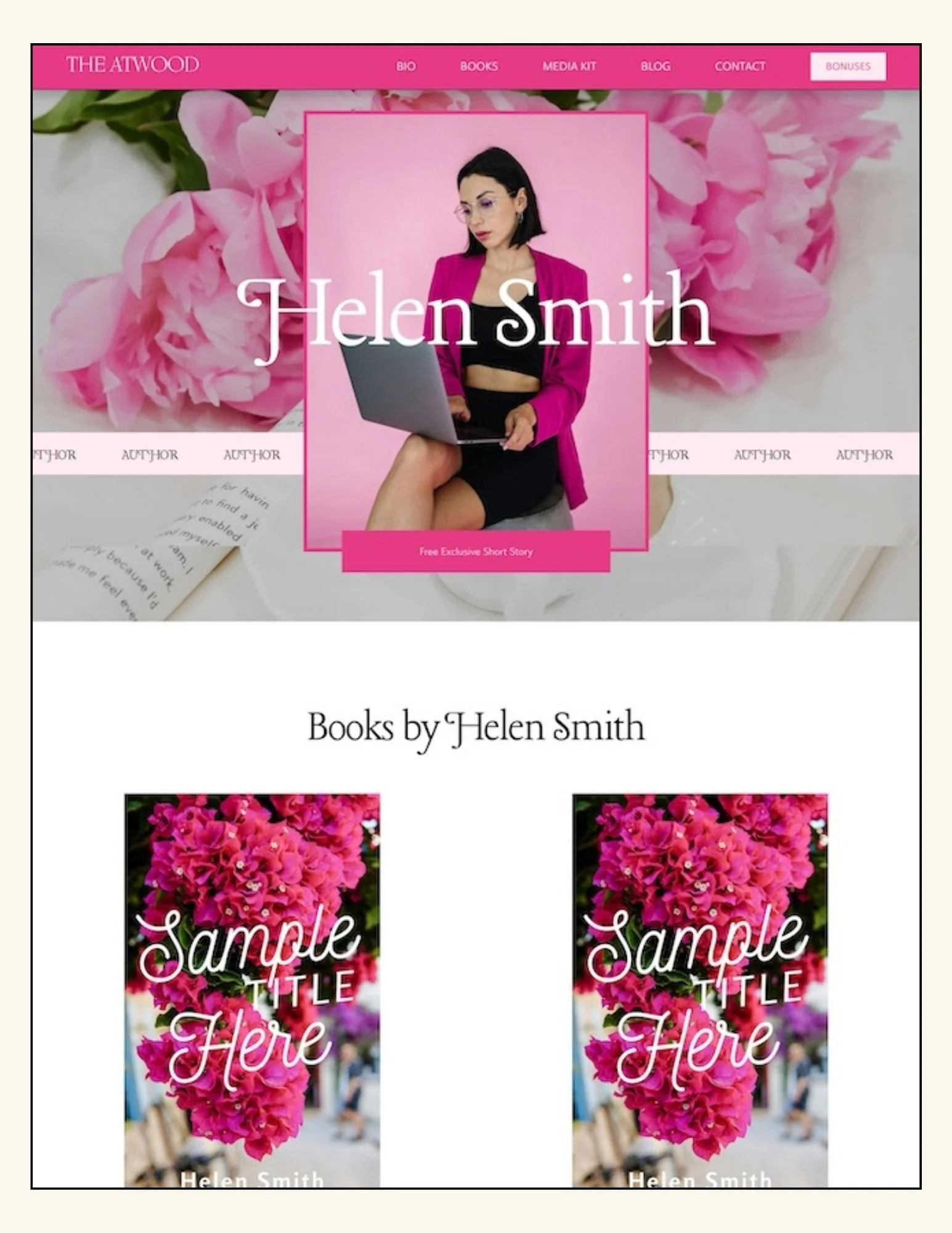
THE ATWOOD - Squarespace Author Website Template
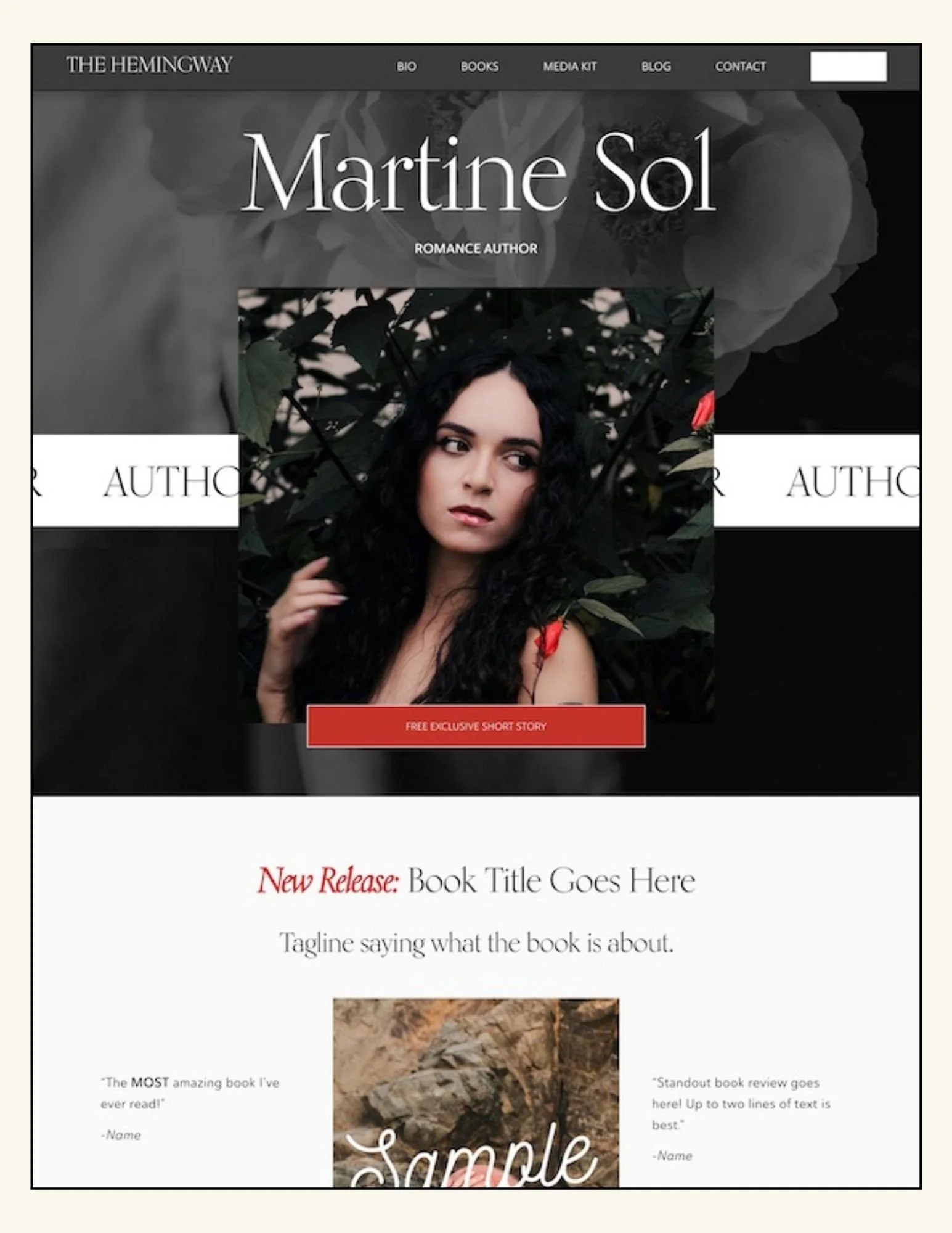
THE HEMINGWAY - Squarespace Author Website Template
THE GILBERT - Squarespace Author Website Template