

THE BLOG
Website Tips For Authors and Small Businesses
BLOG CATEGORIES
Why I Don’t Recommend a One-Page Author Website!
Learn why multi-page author website examples outperform one-page layouts for SEO and growth.

A one-page website might seem appealing at first. It’s simple, quick to put together, and often very affordable to set up. But as an author, your website has a much bigger job to do than to simply exist online. It’s your digital home, your online bookstore (that sells your books and only your books..woo woo!), and a place for growing your brand and audience. And while a one-page site may check the “easy” box, it often falls short where it truly matters.
Let’s dive into why a multi-page website is essential for authors who want to captivate readers, grow their audience, and build a thorough marketing funnel. We’ll cover the SEO limitations of a one-page author website, as well as the impacts it has on user experience, functionality, and building your author brand.
Ready to start dreaming up your author website?
Grab my free Author Website Blueprint here, it’ll help save you LOADS of time figuring out the exact pages your author website needs.
The Purpose of an Author Website
Your website is more than something you just throw together and hope for the best —it’s your most valuable marketing tool. I know, I know.. But isn’t Tiktok / Instagram the most important place to market my books? Well.. although social media platforms are very important for authors who are in the connection and awareness phase of their marketing endeavors, social media doesn’t create long-term connections in a way that your website can.
Here’s what a successful author website should be doing:
Create a home for your online books: Your website should showcase your work, voice, and personality in a way that resonates with readers. We want your author website to create a vibe around your books. Showstopping branding & good design can immediately hook and capture your potential readers' interest.
Engage Readers: Your website is like a window into your world that your readers can gaze into. Your website can help readers learn more about you, explore your books and stay updated on your author journey and future book events and most importantly, it’s where you should be enticing potential readers to sign up for your newsletter.
I’m going to repeat this a lot but your author website is the KEY to your book Marketing Strategies: It’s actually where you need to be sending your social media traffic to so they can sign up for pre-orders, and learn more about launches, and promotions.
To do all that has been mentioned above effectively, certain pages are non-negotiable: an about page, books page, blog or events page, contact page, and a way to build your email list. Want to see how it all comes together?
Check out my Author’s Guide to Website Design & Branding here.
A website isn’t just a pretty place to park your book. It’s a strategic tool that works 24/7 to market your books and grow your readership.

Why a One-Page Website Falls Short
Limited SEO Opportunities
Search engines love websites with rich, organized content. A one-page site doesn’t offer the structure needed to:
Optimize individual pages for targeted keywords like “[Your Name] Author Bio” or “[Book Title] Summary.”
Build separate pages for each book, improving search visibility for specific titles or genres.
Help readers and search engines navigate distinct areas of your site with clarity.
Think about it this way: if each page on your website is a door, a one-page site is like having only one door. But what if readers are searching for different ways to connect with you? Multiple pages create those individual doorways for readers—and search engines—to find exactly what they need.
Poor User Experience (UX)
One-page websites can feel overcrowded and chaotic, making it hard for readers to find what they’re looking for. Key drawbacks include:
Overwhelming Content: Packing everything into one page can confuse and frustrate users.
Navigation Issues: Without clear sections or menus, readers struggle to locate specific information like your latest book release or blog.
Imagine walking into a bookstore where all the books are piled into one corner with no labels. That’s what a one-page website can feel like—disorganized and overwhelming.
Challenges in Showcasing Your Brand and Work
Your website is your brand ambassador, but a one-page layout limits your ability to:
Highlight multiple books or projects.
Share dynamic content like book reviews, media features, or blog posts.
Build a cohesive, professional image that mirrors the depth of your writing.
Your books, achievements, and personality deserve space to shine. A single page just can’t do it justice.
Related: How Fantasy Author J.E. Harter Uses Her Author Website

The Benefits of a Multi-Page Author Website
Improved SEO and Visibility
With a multi-page website, you can optimize for a variety of keywords. For example, on my website, some LSI keywords I optimize for are:
"Author website design tips" (Homepage).
"Effective author website layout" (Books page).
"Email list building for authors" (Contact or landing page).
Search engines prioritize well-organized sites with diverse content, and a multi-page layout lets you spread the SEO love. Think of it as planting multiple seeds instead of betting everything on one tree to grow.
Better Navigation and User Engagement
Multi-page websites provide a seamless experience:
Readers can explore dedicated pages for each book, learning more about your stories.
A blog keeps visitors on your website longer, which in turn boosts your SEO.
When readers can easily find what they’re looking for, they’re more likely to stick around. And the longer they stay, the stronger the connection they build with you as an author.
Scalability for Future Growth
Planning to publish more books? Host workshops or book signing events? Add services like speaking engagements? A multi-page layout grows with you, giving you the flexibility to expand without overhauling your site.
Think long-term. Your website should grow alongside your career, not hold it back.

Key Pages Every Author Website Should Include
Here are the must-haves for any successful author website:
Homepage: Introduction to your brand as an author.
About Page: Showcase your journey and build a connection with readers.
Books Page: Highlight each book with summaries, reviews, and purchase links.
Blog Page: Share insights, writing tips, or updates.
Contact Page: Make it easy for readers, media, and collaborators to reach you.
Email Signup Page: Drive email list growth with lead magnets or CTAs.
Each page plays a role in telling your story and drawing readers deeper into your world. Together, they form a cohesive narrative that keeps your audience coming back for more.

Addressing Common Misconceptions About One-Page Websites
Misconception #1: “It’s harder to Maintain”
Modern website platforms like Squarespace or Wix make managing multi-page websites a breeze. You’ll have the same tools and ease of use—with way more functionality.
Misconception #2: “It’s Cheaper”
While upfront costs might be lower, a one-page site often requires more reworking as your needs grow. Multi-page templates are affordable and scalable from the start and you can even hide any of the pages you don’t want to use quite yet.
Misconception #3: “Readers Don’t Want Too Much Information”
Dedicated pages make information clearer and more accessible. Your readers will thank you for creating pages with a topic dedicated to each page.
Conclusion
A one-page website might seem convenient, but it’s not equipped to meet the demands of an author’s growing brand. By investing in a multi-page site, you’ll enjoy:
Better SEO and visibility.
A clear and impactful user experience.
The flexibility to grow with your career.
Your stories deserve a website as dynamic and engaging as your books. Ready to take the leap?Check out Website Design Services here: Author Website Design Services
Ready for a Showstopping Author Website of Your Own?
I specialize in creating bespoke websites for authors that captivate readers and grow your audience. With a blend of strategy and creativity, I’ll help you craft a site that works as hard as you do.
Learn more about my Website Design Services here!
Here’s how it works:
We start with YOU—your brand, your books, your goals.
I create a custom game plan to bring your vision to life.
You get a site that’s not just beautiful but strategically designed to engage readers and sell books.
Let’s build a website you’ll love. Contact me today to get started!
Pro Tip: Already have a website but feel it’s not pulling its weight? Let’s chat about a refresh to help you stand out and shine.
More into DIY? Check out my Squarespace Author Templates
Visit the Author Website Template Shop: TEMPLATE SHOP

THE ATWOOD - Squarespace Author Website Template

THE HEMINGWAY - Squarespace Author Website Template
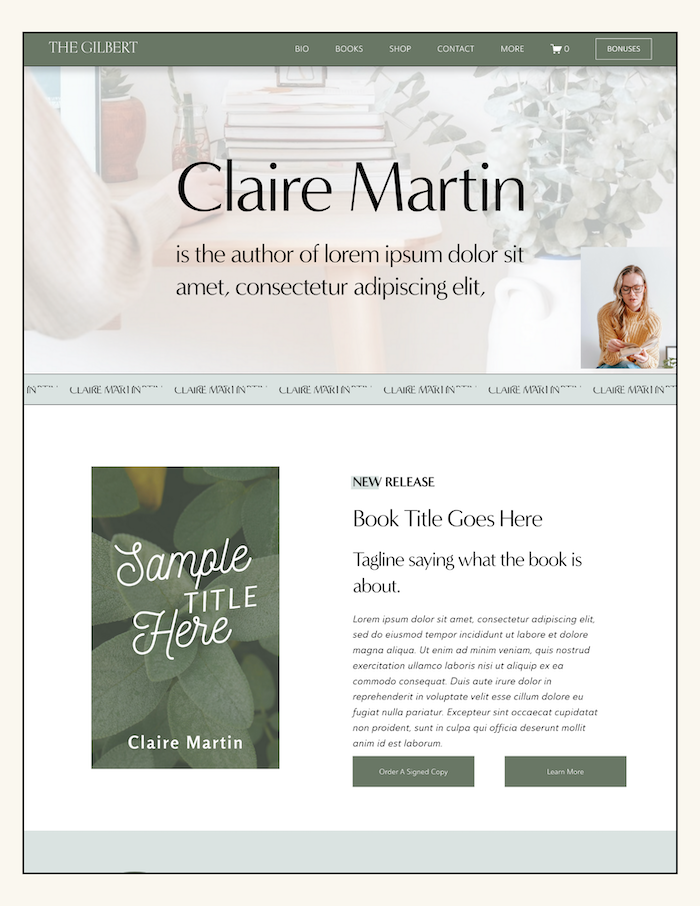
THE GILBERT - Squarespace Author Website Template
Squarespace for Authors: A Quickstart Guide to Building Your Perfect Author Website
A beginner-friendly guide to building an author website on Squarespace using proven structures.

The Overview
Why Authors Need a Professional Website
Explains the importance of a dedicated author website for building a brand, engaging readers, and driving book sales.Why Squarespace is the Perfect Platform for Authors
Highlights Squarespace’s ease of use, customizable templates, and robust tools that make it ideal for authors.Key Pages Every Author Website Needs
A detailed look at essential pages—like the homepage, about page, book page, blog, and contact page—and how to optimize them.Design Tips to Reflect Your Author Brand
Provides actionable tips on choosing fonts, colors, and layouts that align with your writing style and target audience.Integrating Marketing Tools Seamlessly
Covers how to set up newsletter signups, social media integrations, and analytics to grow your reader base.Showcasing Your Books Effectively
Offers guidance on creating visually appealing book pages that feature excerpts, reviews, and purchase links.Building a Connection with Your Audience
Discusses how to use blog content, email newsletters, and calls-to-action to engage and grow your community.SEO Strategies for Author Websites
Breaks down simple SEO tactics to help authors rank higher in search engines and attract more visitors.Using Squarespace’s Features to Simplify Management
Explains how to leverage Squarespace’s intuitive tools to easily update and maintain your site.Next Steps to Launch Your Site
Provides a clear roadmap for authors ready to create or revamp their website, including the option of using templates or professional design services.

A Quickstart guide to help authors build their website on Squarespace
As an author, your website should be more than just a digital business card. It’s the cornerstone of your online presence, a place where your readers can connect with you, learn about your books, and stay engaged with your latest projects. If you’re looking to create an author website that’s as captivating and unique as your stories, Squarespace for authors might be the perfect solution.
In this post, we’ll break down how Squarespace can help you create a beautiful, functional, and professional author website that will help turn your visitors into lifelong fans. Whether you’re just starting out or looking to refresh your current site, this guide will provide you with all the clarity you need to make your website work for you.
Squarespace truly allows you to say goodbye to your boring author website, thanks to its user-friendly experience and the availability of stunning website templates built specifically for authors (see my website templates for authors).
Why Choose Squarespace for Your Author Website?
Squarespace is an excellent website builder that offers a wide range of customizable features and templates, perfect for authors who want to create a unique and professional online presence without getting bogged down in technical details. Here’s why Squarespace is an ideal choice for authors:
1. Easy-to-Use Platform
Squarespace is known for its user-friendly drag-and-drop interface. This means that you don’t need to be a web design expert to create a stunning website. The intuitive layout allows authors to focus on what they do best—writing—while still building a website that reflects their creative vision.
2. Customizable Templates
Squarespace offers a variety of templates designed specifically for authors, showcasing your books and stories in visually striking ways. These templates are not only aesthetically pleasing but are also highly functional, designed to help you engage visitors and convert them into readers.
3. Mobile-Optimized Design
With the growing number of readers accessing websites through their phones, it’s essential that your author website looks great on any device. All Squarespace templates are mobile-responsive, ensuring that your website will look flawless on smartphones, tablets, and desktops alike.
4. Built-in Marketing Tools
Squarespace includes a range of built-in tools to help you market your books and grow your audience. Features like email marketing integrations, social media sharing, and SEO optimization will allow you to reach more readers and boost book sales.
5. SEO-Friendly
Squarespace makes it easy to optimize your website for search engines, helping potential readers find your site when searching for books in your genre. With customizable meta tags, alt text for images, and built-in analytics, Squarespace ensures that your site is optimized for search engines without requiring technical expertise.
6. E-commerce Capabilities
For authors who want to sell books directly through their website, Squarespace’s e-commerce features are a game-changer. You can easily set up an online store to sell digital and physical copies of your books, track inventory, and manage payments—all from within the platform.
7. 24/7 Customer Support
One of the biggest benefits of Squarespace is their exceptional customer service. If you ever run into any issues while setting up or maintaining your website, Squarespace offers 24/7 customer support to assist you in solving problems quickly.
How to Build a Stunning Author Website on Squarespace
Now that we’ve covered the benefits of using Squarespace for your author website, let’s dive into the key features that you’ll want to incorporate into your site to make it as effective as possible.
1. Homepage: Your First Impressions Matter
Your homepage is the first thing visitors will see when they land on your site, so it’s essential to make a lasting impression. Your homepage should immediately convey who you are as an author and what your readers can expect from your books.
Here are a few things to include on your homepage:
Hero Image or Book Cover: A large, eye-catching image that reflects the mood of your work or features your most recent book.
Brief Introduction: A short, engaging description of who you are and what you write. This is your chance to grab the reader’s attention right away.
Call-to-Action (CTA): A prominent button encouraging visitors to learn more about your books, sign up for your newsletter, or shop your book.
A clean, well-organized homepage sets the tone for the rest of your site and gives visitors a clear path to take action.
About Page: Showcase Your Story
Your About page is your opportunity to connect with readers on a personal level. Share your journey as an author, your inspiration for writing, and what readers can expect from your work. This page should be authentic and approachable, reflecting your personality.
Consider including the following elements:
Author Bio: A well-written bio that gives insight into your background and creative process.
Professional Headshot: A high-quality, friendly photo that helps readers connect with you.
Your Writing Journey: A brief story of how you became an author and what motivates you to write.
Don’t forget to include links to your social media profiles so readers can follow you and stay up-to-date with your work.
Books Page: Highlight Your Work
This is where your books take center stage. A dedicated books page should provide all the necessary information about your published works, including book summaries, cover images, and links to purchase or read more.
Here’s what you should include on your books page:
Book Covers: High-quality images of your book covers to make your page visually appealing.
Book Descriptions: A brief, compelling summary of each book, highlighting what readers can expect.
Purchase Links: Direct links to where readers can buy your books (Amazon, Barnes & Noble, or your own online store).
For authors with multiple books, you can organize your books into categories (e.g., fiction, non-fiction, series) to make it easier for visitors to navigate.
Blog: Engage Your Readers
One of the best ways to keep readers engaged is by maintaining an active blog on your author website. A blog gives you a space to share updates, insights into your writing process, book launch news, and other interesting content related to your work.
Tips for creating an engaging blog:
Post Regularly: Consistency is key when it comes to blogging. Even if you post once a month, regular updates will keep your readers engaged.
Share Behind-the-Scenes Content: Readers love to know more about the author behind the book. Share your writing process, thoughts on your latest book, and sneak peeks of future projects.
Encourage Reader Interaction: End each blog post with a question or call-to-action to encourage comments and engagement.A Newsletter Signup Form
Newsletter Sign-Up: Build Your Community
Building an email list is one of the most effective ways to connect with your readers directly. Squarespace allows you to easily integrate a newsletter sign-up form on your website.
Offer an incentive for visitors to sign up, such as:
Exclusive Content: A free short story, excerpt from your latest book, or writing tips.
Early Access to Book Releases: Give newsletter subscribers early access to book launches or discounts.
Special Offers: Periodic giveaways or promotions to keep your readers engaged.
Online Store: Sell Your Books Directly:

If you want to sell your books directly from your website, Squarespace makes it simple to set up an online store. You can sell both digital and physical books, track orders, and manage payments—all from within your website.
Product Pages: Create individual product pages for each book, complete with book descriptions, pricing, and purchasing options.
Secure Checkout: Squarespace’s secure checkout process ensures that your customers’ information is protected during transactions.
SEO Optimization: Help Readers Find You
Search engine optimization (SEO) is essential for increasing your visibility online and helping readers find your website. Squarespace offers built-in SEO features to help optimize your site for search engines.
Contact Page: Stay Accessible
Finally, make it easy for readers, media, and potential collaborators to get in touch with you. Include a simple contact form, your social media links, and any other relevant contact information.
Final Thoughts: Why Squarespace is the Best Choice for Authors
In today’s digital age, having a professional, engaging website is crucial for authors who want to build their brand and connect with their audience. Squarespace offers a powerful, easy-to-use platform that helps authors create a beautiful website that reflects their creativity and grows their readership.
With customizable templates, built-in marketing tools, SEO optimization, and e-commerce capabilities, Squarespace gives authors everything they need to create a stunning, functional website. Whether you’re just starting out or need a refresh, Squarespace for authors is the perfect solution to elevate your online presence and turn your website into a dynamic hub for your books and readers.
By following the tips and strategies outlined in this post, you can craft a Squarespace website that not only showcases your writing but also fosters a loyal reader community and drives book sales. Start building your author website today and take your writing career to new heights!
Check out Website Design Services here:
Author Website Design Services

More into DIY? Check Out The Squarespace Author Templates
Visit the Author Website Template Shop: TEMPLATE SHOP
THE ATWOOD - Squarespace Author Website Template
THE HEMINGWAY - Squarespace Author Website Template

THE GILBERT - Squarespace Author Website Template
12 Must-Have Features for an Unforgettable Author Website on Squarespace
Key features found in top author website examples built on Squarespace.

The Overview
✨ Sleek and Strategic Homepage✨ – Make a lasting first impression with a clean, focused homepage that highlights your books and brand.
✨ About the Author Page✨ – Craft a relatable and authentic bio, complete with fun facts and a personal touch, to connect with readers.
✨ Books or Portfolio Page ✨ – Showcase your books with compelling descriptions, covers, and easy purchase options.
✨ Blog Section ✨ – Share insights, writing tips, and personal stories while improving SEO and engaging with your audience.
✨ Newsletter Signup Form✨ – Build your reader list with an effective form and offer incentives to increase sign-ups.
Social Media Integration – Link to your social platforms and keep consistent branding across all channels.
✨ Contact Page✨ – Make it easy for readers, agents, or collaborators to reach you with a simple contact form and social media links.
✨ Mobile-Responsive Design✨ – Ensure your website looks great on mobile devices, with optimized images and easy-to-read fonts.
✨ SEO Optimization✨ – Improve your site’s visibility with key SEO strategies to help readers find you online.
✨ Testimonials and Reviews✨ – Build trust with potential readers by showcasing positive reviews and testimonials on your site.
✨ Event Calendar or Appearances Page✨ – Keep readers updated on book signings, workshops, and virtual events.
✨ Resources for Writers or Readers✨ – Add value to your website with writing tools, book club guides, and recommended reading lists.
Making your author website look awesome on Squarespace
As a self-published author or aspiring writer, your website is your digital storefront—a place where readers connect with your work, learn more about your journey, and even become your lifelong fans who can’t wait to buy your books! I really love designing out author websites on Squarespace simply because Squarespace makes it so easy and fun to create a showstopping website. Squarespace allows you to say goodbye to your boring author website, thanks to its user-friendly experience and the availability of stunning website templates built specifically for authors (see my website templates for authors). But what features should you include to make your site truly stand out? Here are the top things to include in your Squarespace author website.

A Sleek and Strategic Homepage
Your homepage is the first impression visitors will have of your site. It should immediately communicate who you are and what you write. As you design your homepage, be mindful of creating a clean and sleek design to keep the focus on your books & your author brand.
Tips for an Effective Homepage:
Feature a High-Quality Photo of YOU!!: Yes, I said it! You really should be incorporating at least one photo of you on your homepage. People buy from people afterall. :) Use a professional headshot or an image that reflects your brand in the “about the author” section of your homepage, or even in the homepage hero section of your website.
Include a Tagline: A short, catchy phrase that highlights your niche or genre.
Showcase Your Latest Work: Highlight your most recent book with a compelling cover image and a brief description.
Clear Navigation: Ensure that visitors can easily find other sections of your website with intuitive navigation menus. Keep your navigation items to five or under if possible.
Call-to-Action Buttons: Add clear CTAs like “Buy My Book” or “Read an Excerpt” to guide readers toward the next step.
An " Author Bio" Page
Readers love getting to know the person behind the stories. Your "About" page should tell your story in an authentic and relatable way. Did you know that the about page on a website is the second most visited page on most websites, after the homepage! This means, It’s really really important. A lot of people think of their about page as an afterthought, but let me tell you…it is prime real-estate! This is where you are forging a deeper connection with your curious website visitors, who just can’t wait to learn more about you and your writing!
What to Include:
A compelling bio written in the third person that showcases your journey as a writer.
Fun facts or personal tidbits that make you relatable, such as hobbies or favorite books.
A professional photo that exudes confidence and approachability.
A brief mention of your writing journey and accomplishments, such as awards or notable publications.
Optional: A short video introduction for a personal touch.
*Video on websites is one of the best converters imaginable!
A Books or Portfolio Page
Stating the obvious here, but you definitely should be making a books page on your website. There are few approaches you can have to this! You could do one page that showcases all of your books (think of this as a portfolio page). A page that features more than one book would need short descriptions (book blurbs..) to go along with images of your book covers.
The other kind of book page you would want is what I refer to as a “Book Sales Page”. Each book should get its own Book Sales Page. This page on your author website is similar to an amazon book listing but BETTER. It’s better because not only does it provide an in-depth description of your book, but you also have the opportunity to include related art prints, testimonials and even fantasy world maps. You really have the opportunity to go as deep into description as you like on a Book Sales Page, which is what makes it perhaps, one of the most exciting pages on your website.
Must-Have Elements:
Book Covers and Descriptions: Include eye-catching images of your book covers along with concise and engaging descriptions that spark curiosity.
Buy Links: Make it easy for visitors to purchase your books by linking to retailers like Amazon, Barnes & Noble, or independent bookstores. Offer multiple options to cater to reader preferences.
Downloadable Excerpts: Offer the first chapter or a teaser of your book to entice readers to take the plunge.
Organized Categories: If you write in multiple genres, organize your works by category to make it easier for readers to find their interests.
Highlight Awards: If your book has received accolades or rave reviews, display them proudly.
Author Website Inspiration
Check Out The Squarespace Author Templates
Visit the Author Website Template Shop: TEMPLATE SHOP

THE ATWOOD - Squarespace Author Website Template

THE HEMINGWAY - Squarespace Author Website Template
THE GILBERT - Squarespace Author Website Template
A Blog Section
Blogging is an excellent way to form deeper connections with your audience, establish your expertise, and improve your website’s SEO. A blog keeps your site dynamic and encourages repeat visits.
Blog Ideas for Authors:
Share behind-the-scenes insights into your writing process, including challenges and victories.
Discuss your favorite books or authors that inspire you, creating a connection with fellow readers.
Offer actionable writing tips or advice for aspiring writers.
Provide updates on upcoming projects, events, or book releases to keep your audience engaged.
Share personal stories that relate to themes in your books, offering deeper insight into your work.
Pro Blogging Tips:
Use SEO keywords naturally in your posts to help new readers find you online.
Maintain a consistent posting schedule to keep readers coming back.
End each blog post with a call-to-action, such as subscribing to your newsletter or sharing the post.
A Newsletter Signup Form
Controversial Opinion BUT the number one goal of your author website is not to immediately start selling your books. Shocking, I know…but the number one goal of your website is to get visitors on your newsletter. Why would this be the case?
There is so much noise online, and not just noise, but a lot of people! Many authors struggle to stand out on social media because a bookstagrammer scrolling their discovery feed flips from one author to the next. Your message goes in one ear and out the other. So what can you do to stay top-of-mind of your ideal reader? Answer: Get them on your newsletter.
Your newsletter will allow you to create a longer term connection with your potential reader so you can remind them about your book, over and over and over. And when you come out with your second book? Guess what, you can let all of your avid fans know right away in their inbox via your newsletter! The great news is that Squarespace makes it easy to integrate a newsletter signup form into your website design.
Tips for an Effective Signup Form:
Place it prominently on your homepage, at the end of blog posts, and on your contact page.( Make it bright and colorful!)
Offer an incentive, such as a free chapter, short story, printable guide, or exclusive updates. **Seriously, only your mom and best friends are going to sign up for your newsletter just because you ask them to “Sign up for my newsletter for updates & exciting news!”
Use clear, action-oriented language like “Download the first three chapters free” or “Get Exclusive access to short stories.”
Ensure the signup process is quick and easy to avoid losing potential subscribers
Social Media Integration
Are you putting a lot of effort into what you’re posting on Instagram or Tiktok? If yes, then why not link to your social from your website? On Squarespace, you can even embed your instagram feed into your website either on page or in the footer!
Pro Tips
Only link to platforms where you’re active and engaging regularly.
Use consistent branding across your social media profiles and website to reinforce your author identity.
Encourage visitors to follow you with a call-to-action like, “Follow me for more writing updates and bookish inspiration.”
Share interactive content, like polls or Q&A sessions, to increase engagement.

A Contact Page
You need a contact page! Readers, agents, media contacts, or potential collaborators may want to reach out to you and it’s just way more professional to have a page on your website with a contact form over just saying “DM for more info”. You’re a professional writer! Let’s make it easy for all these cool people to reach out! One of coolest and most unique approached to an author contact page that I’ve seen is Ruth Ware’s: See Here
What to Include:
A simple contact form with fields for name, email, and message.
*Seriously, don’t make your contact forms LONG… the faster and easier the more likely they’ll actually submit the form to you.
Having links to your social media profiles for alternative ways to connect is a good idea too!
An email address specifically for professional inquiries.
Optional: Include a FAQ section to address common questions, such as book availability or media requests.
Mobile-Responsive Design: Author Websites MUST look awesome on cell phones
With so many users browsing on their phones, a mobile-responsive design is non-negotiable. Squarespace templates are designed to look great on all devices, but make sure to test your site on mobile to ensure people that find your website on social aren’t greeted with a crazytown website. I honestly think authors should be prioritizing the aesthetics of how their website looks on mobile over desktop. An author website that looks awesome on cell phones is totally going to connect and convert with the most people!
Mobile Optimization Tips:
Use large, readable fonts. (keep fancy script fonts to a BARE minimum).
Optimize images to load quickly on mobile.
Ensure buttons and links are easy to tap without zooming in.
SEO Optimization
To help people find your author website on Google, you’re going to want to pay attention to SEO. Squarespace offers built-in tools to help you optimize your site for search engines (Thank goodness, because SEO can get both tricky and expensive!).
Key SEO Tips:
Use keywords like your author pen name and the titles of your books in your content and meta descriptions.
Write descriptive alt text for your images to make them accessible and searchable.
Optimize your page titles and URLs for clarity and relevance.
Regularly update your site with fresh content to improve your rankings.
Testimonials and Reviews
Social proof can go a long way in convincing potential readers to check out your work. Dedicate a section of your homepage to showing two to thre reviews, testimonials, or blurbs from readers, fellow authors, or critics. Keep the testimonials on your homepage brief though! Two to three sentences max. Then link to a separate page where you post all your reviews in full!
How to Use Testimonials Effectively:
Place excerpts of the most impactful reviews on your homepage.
Include the reviewer’s name and title (if applicable) to add credibility.
Regularly update testimonials to keep the content fresh.
Event Calendar or Appearances Page
If you participate in book signings, virtual events, or writing workshops, include an event calendar to keep readers informed. Squarespace offers easy-to-use tools for showcasing your events on your website.
Resources for Writers or Readers
Adding a resources section can make your website more engaging and valuable to visitors. For example, you can share writing tools, book club guides, or recommended reading lists.
To Sum it all up:
Your Squarespace author website shouldn’t be an afterthought. It’s where you can build your brand and connect with your audience on an even deeper level By including these essential features, you’ll create a site that not only looks professional but also helps you achieve your goals as an author.
Ready to build your dream author website? Download our free Author Website Blueprint to find out the exact pages your author website needs. It’s packed with tips and advice to simplify the process and ensure your site is optimized for success!
Check out Website Design Services here:
Author Website Design Services

More into DIY? Check Out The Squarespace Author Templates
Visit the Author Website Template Shop: TEMPLATE SHOP
THE ATWOOD - Squarespace Author Website Template
THE HEMINGWAY - Squarespace Author Website Template
THE GILBERT - Squarespace Author Website Template
How to Strategically add Book Reviews to your Author Website
Learn where and how to place reviews on your author website for credibility and conversions.

When it comes to building up hype around your books with potential readers, there’s one thing that does the heavy lifting: social proof. Whether it’s glowing book reviews, award badges, or heartfelt testimonials from readers, showcasing these on your author website can significantly boost your credibility. In this post, we’ll walk you through how to effectively display reviews, testimonials, and awards to capture attention, create trust, and guide readers toward buying your book.
Why Social Proof Matters:
Imagine walking into a bookstore. You see a book with a big sticker on the cover: “Winner of the National Book Award.” That sticker makes you pause, doesn’t it? The same principle applies to your author website. Book reviews, testimonials, and awards show potential readers that others have already vetted and loved your work. These elements create trust and encourage visitors to take action—whether that’s buying your book, signing up for your newsletter, or following your journey.
Start with the Hero Section:
Now, let’s talk about where to showcase your most compelling reviews. The hero section is the very first thing visitors see when they land on your website. It’s typically at the top of your homepage and spans the full width of the page. This section is prime real estate—it’s your chance to make a stellar first impression.
If you’re unsure what goes into a hero section, think of it as the attention-grabber. It usually includes:
A headline or tagline (e.g., “Escape into a world of mystery and adventure”)
A brief description or hook
A strong call-to-action (e.g., “Get your copy today”)
Here’s where reviews come in. Adding a short, glowing review or an award badge right here instantly tells visitors, “This book is worth your time.”
For example, instead of:
“Welcome to my website!”
Try something like:
“Named ‘Best Mystery Novel of 2024’—find out why readers can’t put it down.”
To illustrate, this is where I recommend using an image. If you’re using one of my website templates, like the Hemingway or Austen templates, you can see how a small block of text or an award badge fits seamlessly into the various sections of the home page design.
Keep Testimonials Short and Impactful:
When it comes to testimonials, less is more. Visitors typically skim websites, so long paragraphs won’t hold their attention. Pull out the most memorable part of a review—just a sentence or two—and feature it prominently.
Here’s an example:
“An unforgettable journey through time—this book stayed with me long after the final page.” – Jane Doe, Reader
You can also include a headshot or a logo if the review is from a notable figure or publication. This builds extra credibility.
In my website templates, I’ve made it easy to add brief testimonials within and below the hero section. Images near the testimonials aren’t 100% necessary but do help keep testimonial sections structured and even keep things visually on vibe with your website.
Author Website Inspiration
Check Out The Squarespace Author Templates
Visit the Author Website Template Shop: TEMPLATE SHOP
THE ATWOOD - Squarespace Author Website Template
THE HEMINGWAY - Squarespace Author Website Template
THE GILBERT - Squarespace Author Website Template
Where to Showcase Book Reviews Beyond the Homepage
While the hero section is a great starting point, there are other key spots on your website to include reviews and testimonials:
1. Book Detail Pages
Each book you’ve published should have its own page. Include several reviews here, along with purchase links. Arrange them in a way that breaks up the text—use bold headers, pull quotes, or even sliders to make it easy for visitors to read.
2. Media Kit Page
The Media Kit page isn’t just for your bio—it’s also a great place to sprinkle in testimonials. Reviews about your writing style or your ability to connect with readers can fit perfectly here.
3. Footer Section
For reviews or awards you want visible site-wide, the footer is an often-overlooked but effective location. A single, standout testimonial in the footer ensures that every page reinforces your credibility.
Awards and Badges: Go Visual
Awards and badges are an excellent way to add visual interest to your website. Unlike text-based reviews, badges are small graphics that immediately catch the eye. Here’s how to incorporate them:
Place badges in the hero section, alongside your tagline.
Add a row of awards just above the footer for a subtle but effective touch.
Use badges to break up text-heavy pages, like your book detail page.
If you’re using my Squarespace, for instance, it takes minutes to create a section on your home page for showcasing awards with icons or small images.
Use Reader Testimonials
Reader testimonials don’t have to come from big-name critics. In fact, quotes from everyday readers can feel more authentic and relatable. Here’s how to ask for them:
Include a note at the back of your book inviting readers to leave a review on your website shop or Amazon page.
Host a giveaway or special event in exchange for reviews.
Reach out to your email list and ask readers to share their thoughts.
When you receive these testimonials, format them to be short, specific, and conversational.
Add Video Reviews
If you want to take things up a notch, Squarespace makes it easy to add video testimonials to your site. A brief, heartfelt video from a reader or fellow author can add a personal touch and keep visitors engaged longer. Place these on your book detail page or even your homepage for maximum impact.
Best Practices for Adding Social Proof
Now that you know where to showcase reviews and testimonials, let’s talk about best practices to keep things polished and professional:
Keep It Relevant: Only showcase reviews that align with the genre and tone of your writing.
Focus on Design: Use clean, readable fonts and consistent colors to make reviews visually appealing.
Update Regularly: As you receive new reviews or win more awards, rotate them into your website to keep the content fresh.
Keep Copy Brief: Short snippets are not only easier to read but also make your website feel intentional and well-curated.
Final Thoughts
Adding book reviews, testimonials, and awards to your author website is one of the most effective ways to build credibility and trust with potential readers. From spotlighting a glowing review in the hero section to dedicating space for reader testimonials, these small but powerful details can make a huge difference in how your work is perceived.
If you’re ready to elevate your author website, my templates make it easy to showcase reviews beautifully and effectively. Check out the options on my website and let’s make your site a page-turner for potential readers.
Check out Website Design Services here:
Author Website Design Services
More into DIY? Check Out The Squarespace Author Templates
Visit the Author Website Template Shop: TEMPLATE SHOP
THE ATWOOD - Squarespace Author Website Template
THE HEMINGWAY - Squarespace Author Website Template
THE GILBERT - Squarespace Author Website Template
Author Website Design Deep Dive: Answering the 14 Most-Asked Questions
Clear answers to common author website design questions, based on real author examples.

Author Website Design Deep Dive: Answering the 14 Most-Asked Questions
Creating an author website is an exciting and essential step toward building your unique online presence! Whether you're an aspiring writer or a seasoned author, having a dedicated space where you can share your work, connect with readers, and showcase your journey is invaluable. With so many aspects to consider, it’s natural to have questions. In this post, we’ll explore some of the most frequently asked questions about author websites to help you navigate this vital part of your writing career. Let’s dive in and discover how to make your author website shine!
What is an author website?
An author website is a dedicated online platform where authors can showcase their books, share their writing journey, and connect with readers. It serves as a central hub for all author-related content, including upcoming events, blog posts, and newsletters.
What is the best website for an author?
The best website for an author effectively combines aesthetics with functionality. It should reflect the author’s brand, be user-friendly, and include features that promote engagement, such as a blog, mailing list signup, and book information.
What kind of website should a writer have?
Writers should have a professional website that highlights their work, showcases their writing style, and offers resources for readers. This can include sections for their books, a shop, an events calendar, and links to social media.
What should I call my author website?
Your author website should ideally include your name or pen name to make it easily recognizable. You might also consider adding one of these word to the end of your url “books”, “author”, “writer”. This gives visitors an immediate sense of your brand.
Example: www.katecrossbooks.com, www.katecrossauthor.com
What should be on an author website?
An author website should include:
A homepage with a brief introduction
Book pages for each title
A blog for updates and insights
A newsletter signup form
Information about events and appearances
A shop to sell your books or merchandise directly
Links to social media profiles
Author Website Inspiration
Check Out The Squarespace Author Templates
Visit the Author Website Template Shop: TEMPLATE SHOP
THE ATWOOD - Squarespace Author Website Template
THE HEMINGWAY - Squarespace Author Website Template
THE GILBERT - Squarespace Author Website Template
What is the best Squarespace template for authors?
The best Squarespace template for authors depends on individual style and needs. I’ve created Squarespace website templates designed specifically for authors! Check them out here: https://guidedwebdesign.com/shop
The Hemingway Squarespace Template for Authors
The Gilbert Squarespace Template for Authors
The Atwood Squarespace Template for Authors
The Austen Squarespace Template for Authors
The Quick Start Squarespace Template for Authors
The Children’s Book Squarespace Template for Authors
How should an author website look?
An author website should have a clean, visually appealing design that reflects the author’s style. It should be easy to navigate, with a cohesive color scheme and typography that enhances the reading experience without overwhelming visitors. Make sure you use legible fonts** Don’t get too fancy. Simple is better.
Do you need a website as an author?
Yes, having a website is essential for authors. It provides a professional space to promote your books, connect with readers, and build an engaged community. It also enhances your visibility and credibility as a writer.
Is Squarespace good for an author website?
Squarespace is an excellent choice for an author website due to its user-friendly interface, customizable templates, and robust features for blogging and e-commerce. It allows authors to create visually stunning websites without needing extensive technical knowledge.
Is Squarespace good for writers?
Absolutely! Squarespace offers a range of features that cater specifically to writers, making it easy to showcase books, merchandise, and events. Its integrated tools for SEO and marketing also help writers reach a broader audience.
Should new authors have a website?
Yes, new authors should definitely have a website. It establishes an online presence early on, provides a platform to connect with readers, and can help in building an email list for future book releases.
Do self-published authors need a website?
Self-published authors need a website to create a community around their books in order to more effectively market and establish their brand. A dedicated site allows them to control their narrative, connect with readers, and promote their work without relying solely on social media platforms.
How much does it cost to build an author website?
The cost of building an author website can vary widely. DIY website builders like Squarespace may charge a monthly fee ranging from $16 to $99, while hiring a professional designer could cost anywhere from a few hundred to several thousand dollars, depending on the complexity of the site.
How to make an author website for free?
To create a free author website, consider using platforms like WordPress.com, Wix, or Blogger. While these options have limitations compared to paid services, they allow authors to establish an online presence without upfront costs. Keep in mind that free versions often come with ads and less customization and you can’t add your domain to your website which is kind of a big problem….whatever you do, make sure you buy your domain name asap, even if you don’t plan to use it right now. DM on instagram to ask why!
Elevate Your Author Website with my Website Design Resources
As a writer, having an author website is vital to your success, and I understand the unique challenges you face in establishing a professional and engaging website. At Guided Web Design, I specialize in creating custom websites tailored specifically for authors like you, ensuring that your unique voice shines through in every aspect of your website.
Why Choose Guided Web Design?
Personalized Service: I work closely with each client to understand their vision and goals. My approach is to build a website that not only meets your expectations but exceeds them, creating a digital space that feels authentically you.
One-Week Website Design Service: If you’re looking for a quick turnaround, my One-Week Website Design Service is the perfect solution. Within just one week, I can help you launch a professional author website that showcases your books, connects with readers, and builds your brand effectively.
DIY Author Website Templates: Not ready for a full design service? No problem! My DIY author website templates allow you to create your website at your own pace. These templates are designed specifically for authors, making it easy to customize your site while still ensuring a professional look. With a range of styles and layouts to choose from, you’ll find a template that aligns perfectly with your author brand.
Comprehensive Support and Resources
To make the process of building your author website as smooth as possible, I provide ongoing support and resources. Here’s what you can expect when you purchase from me:
30 Days of Post-Purchase Email Support: After you purchase a website template or complete a design week with me, you’ll receive a month of email support to answer any questions and help you navigate your new website confidently.
FREE Monthly Live Lessons: Join my “Introduction to Squarespace for authors” coaching call, where I walk beginners through getting started on Squarespace. It’s a great opportunity to learn from a Squarespace expert and connect with other authors.
Template Power Hour: For those who purchase a DIY template, I offer personalized one-on-one sessions to help you customize your website and ensure it reflects your vision perfectly.
Thoughtfully Created Resources: I provide reusable book section templates on the backend of your website design (meaning they are ready for you when you need them!) and a comprehensive website launch checklist to streamline your process. Additionally, I offer organized video tutorials to help you manage your Squarespace website easily.
Let’s launch your author website!
Shifting your focus from social media buzz to building a meaningful community is essential for any author. Your website is not just a platform; it’s a space where your stories can flourish, and where readers can connect with you on a deeper level.
By investing in a professional author website, you’re taking a significant step towards enhancing your brand, growing your readership, and ensuring your work resonates with your audience for years to come. Let’s work together to craft a tailored website that truly represents you and your stories.
If you’re ready to have an author website that you’re proud of and build a genuine connection with your audience, I invite you to explore my services at Guided Web Design. Together, we can create a captivating author website that you just can’t wait to show off
Check out Website Design Services here:
Author Website Design Services
More into DIY? Check Out The Squarespace Author Templates
Visit the Author Website Template Shop: TEMPLATE SHOP
THE ATWOOD - Squarespace Author Website Template
THE HEMINGWAY - Squarespace Author Website Template
THE GILBERT - Squarespace Author Website Template
How Fantasy Author S.C. Muir Uses Her Author Website to Connect with Readers
A real-world author website example showing how design supports reader connection.

The Overview
Author Websites & Social Media: Muir uses Instagram, TikTok, and Pinterest to drive traffic to her website & books, finding TikTok most effective for engagement and sales.
Selling Signed Copies: Her website is the primary place for selling signed copies, with a direct link between TikTok interactions and book purchases.
Building a Reader Community with Newsletters: Muir’s main website goal is to grow her newsletter, allowing her to build long-term reader relationships.
Newsletter Engagement: Her newsletter subscribers are highly engaged, often responding to events and street team invites, and most stay subscribed for 8+ months.
Incentives for Sign-Ups: Muir offers exclusive content (e.g., character art, cover designs, and early access) to encourage newsletter subscriptions.
DIY Author Website Design Challenges: Muir found balancing aesthetics and professional functionality difficult when setting up her website.
Mobile Optimization is Essential: Muir emphasizes mobile optimization, a lesson learned after discovering her website didn’t initially look great on mobile.
Advice for Indie Authors: Muir advises having a website as a central landing page and encourages overcoming the fear of imperfection.
Encouragement for Website Creation: Muir believes authors should embrace website creation and seek help from peers to build a functional and effective online presence.
How Fantasy Author S.C. Muir Uses Her Author Website to Connect with Readers
WHO: S.C. Muir
Website URL: scmuirauthor.com
Genre: Fantasy Romance
Indie author S.C. Muir is making waves in the fantasy romance genre with her captivating Dual Mage Series, which follows a prince of fire and a princess of death as they navigate an arranged marriage, societal divisions, and the rise of a dual mage who can wield two types of magic at once. Currently, Muir has two books in the series published, with a third slated for release in early 2026.
“I’ve always been a writer,” Muir shares, reflecting on her long-standing love for storytelling. “I wrote my first book when I was about eight.” Though the first book in the Dual Mage Series“Death By Fire” started as a fun personal project, it quickly grew, and the idea for her trilogy sprang to life.
How S.C Muir is Currently Marketing Her Books
When it comes to marketing her books, S.C. Muir takes a multi-platform approach, primarily leveraging social media. “I mostly use a mix of Instagram, TikTok, and a little bit of Pinterest,” she says. These platforms serve as the primary driver of traffic to her books available on Amazon, Barnes & Noble, and her author website.
Out of the three, Muir finds that TikTok has had the greatest impact. “I think it’s TikTok,” she notes when asked which platform drives the most traffic to her website. Muir uses her website mainly to sell signed copies of her books, and she sees a direct link between her TikTok interactions and book sales. “Just based on interactions I’ve had in my comment section on TikTok, I always get comments like, ‘I just bought your book,’ and then I see the order pop up!”
The Importance of a Newsletter sign-up on your author website
For Muir, her author website isn’t just about selling books—it’s about building long-term relationships with her readers, primarily through her email newsletter. When asked what the main goal of her website is, she says: “Definitely getting visitors up on my newsletter,” Muir recognizes the power of newsletters in driving sales: “The amount of times I have bought books from my favorite author’s newsletters, I do it all the time!”
She goes on to explain that newsletters give authors a direct line of communication with their readers. “If I mention in my newsletter ‘I’m going to be at X event, I’m looking for people to join my street team,’ a lot of my newsletter subscribers actually sign up for those things. They interact with you; they have signed up to see these communications from you—they want to hear from you.”
Her strategy has paid off, with most of her subscribers staying engaged for the long term. “I’ve had my website for 1.5 years, and most of my subscribers have been on my newsletter for 8 or more months.”
To incentivize newsletter sign-ups, Muir offers exclusive content to her readers. “First looks at character art, book cover designs, access to advanced copies, etc.”
Muir currently uses MailerLite as her email service provider. “It’s super user-friendly,” she says, though she has noted that the aesthetics aren’t the best.
Challenges with DIY Author Website Design
Like many indie authors, Muir faced her own challenges when setting up her website. “I think the thing that was hardest for me was aesthetics,” she admits. “I don’t have an aesthetic eye, so trying to find the balance between professional and too professional was difficult for me.”
Choosing the right platform also proved tricky. “Figuring out which website hosting to use was confusing. That was a lot. There are so many that it was hard to know which one to choose.”
In terms of content to include on her website, Muir found guidance by looking at what other authors in her niche were doing. “I looked at other authors’ websites in my niche and I tried to imitate that on my website,” she explains. For her, the essentials included: “Home page, things about my books, an about me section, a shop, and a newsletter sign-up.”
Yes, Author Websites need to look great on mobile
One of the most surprising lessons Muir learned while designing her website was the importance of mobile optimization. “Haha yes, I didn’t even realize that there was a difference,” she laughs, recalling an early misstep. “I sent my website to a friend so that she could check if all the links worked, and she sent me a screenshot of my mobile website, and she was like, ‘This is horrible, haha.’ I had no idea you had to design your website on mobile separately.”

This experience taught her an important lesson: it’s crucial to make sure your website looks good on mobile devices. Most people visiting author websites aren’t using a computer to look at them; they are using their phone. So make sure that you are making the mobile version of your website look just as great, if not even better than the desktop version.
Author Website Advice for Fellow Indie Authors
For any authors who are nervous about launching their first website, Muir offers clear advice: “I think it’s definitely imperative for authors to have a website, whether you’re selling a million copies a year or selling five copies. No matter where you are at, having a central landing page that links to everything is super imperative.”
Having a website gives authors a professional presence online and helps readers easily find them. “If you google your author name, sometimes a website might be one of the things that pops up.”
She also encourages authors to get past their fear of imperfection. “Getting over the fear, recognizing it doesn’t have to be perfect—you can always make it better.” Her advice? “Look at other author’s websites and get ideas, and find a platform that is easy for YOU. Not just what is easy for someone else.”
Future Plans for Her Author Website
Looking ahead, Muir has plans to expand her website’s functionality. “I’d really like to add an events page, now that I’m doing a lot more events, so then it’s not just a post on social media,” she says. She’s also considering adding an event wrap-up section to her blog to give readers a behind-the-scenes look at her appearances.
Advice to other authors launching their websites: Just Go for It
In conclusion, S.C. Muir encourages fellow authors to embrace the challenge of creating a website. “There is a lot of fear about stepping out of your comfort zone and setting it up, which is totally understandable,” she acknowledges, but she urges authors to take the plunge. “I encourage authors to embrace it and just go for it. Reach out to other authors and ask questions.”
With the right mix of social media, email marketing, and a well-designed website, S.C. Muir has built a strong platform to market her books and connect with her readers—and she believes other authors can do the same.
FREE!
Want to Sell More Books? It All Starts with Your Newsletter!
What’s Inside?
Discover the secret sauce top authors use to build loyal reader lists and skyrocket their book sales! 🚀 Download my free guide: Author Newsletter Booster: How to Get More Newsletter Signups on Your Author Website and start building your fanbase today.
Enter your email below to access the guide:

Want to save time launching your author website? Check Out The Squarespace Author Templates
Visit the Author Website Template Shop: TEMPLATE SHOP
THE ATWOOD - Squarespace Author Website Template
THE HEMINGWAY - Squarespace Author Website Template
THE GILBERT - Squarespace Author Website Template
How Fantasy Author J.E. Harter Uses Her Author Website
An author website example highlighting layout choices that support branding and engagement.

The Overview
Her Website = Hub for Loyal Fans
J.E. Harter sees her website as a place to stay in touch with her readers, where they can easily sign up for her newsletter and stay connected. It’s not the first place she gets new readers, but it’s essential for keeping her biggest fans in the loop with exclusive content like sneak peeks and cover reveals!Keep It Simple (and Free) to Start
Harter recommends starting with a free website (hello, budget-friendly!) to get the basics up and running—your bio, books, and a newsletter signup. You don’t need all the bells and whistles right away. Just get your feet on the ground and grow from there!Get That Newsletter Going!
Her website is all about getting readers onto her newsletter list—it's the only way readers can sign up! She uses fun calls-to-action on social media, offering free incentives (think sneak peeks and special reveals) to encourage sign-ups.Upgrade When You’re Ready
Harter plans to eventually switch to a paid website and focus more on SEO. She suggests taking your time, building your audience first, and then upgrading your site when it makes sense.Make Sure It Looks Good on Mobile
J.E. knows how important it is to have a site that looks great on every device. Her pro tip? After making changes, always check how your site reads on mobile to make sure it’s looking its best for your readers!Essential Pages to Include
On her site, she’s got a dedicated page for each of her books, an "About Me" section, a reviews page, and a newsletter sign-up. It’s clean, simple, and all about helping readers find what they’re looking for. Even without a shop (yet!), she’s made it super easy for fans to buy her books by linking out to where they can purchase.
How Fantasy Author J.E. Harter Uses Her Author Website
WHO: J.E. Harter
Website URL: https://jeharterauthor.wixsite.com/j--e--harter-author
Book Purchase Links: https://jeharterauthor.wixsite.com/j--e--harter-author/copy-of-press-reviews
J.E. Harter has been writing since childhood, with an unwavering passion that stretches back to when she was very young. "I have always been writing since I was a little kid, it was something I was always very committed to. I didn’t just write a page or so of writing, I would actually write books from a very young age, so it has always been something that I’ve enjoyed doing," she recalls.
It wasn’t until two and a half years ago that she began work on her debut novel, The Butcher and The Bard. The idea came while she was watching The Witcher. "I was watching The Witcher actually, and I thought it would be cool if there was a female version of Geralt, so that’s who my main character is about." With a blend of fantasy and a fierce female lead, Harter’s book has attracted readers intrigued by her take on a strong female protagonist.
How J.E. Harter is Currently Marketing Her Books
As an indie author, Harter relies on social media to connect with readers and promote her work. She finds social platforms essential for reaching her audience. "I would say certainly social media is important, I would say it’s almost impossible as a self-published author not to use social media, unless you are so well established that people know who you are."
She primarily uses Instagram, TikTok, and reposts her Instagram content to Facebook. "The majority of people find me via TikTok or Instagram," she explains. "I can connect to readers that way, share my favorite books, things that I’m reading, share my writing process and advice with people there, which I think is really helpful. I also talk about the tropes of my book and other avenues to capture people's attention." By engaging readers in this way, Harter keeps her audience connected to her writing journey and characters.
In addition to social media, Harter uses a monthly newsletter to stay in touch with her most loyal readers. "I don’t think I’m getting new readers, but my most loyal readers sign up for the newsletter, those are people who are mostly guaranteed to buy the next book whatever I write," she explains. The newsletter serves as a way to give these readers something special, such as exclusive content like title reveals, cover reveals, and even sneak peeks. "I always send out the blurb, the title reveals, or cover reveals. I even sent out the first chapter of my third book to my newsletter last month and this month again, as a kind of sneak peek."
FREE!
Want to Sell More Books? It All Starts with Your Newsletter!
Snag the free guide
Discover the secret sauce top authors use to build loyal reader lists and skyrocket their book sales! 🚀 Download my free guide: Author Newsletter Booster: How to Get More Newsletter Signups on Your Author Website and start building your fanbase today.
Enter your email below to access the guide:
How J.E. Harter’s Author Website Fits Into Her Book Marketing Efforts?
When it comes to using her website as a marketing tool, Harter sees it more as a necessary hub than a primary driver of sales. For her, the website primarily functions as a place for readers to sign up for her newsletter and as a central landing page. "Typically, people get to my website through social media, and the only way for them to sign up for my newsletter is through my website," she says, emphasizing how social media plays the main role in directing people to her site. She uses calls-to-action on her social accounts to entice readers to visit. "I usually say things like: Here are some free incentives if you sign up for the newsletter."
Where Are Most People Buying Her Books?
For most of Harter’s readers, Amazon is the go-to platform for purchasing her books. "Definitely Amazon. I think most people are going to purchase on Amazon, it’s just so much easier for everyone. If you have Prime, you get free shipping and it comes in like two days."
However, Harter also notes that mindful readers, those who really want to support indie authors directly, are trying to buy from alternative sources. "Mindful readers who are really trying to support the indie author themselves are trying to buy direct as much as possible," she shares, adding that she’s considering adding a store element to her website in the future.
Advice to Fellow Authors About Launching Their First Author Website:
Harter’s advice for new authors setting up a website is practical and budget-friendly. "My current website is a free website from Wix. It was really simple to set up and honestly, for an aspiring author or a brand-new indie author, I don’t see anything wrong with having a free website to just get your feet on the ground."
She emphasizes the importance of keeping things simple when you're first starting out. "Create a free website, get your basic bio, talk about your books, whatever else, get that newsletter going because that’s going to be really helpful. That’s all you need to start with if it feels intimidating."
Looking ahead, Harter plans to eventually switch to a paid website and explore more advanced SEO options as her audience grows. "In a year or so, depending on how book sales are going, I might switch to the paid version so that way I can work on some SEO stuff on my author website," she adds.
What J.E. Harter Included on Her Author Website?
When designing her website, Harter focused on giving each book its own space. "I tried to give each book its own separate page," she says. On the homepage, she displays pictures of her books with a small snippet of information to direct visitors to detailed book pages. Her site also includes an "About Me" page, a reviews page, and a newsletter subscription at the bottom of the homepage. Although she doesn't have an online shop yet, Harter has a purchase page that links to various places where people can buy her books, making it easy for readers to find the right platform for their purchase.
J.E. Harter’s journey as an indie author highlights the importance of balancing social media, newsletters, and a website. While her site may not yet be a primary driver for new readers, it remains a crucial tool for connecting with loyal fans and presenting herself professionally to a wider audience. Her practical advice to fellow authors emphasizes starting small and expanding as your readership grows.
Future Plans for Her Author Website and Some Tips for Authors:
As for future website improvements, Harter is focused on optimizing SEO and making sure her site is user-friendly on mobile. "When the time comes, look into your website’s SEO. That is something that I feel like really does help any website." She also advises authors to check their website on multiple devices. "Always double-check after you’ve made some changes on your website. Look at it on a couple of devices to make sure it is reading the way that you like it."
FREE!
Want to Sell More Books? It All Starts with Your Newsletter!
What’s Inside?
Discover the secret sauce top authors use to build loyal reader lists and skyrocket their book sales! 🚀 Download my free guide: Author Newsletter Booster: How to Get More Newsletter Signups on Your Author Website and start building your fanbase today.
Enter your email below to access the guide:
Want to save time launching your author website? Check Out The Squarespace Author Templates
Visit the Author Website Template Shop: TEMPLATE SHOP
THE ATWOOD - Squarespace Author Website Template
THE HEMINGWAY - Squarespace Author Website Template
THE GILBERT - Squarespace Author Website Template
The Benefits of Hiring a Website Designer who works Exclusively with Authors
Why custom author website templates and expert design can elevate your online presence.

Elevate Your Author Brand with the Perfect Website
Authors need more than a social media presence to create dreamy long-term connections with your most eager fans. You know those fans that are begging you to finish your next book because they just can’t wait to read what comes next? Yes, those very readers want to connect with you on a deeper level, that goes well beyond the power of your fleeting instagram posts. Enter your new sexy online home: Your Author Website.
Whether you’re a first-time novelist, an indie author with several titles under your belt, or a traditionally published writer looking to expand your reach, your author website is the cornerstone of your online brand. It’s where your readers connect with you, discover your books, and learn more about your story. But here’s the secret to taking your author website from “just another site” to a show-stopping online presence: working with a website designer who knows authors and their unique needs.
Creating a stellar author website isn’t just about making it look good—although aesthetics do matter. It’s about crafting a digital space that represents you, serves your readers, and grows with your author career. In this post, we’ll explore when it’s time for an author to hire a website designer, what to look for in a designer, and how the right expert can help you build an online platform that works as hard as you do.
Check out my Website Design Services here: Website Design Services
Why Your Author Website Matters:
Before we dive into the details of finding the perfect website designer, let’s talk about why having a standout author website is so important in the first place.
Your website is often the first impression readers have of you. When someone Googles your name after seeing your book on Instagram or reading a glowing review, they’re likely landing on your website first. This space is where you can control the narrative—it’s your hub, free from the constraints of social media algorithms or third-party platforms.
Here’s what a strong author website can do for you:
Build credibility: A polished, professional website tells readers, agents, and potential collaborators that you’re serious about your writing career.
Connect with your audience: From blog posts and newsletters to personal anecdotes, your website allows readers to get to know you beyond your books.
Sell your books directly: While Amazon and other retailers play a big role in book sales, offering a direct-to-reader option on your website can give you more control over pricing and profits. Plus, avid fans both want signed copies and want to show their support by buying directly from you.
Grow your newsletter: An email list is gold for authors. Seriously, every author I speak with says their newsletter drives the most sales… seriously…every author I have spoken with says it’s all about the newsletter! Your website is the perfect place to gather reader emails for future book launches, pre-sales, and insider exclusives.
Serve as a central hub: Your social media links, links to buy your books, interviews, event calendar, and more can all live in one easily accessible place—your website.
Now that we’ve established why your author website matters, let’s move on to the secret ingredient: the right website designer.
The Difference a Website Designer for Authors Makes
When it comes to building or revamping your website, you might be tempted to go the DIY route. Platforms like Squarespace or Wix make website building seem easy, right? While DIYing can be a great option for some, especially with tools like my Squarespace website templates designed specifically for authors, if you’re not interested in learning a new platform, hiring a professional website designer who understands the unique needs of writers is going to save you a lot of headaches. Whether you're looking for a custom design or prefer a done-for-you template restyle, the key is having a website that truly works for you and your author brand.
Here’s why hiring a website designer who specializes in author websites is key:
They understand your audience: An experienced author website designer knows that your readers aren’t just looking for information—they’re looking for connection. They’ll design your site with reader experience in mind, ensuring your personality and brand shine through.
They know what pages you need: Unlike a generic designer who may focus on things like a high converting services page, a designer for authors will know the importance of having dedicated pages for each of your “Books”, a well-crafted “About Me” section, and an intuitive newsletter signup.
They streamline your sales process: Selling books through your website can be a challenge if you’re not tech-savvy. A website designer for authors will ensure your purchase process is smooth and easy for readers, whether you’re selling directly or through third-party retailers.
They ensure mobile responsiveness: Most readers these days are finding new authors via social media, meaning they are browsing on their phones. A designer who works specifically with authors understands the importance of mobile-friendly design and will make sure your site looks and functions just as beautifully on a smartphone as it does on a desktop.
They make your website future-proof: As your author career grows, your website needs to grow with it. A designer for authors will build your site with scalability in mind, so you can easily add new books, events, or projects as they come up.
Check out my Website Design Services here: Website Design Services
Author Website Inspiration
Check Out The Squarespace Author Templates
Visit the Author Website Template Shop: TEMPLATE SHOP
THE ATWOOD - Squarespace Author Website Template
THE HEMINGWAY - Squarespace Author Website Template
THE GILBERT - Squarespace Author Website Template
What to Look for in a Website Designer
Now that you know why working with a website designer for authors is a smart move, how do you find the right one? Here are some key factors to consider when choosing a designer:
1. Experience with Author Websites
Not all website designers are created equal, especially when it comes to understanding the unique needs of authors. It’s important to find a designer who knows how to effectively showcase your books and brand. Look for someone who can demonstrate their ability to design clean, intuitive, and compelling author websites. Pay attention to how well they structure their designs to highlight the author’s work, ensuring that it captures the essence of their brand.
An author-specific designer will understand your unique needs, from showcasing your writing style to integrating book sales and managing newsletters.
2. Customization Options
Your website should be as unique as your voice. Look for a designer who can elevate a pre-made template into something that feels distinctly yours. A great website isn’t about using a one-size-fits-all solution but about taking a solid foundation and customizing it to reflect your personal style and brand. With the right designer, even a template can be transformed into an outstanding, tailored representation of you and your work."
3. Platform Expertise
Different website platforms offer different functionalities. If you’re already using or plan to use a platform like Squarespace, WordPress, or Wix, make sure your designer has expertise in that platform. They should be able to recommend the best platform for your needs and ensure that your site is easy to maintain once it’s live.
4. SEO Knowledge
Search engine optimization (SEO) is crucial for getting your website found by potential readers. A website designer for authors should understand the basics of SEO and build your site in a way that’s optimized for search engines. This includes things like optimizing images, structuring your site for easy navigation, and ensuring fast load times.
5. A Collaborative Approach
You’re the expert on your brand and books, so it’s essential to work with a designer who values collaboration. Your designer should be open to your ideas and feedback while offering their own insights and expertise. Together, you’ll create a website that not only looks great but also supports your career goals.
Check out my Website Design Services here: Website Design Services
How a Great Website Designer Can Transform Your Author Brand
Working with a website designer who specializes in author websites can do more than just improve your site’s look. It can transform your entire author brand by making it more cohesive, professional, and engaging. When readers land on your site, they’ll feel like they’ve stepped into your world. They’ll get a sense of who you are, what your books are about, and why they should follow you on your author journey.
With the right website, you can:
Convert casual visitors into loyal readers: By providing a seamless user experience, you’ll encourage visitors to spend more time on your site, sign up for your newsletter, and ultimately buy your books.
Build a stronger connection with your audience: Your website is where you can deepen your relationship with readers by sharing behind-the-scenes insights, blog posts, and exclusive content.
Showcase your professionalism: A well-designed, up-to-date website signals to agents, publishers, and collaborators that you’re a serious author who takes their career (and their readers) seriously.
Enhance Your Online Presence with a Designer Who Understands Authors
There’s no denying the impact a strong online presence can have on your author career. Your website is more than just a digital business card—it’s your brand’s home base, your reader’s portal, and your marketing powerhouse. But here’s the truth: not all websites are created equal. If you want a site that works as hard as you do, you need to work with a website designer who understands what it means to be an author.
From crafting an intuitive layout to ensuring your site is mobile-friendly and SEO-optimized, the right designer can make all the difference. So, whether you’re just getting started or looking to revamp your current site, make the investment in a professional website designer who gets authors, gets books, and gets results.
Because when it comes to building a stellar online presence, that’s the secret to success.
Check out my Website Design Services here: Website Design Services
More into DIY? Check Out The Squarespace Author Templates
Visit the Author Website Template Shop: TEMPLATE SHOP
THE ATWOOD - Squarespace Author Website Template
THE HEMINGWAY - Squarespace Author Website Template
THE GILBERT - Squarespace Author Website Template
Finding the best website template for your author website
How to choose an author website template that fits your genre, goals, and experience level.

Enhance Your Author Brand with Stunning Website Templates
Hey, authors! Let’s talk about something that can truly level up your brand—your website. Whether you're aiming to captivate new readers, impress literary agents, or boost book sales, the right website can be a game-changer for your author brand. And it all starts with a great website template!
Why Website Templates Matter for Authors
Let’s be real. First impressions matter—especially online. A professionally designed website sets the tone for who you are as an author and what your work is all about. You’re not just creating a space to showcase your books; you’re crafting an experience that invites readers into your world.
Our author-focused website templates are designed with your unique voice in mind. They’re more than just pretty designs—they're tools to help you connect with your audience, sell more books, and build your online presence in a way that feels true to who you are. Whether you're into thrillers, non-fiction, or whimsical poetry, these templates are as versatile as your writing style.
Branding and your Author Website
Your author brand is the foundation of your career. It’s not just about the books you write—it's about your values, your vibe, and how you connect with your readers. A strong brand makes you stand out and positions you as someone worth paying attention to.
When readers recognize your brand, they feel a deeper connection with you, and trust me, that can lead to all sorts of opportunities—from book sales to speaking gigs. A cohesive, well-thought-out brand also lends credibility. When readers land on your website and see that polished, professional look, they’ll know you mean business.
Check Out my Squarespace Author Website Templates
Visit the Author Website Template Shop: TEMPLATE SHOP
THE ATWOOD - Squarespace Author Website Template
THE HEMINGWAY - Squarespace Author Website Template
THE GILBERT - Squarespace Author Website Template
The Impact of a Stunning Author Website
In today’s digital world, your website is more than a digital business card—it’s the hub of everything you do. Whether readers are checking out your latest release or learning more about you, your website is where that journey begins.
So, what makes a website stunning? It's all about balance—design that’s visually appealing, easy to navigate, and filled with content that reflects you. A stunning website should showcase your writing, highlight your personality, and invite readers to stay a while. With the right template, you can create an online space that truly feels like home for your readers.
What Makes a Great Author Website Template?
When choosing an author website template, you want to focus on a few key elements:
Look for these key features:
Visually Captivating Design
Your website should match your brand’s tone. Think sleek, modern looks for mystery writers or whimsical, artsy designs for children’s authors. It should feel like you.Mobile-Friendly and Responsive
People browse on their phones. A lot. Your website needs to look great no matter the device—whether it’s a phone, tablet, or desktop.Easy Navigation
Make it simple for readers to find what they’re looking for. Whether it’s your latest blog post, a bio about your journey as an author, or where they can buy your books, they shouldn’t have to search too hard.Content That Connects
Your site should reflect your unique voice. Fill it with engaging content that gives readers insight into who you are and what makes your work stand out.Conversion-Optimized
Your website isn’t just about looking pretty—it should also help you reach your goals. Want more newsletter signups or book sales? Make sure your template has built-in ways to help visitors take action!
Picking the Right Template for Your Author Brand
The great thing about using a website template is that you don’t have to start from scratch. But not all templates are created equal. Look for one that’s:
User-friendly for both you and your readers. Updating your blog, adding new releases, or sharing an event should be easy—without needing a degree in coding!
SEO and mobile-friendly. You want your site to rank on search engines and be accessible to readers no matter where they are.
Customizing Your Template
Once you’ve picked the perfect template, it’s time to make it your own! Here are some quick tips:
Brand it up: Add your logo, colors, and fonts to create a cohesive look. Everything should feel like you—from the imagery to the text.
Show off your books: Highlight your latest releases, include some excerpts, and use book cover images that pop. Remember, your book cover is often the first impression a reader gets!
Build your bio: Readers love knowing the person behind the stories. Share your journey, writing process, or anything that gives readers a glimpse into your world.
SEO: Get Found by Readers
Optimizing your website for search engines is key to helping new readers discover you. SEO might sound technical, but it doesn’t have to be complicated. Here’s how you can get started:
Use keywords: Think about what your audience is searching for and include those terms in your titles, blog posts, and headings.
Create engaging content: High-quality blog posts, behind-the-scenes insights, or book updates can all help boost your search rankings.
Optimize images: Use alt text and captions for images so search engines know what your visuals are about.
Social Media: Bringing It All Together
Social media and your website should work together. Embed your latest posts or add follow buttons to encourage visitors to stay connected. Your website can be the central place where readers come to see what you’re up to on other platforms!
Showcasing Your Writing Portfolio
Your website is also the perfect place to show off your work! Highlight your books, link to reviews, and even share samples of your writing. It’s all about giving readers a taste of what you offer and leaving them wanting more.
If you have an upcoming release, dedicate a section to promote it. Pre-order links, sneak peeks, and teasers can help build buzz and get your audience excited.
Engage With Your Audience
Your website isn’t just a static page—it’s a place to engage with your readers. You could host a blog, share updates on new projects, or even hold a Q&A session. Building an interactive experience will make readers feel more connected to you.
Ready to boost your author brand with a website that turns heads? Whether you’re self-published, traditionally published, or somewhere in between, the right website template will help you stand out, connect with readers, and grow your career.
Check Out The Squarespace Author Templates
Visit the Author Website Template Shop: TEMPLATE SHOP
THE ATWOOD - Squarespace Author Website Template
THE HEMINGWAY - Squarespace Author Website Template
THE GILBERT - Squarespace Author Website Template
How Authors Can Use Their Website to Drive Direct Book Sales
Learn how author website design supports direct sales without relying on third-party platforms.

Ugh… social media. I get it, social media seems to rule everything from book promotions to reader interactions, and I bet you (like many authors) are feeling the pressure to become a full-fledge influencer. The allure of viral posts and massive amounts of followers just dying to buy your books is hard to resist, but it often pulls authors away from what really matters—telling your stories and building longterm connections with your readers.
Your Author Website is the destination not Social Media
Fortunately, you don’t need to chase social media trends and likes to sell books. In fact, some of the most successful indie authors are moving away from social media as their main sales platform and embracing the power of their own author websites. By focusing on creating a home for your work, building a newsletter, and using e-commerce features on your website, you can sell your books directly to your readers, free from the constraints of ever-changing social media trends.
If you’re an indie author looking to use your website as a platform for book sales, a well-designed Squarespace template can make all the difference. In this post, I’ll share actionable tips to help you drive book sales directly from your site—no social media “fame” required.
Why Sell Books Directly from Your Author Website?
Before diving into the technical side, let’s talk about why selling books directly from your website is such a powerful strategy.
You Keep More Profits: When you sell through platforms like Amazon or a bookstore, you’re usually splitting a large percentage of your earnings. By selling directly from your website, you cut out the middleman and keep a bigger portion of your revenue.
You Own the Relationship: Selling through third-party platforms means you’re often at the mercy of their algorithms and rules. When you sell from your website, you get to control the relationship. You capture email addresses, understand your readers’ purchasing habits, and build long-term connections.
Direct Feedback & Reader Interaction: When readers buy directly from you, they feel more connected to the author behind the story. This gives you the opportunity to provide personalized offers, signed books, or even bundle unique items with their purchase.
Now that we’ve established the benefits, let’s explore how Squarespace can help you make this shift.
Author Website Inspiration
Check Out The Squarespace Author Templates
Visit the Author Website Template Shop: TEMPLATE SHOP
THE ATWOOD - Squarespace Author Website Template
THE HEMINGWAY - Squarespace Author Website Template
THE GILBERT - Squarespace Author Website Template
The Power of using Squarespace Templates built specifically for Authors
Squarespace is known for its user-friendly design, making it perfect for indie authors who want a professional website without the hassle of coding. Whether you’re a seasoned website builder or new to the game, my Author Squarespace templates are designed to simplify the process while still giving you full control over customization.
As an author, one of your primary goals should be to make it as easy as possible for readers to find, buy, and enjoy your books. Here’s how you can do just that:
Choose an Author Website Template with E-Commerce Features
Not all templates are created equal, especially when it comes to selling products. When selecting a Squarespace template, make sure to choose one with built-in e-commerce functionality. My Squarespace Author Website Templates are designed with this in mind, offering features specifically created to help indie authors turn casual visitors into loyal buyers.
Look for these key features:
A Shop Page: This is where your books will live. You can organize different book formats (eBooks, paperbacks, hardcovers) and allow customers to easily browse and purchase directly from your website.
Easy Checkout: Streamlining the checkout process is essential. You want the buying experience to be smooth and fast. Squarespace templates come with built-in e-commerce tools that integrate with payment platforms like PayPal and Stripe.
Inventory Management: If you’re offering signed copies or limited-edition books, Squarespace’s inventory management system helps you keep track of what’s available, so you never accidentally oversell.
Integrate Newsletter Opt-Ins Throughout Your Site
One of the most powerful tools you can use as an author is your newsletter. In fact, many authors find that their most loyal readers (and biggest book buyers) come from their email list, not from social media.
To grow your list, you’ll want to strategically place newsletter opt-in forms throughout your site. My author website templates come with pre-built options for this, but here are a few key places to include them:
Homepage: This is your first impression. Make sure you have a compelling call-to-action (CTA) inviting visitors to join your newsletter to stay updated on your latest book releases, exclusive content, or even a sneak peek of upcoming work.
Book Sales Page: Add a simple opt-in for readers who might not be ready to buy yet, but are interested in future releases. Offering a free sample chapter in exchange for their email can be a powerful incentive.
Checkout Process: Don’t forget to include an option to sign up for your newsletter during checkout. It’s a low-pressure way to capture emails from people who are already buying your book.
Leverage Pre-Order Campaigns
Pre-orders are a fantastic way to drum up excitement before your next release, and with Squarespace’s e-commerce capabilities, you can easily set up a pre-order page directly on your site. Not only does this give you control over the process, but it also allows you to start building sales before the book even launches.
Here’s how to create a pre-order campaign:
Create a Dedicated Pre-Order Page: Use one of Squarespace’s landing page templates to create a pre-order page that highlights the book’s cover, description, and any special bonuses for early buyers (like signed copies or exclusive chapters).
Offer Bonuses for Early Buyers: Give readers an extra incentive to buy during the pre-order window. For example, you can offer a free digital download, a signed bookmark, or even an invitation to an exclusive online event for your pre-order customers.
Use Social Media to Promote It (Sparingly): While this guide focuses on selling through your website, there’s still value in using social media to promote your pre-order. Share sneak peeks, countdowns, or testimonials from early readers to get people excited.
Use your Author Website to Create Exclusive Bundles and Offers
Another great way to drive sales is by offering exclusive bundles and upsells that readers can only get on your website. This not only encourages direct purchases but also helps you stand out from retailers like Amazon.
Here’s how you can structure a few bundle ideas:
Book + Merch: Pair your book with custom merch like signed postcards, bookmarks, or even character-inspired artwork.
Book + Digital Content: Offer a package deal that includes the book and additional digital content, like an exclusive short story, a behind-the-scenes look at your writing process, or a book club discussion guide.
Book Box: If you have a series or multiple formats (like eBook and paperback), offer a “Book Box” bundle where readers can get multiple items at a discounted rate.
Use Blogging to Drive Traffic to Your Book Sales Page
Blogging is a fantastic tool for bringing new traffic to your website. Every blog post is an opportunity to connect with readers, share your thoughts, and ultimately, guide them to your books. Plus, well-optimized blog content can improve your site’s SEO, making it easier for readers to find you.
Here’s are some simple blog post ideas:
Create Posts Related to Your Book: Write about topics that tie into the themes of your book or your writing process. For example, if you write historical fiction, you could create posts about the historical period your book is set in. At the end of each post, include a CTA encouraging readers to check out your book.
Repurpose Social Media Content: If you’ve been sharing content on social media, you can repurpose those ideas into longer blog posts. For example, if you’ve shared writing tips or updates on your book’s progress, turn those into full blog articles with links to your book sales page.

Looking for a website designer for your author website?
Let me guess… You’ve already spent hours piecing together advice from reading blog-after-blog explaining website design principles and yet you’re still unsure about what exactly should be on your website. You’re ready to connect with your readers and can’t wait to be featured at book readings, conferences and podcasts. Perhaps you’ve realized that DIYing your author website may not be for you. No worries, I’m here to help!
Check out Website Design Services here: Author Website Design Services
Your Author Website can be used to build a community, not just make a Sale
At the end of the day, selling directly from your website isn’t just about driving book sales—it’s about building a lasting connection with your readers. By creating a space where they can engage with your work, learn more about your writing, and join your community through your newsletter, you’re setting yourself up for long-term success that doesn’t rely on the whims of social media.
With Squarespace’s e-commerce features and my author website templates designed specifically to grow your newsletter and book sales, you’ll have everything you need to turn your website into a powerful hub for your author business.
Your stories are worth more than a fleeting social media post. Start building genuine, lasting connections—and sell more books—by focusing on the community you can grow directly on your site. After all, we are all looking for more connection with one another.
Check Out The Squarespace Author Templates
Visit the Author Website Template Shop: TEMPLATE SHOP
THE ATWOOD - Squarespace Author Website Template
THE HEMINGWAY - Squarespace Author Website Template
THE GILBERT - Squarespace Author Website Template
6 Things Your Author Media Kit Should Have
Essential elements authors should include on their website media kit pages.

One of the major benefits of launching your author website is that you will now have an easy way to send out your media kit to potential podcasts, interviewers, conferences and more! If you’re new to the world of book marketing, you may not know what a media kit is! In sum: A media kit is a collection of promotional materials that provides information about an author to help reporters, bloggers, and other media outlets write articles.
In general, there are a few things that your media kit page should include:
Your Official Bio
Approved Photos
Book Reviews
Links to Interviews You’ve Done
Link to Your NewsletterOpt-in
Social Links
Let’s dive in and understand why each of these six sections of your media kit are important. I’ll be using screenshots from: The Atwood: Squarespace Author Template so you can see an example of an author media kit in action. Remember, you don’t need to have a huge and complex media kit when you first launch your website. You can add depth to this page over time. These six elements are a fantastic starting point!
Author Media Kit Must Have #1 : The Official Bio
The first element of a media kit is an official bio. As with any bio, you’re meant to do some bragging here! Go ahead and mention your publications and accolades. The most important thing though, is to keep this official bio brief. Some of the best I’ve seen are usually only around 5 sentences.
Author Media Kit Must Have #2 : Approved Photos
The next section your author media kits needs is an approved photos section. Not only is including professional photos of you an excellent way to optimize your personal branding as an author, but it also demonstrates your professionalism and dedication to your craft.
If you don’t have the budget for professional photos, I am a huge believer in DIYing your photos until you can afford to have professional headshots taken. Confession: When I first started my website design business, I actually DIYed my website photos and didn’t update them for a few months until I started making consistent income. I ordered an IPhone tripod and used youtube to learn how to take professional photos on my IPhone and I think they came out great!
Need to DIY your author media kit photos? Here is the exact youtube video I watched:
Professional Headshots Using Portrait Mode On Your IPhone
Author Media Kit Must Have #4 : Book Reviews
Be sure to include a handful of standout book reviews. You don’t need many though. Try to stick to no more than five. Three is plenty! If J.K. Rowling happened to write a positive review of your book, you’d definitely want that to live in this section. Even if major book celebrities have yet to read your book, I’m sure you have raving fans across the internet! Go ahead and grab some of those awesome reviews and/or comments from instagram / Tiktok and put a couple of them on this page.
Author Media Kit Must Have #5 : Links to Interviews
If you’ve already been interviewed on a podcast or by a media outlet create a section with simple links to those interviews. This section does not need to be complicated. It can have a simple header and then the title of the interview hyperlinked.
**Make sure that you select having the hyperlinked text link “open in a new tab”. That way your website visitor doesn’t have to go hunting back through their web history looking for your website again after they finish listening to your interviews.
Author Media Kit Must Have #6 : Link to newsletter
I think it’s an awesome idea to leave a link to your opt-in on your media kit page. I’m sure you’ve created an exciting incentive for your readers, so why not share that with potential interviewers. As a bonus, you will now have potential interviewers on your email list and what better way to show how engaged you are with your audience than by dropping into their inbox a couple times a month.
Author Media Kit Must Have #7 : Social Links
No doubt about it, we live in a time where publishers and journalist want to see what an author’s social media presence looks like. I’ve noticed many book marketers talking about how authors need to be building personal brands on social media and hence, having links to your social media accounts are a great way for journalists to get to know you better.
Other Elements Worth Including
The great thing about having your media kit on your author website, is this can be updated and built out over time. You can add in more sections as you feel you need them.Here are a couple of examples of extra sections that you may want to include when you’re ready.
Firstly, another section dedicated to your book. So far we only have a "book reviews” section. But you may want to add a section to your media kit that includes your book cover image. Make sure this is a flat image, so journalists can download it. You can also include a link to a book excerpt if you have one to provide.
The second noteworthy section would be a nice addition below the “interviews”section of your media kit page. This section would be dedicated to sample questions and answers for potential interviewers. Why provide this? Well, unfortunately, not all interviewers will have time to read your whole book, so they’ll want a resource to be able to ask you questions that you’re excited to answer.
Check out Website Design Services here: Author Website Design Services
Looking for a website designer for your author website?
Let me guess… You’ve already spent hours piecing together advice from reading blog-after-blog explaining website design principles and yet you’re still unsure about what exactly should be on your website. You’re ready to connect with your readers and can’t wait to be featured at book readings, conferences and podcasts. Perhaps you’ve realized that DIYing your author website may not be for you. No worries, I’m here to help!
Check Out The Squarespace Author Templates
Visit the Author Website Template Shop: TEMPLATE SHOP
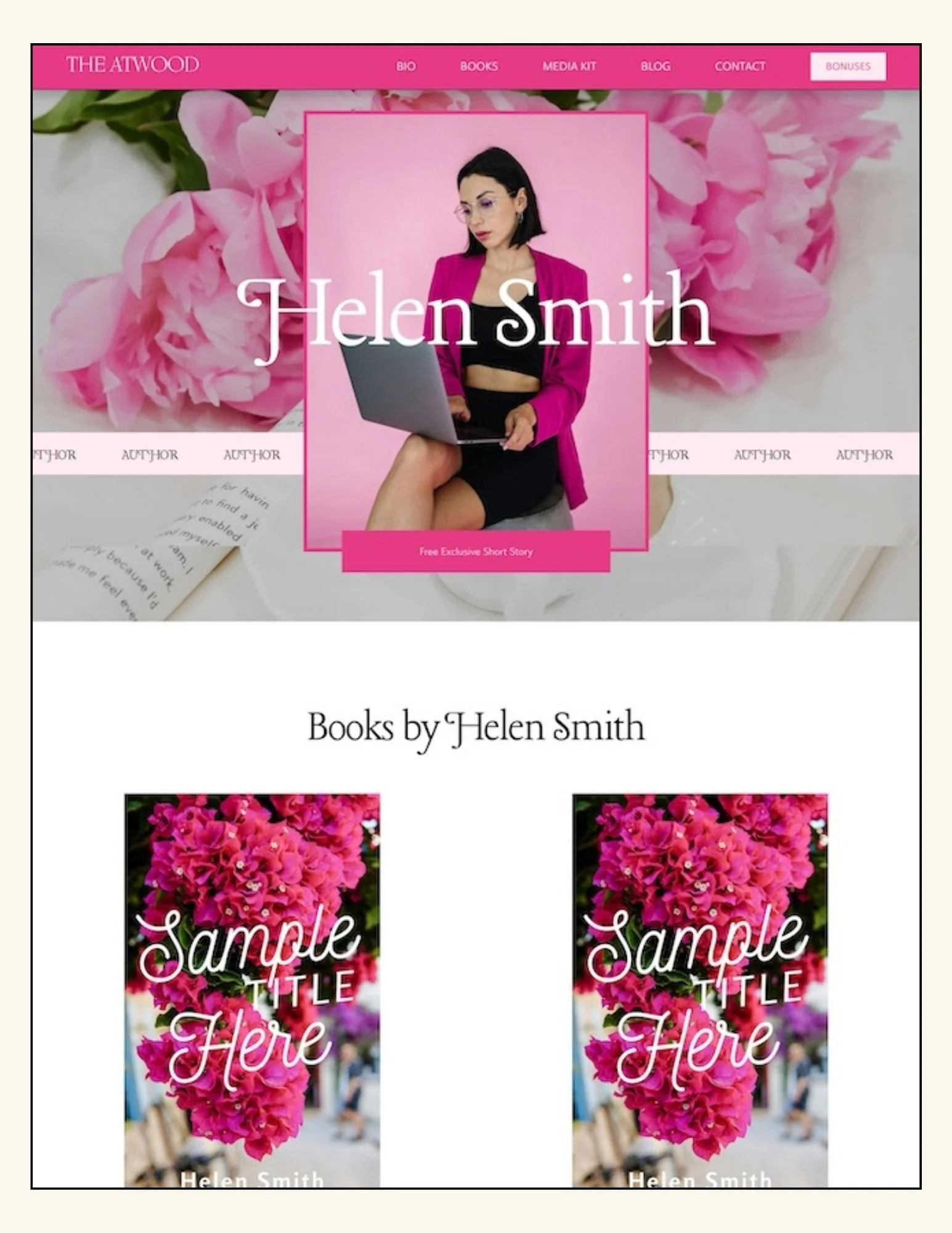
THE ATWOOD - Squarespace Author Website Template
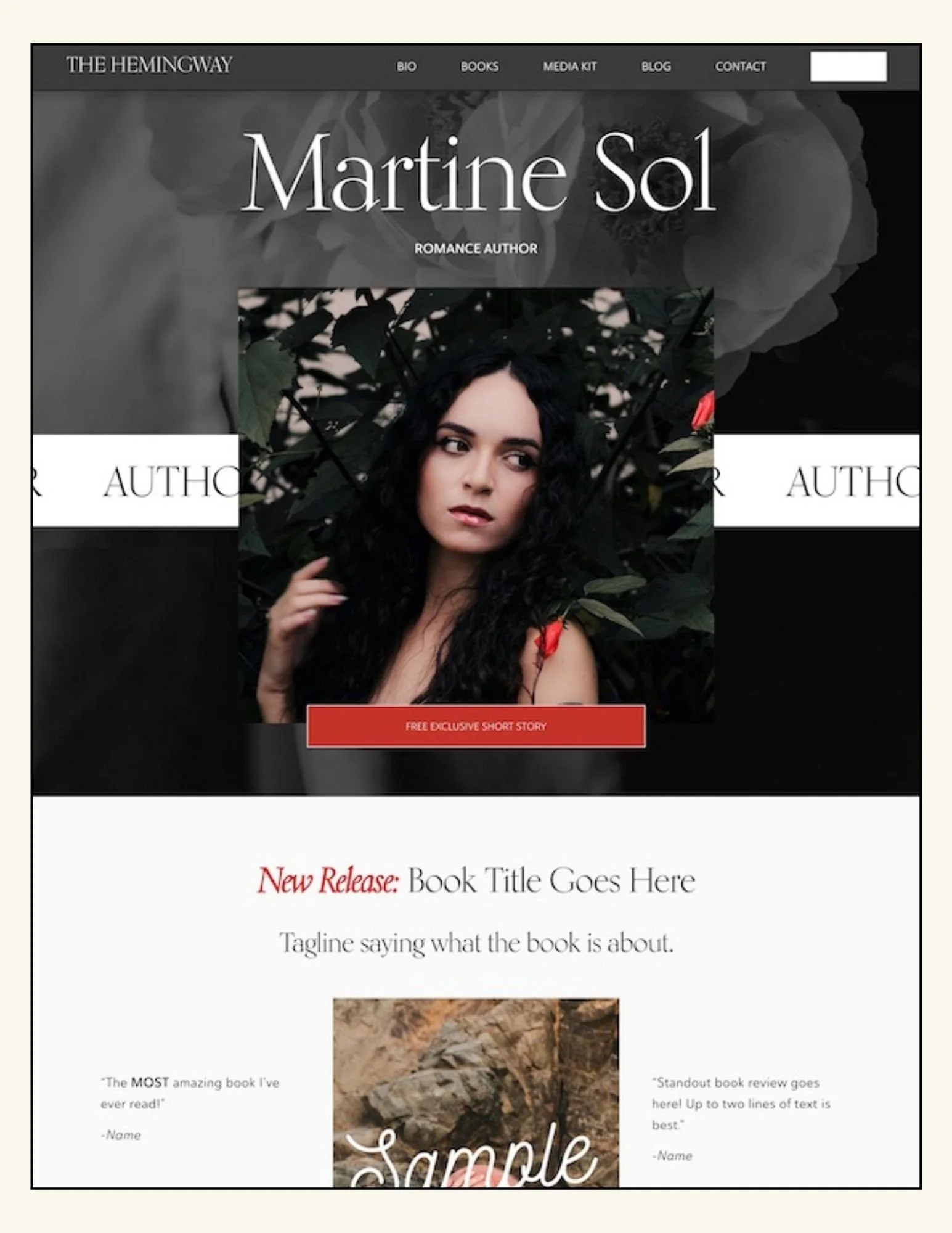
THE HEMINGWAY - Squarespace Author Website Template
THE GILBERT - Squarespace Author Website Template