6 Author Website Examples That Actually Sell Books
Your author website should do more than look pretty—it should turn casual visitors into book buyers. The best author websites combine clean design, reader-friendly features, and strategic calls-to-action that guide visitors from "just browsing" to clicking "buy now." Whether you're launching your first book or building a long-term readership, studying what works (and why) can save you months of guesswork.
Most authors think they need fancy animations or complex layouts to stand out. The truth? The top-performing author sites focus on clarity, connection, and making it ridiculously easy for readers to take the next step. You don't need to be a designer or hire an expensive agency—you just need to understand what actually converts.
In this post, you'll see real examples of author websites that drive book sales, plus the exact features and design choices that make them work. These aren't just pretty portfolios—they're selling machines built by authors who know how to turn online traffic into loyal readers.
Want a beautiful author website without spending weeks designing it from scratch? These Squarespace website templates for authors are designed to showcase your books, grow your email list, and look professional instantly.

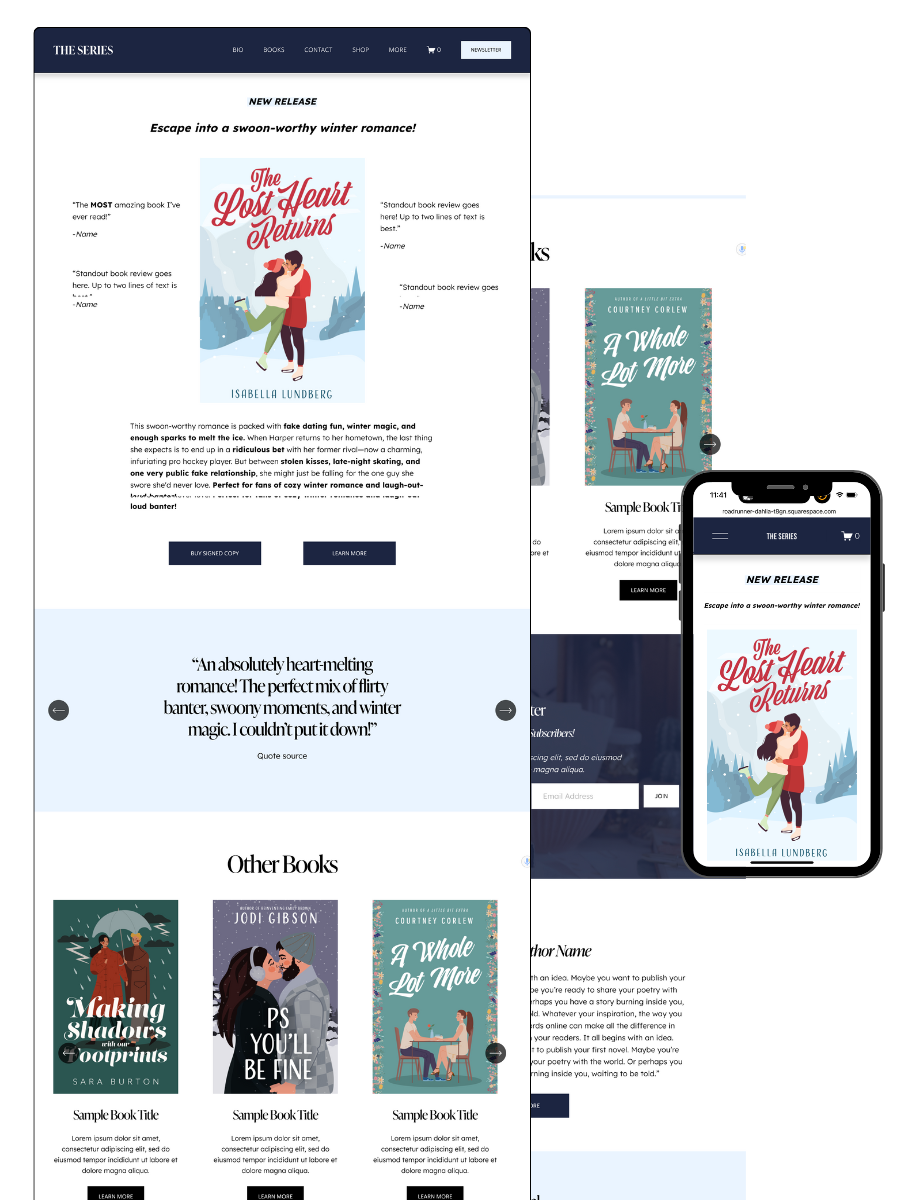
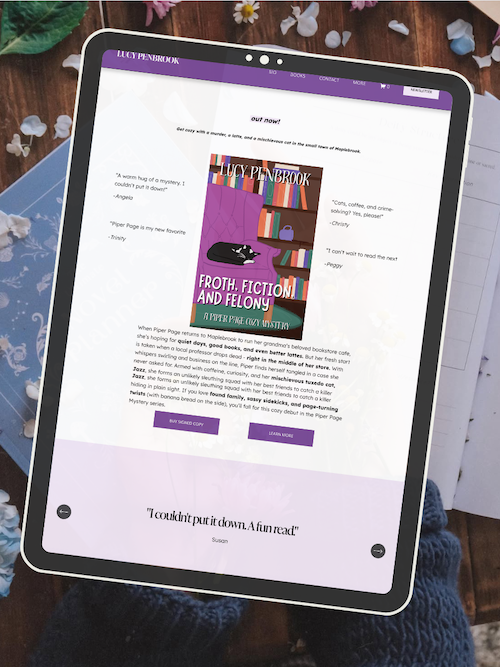
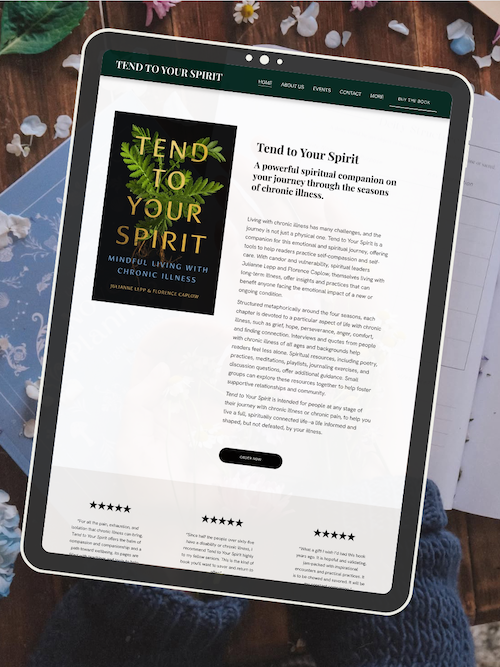
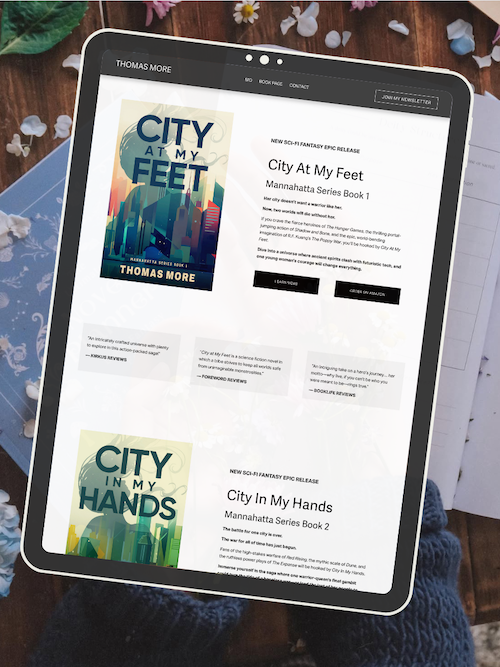
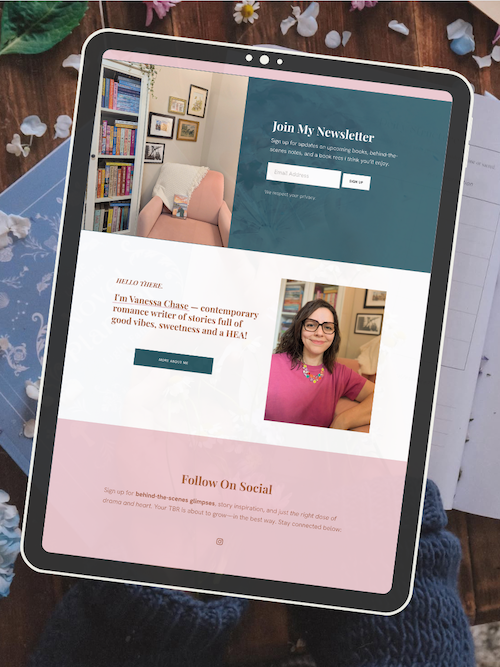
Here’s how real authors are using these Squarespace author website templates:
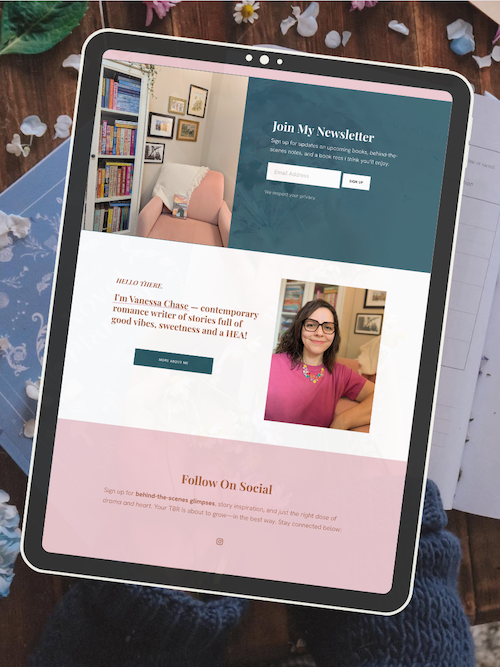
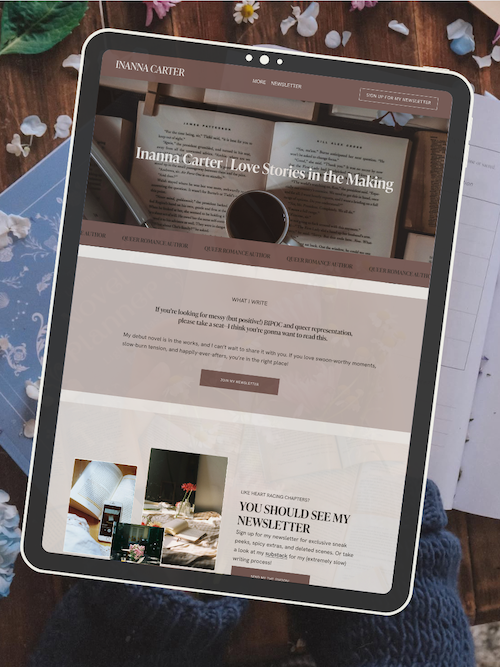
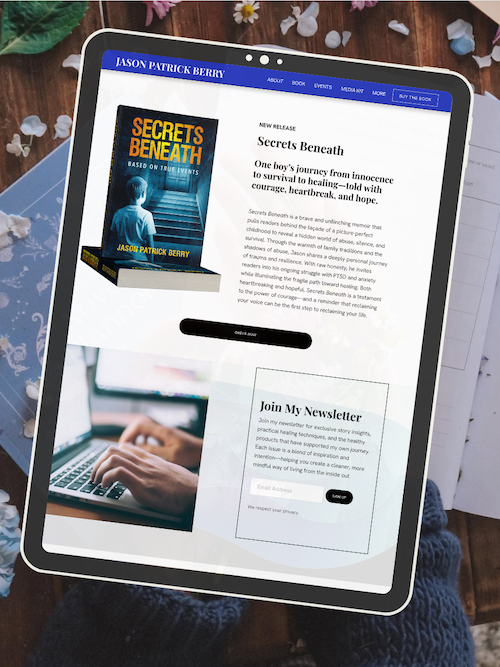
Key Takeaways
Successful author websites prioritize simple design and clear calls-to-action over flashy features
Reader engagement tools like email signup forms and sample chapters build lasting connections that lead to sales
Strategic website design guides visitors naturally from discovery to purchase without feeling pushy or complicated
Why Author Websites Matter for Book Sales
Your author website builds credibility, creates direct sales opportunities, and turns casual visitors into loyal readers who buy your books and recommend them to others.
Building Reader Trust and Authority
When readers discover your name, the first thing they do is search for you online. If they find a professional author website, you immediately look legitimate and serious about your work. Without one, you risk losing potential readers to doubt or distraction.
Your website shows readers you're a real author with a real body of work. It gives them a central place to learn about you, read your bio, and see all your books in one spot. This matters more than you might think—readers buy from authors they feel they know and trust.
A well-designed author website also signals that you're invested in your career for the long haul. It separates you from hobbyists and establishes you as a professional. When readers see a cohesive brand, updated content, and easy navigation, they're far more likely to buy your book and sign up for your email list.
Direct Book Sales and Increased Visibility
Your author website gives you control over how you sell books. You can link directly to retailers, highlight specific titles, and even sell signed copies or special editions yourself. This means more sales and more money in your pocket.
Search engines index your site, which means readers searching for books in your genre can find you organically. Each book page you create is another opportunity to rank for relevant keywords. The best author websites use this to their advantage, turning search traffic into book buyers.
You're not dependent on Amazon's algorithm or social media platforms that can change their rules overnight. Your website is yours—no one can take it down or limit who sees your content. This makes it the most reliable part of your author platform for driving consistent book sales month after month.
Audience Growth and Engagement
Your author website is the perfect place to grow your email list, which is your most valuable asset as an author. Visitors who sign up for your newsletter are choosing to hear from you directly. These are the readers most likely to buy your next book on launch day.
You can engage your audience through blog posts, book updates, and behind-the-scenes content that keeps them connected to your work. This ongoing engagement turns one-time buyers into lifelong fans who pre-order every book you release.
Social media followers come and go, but your email list stays with you. Your website captures those email addresses and gives you a way to reach readers anytime. The more you engage with your audience through your site, the more books you'll sell—not just today, but for years to come.
What Top Author Website Examples Get Right
AUTHOR WEBSITE EXAMPLES
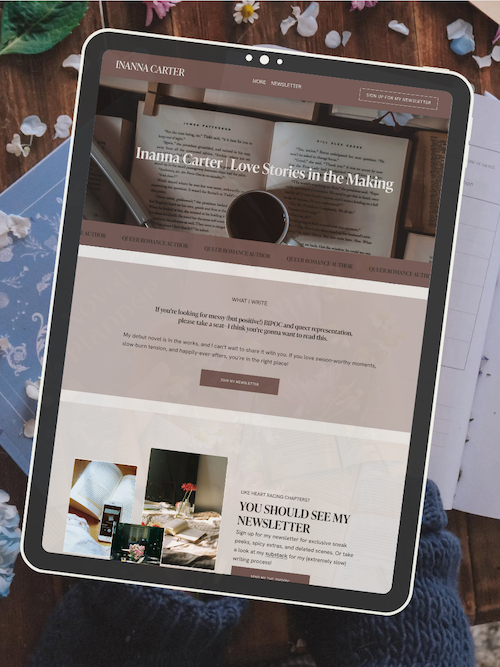
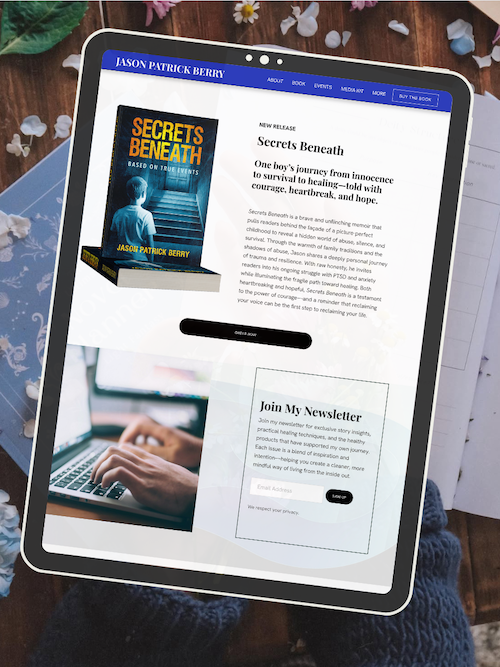
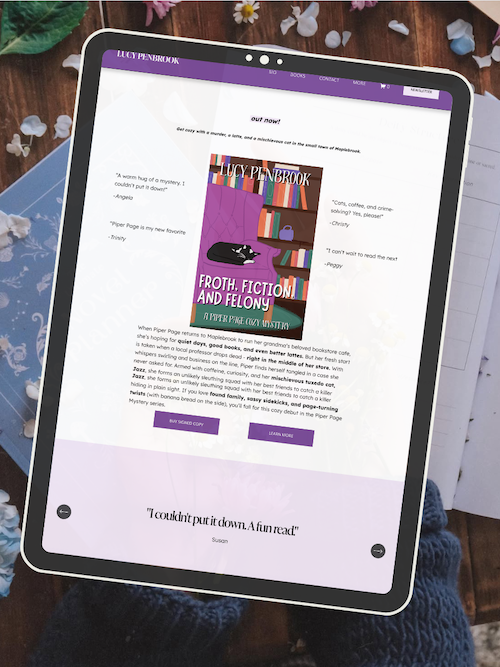
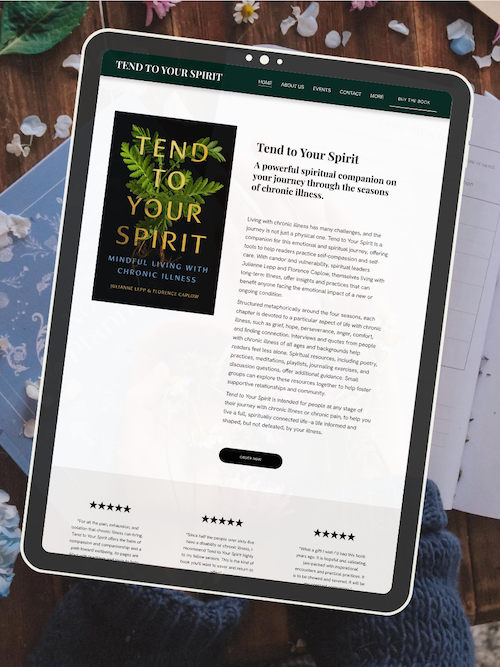
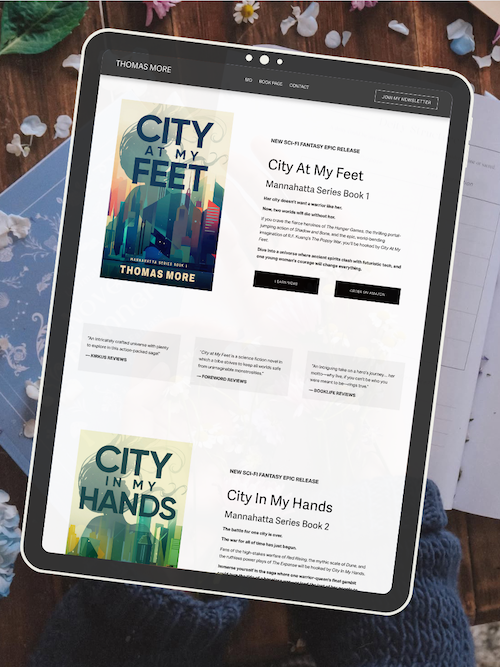
The best author website examples share a few key traits: strong visual identity that reflects the author's voice, book pages designed to convert browsers into buyers, strategic placement of action-driven buttons, and email capture tools that actually get people to sign up.
Effective Author Branding and Identity
Your author brand is what makes readers remember you before they even finish reading your bio. The top author website examples nail this by using consistent colors, fonts, and imagery that match their book genres and writing style.
A romance author might use soft pastels and elegant script fonts. A thriller writer might go with bold typography and dark, moody photos. Your author bio should sound like you actually wrote it—not like a corporate press release.
Key branding elements that work:
Color palette limited to 2-3 main colors
Professional headshots that match your genre
Typography that's readable and on-brand
Visual consistency across every page
Your homepage should tell visitors who you are within three seconds. Use a hero image or banner that shows your book covers, your face, or both. Add a tagline that explains what you write. Skip the vague "Welcome to my website" approach.
Optimized Book Showcases and Pages
Your book pages need to sell, not just inform. The best author website examples treat each book showcase like a mini sales page with eye-catching book covers, compelling descriptions, and multiple ways to buy.
Display your covers large and clear—they're your most powerful visual marketing tool. Include the blurb exactly as it appears on retailers, plus review quotes from credible sources. Add buy buttons for every major retailer, not just Amazon.
Essential elements for book pages:
Element Purpose High-res cover image Grabs attention immediately Book description Sells the story and hooks readers Multiple buy links Makes purchasing easy everywhere Reviews/testimonials Builds trust and social proof Series information Encourages binge-reading
Create dedicated pages for each book rather than cramming everything on one "Books" page. This gives you space to optimize for search and really sell each title. Include clear navigation so readers can jump between books easily.
High-Converting Calls to Action
Calls to action are the buttons, links, and prompts that tell readers what to do next. Professional author website examples place these strategically without being pushy.
Your primary CTA should appear above the fold on your homepage. Make it specific: "Read Chapter One Free" converts better than "Learn More." Use action words like "Get," "Download," "Start," or "Join."
Color matters. Your CTA buttons should stand out from your background but still feel on-brand. Test different text to see what works. "Subscribe to my newsletter" might get fewer clicks than "Get free books and bonus scenes."
Place secondary CTAs throughout your site. At the end of your about page? Add a book recommendation. After a blog post? Prompt newsletter signups. Every page should guide readers toward one clear next step.
Don't overdo it. Three CTAs per page maximum, with one primary action you want most visitors to take.
Newsletter Signup and Mailing List Tactics
Your author newsletter is your most valuable marketing tool, so top author website examples make signup forms impossible to miss. Place a newsletter signup form on every page—in your header, sidebar, or footer.
The best signup forms offer something valuable in exchange for an email address. Free chapters, exclusive short stories, reading guides, or early access to new releases all work. Be specific about what subscribers get: "Join 5,000 readers getting free stories monthly" beats "Sign up for updates."
Keep forms simple. Ask for first name and email only. Every extra field you add drops your conversion rate. Use mailing list integration tools that connect directly to your email platform, whether that's Mailchimp, ConvertKit, or something else.
High-performing signup strategies:
Pop-ups timed to appear after 30 seconds
Exit-intent pop-ups for leaving visitors
Inline forms between blog posts
Footer forms on every page
Welcome mat takeovers on mobile
Make your opt-in copy about the reader, not you. "Never miss a release" is reader-focused. "Stay updated on my writing" is author-focused. Small wording changes make big differences in signup rates.
Test your forms on mobile devices. More than half your visitors browse on phones, so your signup process needs to work perfectly on small screens.
Design Elements That Actually Convert Visitors to Buyers
Your website's design does more than make things look pretty—it builds trust, guides behavior, and turns browsers into book buyers. The right layout, consistent branding, and smooth technical performance work together to create an experience that makes readers want to stick around and hit that purchase button.
Professional Author Website Design
A professional author website doesn't mean expensive or complicated. It means clean, intentional, and easy to navigate.
Your homepage should answer three questions in under five seconds: who you are, what you write, and where visitors can buy your books. Use a simple layout with plenty of white space so readers aren't overwhelmed by clutter.
Key design elements that boost conversions:
Clear navigation menus with 5-7 main items max
High-quality book covers displayed prominently above the fold
Easy-to-spot buy buttons in contrasting colors
Author photo that's professional but approachable
Book descriptions that hook readers with benefits, not just plot summaries
Your author website design should guide visitors naturally from discovery to purchase. Place your most important content—like your latest release or email signup—where eyes land first. Use headings, subheadings, and short paragraphs to break up text.
Skip the fancy animations and auto-play videos. They slow things down and distract from what matters: your books. A professional author website loads fast, looks polished, and makes buying your books the easiest action on every page.
Consistent Book and Author Branding
Your book branding and author branding should feel like they belong to the same universe. When visitors land on your author website, they should instantly recognize your style—from colors and fonts to tone and imagery.
Start with your book covers. Use similar color palettes, typography styles, or visual themes across your series or entire catalog. This creates instant recognition and makes your work look more professional and intentional.
Branding elements to keep consistent:
Color scheme (2-3 main colors used throughout)
Font choices (one for headings, one for body text)
Photography style (moody and dark vs bright and airy)
Voice and tone in all copy, including meta descriptions
Your book website should echo your book covers. If your thriller series features dark, gritty covers, your site shouldn't be pastel pink with playful fonts. Match the mood and genre expectations so readers know what they're getting.
Don't forget your meta descriptions and page titles. These show up in search results and need to reflect your author branding too. Use consistent language and tone that matches your books and website copy.
Strong author branding makes you memorable. When readers see your next book cover in their feed or inbox, they'll recognize it instantly—and that recognition builds trust and sales.
Mobile-Friendly and Fast Loading Experiences
Over 60% of website visitors browse on phones or tablets. If your author website isn't mobile-friendly, you're literally losing more than half your potential book buyers.
Mobile-responsive design means your site automatically adjusts to fit any screen size. Book covers should stack vertically on phones, not shrink to thumbnail size. Buy buttons need to be big enough to tap with a thumb. Text should be readable without zooming or horizontal scrolling.
Page speed matters just as much. If your book website takes more than three seconds to load, most visitors will bounce before seeing your first book cover. Compress your images, skip heavy plugins, and choose a reliable hosting platform.
Mobile optimization checklist:
Book covers and author photos load quickly (under 200KB each)
Navigation menu collapses into a clean hamburger icon
Contact forms work smoothly on touchscreens
Buy buttons are thumb-friendly (at least 44x44 pixels)
Text is readable at 16px minimum font size
Test your author website on actual phones and tablets, not just by shrinking your browser window. Check loading speed using free tools and aim for under two seconds on mobile networks.
A fast, mobile-friendly professional author website keeps readers engaged and removes friction from the buying process. When purchasing your book is easy no matter what device someone's using, your conversion rates will climb.
Engagement Features That Build Lasting Reader Relationships
Author websites that convert visitors into book buyers don't just display information—they create interactive experiences that turn casual browsers into devoted fans. The most successful sites combine social tools, personalized connection points, and strategic lead magnets to build email lists that drive consistent sales.
Social Media Integration and Interactive Tools
Your website needs to do more than link to your social profiles. The best author sites embed live social feeds directly on their pages so visitors can see your latest Instagram posts or Twitter updates without leaving your site. This keeps readers engaged longer and shows you're active and accessible.
Interactive features like comment sections on blog posts, live chat widgets, or Q&A forums let readers interact with you directly. Some authors add "ask me anything" forms or monthly live streams embedded right on their homepage. These tools create two-way conversations instead of one-way broadcasts.
Social sharing buttons on every blog post and book page make it easy for readers to spread the word about your work. But don't just slap generic share buttons everywhere—place them strategically at the end of compelling content when readers are most likely to share. Add click-to-tweet quotes from your books that fans can post with one click.
Audience Engagement and Fan Connection
Email remains your most powerful connection tool, but how you collect those addresses matters. Create exclusive "reader's club" membership areas on your site where fans get early access to book excerpts, deleted scenes, or behind-the-scenes writing updates. This gives people a real reason to stay subscribed.
Build a simple quiz like "Which character from my series are you?" or "What book should you read next?" These interactive elements keep visitors on your site longer and collect email addresses in exchange for results. Quizzes feel fun, not pushy, and they give you data about what your readers actually want.
Host virtual events through your website—book club discussions, writing workshops, or character Q&As using embedded video tools. Post recordings afterward so fans can watch on their schedule. This transforms your static website into a living community hub where readers feel connected to you and each other.
Reader Magnets and Lead Generation
Your strongest lead magnet isn't a generic freebie—it's content your ideal readers desperately want. Offer the first three chapters of your latest book, an exclusive prequel short story, or a printable reading guide. Make it relevant to what visitors came to your site looking for.
Place signup forms strategically throughout your site, not just in one spot. Add a welcome popup (but make it easy to close), a sidebar form on your blog, and inline forms after particularly engaging content. Test different offers on different pages—visitors reading your fantasy series page might want different bonuses than those browsing your writing advice blog.
Create targeted landing pages for each book or series with dedicated signup forms. These focused pages convert better than generic "join my list" pages because they speak directly to what that specific reader wants. Use these URLs in your social media bios, guest posts, and book backmatter to drive qualified traffic straight to conversion points.
Frequently Asked Questions
Author websites need to do more than look pretty—they need to convert visitors into readers and buyers. Design choices, platform features, mobile performance, and email strategy all play a direct role in whether your site actually sells books.
What are some effective design elements to include in an author website to increase book sales?
Your homepage should feature a clear call-to-action above the fold. This means visitors see "Buy Now" or "Get the Book" without scrolling. A hero image of your book cover with a bright, contrasting button makes it impossible to miss.
Include social proof prominently. Reader reviews, testimonials, and endorsements build trust fast. Display them on your homepage and book sales pages where people make buying decisions.
Your navigation should be simple. Stick to four to six menu items max. Visitors need to find your books, about page, and contact info without hunting.
Use high-quality images of your book covers. Blurry or small images kill sales. Your covers should be large enough to read the title and see the design clearly.
Add a book preview or sample chapter. Let readers try before they buy. This single element can boost conversions by giving cautious buyers confidence in your writing.
How can self-published authors create a high-conversion website to market their books?
Start with a professional domain name that includes your author name. Avoid free subdomains—they hurt credibility and make you harder to find in search results.
Build an email list from day one. Put a sign-up form on every page, not just your homepage. Offer a free chapter, short story, or exclusive content in exchange for email addresses.
Create dedicated landing pages for each book. Don't just list all your titles on one page. Give each book its own space with a detailed description, reviews, buy buttons, and related content.
Make your buy buttons work. Link directly to retailer pages where readers can purchase immediately. Never make people search for where to buy your book.
Add author photos and a compelling bio. Readers want to connect with you as a person. A friendly, professional photo and relatable story make you approachable and memorable.
Which website builders offer the best features for authors looking to sell their books online?
Squarespace gives you beautiful templates and built-in email marketing. You can design your site, collect emails, and sell books directly through one platform. The templates look professional without needing design skills.
WordPress with WooCommerce offers the most flexibility. You can customize everything and add any feature through plugins. It takes more technical knowledge but gives you complete control.
Wix provides drag-and-drop simplicity with good e-commerce features. Their ADI (Artificial Design Intelligence) can build a site for you based on your preferences. It's beginner-friendly and requires no coding.
Shopify works best if you're selling books and merchandise. The platform handles inventory, shipping, and payments smoothly. It's overkill if you only sell ebooks or link to retailers.
Can you provide examples of top author websites that successfully leverage email marketing for sales?
Brandon Sanderson uses his email list to announce new releases and exclusive content. His signup forms appear on every page, and he delivers consistent value through newsletters about his writing process and upcoming projects.
Joanna Penn offers multiple lead magnets targeting different reader interests. She segments her list based on what freebie people downloaded, then sends targeted emails about relevant books. This approach converts better than generic newsletters.
Mark Dawson built his success on email marketing combined with Facebook ads. His website captures emails through free thriller chapters, then his automated sequence nurtures subscribers into buyers over several weeks.
Marie Forleo sends weekly emails that mix valuable content with book promotions. She doesn't pitch every time—she builds relationship and trust first. When she does promote, her list responds because they feel connected.
What strategies do successful author websites use to engage visitors and convert them into book buyers?
They tell stories, not just list facts. Instead of a dry bio, successful authors share their journey. Instead of basic book descriptions, they hook readers with compelling back cover copy that creates curiosity.
Regular blog content keeps visitors coming back. Authors who blog about topics related to their books attract readers through search engines. Each post includes calls-to-action to join the email list or check out their books.
Video content increases engagement significantly. Book trailers, author introductions, and reading excerpts help visitors connect with you and your work. Video keeps people on your site longer, which builds trust.
Limited-time offers create urgency. Flash sales, pre-order bonuses, and exclusive bundles motivate fence-sitters to buy now instead of later. Countdown timers make the urgency visible.
Reader magnets and lead magnets grow email lists. Free first chapters, character guides, deleted scenes, or prequel stories give value upfront. Once someone joins your list, you can market to them repeatedly at no extra cost.
How important is mobile responsiveness for author websites, and how does it impact book sales?
Over 60% of web traffic comes from mobile devices. If your site doesn't work on phones, you're losing more than half your potential buyers. People won't struggle with a broken mobile site—they'll just leave.
Mobile-responsive design affects your search rankings. Google prioritizes mobile-friendly sites in search results. A site that doesn't work on phones gets pushed down, making you harder to find.
Buy buttons must work perfectly on mobile. If your purchase links are too small, don't load, or lead to non-mobile-friendly retailer pages, you lose sales at the final step. Test every button on your phone before launching.
Page speed matters more on mobile. Slow-loading sites frustrate mobile users who often have slower connections. Compress images, minimize plugins, and choose fast hosting to keep load times under three seconds.
Reading on mobile requires larger text and shorter paragraphs. Mobile users won't zoom in to read tiny fonts or scroll through walls of text. Break content into scannable chunks with clear headings and plenty of white space.
Ready to launch your author website?
Explore my Squarespace website templates designed specifically for authors — easy to customize, beautifully designed, and built to help you sell more books.

SHOP THE AUTHOR WEBSITE TEMPLATES
THE MANUSCRIPT AUTHOR WEBSITE TEMPLATE — perfect for authors launching their first professional website with a simple, polished layout
THE DEBUT AUTHOR WEBSITE TEMPLATE — designed to highlight your first book, build your email list, and grow an audience from day one
THE SERIES AUTHOR WEBSITE TEMPLATE — ideal for showcasing multiple books with clear series pages and strong reader flow
THE ONE-PAGE AUTHOR AUTHOR WEBSITE TEMPLATE — a streamlined one-page site for authors who want something beautiful, fast, and easy
THE DONE-FOR-YOU AUTHOR WEBSITE EXPERIENCE — your author website built for you so you can launch without touching design or tech
MOST POPULAR BLOG POSTS
Authors Guide to Website Design & Branding
Squarespace Email Campaigns: A Guide for Authors
How to Create an Author Website on Squarespace (Step-by-Step)

Launch Your Author Website in a Day (Without the Tech Overwhlem)
*No more starting from scratch.
A simple, done-for-you Squarespace template built specifically for authors with a WIP.