What Makes an Author Website Actually Sell Books: Design and Strategy Tips That Convert Readers
Most authors think their website just needs to exist. They set one up, add a few book covers, and hope readers will somehow find them and click "buy." But a website that actually sells books does something different—it guides visitors through a clear path from curious stranger to committed reader.
An author website that sells books builds trust, makes buying easy, and gives readers a reason to stay connected with you. It's not about fancy design or clever copy. It's about creating a simple experience where readers can learn about your work, feel confident in their decision, and complete a purchase without confusion or second-guessing.
Your website should work like a helpful bookstore clerk, not a billboard. When someone lands on your site, they should immediately understand who you are, what you write, and how to get your books. If your website isn't selling, it's usually because one of these pieces is missing or buried. The good news? You can fix it with a few focused changes that don't require tech skills or a big budget.
Key Takeaways
Your author website needs clear navigation that guides readers from discovery to purchase without confusion
Trust-building elements like sample chapters, reviews, and an email list turn visitors into loyal readers
Direct sales through your website give you higher profits and direct relationships with your audience
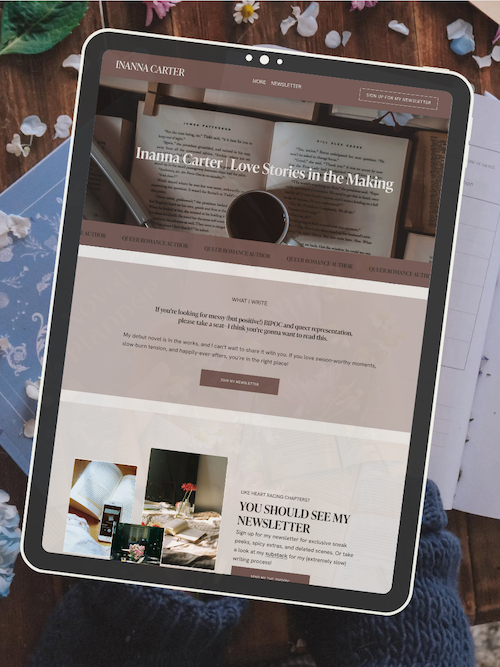
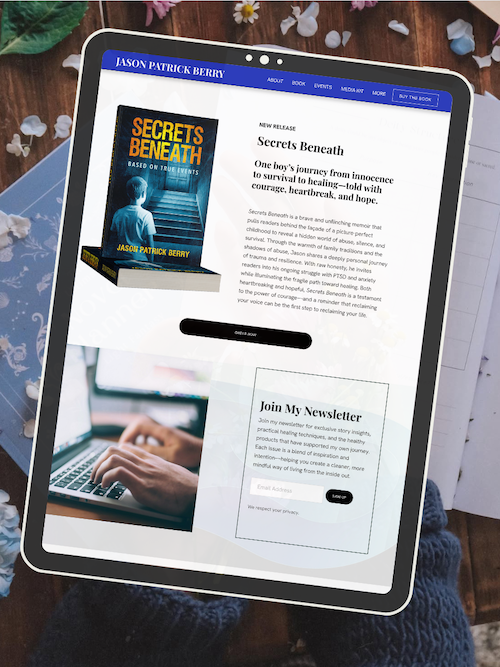
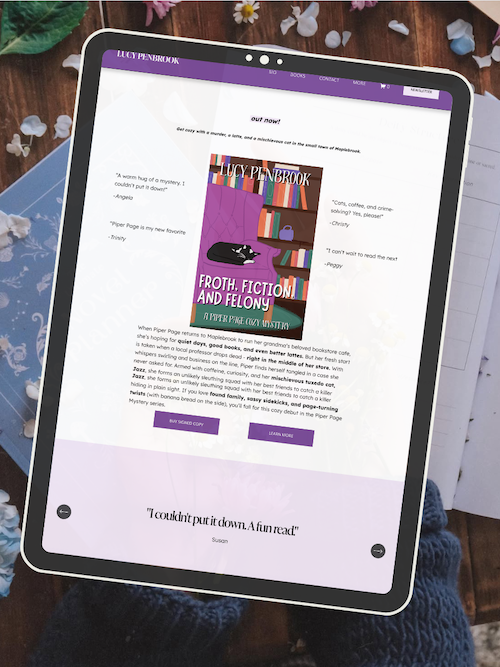
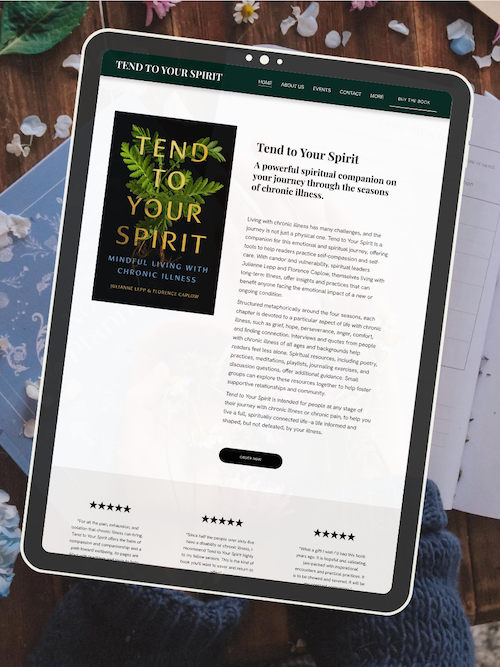
Want a beautiful author website without spending weeks designing it from scratch? These Squarespace website templates for authors are designed to showcase your books, grow your email list, and look professional instantly.

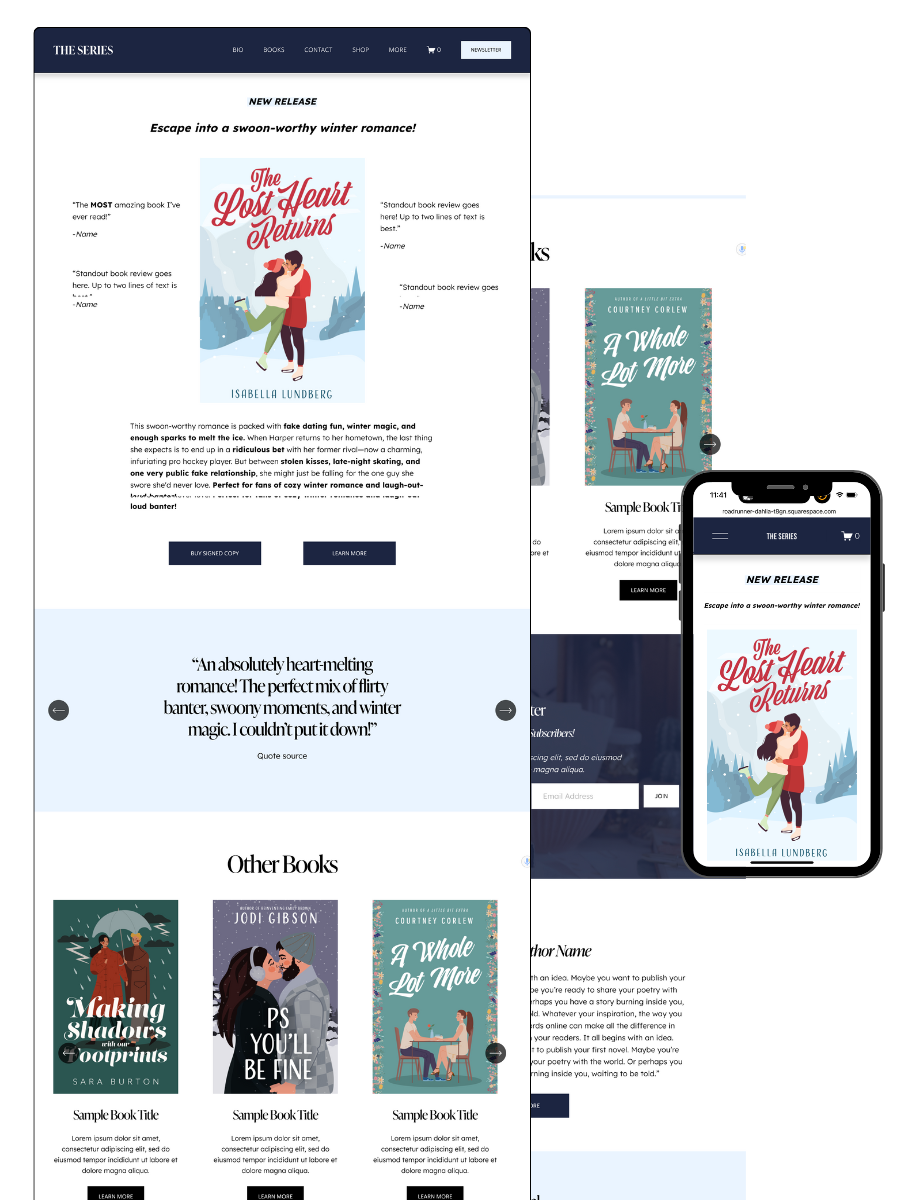
Here’s how real authors are using these Squarespace author website templates:
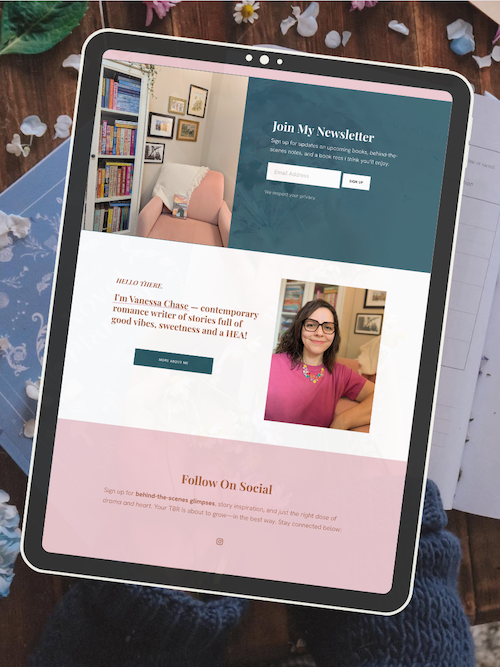
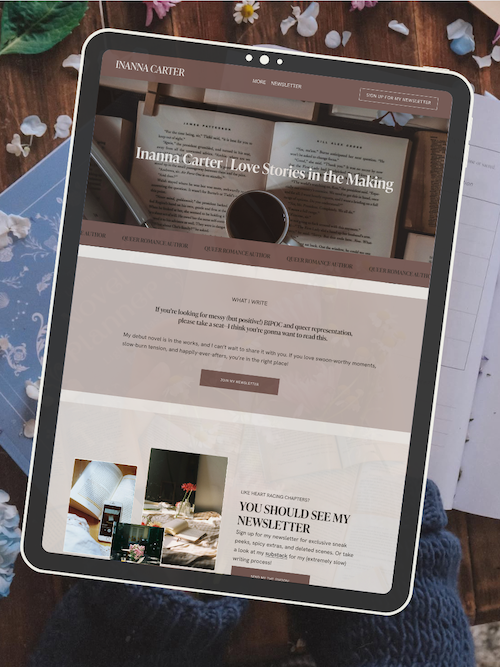
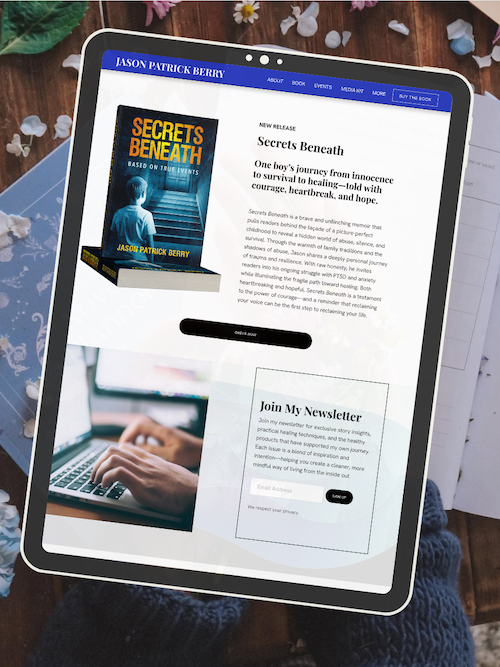
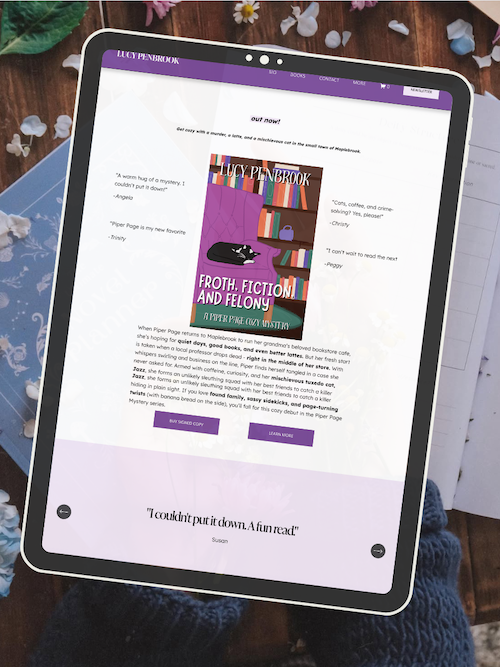
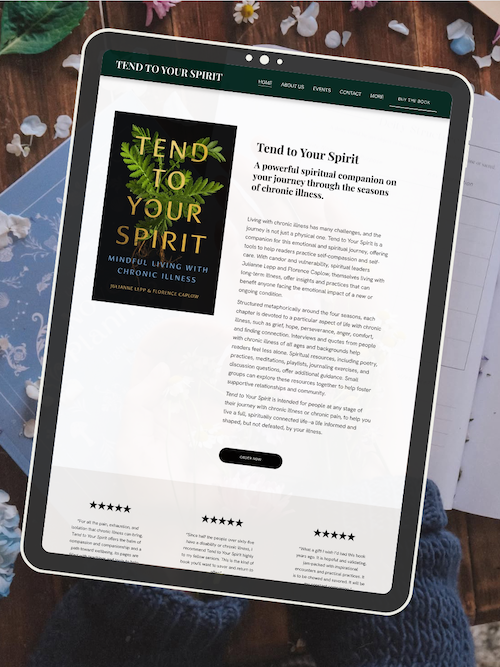
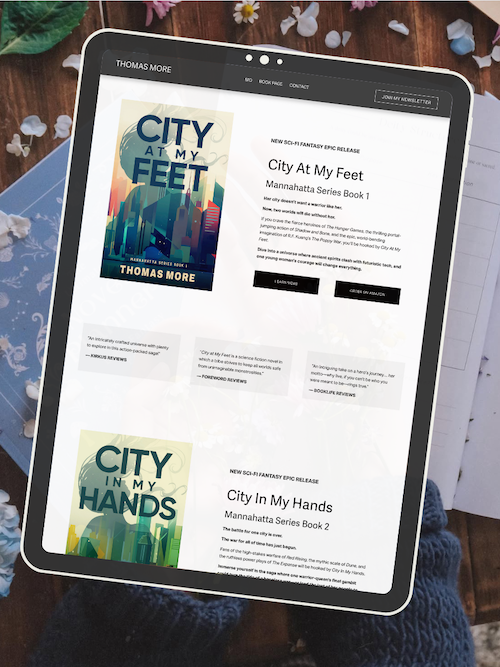
How to Build an Author Website That Actually Sells Books
Building an author website that sells books requires more than just pretty design. You need the right platform, clear book pages, direct sales tools, and a way to capture email addresses so you can turn casual visitors into loyal readers who buy everything you publish.
Claiming Your Domain and Choosing the Right Platform
Your domain should be simple and professional. Grab yourname.com if it's available. This makes you easy to find and remember.
If yourname.com is taken, try variations like yourfullname.com or authorjohnsmith.com. Keep it short and avoid numbers or hyphens.
Top Platform Options for Authors:
Squarespace - Beautiful templates, built-in email marketing, and e-commerce tools for selling books directly
WordPress - Most flexible but requires more technical knowledge
Wix - Beginner-friendly with drag-and-drop design
Author websites platforms - Specialized tools built specifically for authors
Pick a platform that lets you sell books direct without complicated setup. Squarespace and WordPress with WooCommerce handle direct book sales well. Your author platform starts with this foundation, so choose something you can actually manage yourself.
Creating a Homepage That Converts Visitors into Buyers
Your homepage is your storefront. It needs to tell visitors who you are and what you write in under five seconds.
Start with a clear headline that states your genre and what makes your books different. "Science fiction thrillers for readers who love complex characters" beats "Welcome to my website" every time.
Essential Homepage Elements:
Your newest or most popular book prominently displayed with cover image
A strong call-to-action button (Buy Now, Start Reading, Get the First Chapter Free)
A newsletter signup form with a compelling opt-in offer
Professional author photo
Navigation that makes finding your books easy
Your homepage should guide readers toward two actions: buying a book or joining your email list. Everything else is secondary. Remove clutter and focus on these conversion goals. High-converting author websites keep it simple and direct readers to the next step.
Designing Book Pages That Drive Direct Sales
Each book needs its own dedicated book page or book landing page. This is where you make the sale happen.
Your book cover should be the largest visual element. Readers buy with their eyes first. Include multiple purchase options with clear buttons.
What Every Book Page Needs:
Large, high-quality book cover image
Compelling book description that hooks readers in the first sentence
Buy buttons for multiple retailers (Amazon, Apple Books, etc.)
Direct sales option if you're selling books direct
Book reviews and ratings from readers
Sample chapter or "Look Inside" feature
Series information if applicable
Write your book description for skimmers. Use short paragraphs, bold key phrases, and bullet points. Lead with the hook, not the backstory. Make it about what the reader gets, not just what the book contains.
Add social proof through book reviews from readers and review sites. Even a few good quotes build trust and push hesitant visitors toward buying.
AUTHOR WEBSITE EXAMPLES
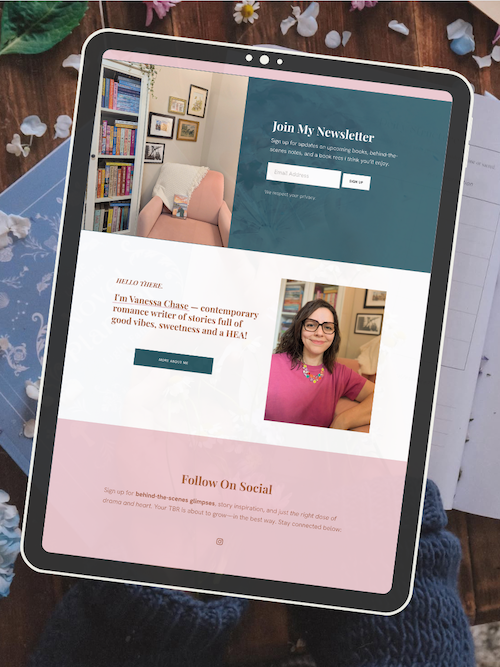
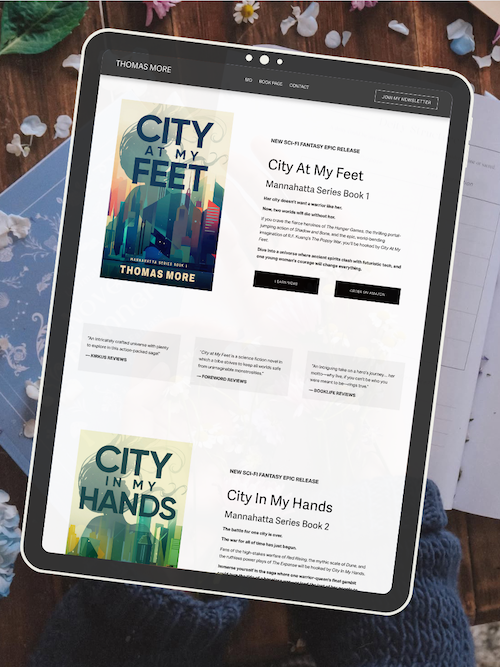
Setting Up a High-Converting Email Signup Form
Your email list is your most valuable author business asset. You own it completely, unlike your social media followers.
Place your email signup form in multiple locations: homepage, sidebar, end of blog posts, and as a popup. Don't be shy about asking people to join.
Creating Irresistible Reader Magnets:
Free short story in your book's world
First book in a series at no cost
Character deep dives and bonus scenes
Reading order guide for complex series
Exclusive prequel content
Your opt-in offer needs to be specific and valuable. "Join my newsletter for updates" doesn't work. "Get a free 50-page prequel story delivered instantly" does work.
Use an email marketing service like MailerLite, ConvertKit, or Squarespace Email Campaigns. These tools let you automate welcome sequences and segment your readers by genre preference. Keep your newsletter signup process simple. Ask for first name and email only. The fewer fields, the more signups you get.
Showcasing Your Author Brand with Compelling Bios and Photos
Your author bio tells readers why they should trust you with their time. Write it in third person for your main bio page, but use first person in your newsletter.
Keep multiple versions ready: 150 words for your website, 100 words for guest posts, and 50 words for social media. Focus on your writing credentials, the genres you write, and interesting personal details that connect with readers.
Your author photo matters more than you think. Use a professional-looking image that matches your genre. Romance and cozy mystery authors often use warm, friendly photos. Thriller writers might go for something more dramatic.
Author Bio Must-Haves:
What genres you write
Publishing credits and achievements
Why you write what you write
Personal details that humanize you
Links to your books
Update your bio when you hit new milestones. "Award-winning author of twelve novels" sells better than "aspiring writer." Your author brand comes through in both the photo and the words you use to describe yourself.
Adding Trust: Book Reviews, Media & Contact Pages
Social proof builds trust fast. Dedicate space on your author website to reviews, media coverage, and ways to contact you.
Create a media page that includes your author photo, bios in multiple lengths, book covers in high resolution, and any press mentions. Make it easy for bloggers and journalists to feature you.
What to Include on Your Media Page:
Press kit downloads (bio, photos, covers)
Interview questions and answers
Past media appearances and links
Contact information for interview requests
Your contact page should include a simple form or email address. Readers want to reach out when they love your books. Book bloggers need a way to request review copies. Don't hide this information.
Display book reviews from Amazon, Goodreads, BookBub, and reader emails throughout your site. Pull the best quotes and feature them on your homepage and individual book pages. Real reader reactions convince other readers to buy.
Optimizing Your Website for Direct Book Sales
Selling books directly means you keep more money per sale and own the customer relationship. It's worth setting up even if Amazon remains your main sales channel.
Direct book sales let you earn 70-90% of the retail price instead of 35-70% through retailers. You also capture customer emails automatically when readers buy from you.
Benefits of Selling Books Direct:
Higher profit margins on each sale
Direct relationship with readers
Ability to bundle books and offer exclusive editions
Full control over pricing and promotions
Customer data you own
Frequently Asked Questions
Building a website that converts visitors into readers requires the right approach to book presentation, content strategy, design choices, mobile optimization, launch planning, and audience engagement.
How can authors effectively showcase their books on their website to encourage sales?
Your book pages need to do more than just exist. They need to sell.
Create a dedicated page for each book with a clear, high-resolution cover image at the top. Include the book description, but keep it punchy and focused on what readers get from your story—not a long summary of every plot point.
Add multiple buy buttons throughout the page. Put one near the top, one after the description, and one at the bottom. Make them stand out with contrasting colors that match your brand.
Include reader reviews and testimonials prominently. Real feedback from actual readers builds trust faster than anything else you can say about your own work.
Show your book's formats clearly. List whether it's available in ebook, paperback, hardcover, or audiobook. Some readers have strong format preferences and won't buy if they can't quickly see their option.
Add sample chapters or a "Look Inside" feature. Let readers preview your writing style before they commit to buying. This works especially well for series books or if you're a new author building trust.
What kind of content should an author include on their website to attract and retain readers?
Your website content should give readers a reason to come back, not just visit once.
Start with a blog that shares behind-the-scenes content about your writing process. Talk about character development, research trips, or what inspired specific scenes. This creates connection without being salesy.
Create a resources page if you write nonfiction. Share tools, reading lists, or worksheets related to your book's topic. This positions you as an authority and gives visitors something valuable for free.
Build an email signup form with a compelling freebie. Offer a short story, deleted chapter, character guide, or exclusive content. Make it clear what subscribers get and how often you'll email them.
Add an about page that feels personal. Share your writing journey, what drives your work, and what readers can expect from your books. Skip the formal third-person bio and write like you're talking to a friend.
Include upcoming release information and a book news section. Keep your most excited fans updated on what's next without making them hunt for information.
Which website design elements are crucial for authors to convert site visits into book sales?
Simple, clean design beats flashy every time.
Your navigation menu should be straightforward. Use labels like "Books," "About," "Blog," and "Contact." Visitors need to find your books in two clicks or less.
Make your call-to-action buttons visible and action-oriented. Use phrases like "Get Your Copy," "Start Reading," or "Download Now" instead of generic "Click Here" buttons.
Choose fonts that are easy to read on screens. Stick to two fonts maximum—one for headings and one for body text. Fancy script fonts might look pretty, but they slow readers down.
Use white space intentionally. Don't cram everything together. Give your content room to breathe so visitors' eyes naturally flow to what matters most.
Add trust signals throughout your site. Display any bestseller badges, awards, media mentions, or professional associations. These visual cues tell new visitors you're legitimate.
Place your book covers prominently on your homepage. They should be large enough to see clearly and clickable to their respective book pages.
How important is a mobile-responsive author website in driving book sales?
Most of your visitors will find you on their phones. If your site doesn't work on mobile, you're losing sales.
Over 60% of web traffic now comes from mobile devices. Readers browse social media, click your link, and expect a smooth experience. If they have to pinch and zoom to read anything, they'll leave.
Mobile-responsive design adjusts automatically to any screen size. Your content reflows, images resize, and buttons stay tappable. This isn't optional anymore—it's essential.
Test your site on actual phones regularly. Load times matter even more on mobile than desktop. Compress your images and remove any elements that slow down your pages.
Make sure your buy buttons are thumb-friendly. They need to be large enough to tap easily without accidentally hitting something else.
Check that your email signup forms work perfectly on small screens. A broken form on mobile means lost subscribers and potential readers.
Can you recommend strategies for authors to use their website for successful book launches?
Your website should be launch headquarters, not an afterthought.
Create a dedicated launch page at least a month before release. Include the cover, blurb, buy links (even if they're preorder), and a countdown timer. Update this page as you get closer to launch day.
Set up an email sequence specifically for launch. Capture emails with an exclusive bonus related to the new book. Then send a series of messages building excitement before release day.
Add a preorder incentive that only exists on your website. Offer signed bookplates, exclusive bonus chapters, or entry into a launch giveaway for anyone who preorders and submits their receipt.
Plan content that supports your launch. Write blog posts about the book's themes, share character interviews, or post deleted scenes. Schedule these strategically in the weeks around release.
Create a launch day event on your site. Host a live Q&A, virtual book signing, or interactive reader chat. Promote it beforehand and keep the page active for anyone who can't attend live.
Update your homepage entirely for launch week. Make the new book impossible to miss. Every visitor should immediately know you have something new out.
What are the best practices for authors to engage with their audience through their website?
Engagement turns casual visitors into loyal readers who buy every book you release.
Enable comments on your blog posts and respond to every single one. This creates conversation and shows readers you're accessible and interested in what they think.
Add a contact form that's easy to find. Some readers want to reach out directly. Make it simple and promise to respond within a specific timeframe.
Create a reader group or community section. This could be a forum, a members-only area, or links to your Facebook group or Discord server. Give your biggest fans a place to connect with you and each other.
Share reader-generated content on your site. Feature fan art, book club photos, or reader reviews in a gallery or dedicated page. This recognition encourages more engagement.
Host regular website events. Run contests, challenges, or themed discussions tied to your books. Change these up seasonally to give readers reasons to check back often.
Use polls and surveys to involve readers in decisions. Ask what they want to see next, which cover they prefer, or what topics interest them for your blog. People engage more when they feel heard.
Ready to launch your author website?
Explore my Squarespace website templates designed specifically for authors — easy to customize, beautifully designed, and built to help you sell more books.

SHOP THE AUTHOR WEBSITE TEMPLATES
THE MANUSCRIPT AUTHOR WEBSITE TEMPLATE — perfect for authors launching their first professional website with a simple, polished layout
THE DEBUT AUTHOR WEBSITE TEMPLATE — designed to highlight your first book, build your email list, and grow an audience from day one
THE SERIES AUTHOR WEBSITE TEMPLATE — ideal for showcasing multiple books with clear series pages and strong reader flow
THE ONE-PAGE AUTHOR AUTHOR WEBSITE TEMPLATE — a streamlined one-page site for authors who want something beautiful, fast, and easy
THE DONE-FOR-YOU AUTHOR WEBSITE EXPERIENCE — your author website built for you so you can launch without touching design or tech
MOST POPULAR BLOG POSTS
Authors Guide to Website Design & Branding
Squarespace Email Campaigns: A Guide for Authors
How to Create an Author Website on Squarespace (Step-by-Step)

Launch Your Author Website in a Day (Without the Tech Overwhlem)
*No more starting from scratch.
A simple, done-for-you Squarespace template built specifically for authors with a WIP.