Multi-Page Author Websites: When You Need One and How to Know If You're Ready
Most authors start with a simple one-page website. It gets the job done when you're just starting out or only have one or two books to share. But as your career grows, you might notice your site feels cramped, confusing, or just not doing the work it needs to do anymore.
A multi-page author website becomes necessary when you have multiple books, write in different genres, offer additional services, or need dedicated space for a mailing list, blog, media kit, and speaking engagements. If readers are scrolling endlessly to find what they need or your brand feels unclear, it's time to expand.
The good news? You don't need to be a web designer or spend a fortune. This guide walks you through exactly when a multi-page site makes sense, what pages you actually need, and how to set it up without the overwhelm.
Key Takeaways
One-page websites work at first, but multi-page sites become essential as your author career and book catalog expand
You'll need multiple pages when you write in different genres, offer services beyond books, or want organized space for your blog and media resources
A well-organized multi-page website helps readers find what they need quickly and strengthens your professional author brand
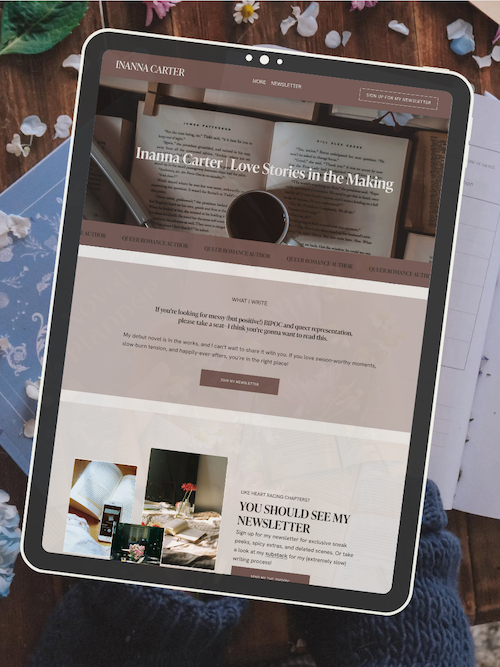
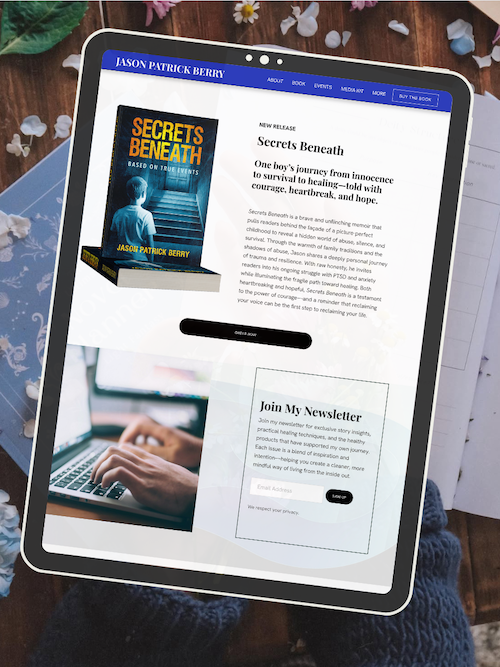
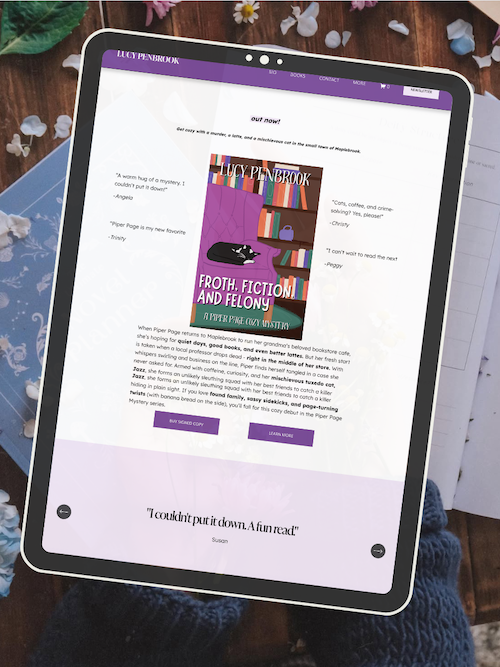
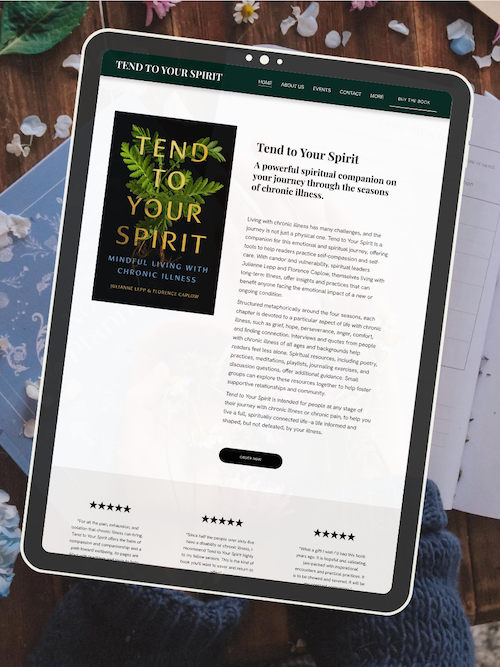
Want a beautiful author website without spending weeks designing it from scratch? These Squarespace website templates for authors are designed to showcase your books, grow your email list, and look professional instantly.

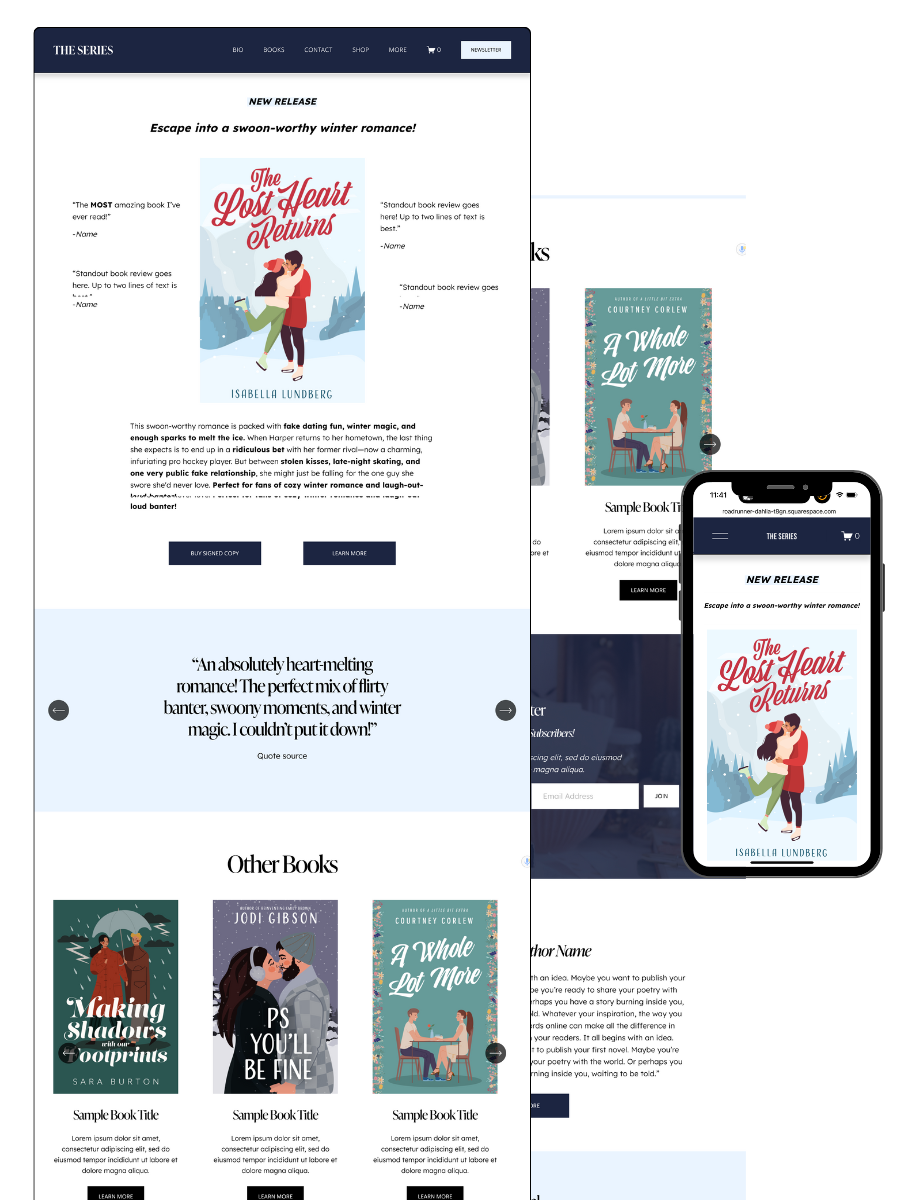
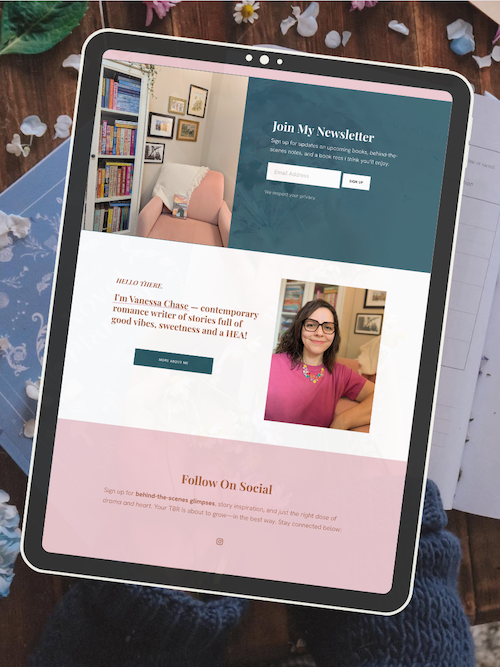
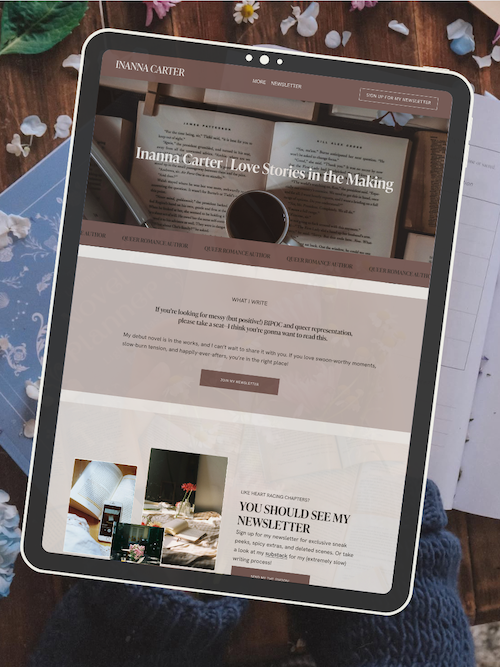
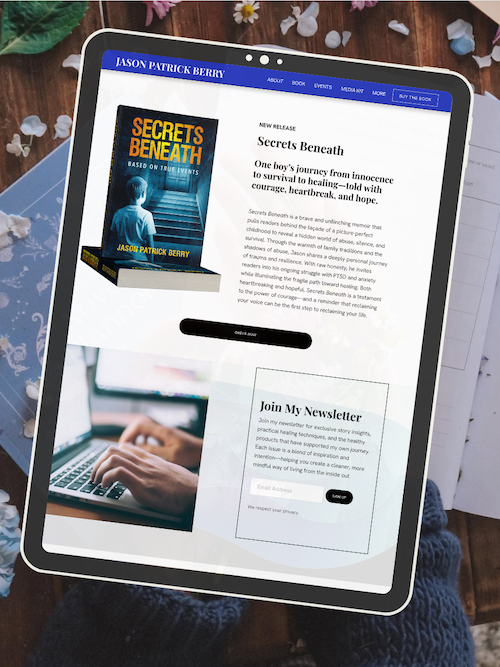
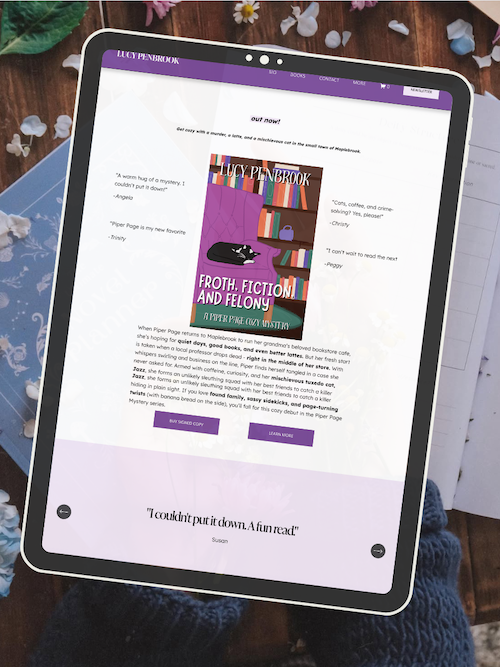
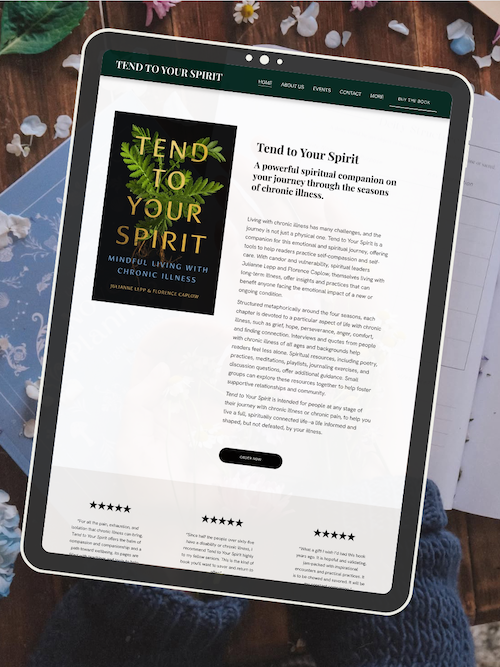
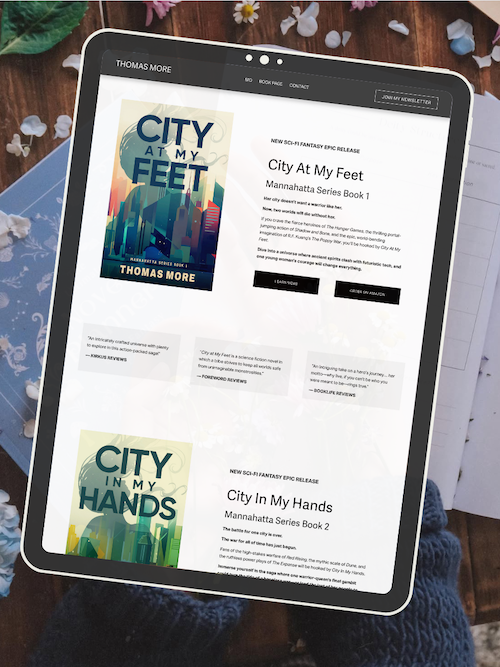
Here’s how real authors are using these Squarespace author website templates:
When You Need a Multi-Page Author Website
A multi-page author website makes sense when you have multiple books, several ways to engage readers, or content that needs its own space. The right structure depends on how much you have to share and where your author career is headed.
Multi-Page vs One-Page Author Websites
A one-page author website puts everything on a single scrolling page. You get your bio, book info, and contact details all in one place. This works great when you're just starting out or only have one book to promote.
A multi-page author website splits your content across separate pages. Each page focuses on one topic—like your books, your bio, or your blog. This gives you more room to showcase your work and makes it easier for readers to find what they need.
The biggest difference is how much you can say. With one page, you're limited to what fits on that scroll. With multiple pages, you can go deeper into each topic without overwhelming visitors.
Single-page sites work best for:
Brand new authors with one book
Writers who want something simple
Authors who prefer minimal web presence
Multi-page sites work best for:
Authors with multiple books
Writers with ongoing blogs or newsletters
Authors building a long-term platform
Multi-page websites also let you target different search terms. Each page can focus on a different keyword, which helps more readers find you through Google.
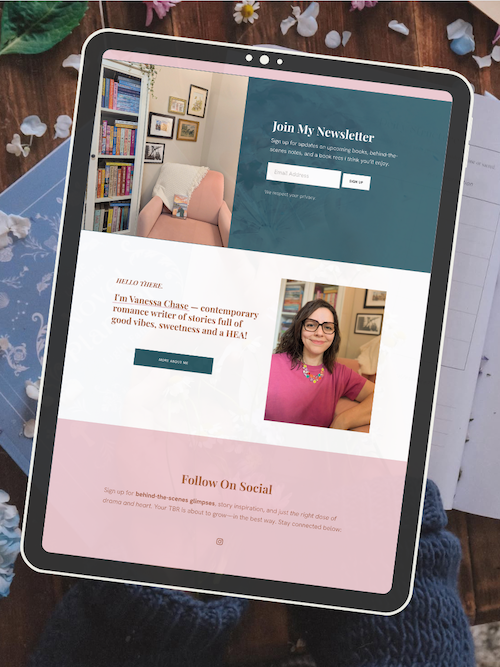
AUTHOR WEBSITE EXAMPLES
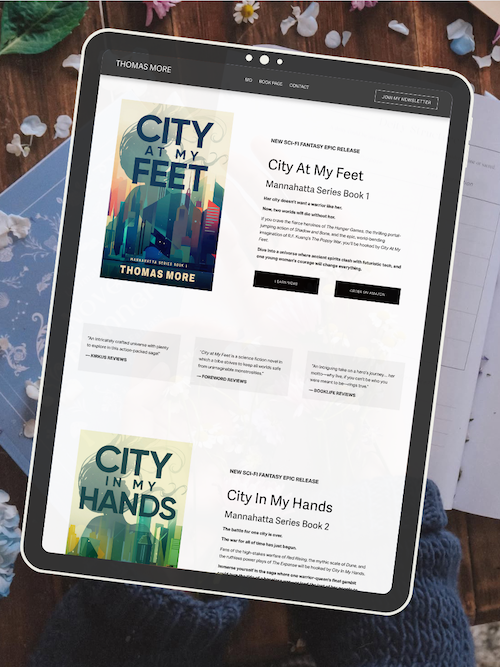
Essential Pages in a Multi-Page Author Website
Your multi-page author website needs a few core pages to work well. These pages help readers learn about you and your books without getting lost.
Home Page
This is where visitors land first. Keep it simple with a welcome message, your newest book, and clear links to your other pages. Think of it as your digital handshake.
Books Page
This is where you showcase your books. Give each book its own section with the cover, description, and buy links. If you have multiple books, organize them by series or genre. Strong book pages drive book sales.
About Page
Readers want to know who you are. Share your author bio, your photo, and why you write. Keep it personal but professional. This page builds connection.
Contact Page
Make it easy for readers, agents, or event coordinators to reach you. Include a contact form or email address. You can also add links to your social media here.
Blog or News Page
If you write regular content, you need a dedicated blog page. This gives you space to share updates, writing tips, or behind-the-scenes content. Regular posts also help with search rankings.
Some authors add extra pages like speaking events, media kits, or reader resources. Add these as your career grows.
Deciding Factors: Is Multi-Page Right for You?
You need to think about your content, your goals, and your time before choosing a multi-page structure. Not every author needs one right away.
Amount of content matters most. If you have three or more books, each one deserves space to shine. A single page gets crowded fast when you're trying to feature multiple titles with covers, descriptions, and reviews.
Your author brand plays a role too. If you write in multiple genres or have different series, separate pages help readers navigate your work. A romance author who also writes thrillers needs clear organization.
Website builders for authors like Squarespace make multi-page sites affordable at $200-300 per year. The cost stays the same whether you build one page or twenty.
Think about updates and maintenance. More pages mean more content to manage. If you post weekly blog entries or add new books regularly, you need a structure that handles growth. Static pages that rarely change are easier to maintain than blogs that need fresh content.
Your long-term goals matter too. If you plan to grow your platform, start with multi-page now. Switching later means redesigning and redirecting links.
Signs You're Ready for a Multi-Page Site
You'll know it's time for a multi-page author website when your single page feels cramped. Here are clear signs you've outgrown the one-page format.
You have multiple books to promote. When readers have to scroll past three books to find your contact form, you need more pages. Each book deserves dedicated space with proper formatting.
You're blogging regularly. If you post weekly or monthly content, that content needs its own home. Blog posts buried on a single page don't get read or ranked by search engines.
Readers can't find things easily. When visitors ask where to find your mailing list signup or which book to read first, your navigation isn't working. Multiple pages with clear menus solve this.
You want better search visibility. Each page on your website can rank for different keywords. A dedicated books page ranks for your titles. A blog post about writing craft ranks for that topic. One page limits your reach.
You're getting professional opportunities. Media requests, speaking invitations, and collaboration offers mean you need a media kit or speaking page. These don't fit well on a single scrolling page.
Your brand is expanding. If you're adding merchandise, courses, or multiple pen names, you need room to organize everything. A multi-page website gives each part of your business its own space.
Frequently Asked Questions
Authors often have questions about when a multi-page website makes sense and how to build one that actually works. The right structure can help readers find your books faster, while smart SEO and social media integration can bring new fans to your site.
What are the signs that an author should consider creating a multi-page website?
You need a multi-page website when you have multiple books to showcase, especially across different series or genres. A single-page layout gets cluttered fast when you're trying to feature three or more titles with covers, descriptions, and buy links.
If you're actively building an email list and offering freebies, resources, or bonus content, separate pages help organize everything. Readers can find what they need without endless scrolling.
You should also consider going multi-page when you blog regularly or share writing updates. A dedicated blog page keeps your content organized and makes it easier for search engines to find and rank your posts.
Professional authors who want to appear in Google search results for different topics need multiple pages. Each page can target specific keywords like "historical romance books" or "thriller author" to help different readers find you.
How can multi-page websites benefit an author's online presence and book promotion?
Multi-page websites give you more real estate to work with. You can create dedicated pages for each book or series, which means more space for reader reviews, character art, and detailed descriptions that actually sell.
Search engines rank multi-page sites better because you can target different keywords on different pages. Your home page might focus on your author brand, while individual book pages rank for specific titles and genres.
You can guide readers through a clear journey. New visitors land on your home page, discover your books on a dedicated page, sign up for your newsletter on another, and find your blog posts easily. Each page serves one purpose and does it well.
Multi-page sites also load faster than cramming everything onto one long page. Faster sites keep readers around longer and rank better in Google.
What steps should authors take to structure their multi-page website effectively?
Start with your essential pages: Home, Books, About, and Contact. These four cover what most readers need to know about you and your work.
Your home page should clearly state who you are and what you write. Include a hero image, a short intro, and clear links to your books and email signup.
Create a Books page that showcases all your titles. If you have multiple series or write in different genres, organize them into clear sections or create separate pages for each series.
Your About page tells your story. Keep it focused on what readers care about—your background as a writer, what inspires your books, and maybe a personal detail or two that makes you relatable.
Add specialized pages as you grow. A blog page for regular content, a media kit page for journalists and podcast hosts, or a resources page for free downloads and bonus materials.
Link your pages clearly in your navigation menu. Keep it simple—if readers can't find what they need in three clicks, your structure needs work.
What are the best practices for authors to optimize their multi-page websites for SEO?
Each page needs a clear focus on one main topic or keyword. Your thriller book page should use "thriller" and your book title throughout the text naturally.
Write unique page titles and descriptions for every page. Your home page might be "Sarah Jones | Bestselling Thriller Author," while your latest book page could be "Dark Waters | New Psychological Thriller by Sarah Jones."
Use headings (H1, H2, H3) to organize your content. Search engines read these to understand what your page is about, and they help readers scan your content quickly.
Add alt text to every image. Describe what's in the photo using keywords when it makes sense—like "Dark Waters thriller book cover by Sarah Jones."
Create internal links between your pages. Link from your blog posts to your book pages, from your home page to your newsletter signup, and from your About page to your Books page.
Keep your URLs clean and descriptive. Use "yoursite.com/books/dark-waters" instead of "yoursite.com/page-7829."
Update your content regularly, especially your blog. Fresh content tells search engines your site is active and worth showing to readers.
How can authors integrate social media and blogging into their multi-page websites?
Add a dedicated blog page with clear categories. Group posts by topics like "Writing Tips," "Behind the Scenes," or "Book Updates" so readers can find what interests them.
Embed social media feeds on your home page or a dedicated social page. This keeps your site feeling active even between major updates.
Include social sharing buttons on every blog post. Make it easy for readers to share your content on Facebook, Twitter, or Pinterest with one click.
Link to your social profiles in your site footer and on your Contact page. Don't hide them—you want readers to connect with you everywhere.
Create blog posts that support your book launches. Write about your research process, character inspiration, or deleted scenes, then link directly to your book pages.
Use your blog to grow your email list. Add signup forms within blog posts and offer content upgrades related to specific topics.
Cross-promote between platforms. Share blog snippets on Instagram, tweet links to new posts, and use Facebook to announce new content on your site.
What website templates do you recommend for authors looking to build a multi-page site on Squarespace?
The Rivoli template works well for authors with multiple books. It features a clean grid layout that showcases book covers beautifully and includes built-in blog styling.
Paloma offers an elegant, simple design perfect for literary fiction authors. Its minimal style puts your words front and center without distraction.
Forma provides a modern magazine-style layout that's great if you blog regularly. The homepage can feature your latest posts alongside your books and newsletter signup.
Burke gives you a classic, traditional look that works for any genre. It's highly customizable and includes strong navigation options for multi-page sites.
Cadence suits romance and contemporary fiction authors with its warm, welcoming design. The template naturally guides readers from your home page through to your books and blog.
All these templates are mobile-responsive and easy to customize. Pick one that matches your genre and brand, then adjust colors and fonts to make it yours.
Ready to launch your author website?
Explore my Squarespace website templates designed specifically for authors — easy to customize, beautifully designed, and built to help you sell more books.

SHOP THE AUTHOR WEBSITE TEMPLATES
THE MANUSCRIPT AUTHOR WEBSITE TEMPLATE — perfect for authors launching their first professional website with a simple, polished layout
THE DEBUT AUTHOR WEBSITE TEMPLATE — designed to highlight your first book, build your email list, and grow an audience from day one
THE SERIES AUTHOR WEBSITE TEMPLATE — ideal for showcasing multiple books with clear series pages and strong reader flow
THE ONE-PAGE AUTHOR AUTHOR WEBSITE TEMPLATE — a streamlined one-page site for authors who want something beautiful, fast, and easy
THE DONE-FOR-YOU AUTHOR WEBSITE EXPERIENCE — your author website built for you so you can launch without touching design or tech
MOST POPULAR BLOG POSTS
Authors Guide to Website Design & Branding
Squarespace Email Campaigns: A Guide for Authors
How to Create an Author Website on Squarespace (Step-by-Step)

Launch Your Author Website in a Day (Without the Tech Overwhlem)
*No more starting from scratch.
A simple, done-for-you Squarespace template built specifically for authors with a WIP.