Simple Author Website Examples That Look Professional: Real Designs to Inspire Your Portfolio Site
Your author website doesn't need fancy animations or complicated features to look professional. What it needs is clean design, easy navigation, and a clear way for readers to connect with you and your books.
A simple, well-designed author website can be just as effective (and often more effective) than a complex one—especially when it focuses on what readers actually want: information about your books, ways to stay in touch, and a sense of who you are as a writer. The best part? You don't need to be a web designer or spend thousands of dollars to make it happen.
In this post, you'll see real examples of simple author websites that look polished and professional. You'll learn what makes them work, what features to include (and skip), and how to build something similar for yourself without overthinking it.
Want a beautiful author website without spending weeks designing it from scratch? These Squarespace website templates for authors are designed to showcase your books, grow your email list, and look professional instantly.

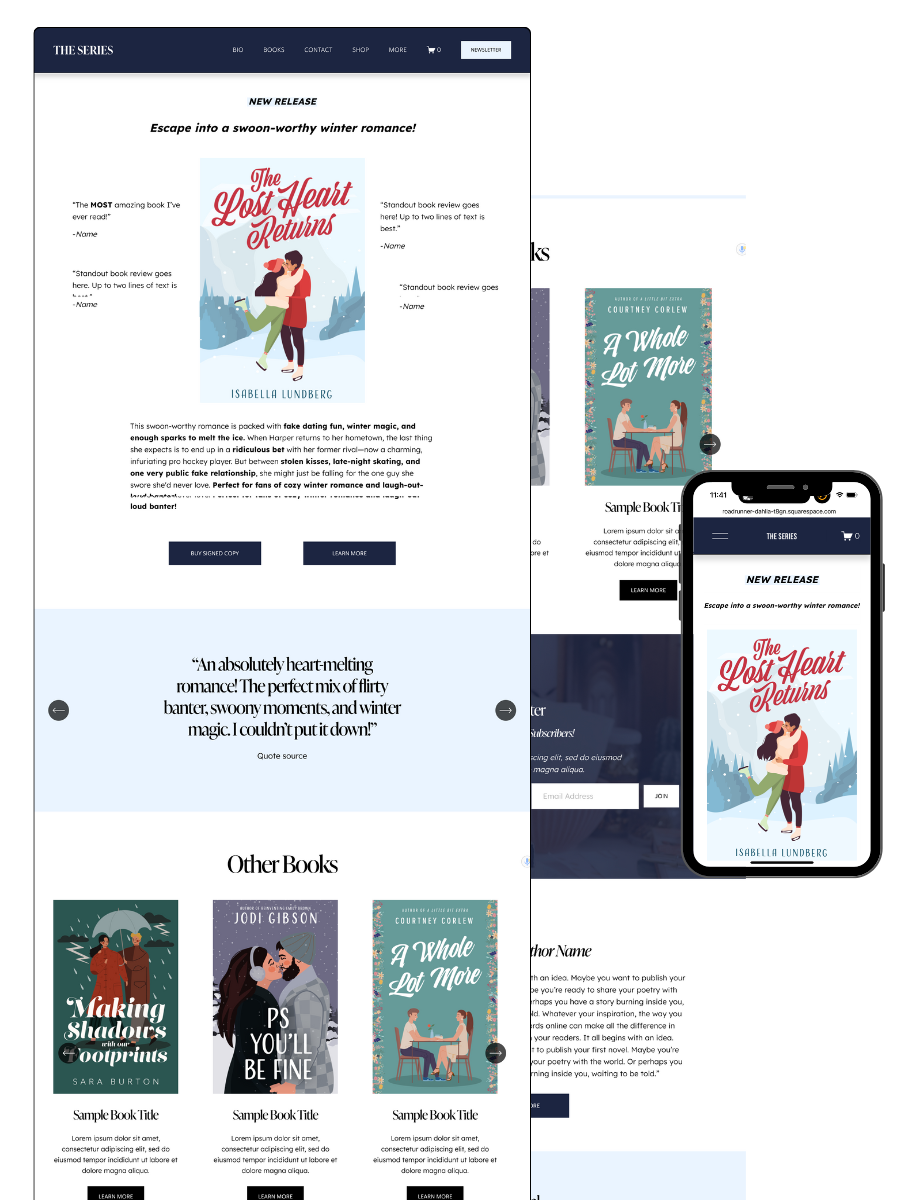
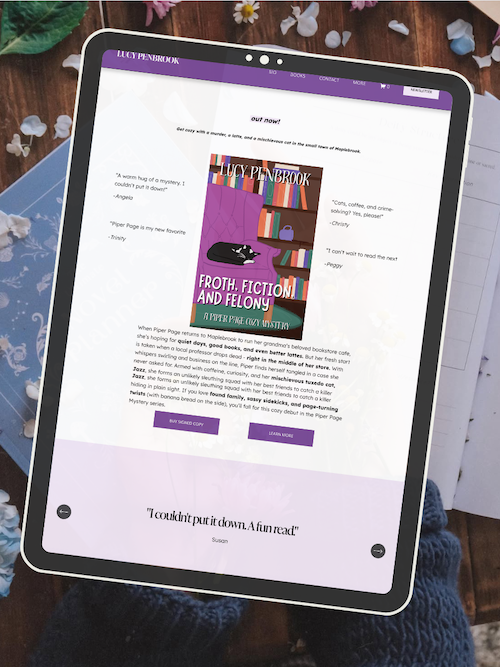
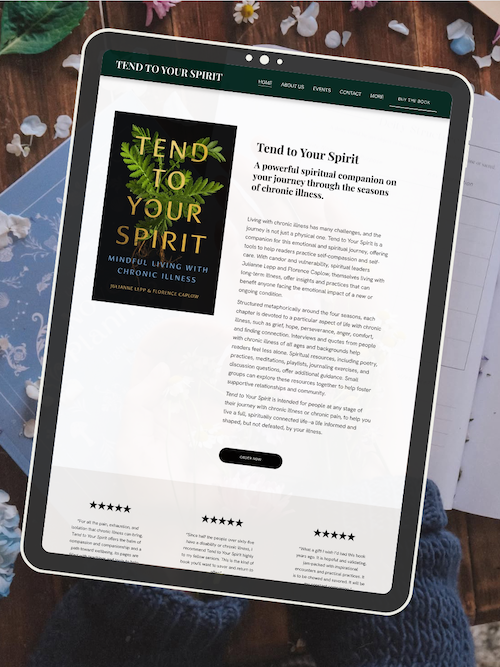
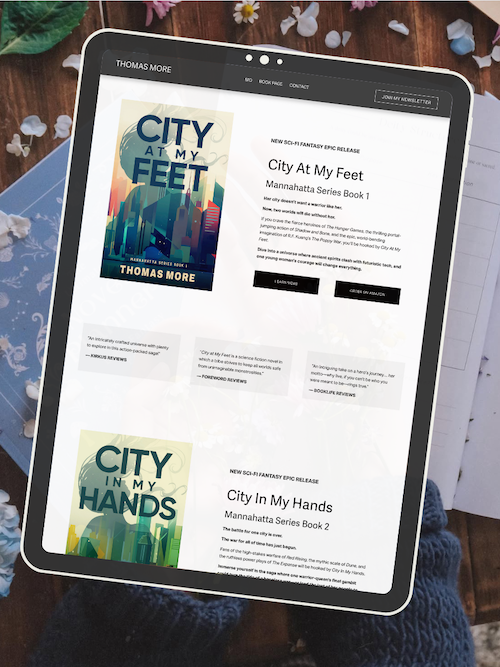
Here’s how real authors are using these Squarespace author website templates:
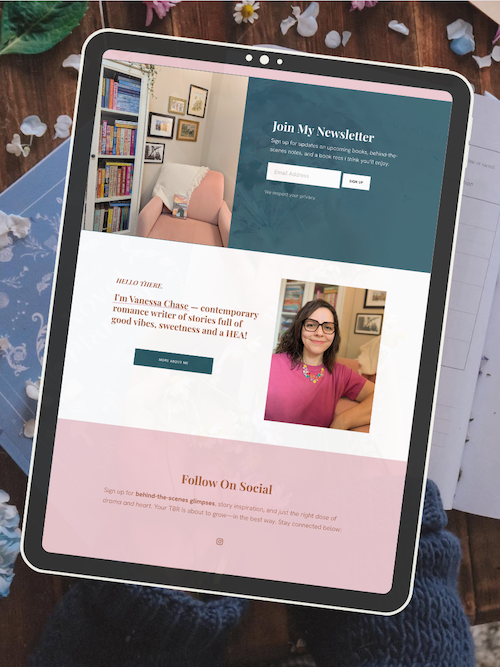
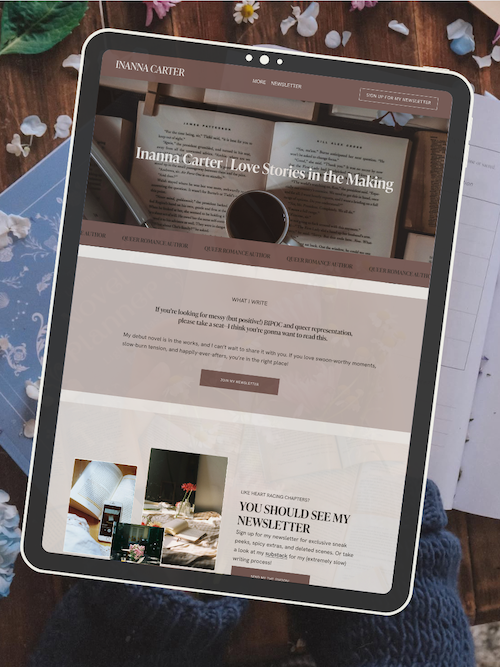
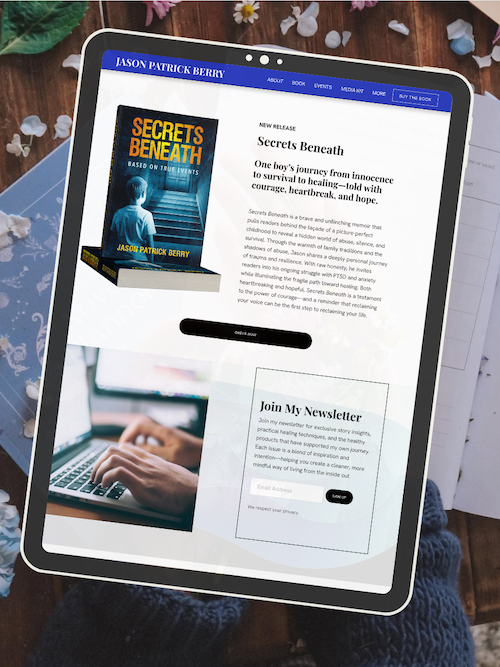
Why Simple Author Websites Work Better
Simple websites load faster and are easier to use. When a reader lands on your site, they usually want one of three things: to learn about your books, sign up for your newsletter, or find out how to contact you. A clean, simple layout helps them do that without digging through menus or scrolling past clutter.
Complicated websites can confuse visitors. Too many pop-ups, auto-playing videos, or buried navigation can make people leave before they even see what you have to offer.
What Makes an Author Website Look Professional
A professional author website doesn't need to be flashy. It needs to be clear, organized, and easy to read.
Good websites use plenty of white space, readable fonts, and a consistent color scheme. They also include high-quality images of book covers and a professional author photo. These small details make a big difference in how polished your site looks.
Navigation should be simple and obvious. Visitors should find what they need in two clicks or less. A basic menu with options like Home, Books, About, and Contact is usually enough.
AUTHOR WEBSITE EXAMPLES
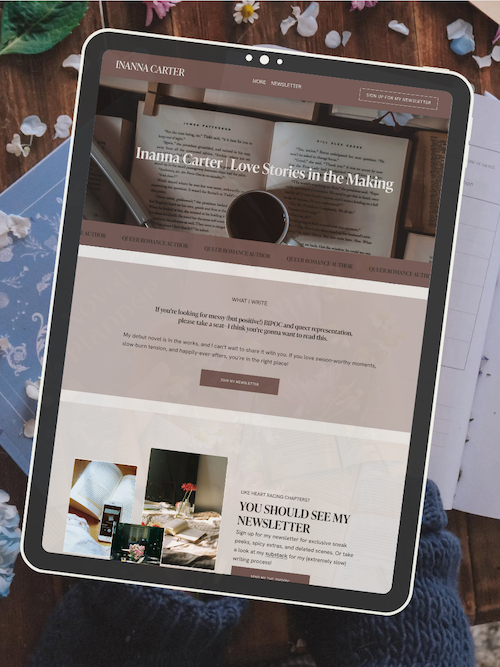
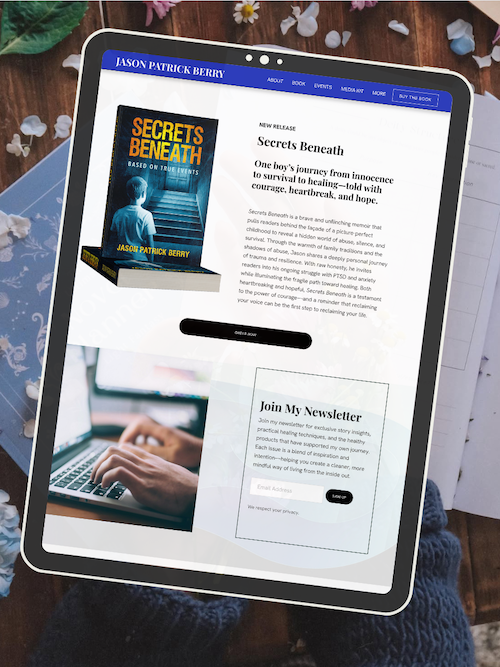
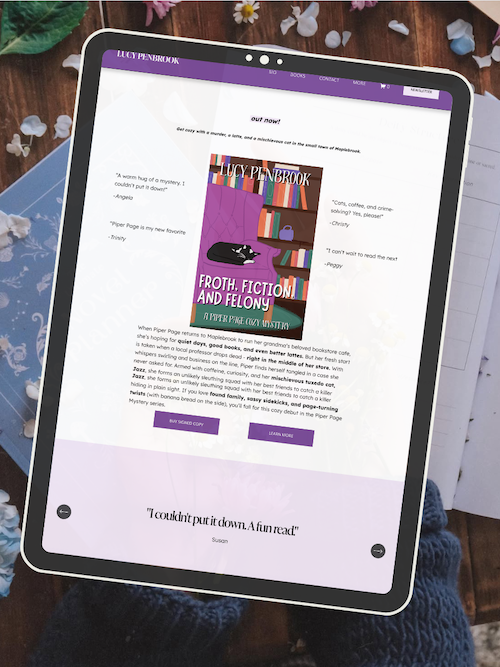
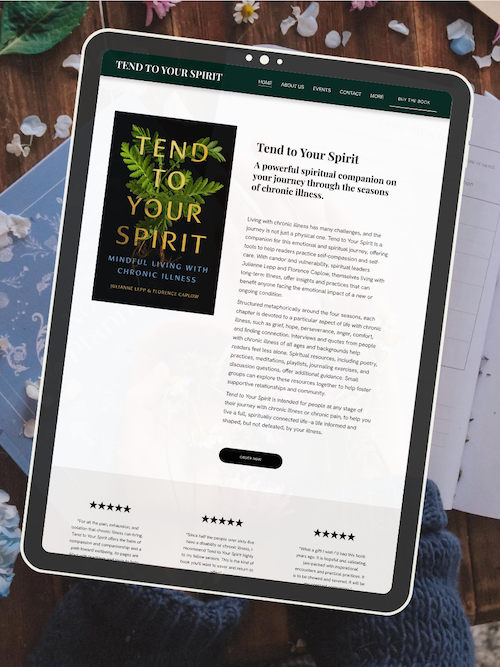
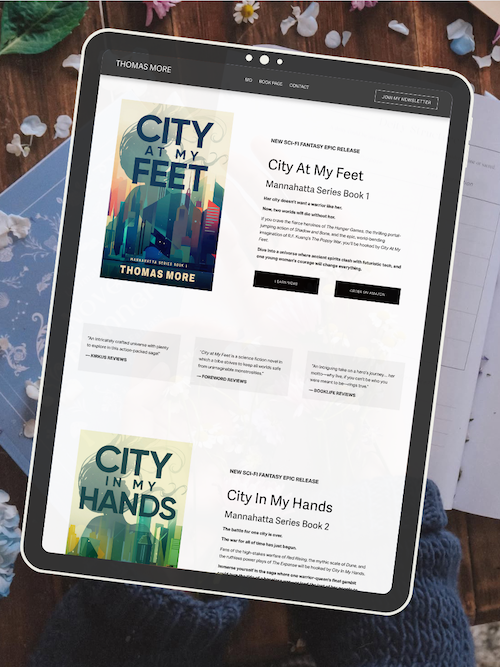
Must-Have Pages for Your Author Website
Every author website should include a few basic pages. These are the building blocks that help readers learn about you and your work.
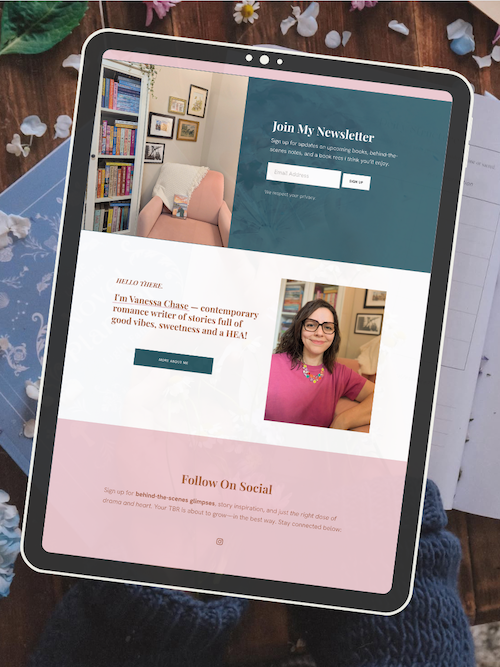
Your homepage should introduce who you are and what you write. It's the first thing people see, so make it count. Include a short bio, your latest book, and a clear call to action like "Join my newsletter" or "Read my latest release."
Your Books page should showcase your titles with covers, descriptions, and buy links. Make it easy for readers to see what you've written and where they can get it.
The About page tells your story. Keep it personal but professional. Readers want to know who you are, what you write, and why you write it.
Simple Author Website Examples That Work
Let's look at what makes certain author websites effective without being overly complex.
Clean Homepage Layouts
The best author homepages get straight to the point. They show your name, what you write, and your latest book above the fold. This means visitors see it without scrolling.
A simple hero image with your book cover and a tagline works well. Below that, you might add a short bio, a newsletter signup, and links to your books. That's it. No clutter, no confusion.
Book Showcase Pages
Your book pages should focus on one thing: making it easy to buy. Each book needs a clear cover image, a compelling description, and visible buy buttons.
Some authors create a single page that lists all their books. Others create individual pages for each title. Both approaches work as long as the information is clear and the buy links are easy to find.
Author Bio and About Sections
Your About page is where readers get to know you. You don't need a long life story. A few paragraphs about your writing journey, what inspires you, and what readers can expect from your books is enough.
Include a professional photo and maybe a personal touch like where you live or what you do when you're not writing. This helps readers feel connected to you.
Design Elements That Make It Look Polished
Small design choices can make your site look more professional. These don't require technical skills, just attention to detail.
Typography and Readability
Choose fonts that are easy to read on all devices. Stick to one or two font families throughout your site. Use larger text for body copy (at least 16px) so people don't have to squint.
Headings should stand out from body text. Make them bigger, bolder, or a different color. This helps readers scan your content quickly.
Color Schemes and Branding
Pick two or three main colors and use them consistently. Your colors should match your book covers and author brand. If you write romance, you might use softer colors. Thriller writers might choose darker, moodier tones.
Don't use too many colors. It looks busy and unprofessional. Stick to your main colors plus black or dark gray for text.
Images and Book Covers
Use high-quality images everywhere. Blurry or pixelated photos make your whole site look cheap. Your book covers should be sharp and large enough to see the title clearly.
Make sure your author photo looks professional. You don't need a studio shoot, but good lighting and a clean background go a long way.
Features You Actually Need (And What to Skip)
Not every website feature is worth your time. Focus on what helps you connect with readers and sell books.
Essential Features
A newsletter signup form is the most important feature on your site. Put it on every page, especially your homepage. This is how you build your reader list and stay in touch between book launches.
Contact information or a contact form lets readers reach you. Social media links help them follow you on other platforms. Buy buttons make it easy to purchase your books.
Features to Avoid
Auto-playing music or videos annoy visitors. Pop-ups that appear immediately are pushy and drive people away. Complicated navigation menus confuse readers instead of helping them.
You don't need a blog if you won't update it regularly. An outdated blog makes your site look abandoned. Only add features you'll actually use and maintain.
Platform Options for Simple Professional Sites
You have several good options for building a simple author website. The right choice depends on your budget, technical comfort level, and how much control you want.
Squarespace for Authors
Squarespace is popular with authors because it's easy to use and looks professional right out of the box. The templates are clean and modern. You can customize colors, fonts, and layouts without touching code.
It includes hosting, so you don't need to buy that separately. Plans start around $16 per month if you pay annually. Email campaigns and some commerce features are built in at higher tiers.
WordPress and Other Options
WordPress offers more flexibility but has a steeper learning curve. You need to find hosting, install the platform, and choose from thousands of themes. It's more work upfront but gives
Simple Author Website Examples That Look Professional
A professional author website doesn't need to be complicated or expensive. The best author websites balance clean design with essential features like an engaging author bio, book showcase, and easy navigation that keeps readers coming back.
What Makes a Simple Yet Professional Author Website
A professional author website starts with clarity. Readers should understand who you are and what you write within seconds of landing on your site.
The best author websites use clean typography and a consistent color scheme. Pick two or three fonts—one for headings, one for body text, maybe one for accents. Stick with them across every page.
Your website design should feel uncluttered. White space matters. High-quality images of your book covers and author photo should stand out without competing for attention.
Professional design doesn't mean fancy. It means intentional. Every element should serve a purpose—guiding readers to your books, your bio, or your mailing list.
Key Features Found in Top Author Website Examples
The best author websites share common website features that work. They're not reinventing the wheel—they're using proven tools that convert visitors into readers.
Essential features include:
Book showcase with clear book pages for each title
Author bio (both short bio and long bio versions)
Contact page with a simple form
Newsletter signup with subscription form
Engaging blog or journal
Social media integration with visible social media icons
Call-to-action buttons throughout the site
Look at what makes a great author website work in practice. Neil Gaiman's site uses a blog to share updates. Colleen Hoover includes community features like forums and book clubs.
Your author platform should also have testimonials and reviews from readers. Book reviews build credibility fast.
Choosing the Right Squarespace Author Website Template
Squarespace offers author website templates built specifically for writers. These templates give you a professional starting point without requiring design skills.
Website builders for authors like Squarespace include features you actually need—book pages, blog layouts, and mailing list integration. You're not starting from scratch.
When picking an author website template, consider your genre and personal branding. Mystery writers might want darker color schemes. Romance authors often use softer palettes.
The right template should support your book marketing goals. Does it have space for a book showcase? Can you add a subscription form above the fold? Will your book covers look good in the layout?
Test mobile views before committing. Most readers will find you on their phones.
Homepage Design: Creating a Strong First Impression
Your homepage is your book cover for your entire author site. Readers decide in three seconds whether to stay or leave.
Put your best book front and center. Include your author photo—readers want to see the person behind the words. Add a short bio (two to three sentences) that tells readers what you write.
A clear call-to-action button should appear above the fold. "Get My Free Chapter," "Join My Newsletter," or "Buy My Latest Book" work well.
Use visual hierarchy to guide eyes down the page. Big, bold headlines. Smaller subheadings. Body text that's easy to scan. Break up sections with images or white space.
Famous authors like Brandon Sanderson use parallax scrolling for visual interest. But simple scrolling works just fine if it keeps focus on your books.
Crafting a Standout Author Bio and About Page
Your author bio answers the question every reader has: "Who is this person and why should I care?"
Write two versions. A short bio (50-75 words) goes in your sidebar or footer. A long bio (200-300 words) gets its own About page.
Your short bio should cover:
Your name and what you write
One impressive credential
Where readers can find your work
Your long bio can tell your story. How did you become a writer? What drives your work? What should readers know about you as a person?
Include your author photo on the About page. Professional doesn't mean stuffy—just clear, well-lit, and representing your author branding.
Add personality. Readers connect with humans, not résumés.
Book Showcase and Book Pages That Convert
Every book you've written deserves its own dedicated page. This is where casual browsers become buyers.
Your book pages should include:
High-quality images of book covers
Book description (hook them in the first line)
Buy buttons linking to retailers
Book reviews or pull quotes
ISBN and publication details
Create a separate book showcase on your homepage. Display covers as clickable thumbnails that lead to individual book pages.
Use call-to-action buttons strategically. "Buy Now," "Pre-Order Today," or "Add to Cart" should stand out with contrasting colors.
If you sell books directly through your site, make checkout obvious. Add to cart buttons should be large and unmissable.
Consider grouping books by series. Maps or series guides help readers navigate your fictional worlds.
Built-In Blog and Publishing Journals
An engaging blog keeps readers coming back between book launches. It's also good for SEO and building your author platform.
Post consistently—weekly is ideal, monthly is fine, sporadic doesn't work. Pick a schedule you can maintain.
Blog content ideas for authors:
Writing process updates
Behind-the-scenes content from book launches
Character insights or world-building details
Reading recommendations
Personal essays about writing life
Keep posts scannable. Use short paragraphs (one to three sentences). Add subheadings. Include images.
A journal section works differently than a blog. Journals feel more personal—daily observations, creative experiments, or educational content about your craft.
Both formats build connection with readers. Pick the one that fits your style.
Effective Calls-to-Action and Contact Pages
Call-to-action buttons drive readers to take specific actions. Without them, visitors browse and leave.
Place call-to-action buttons on every page. Your homepage needs at least two—one above the fold, one at the bottom.
Effective CTA examples:
"Download Your Free First Chapter"
"Join 5,000+ Readers on My Newsletter"
"Pre-Order My New Release"
"Book Me for Speaking Events"
Your contact page should be simple. Name, email, message box. That's it.
Add context about why someone might contact you. "For interview requests, speaking engagements, or reader questions, use the form below."
Don't hide your contact page in a hamburger menu. Make it accessible from your main navigation.
Consider adding a reader magnet—a free short story or chapter—in exchange for email addresses. This grows your mailing list fast.
Social Media Integration and Reader Community Features
Social media links should be visible but not overwhelming. Add
Frequently Asked Questions
Authors building their first website often have similar questions about design, functionality, and visibility. These answers cover the core elements you need to make your site work, from showcasing books to connecting with readers through search and social platforms.
What are the key elements of a professional author website?
A professional author website needs a homepage that clearly states who you are and what you write. Your homepage should include your name, a brief tagline or description of your work, and a professional photo or headshot.
You'll also need an About page that tells your story in a conversational tone. Keep it focused on your writing journey and what readers can expect from your books.
A Books page is essential for showcasing your published work. Include cover images, book descriptions, and buy links for each title.
You should add a Contact page with a simple form or email address. This makes it easy for readers, media contacts, and potential collaborators to reach you.
An email signup form should appear on multiple pages, not just buried on a separate page. Your homepage and Books page are good places to add it.
How can an author effectively showcase their books on their website?
Start with high-quality cover images that are large enough to see clearly. Each book should get its own section or card with the cover displayed prominently.
Write a compelling book description that hooks readers in the first sentence. Keep it under 150 words and focus on what makes the story or content unique.
Include all the important details like publication date, page count, and ISBN. Add direct buy links to retailers like Amazon, Barnes & Noble, or your preferred bookstore.
You can organize multiple books by series, publication date, or genre. Choose whatever makes the most sense for your catalog.
Add reader reviews or blurbs from other authors to build credibility. Pick the strongest 2-3 testimonials for each book rather than listing everything.
What are the best practices for creating an author website on a platform like Squarespace?
Choose a template that puts your books front and center. Squarespace offers clean, modern designs that work well for authors without requiring custom code.
Use your site's style editor to match your brand colors and fonts. Pick 2-3 colors maximum and stick with readable font combinations.
Keep your navigation simple with 4-6 main menu items. Most author sites need Home, About, Books, Blog, and Contact at minimum.
Make sure your site works on mobile devices by previewing it on different screen sizes. Over half of your visitors will view your site on phones or tablets.
Connect your domain name to your Squarespace site for a professional web address. Your own domain (like yourname.com) looks more credible than a generic Squarespace URL.
Set up basic SEO by adding page titles and descriptions. Squarespace has built-in fields for this in each page's settings.
How can authors integrate social media into their website design?
Add social media icons to your header or footer that link to your active profiles. Only include platforms you actually use and update regularly.
You can embed your Instagram feed or Twitter timeline directly on your homepage. This shows visitors that you're active and engaged with readers.
Include social sharing buttons on your blog posts. Make it easy for readers to share your content with one click.
Don't overdo it with too many platforms. Focus on 2-3 social networks where your readers actually spend time.
You can also add a social media feed to your Books page. Show readers posting about your work or share behind-the-scenes content from your writing process.
What are some tips for maintaining an engaging blog on an author's website?
Post consistently on a schedule you can actually maintain. Once a week is better than daily posts that fizzle out after a month.
Write about topics your readers care about. Share your writing process, book recommendations, or insights related to your genre.
Keep posts between 500-1000 words for better readability. Break up text with subheadings, images, and short paragraphs.
Use a conversational tone that matches how you'd talk to a reader in person. Skip the formal academic writing unless that's your brand.
End each post with a question or call-to-action. Invite comments, suggest related posts, or encourage readers to sign up for your newsletter.
Add categories or tags to organize your content. This helps readers find posts on specific topics they're interested in.
How can authors optimize their website for search engine visibility?
Start with keyword research to find what terms readers use when searching for books like yours. Include these naturally in your page titles, headings, and content.
Write unique page titles and meta descriptions for every page. These show up in search results and help people decide whether to click.
Use descriptive alt text for all images on your site. This helps search engines understand your content and improves accessibility.
Create quality content that answers reader questions or provides value. Blog posts about writing craft, your genre, or book-related topics can attract organic traffic.
Build internal links between your pages by linking from blog posts to your Books page or About page. This helps search engines crawl your site more effectively.
Make sure your site loads quickly by optimizing image sizes. Large, uncompressed photos slow down your pages and hurt your search rankings.
Ready to launch your author website?
Explore my Squarespace website templates designed specifically for authors — easy to customize, beautifully designed, and built to help you sell more books.

SHOP THE AUTHOR WEBSITE TEMPLATES
THE MANUSCRIPT AUTHOR WEBSITE TEMPLATE — perfect for authors launching their first professional website with a simple, polished layout
THE DEBUT AUTHOR WEBSITE TEMPLATE — designed to highlight your first book, build your email list, and grow an audience from day one
THE SERIES AUTHOR WEBSITE TEMPLATE — ideal for showcasing multiple books with clear series pages and strong reader flow
THE ONE-PAGE AUTHOR AUTHOR WEBSITE TEMPLATE — a streamlined one-page site for authors who want something beautiful, fast, and easy
THE DONE-FOR-YOU AUTHOR WEBSITE EXPERIENCE — your author website built for you so you can launch without touching design or tech
MOST POPULAR BLOG POSTS
Authors Guide to Website Design & Branding
Squarespace Email Campaigns: A Guide for Authors
How to Create an Author Website on Squarespace (Step-by-Step)

Launch Your Author Website in a Day (Without the Tech Overwhlem)
*No more starting from scratch.
A simple, done-for-you Squarespace template built specifically for authors with a WIP.