Author Website Copywriting Tips: How to Write High-Converting Copy That Sells Your Books
Your author website isn't just a digital business card. It's your most powerful sales tool, reader magnet, and platform builder all rolled into one. But if your copy falls flat, even the most beautiful website won't convert visitors into fans or book buyers.
The difference between a website that sits quietly online and one that actively grows your author career comes down to how well you write your copy. Good website copy speaks directly to readers, shows them why your books matter, and guides them toward taking action—whether that's joining your email list, buying your latest release, or following you on social media.
The good news? You don't need to be a marketing expert to write compelling author website copy. With a few smart strategies and practical tips, you can transform your site into a reader-converting machine that works for you around the clock.
Want a beautiful author website without spending weeks designing it from scratch? These Squarespace website templates for authors are designed to showcase your books, grow your email list, and look professional instantly.

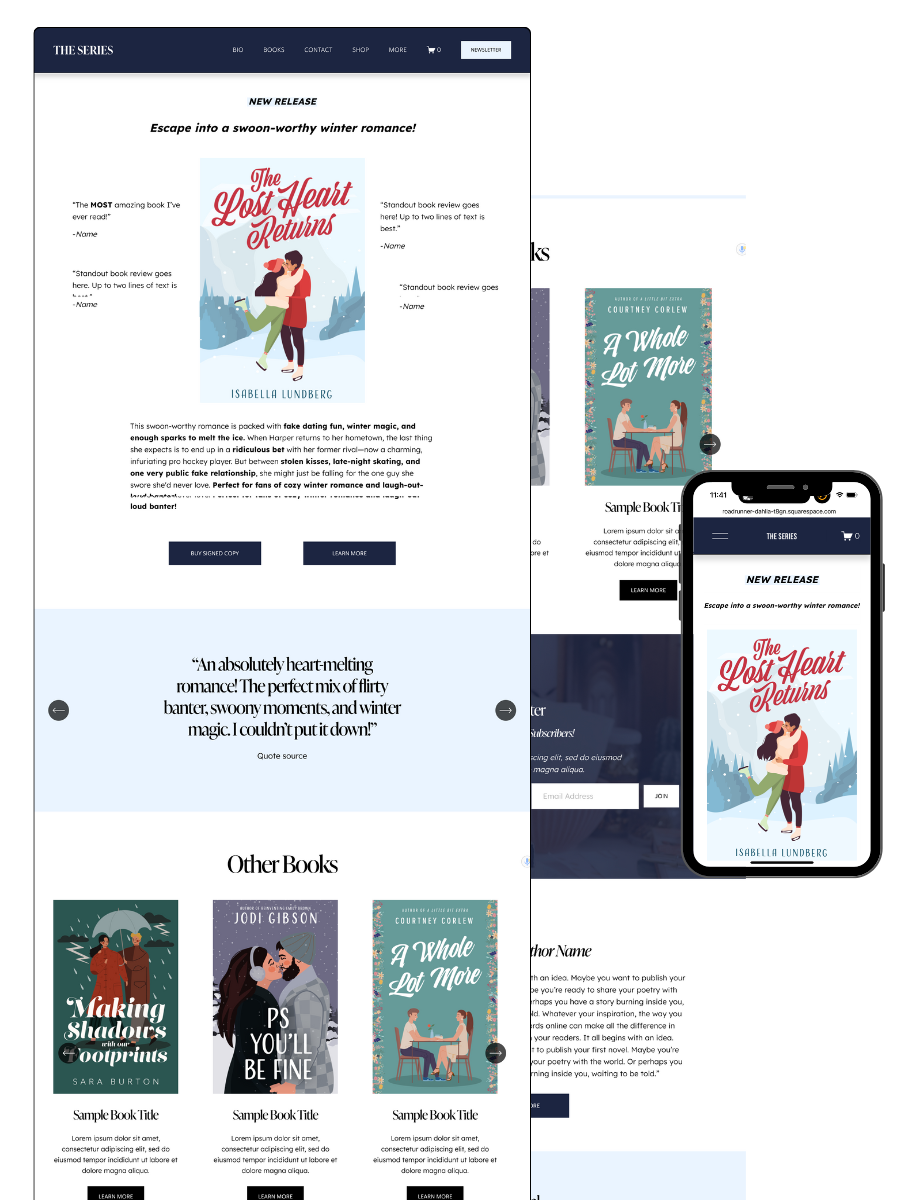
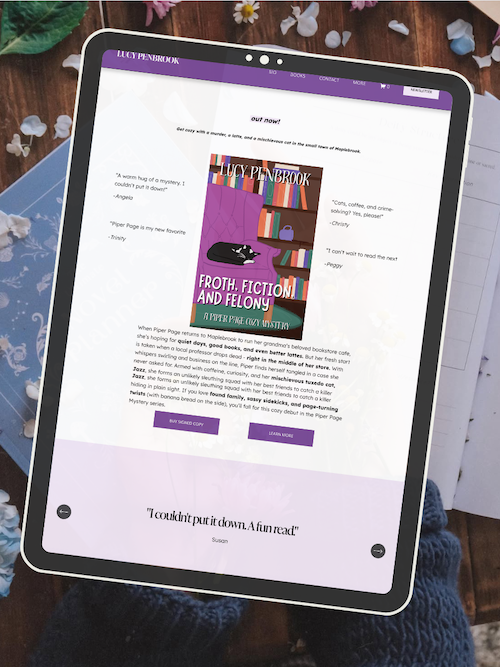
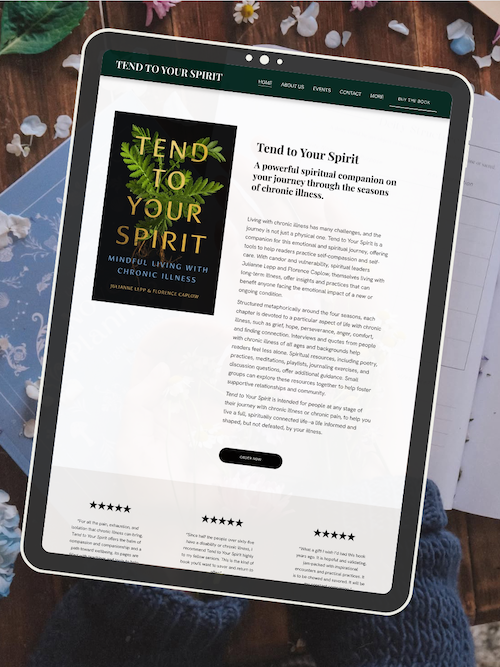
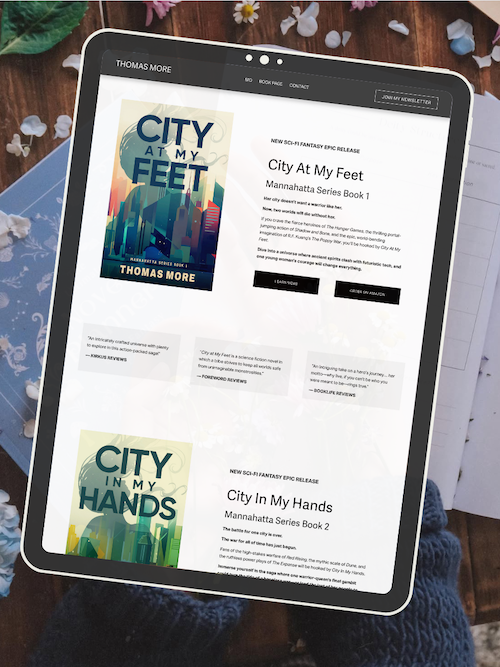
Here’s how real authors are using these Squarespace author website templates:
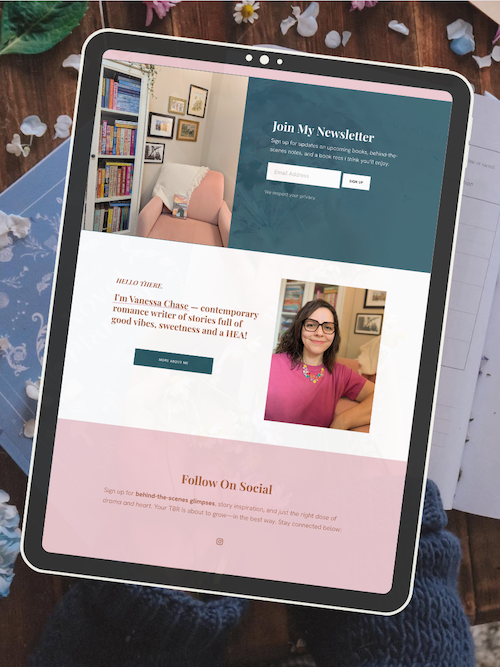
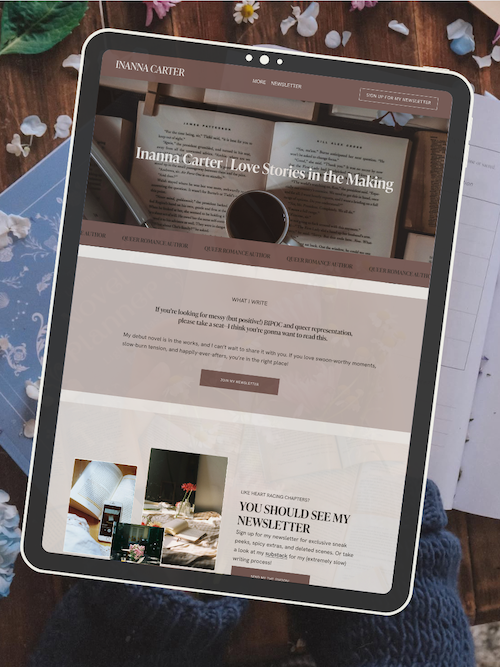
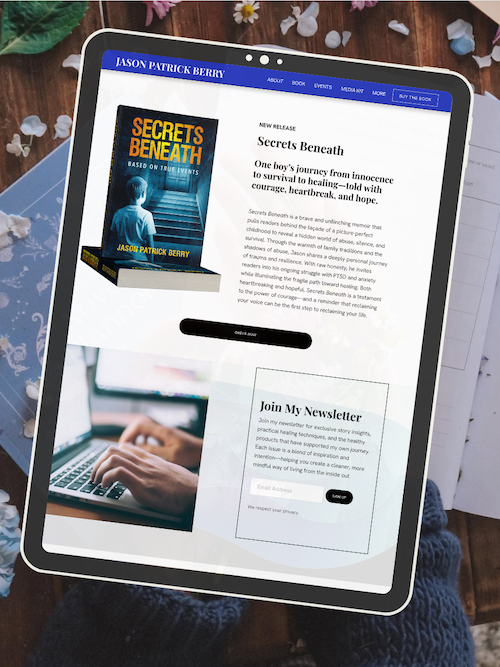
Key Takeaways
Strong author website copy connects with readers and drives them to take clear actions like buying books or joining your email list
Writing effective copy requires knowing your audience, using clear headlines, and creating compelling calls-to-action throughout your site
Simple adjustments to your existing website copy can boost engagement and turn casual visitors into loyal fans
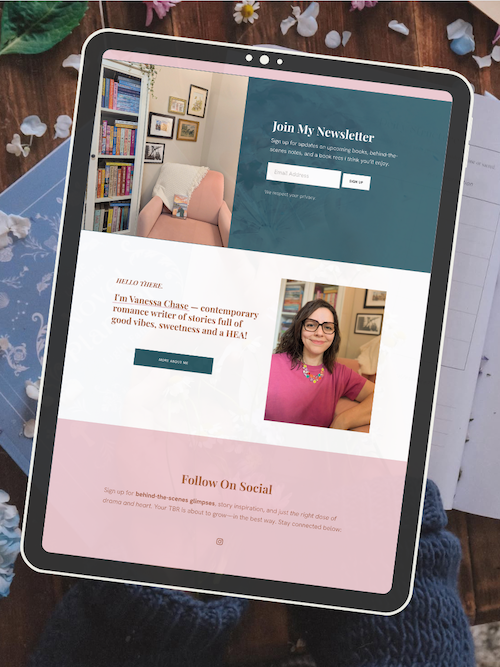
AUTHOR WEBSITE EXAMPLES
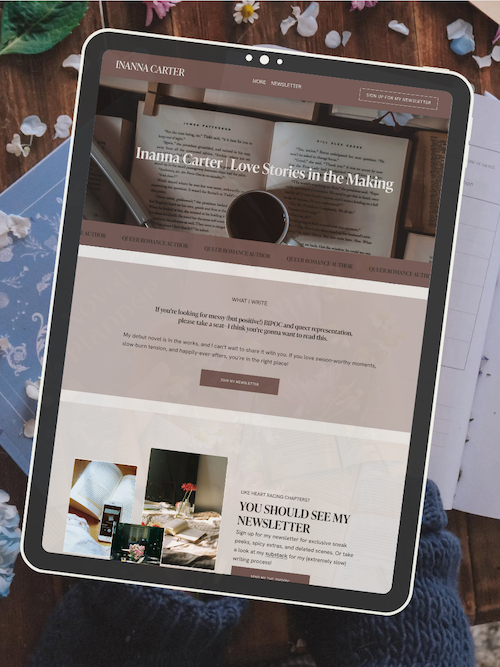
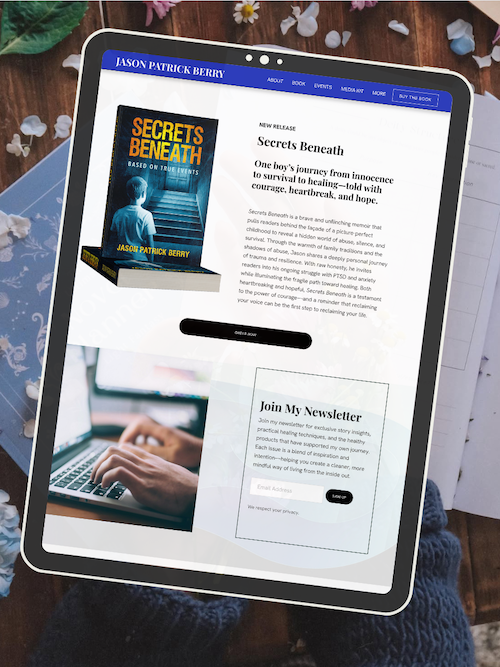
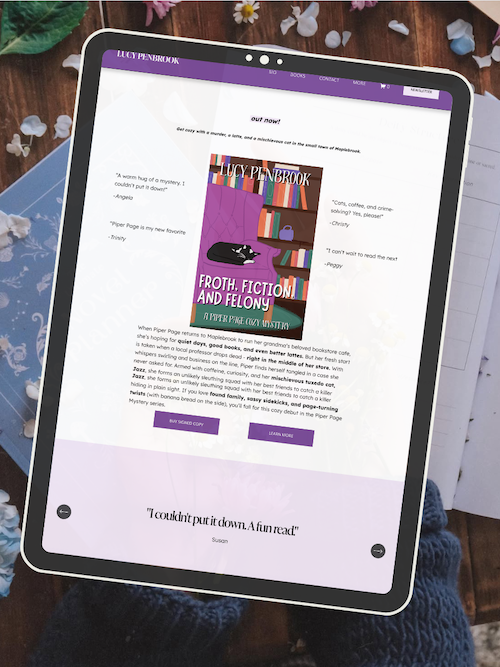
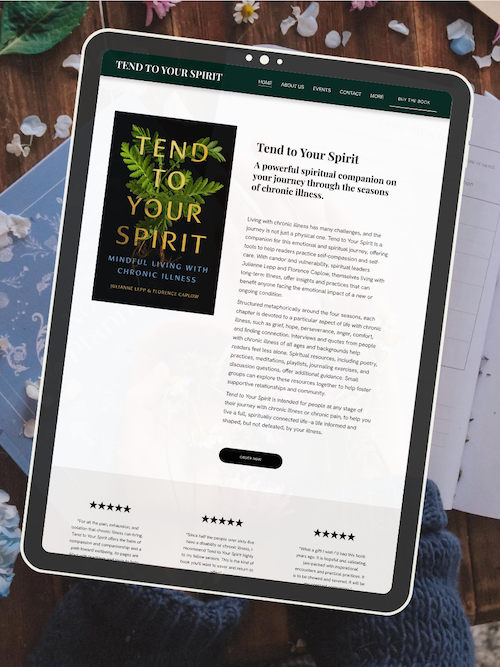
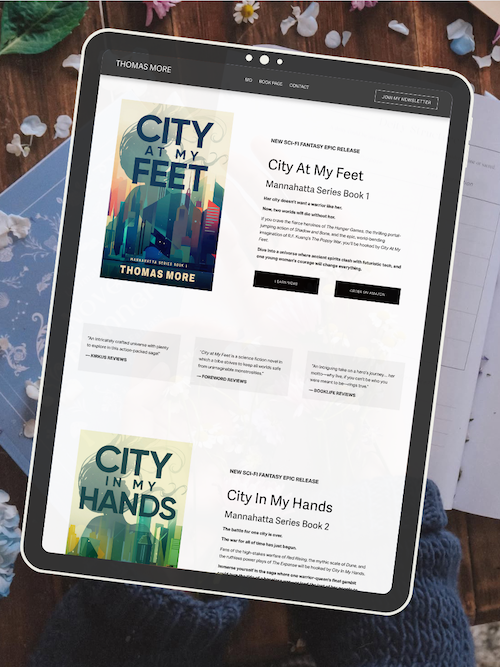
Essential Author Website Copywriting Tips
Strong website copy builds trust with readers and turns casual visitors into loyal fans. The key is knowing who you're talking to, being clear about what makes your work special, showing real value, and keeping your language simple enough that anyone can follow along.
Understand Your Audience and Buyer Personas
You can't write effective copy if you don't know who you're writing for. Your target audience isn't "everyone who reads books." It's a specific group of readers who connect with your genre, voice, and themes.
Start by thinking about demographics—age, reading habits, where they hang out online. But don't stop there. Dig deeper into what keeps them up at night. What problems do they want solved? What emotions do they crave in a story?
Create buyer personas by:
Listening to feedback from current readers
Reading Amazon reviews of similar books in your genre
Joining reader groups on social media
Noting the exact words readers use to describe books they love
When you know your audience, you can speak directly to them. Instead of generic copy like "I write books for everyone," you might say "I write dark fantasy for readers who love morally gray characters and high-stakes magic systems."
Pay attention to the language your readers actually use. If they say they're looking for "cozy mysteries with strong female leads," use those exact phrases in your copy. This creates an instant connection because readers feel understood.
Craft a Compelling Value Proposition
Your value proposition answers one simple question: Why should someone care about your books? It's not just what you write—it's what readers get from your writing.
Think about the specific experience you deliver. Maybe you write romance that makes readers laugh out loud. Or thrillers that keep them guessing until the final page. Or historical fiction that transports them to another era with rich, vivid detail.
Your value proposition should be:
Specific: "Heartwarming contemporary romance" beats "good stories"
Reader-focused: What they experience, not just what you do
Memorable: Something that sticks after they leave your site
Honest: Don't promise what you don't deliver
Place your value proposition prominently on your homepage. Make it one of the first things visitors see. You might put it in your header, your bio, or right below your name.
Test your value proposition by showing it to readers who don't know your work. Can they tell what you write and why they might enjoy it? If not, simplify and clarify until the message lands.
Highlight Benefits Over Features
New authors often list features: "My book is 300 pages" or "I've published five novels." But readers don't care about page counts or publication numbers. They care about what they'll feel, learn, or experience.
Features describe what something is. Benefits describe what it does for the reader.
Here's the difference:
Feature Benefit "A three-book fantasy series" "Lose yourself in a complete fantasy world with no cliffhangers" "Strong female protagonist" "Root for a heroine who fights for what she believes in" "Set in Victorian England" "Escape to a world of drawing rooms, secrets, and scandal"
Focus on benefits by asking "so what?" after every feature. You wrote a standalone novel—so what? Readers get a satisfying story with a complete ending in one book. You research extensively—so what? Readers experience historically accurate details that bring the past to life.
Use emotional language that connects to what readers want. They want to laugh, cry, escape, learn, feel less alone, or experience adventure. Show them how your books deliver those feelings.
Use Clear, Concise, and Readable Language
Clarity matters more than clever wordplay. Your website copy isn't the place to show off your most complex prose. Save that for your novels.
Keep sentences short. Really short. Mix in some longer ones for rhythm, but default to brevity. Short sentences are easier to scan on screens.
Short paragraphs improve readability too. Break up text every 1-3 sentences. White space gives readers' eyes a rest and makes your page less intimidating.
Cut unnecessary words:
"In order to" becomes "to"
"At this point in time" becomes "now"
"Due to the fact that" becomes "because"
Avoid jargon and industry terms unless you're writing for other authors. Your readers don't need to know about your "character-driven narrative arc with a three-act structure." They want to know your story will keep them hooked.
Use active voice whenever possible. "I write thrillers" sounds stronger than "Thrillers are written by me." Active voice creates momentum and confidence.
Read your copy out loud. If you stumble or run out of breath, your sentences are too long. If it sounds stiff or formal, simplify. Write like you talk—natural, friendly, and direct.
Frequently Asked Questions
Author websites need clear answers to common challenges like writing an effective about page, building reader engagement through blog content, and turning visitors into subscribers. These questions focus on the practical decisions you'll face when building or improving your author site.
What are the best practices for crafting an about page on an author's website?
Your about page should start with a strong opening line that connects with readers. Skip the chronological life story and focus on what matters to your audience—why you write, what themes drive your work, and what readers can expect from your books.
Include a professional author photo that feels approachable. This helps readers connect with you as a real person, not just a name on a book cover.
Write in short paragraphs that mix personal details with your writing credentials. Mention awards, publications, or interesting background that relates to your books, but keep it conversational and warm.
End with a clear next step. Do you want readers to join your newsletter, check out your latest book, or follow you on social media? Make that action obvious and easy to complete.
How can authors create a compelling blog content strategy?
Choose 2-3 core topics that connect to your books and expertise. If you write historical fiction, you might blog about research discoveries, writing process insights, and book recommendations in your genre.
Post consistently but realistically. One quality post per month beats four rushed posts that don't serve your readers. Pick a schedule you can actually maintain long-term.
Write posts that provide real value. Answer questions your readers ask, share behind-the-scenes writing stories, or teach something related to your book themes. Every post should leave readers feeling like they learned something or connected with you more deeply.
Include a newsletter sign-up in every blog post. Readers who engage with your content are warm leads who might want more from you.
What are effective ways to showcase testimonials on an author's site?
Place your strongest testimonials on your homepage. Choose quotes that speak to emotional impact or specific benefits readers experienced, not generic praise like "great book."
Use testimonials from recognizable sources when you have them. Reviews from established authors, publications, or industry figures carry extra weight. Mix these with authentic reader reviews that highlight specific story elements.
Keep testimonials short and scannable. Pull the most powerful sentence or two rather than including entire paragraphs. Long blocks of quoted text lose reader attention quickly.
Include attribution with each testimonial. A first name and last initial works for reader reviews. For professional endorsements, use full names and credentials.
What key elements should be included in an author's website homepage design?
Your homepage needs a clear headline that immediately tells visitors who you are and what you write. "Mystery novelist" or "YA fantasy author" works better than clever taglines that require interpretation.
Feature your latest or most important book prominently. Include the cover image, a brief description, and purchase links. This should be visible without scrolling on most devices.
Add a newsletter sign-up form early on the page. Offer something valuable in return—a free short story, the first chapter of your book, or exclusive content subscribers can't get elsewhere.
Include navigation that makes sense. Your main menu should link to your books, about page, blog, and contact information. Don't hide these behind creative labels that confuse visitors.
How can authors optimize their book pages for higher conversion rates?
Start each book page with a compelling book description that hooks readers in the first sentence. Focus on the story's emotional pull and what makes it unique, not a dry plot summary.
Place buy buttons above the fold and repeat them after the description. Make these buttons stand out visually with contrasting colors. Link to multiple retailers so readers can choose their preferred platform.
Include social proof like reader reviews, ratings, and awards. Readers want to know others enjoyed your book before they commit to buying.
Add "read a sample" options when possible. Let visitors read the first chapter or a compelling excerpt. Many readers need to test your writing style before purchasing.
What strategies can authors use for integrating a newsletter sign-up into their website?
Place sign-up forms in multiple locations without being pushy. Your homepage, about page, blog sidebar, and end of blog posts are all natural spots where engaged visitors might want to subscribe.
Offer a specific incentive rather than asking people to "stay updated." A free short story, exclusive chapter, or resource guide gives visitors a concrete reason to share their email address.
Keep your sign-up form simple. Ask for just an email address, or email and first name at most. Every additional field you add reduces conversion rates.
Use clear, direct language in your call-to-action. "Get my free short story" or "Join 2,000 readers" works better than vague phrases like "Join the community." Tell people exactly what they're signing up for and what they'll receive.
Ready to launch your author website?
Explore my Squarespace website templates designed specifically for authors — easy to customize, beautifully designed, and built to help you sell more books.

SHOP THE AUTHOR WEBSITE TEMPLATES
THE MANUSCRIPT AUTHOR WEBSITE TEMPLATE — perfect for authors launching their first professional website with a simple, polished layout
THE DEBUT AUTHOR WEBSITE TEMPLATE — designed to highlight your first book, build your email list, and grow an audience from day one
THE SERIES AUTHOR WEBSITE TEMPLATE — ideal for showcasing multiple books with clear series pages and strong reader flow
THE ONE-PAGE AUTHOR AUTHOR WEBSITE TEMPLATE — a streamlined one-page site for authors who want something beautiful, fast, and easy
THE DONE-FOR-YOU AUTHOR WEBSITE EXPERIENCE — your author website built for you so you can launch without touching design or tech
MOST POPULAR BLOG POSTS
Authors Guide to Website Design & Branding
Squarespace Email Campaigns: A Guide for Authors
How to Create an Author Website on Squarespace (Step-by-Step)

Launch Your Author Website in a Day (Without the Tech Overwhlem)
*No more starting from scratch.
A simple, done-for-you Squarespace template built specifically for authors with a WIP.