Minimal vs Multi-Page Author Websites: Which Design Strategy Drives More Reader Engagement
As an author building your online presence, one of the first decisions you'll make is choosing between a minimal one-page website and a multi-page site. The right choice depends on how much content you need to share and whether you want room to grow your platform over time. A minimal site keeps things simple and focused, while a multi-page site gives you space to organize books, blog posts, events, and more across separate pages.
Many new authors feel drawn to minimal sites because they're quick to set up and easy to maintain. They work well if you have one main goal, like promoting a single book or collecting email signups. But as your author career grows, you might need more room to showcase multiple projects, share your writing journey, or build a content library that helps readers connect with your work.
This guide will help you understand which structure fits your needs right now and how to make the switch later if your goals change. You'll learn the benefits and limits of each option, plus how to decide based on your publishing timeline, content plans, and long-term author goals.
Want a beautiful author website without spending weeks designing it from scratch? These Squarespace website templates for authors are designed to showcase your books, grow your email list, and look professional instantly.

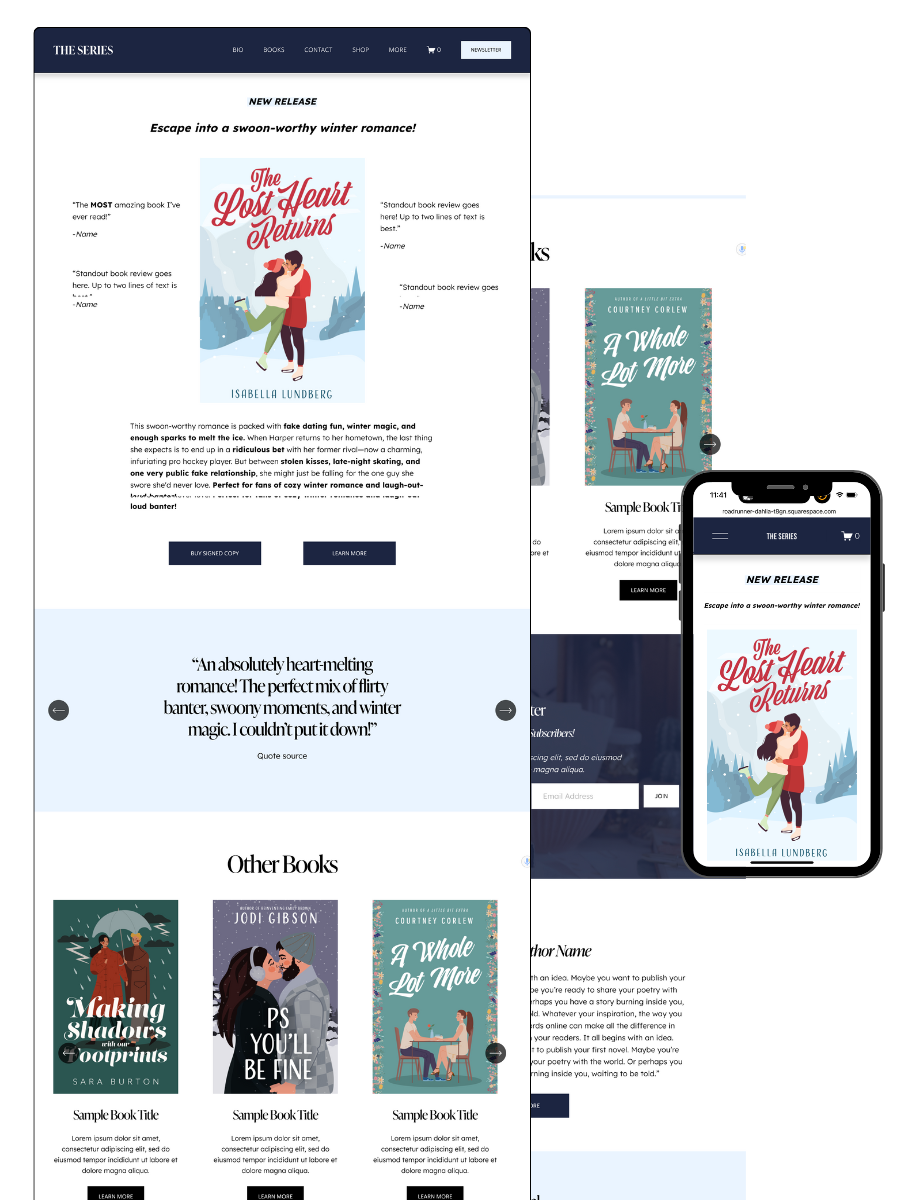
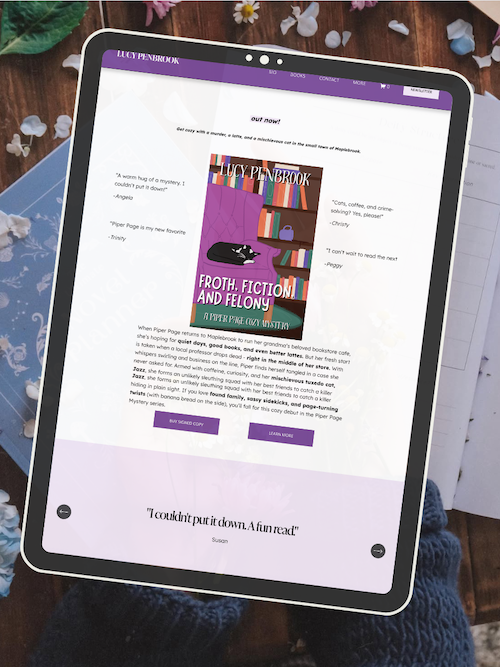
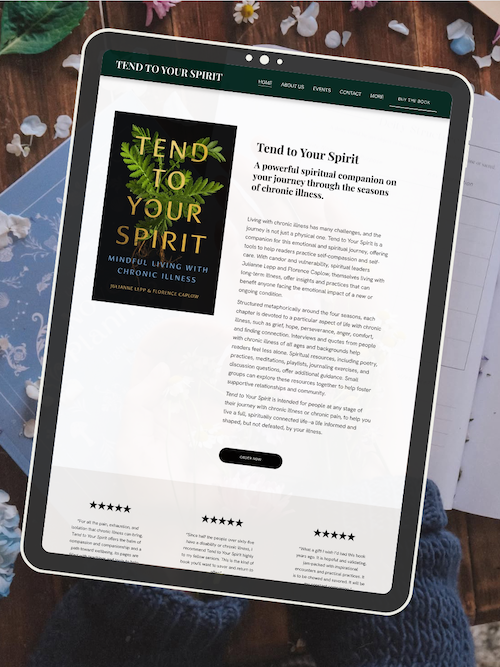
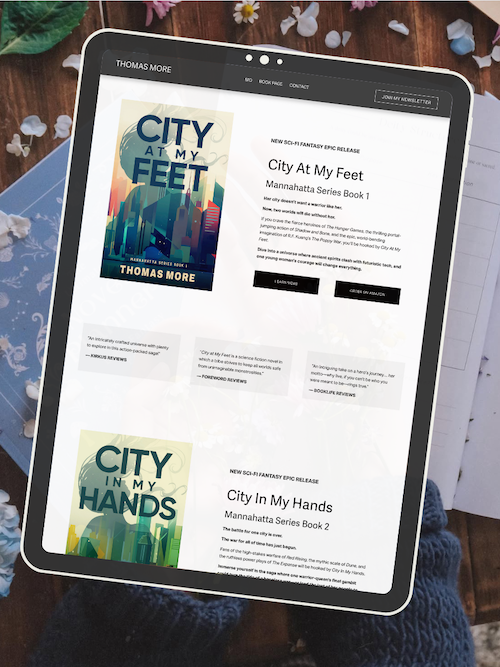
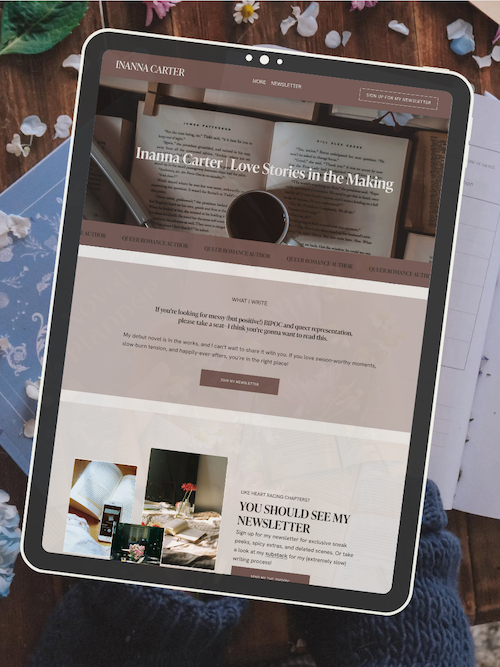
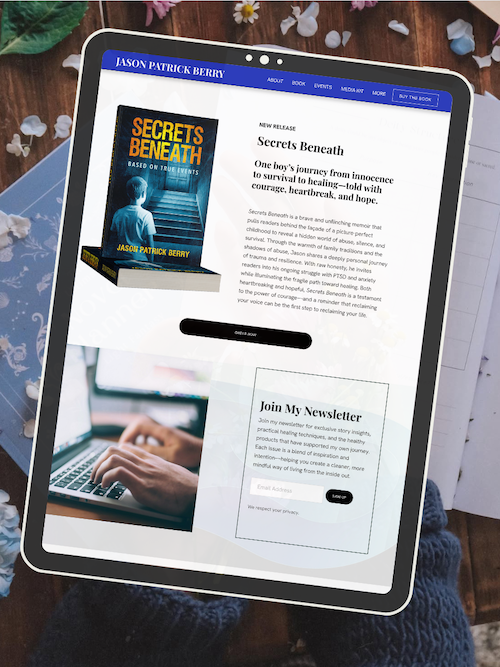
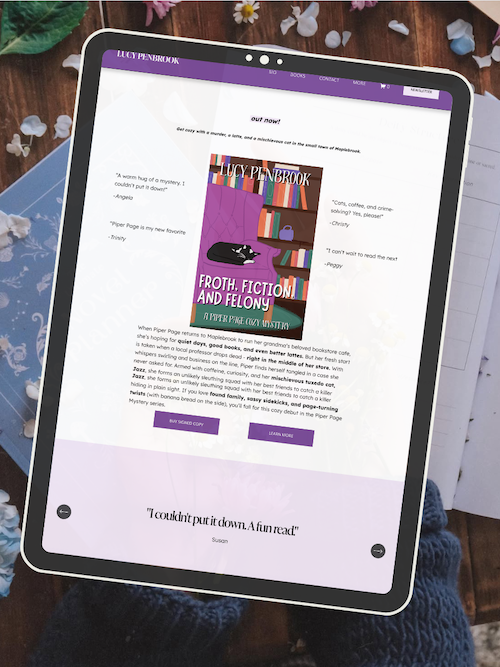
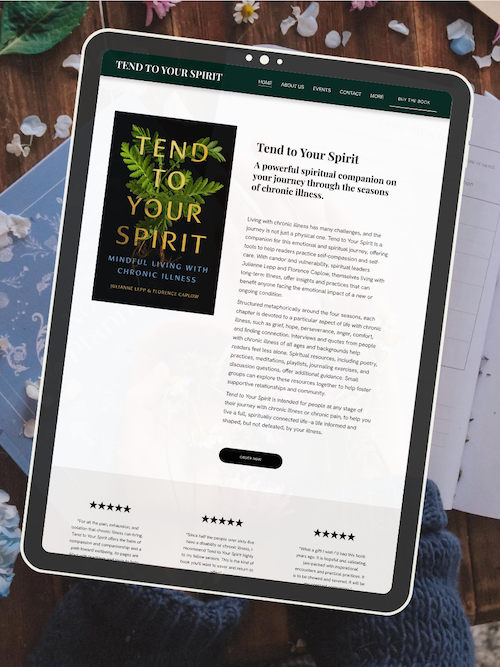
Here’s how real authors are using these Squarespace author website templates:
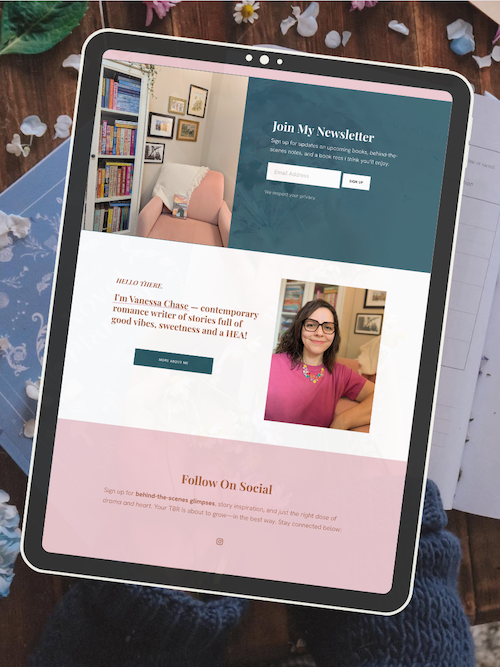
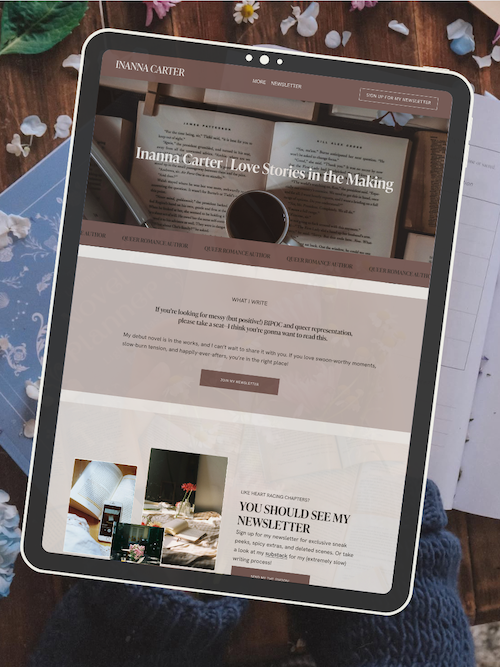
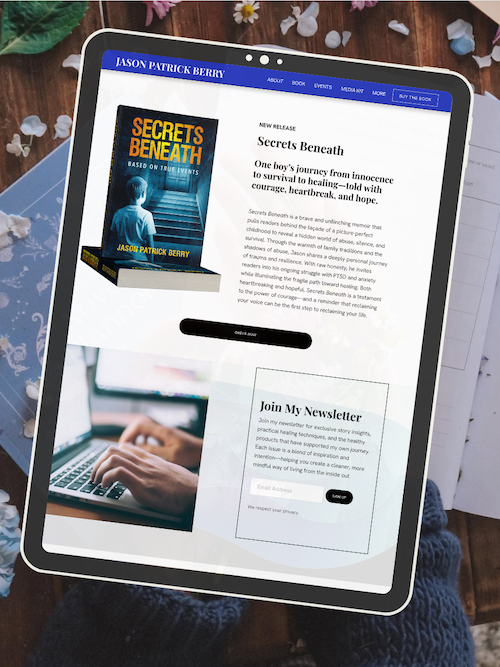
Key Takeaways
Minimal sites work best for authors with a single focus like launching one book or building an email list
Multi-page sites give you room to grow with separate areas for multiple books, blogs, events, and media
You can start with one structure and switch to the other as your author platform and content needs expand
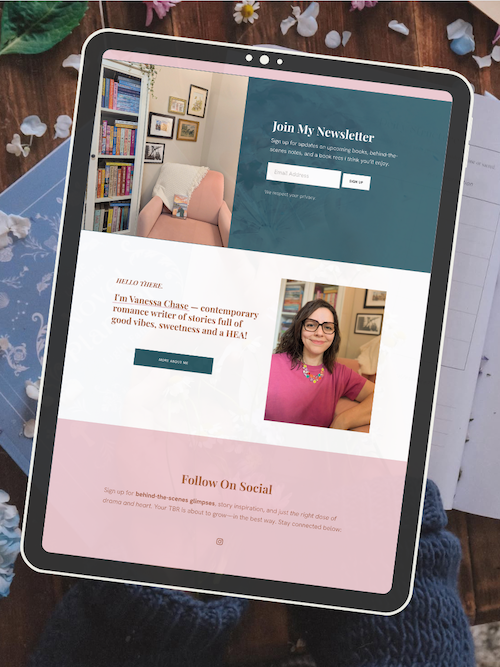
AUTHOR WEBSITE EXAMPLES
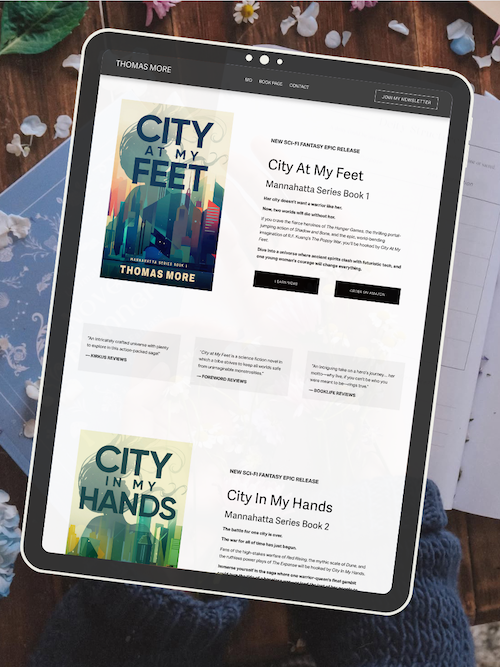
Minimal vs Multi-Page Author Websites: Which Structure Is Best for You?
A minimal website keeps all your content on one scrollable page, while a multi-page site spreads information across separate pages like About, Books, Blog, and Contact. The right choice depends on how much content you have, what you want readers to do, and how you plan to grow your author platform.
Key Differences Between Minimal and Multi-Page Websites
A single-page website displays everything on one continuous page. You scroll down to see your bio, book covers, testimonials, and contact form without clicking to new pages.
Navigation uses anchor links that jump to different sections when clicked. This creates a smooth scrolling experience that works great on mobile devices.
A multi-page website uses traditional navigation with separate pages for each topic. Your homepage introduces visitors, your about page tells your story, and your blog lives on its own with multiple posts.
Site structure affects how readers find information and how search engines rank your content. Single-page sites work best with one clear call to action, while multi-page structures let you target different reader goals on different pages.
Content organization differs significantly:
Minimal (Single-Page) Multi-Page All content in one location Content split across pages Anchor link navigation Traditional menu navigation Limited content volume Unlimited content depth One primary CTA Multiple CTAs per page Fast initial loading Pages load as needed
Benefits of Minimal (Single-Page) Author Websites
Single page websites deliver a focused user experience perfect for authors with a clear goal. If you're launching one book, building your email list, or driving readers to a single purchase link, a one-page site keeps attention where it matters.
The user journey is simple and linear. Readers scroll through your story in the order you choose—hook them with your author photo, share your book, show testimonials, then hit them with your call to action. No distractions. No wondering where to click next.
Mobile-first design works naturally on single-page sites. Scrolling feels intuitive on phones and tablets. You won't deal with clunky menus or readers getting lost across multiple pages.
Setup and maintenance are easier. You update one page instead of managing five or ten separate pages. Website templates for single-page designs are straightforward, and most website builders make them simple to customize.
Fast loading is another win. With lazy loading, images and content load as readers scroll, keeping page performance strong. Your site feels snappy and responsive.
Higher conversion rates often come from the focused nature of single-page web design. When you remove navigation options and guide readers down one path, they're more likely to complete your main goal—whether that's joining your email list or buying your book.
Strengths of Multi-Page Author Websites
Multi-page websites give you room to grow your author platform over time. When you have multiple books, a blog, speaking events, and different reader audiences, a multi-page structure organizes everything cleanly.
Blogging becomes practical with a multi-page site. You can publish fresh content regularly, which drives organic traffic through search engines. Each blog post targets different keywords and topics your readers care about.
SEO benefits multiply across pages. Your homepage can focus on your author brand, your about page can target "about [your name]," individual book pages can rank for specific titles, and blog posts can capture long-tail searches. Google Analytics tracks which pages perform best, helping you refine your content strategy.
In-depth content fits naturally into a multi-page web design. You can dedicate full pages to case studies, detailed book descriptions, portfolio samples of your writing, or comprehensive resource guides for readers.
Branding and storytelling expand when you're not cramped into one scrolling page. Your about page can tell your full author journey. Book pages can include excerpts, reviews, and purchase options. Your contact page can offer multiple ways to connect.
Navigation helps readers find exactly what they want. A reader interested in your thriller series can jump straight to that book page. A potential client looking for your speaking info can click directly to that page without scrolling past everything else.
User engagement improves when content is organized logically. Readers exploring your site can dive deep into topics they care about and skip what doesn't interest them. This creates a better overall user experience.
Choosing the Right Website Structure for Your Goals
Your content volume should guide your decision. If everything you need to say fits on one screen of scrolling, a single-page site works perfectly. If you have three or more books, active blogging, and multiple services, you need a multi-page structure.
Ask yourself these questions:
Do you have one clear call to action or multiple reader goals?
Will you blog regularly or update content weekly?
Do you have more than two books to showcase?
Do different readers visit your site for different reasons?
One "yes" answer suggests you might need a single page site. Three or more "yes" answers point toward a multi-page website.
Your marketing strategy matters too. If you're running landing pages for specific book launches or promotions, a focused single-page site or dedicated landing page converts better. If you're building long-term organic traffic through content marketing, a multi-page site with blog posts pays off.
Consider your future plans. Starting with a minimal website makes sense when you're just launching your author career. You can always expand to a multi-page site as you publish more books and grow your platform.
A hybrid approach works for many authors. Keep your main site as a clean, focused homepage with simple navigation to essential pages—About, Books, Blog, Contact. This gives you the clarity of a single-page site with the depth of a multi-page structure.
Testing your conversion rate helps you decide if your current structure works. Use Google Analytics to track whether readers complete your CTAs, how long they stay on your site, and which pages they visit most. If your single cta on a one-page site converts well, stick with it. If readers seem lost or bounce quickly, adding pages with clearer navigation might help.
Website builders like Squarespace offer responsive website templates for both structures, making it easy to switch if your needs change.
Frequently Asked Questions
Authors often wonder which website structure best fits their goals and how to make the most of their chosen design. These questions cover the practical advantages of each approach, what pages to include, and how to optimize your site for both readers and search engines.
What are the key advantages of choosing a minimal author website design?
A minimal author website keeps things simple and focused. You get faster load times, easier maintenance, and a clear path for visitors to take action. Everything lives on one scrolling page, so readers don't have to click around to find your books or contact info.
This design works really well if you're launching your first book or building a straightforward author brand. You spend less time managing content and more time writing.
The streamlined approach also makes it easier for mobile visitors to navigate. They can scroll through your bio, books, and newsletter signup without tapping through multiple pages.
How many pages should an author's website have for optimal user engagement?
Most author websites perform well with 4 to 7 main pages. A typical setup includes Home, About, Books, Blog, and Contact. This gives readers enough depth to explore your work without overwhelming them.
If you write in multiple genres or have a speaking career alongside your books, you might need 8 to 10 pages. Each major aspect of your author platform deserves its own dedicated space.
Start with the basics and add pages as your career grows. You can always expand from 5 pages to 8 pages when you launch a new series or add author events to your schedule.
Can a multi-page author website improve SEO compared to a minimal website?
Yes, multi-page websites typically rank better in search engines. Each page targets different keywords related to your books, writing topics, and author brand. A dedicated book page can rank for your title, while blog posts bring in readers searching for topics you write about.
Search engines favor websites with more content to index. When you create separate pages for your thriller series, your romance novels, and your writing advice blog, you give Google more opportunities to match your site with reader searches.
A single-page site limits your SEO potential because all your content competes for attention on one URL. Multi-page sites let you build authority across multiple search terms and topics.
What essential elements should a multi-page author website include?
Your homepage should welcome visitors and guide them to your books or newsletter. Include a compelling headline about your writing, a professional author photo, and clear navigation to your other pages.
An About page tells your author story and builds connection with readers. Share your writing journey, what inspires your books, and personal details that make you relatable.
A Books page showcases your published works with covers, descriptions, and buy links. If you have multiple books, consider giving each one its own page or organizing them by series.
Your Contact page needs an email signup form and ways for readers to reach you. Add social media links and a contact form for speaking requests or media inquiries.
A Blog or News page keeps your site active with fresh content. This improves SEO and gives readers reasons to return to your website between book launches.
How can authors make their minimal website design stand out?
Use high-quality images that reflect your book genre and brand aesthetic. Your header image or background photo sets the mood for your entire site, so choose something striking that matches your writing style.
Strong, clear copy makes a bigger impact than fancy design tricks. Write compelling headlines, concise book descriptions, and a bio that hooks readers in the first sentence.
Strategic use of white space keeps your minimal design from feeling cluttered. Let your content breathe by spacing out sections and avoiding the urge to cram everything above the fold.
Choose one or two accent colors that complement your book covers. This creates visual cohesion without overwhelming visitors with too many competing elements.
Add subtle animations or transitions as visitors scroll through your page. Squarespace templates often include these features, and they add polish without slowing down your site.
What are the best practices for organizing content on a multi-page author website?
Create a logical navigation menu that prioritizes what readers care about most. Put Books, About, and Blog in your main navigation, and move less important pages like Press Kit or Speaking to a footer menu.
Group related content together under parent pages. If you write multiple series, create a main Books page with dropdown links to each series page.
Use consistent layouts across similar pages. All your individual book pages should follow the same structure so readers know where to find buy links, reviews, and series information.
Link between related pages to keep visitors exploring. Mention other books at the bottom of each book page, or link to relevant blog posts from your About page.
Keep your most important calls to action visible on every page. Your newsletter signup and newest book should be easy to find whether someone lands on your homepage or a blog post.
Update your navigation as your career evolves. When you publish your fifth book, it might be time to reorganize from individual book pages to a series-based structure.
Ready to launch your author website?
Explore my Squarespace website templates designed specifically for authors — easy to customize, beautifully designed, and built to help you sell more books.

SHOP THE AUTHOR WEBSITE TEMPLATES
THE MANUSCRIPT AUTHOR WEBSITE TEMPLATE — perfect for authors launching their first professional website with a simple, polished layout
THE DEBUT AUTHOR WEBSITE TEMPLATE — designed to highlight your first book, build your email list, and grow an audience from day one
THE SERIES AUTHOR WEBSITE TEMPLATE — ideal for showcasing multiple books with clear series pages and strong reader flow
THE ONE-PAGE AUTHOR AUTHOR WEBSITE TEMPLATE — a streamlined one-page site for authors who want something beautiful, fast, and easy
THE DONE-FOR-YOU AUTHOR WEBSITE EXPERIENCE — your author website built for you so you can launch without touching design or tech
MOST POPULAR BLOG POSTS
Authors Guide to Website Design & Branding
Squarespace Email Campaigns: A Guide for Authors
How to Create an Author Website on Squarespace (Step-by-Step)

Launch Your Author Website in a Day (Without the Tech Overwhlem)
*No more starting from scratch.
A simple, done-for-you Squarespace template built specifically for authors with a WIP.