Author Website Checklist: Essential Elements to Build Your Online Presence (Free Download)
Your author website needs more than just pretty design. It needs to turn visitors into readers, and readers into fans. A well-planned author website checklist helps you build a site that captures email subscribers, showcases your books, and grows your audience on autopilot.
Most authors skip the basics and wonder why their website isn't working. They launch without clear calls-to-action, forget to add an email signup, or bury their best content where no one can find it. You don't have to guess what belongs on your site or figure it all out the hard way.
This guide walks you through every essential element your author website needs to succeed. You'll get a complete checklist you can follow step by step, plus a free downloadable resource to make setup easier. Whether you're building your first site or improving an existing one, this checklist ensures nothing gets missed.
Key Takeaways
A complete author website checklist ensures your site includes all essential elements that convert visitors into subscribers
Following a structured checklist helps you avoid common mistakes and build a professional site faster
Using a ready-made checklist or template saves time and removes the guesswork from launching your author platform
Want a beautiful author website without spending weeks designing it from scratch? These Squarespace website templates for authors are designed to showcase your books, grow your email list, and look professional instantly.

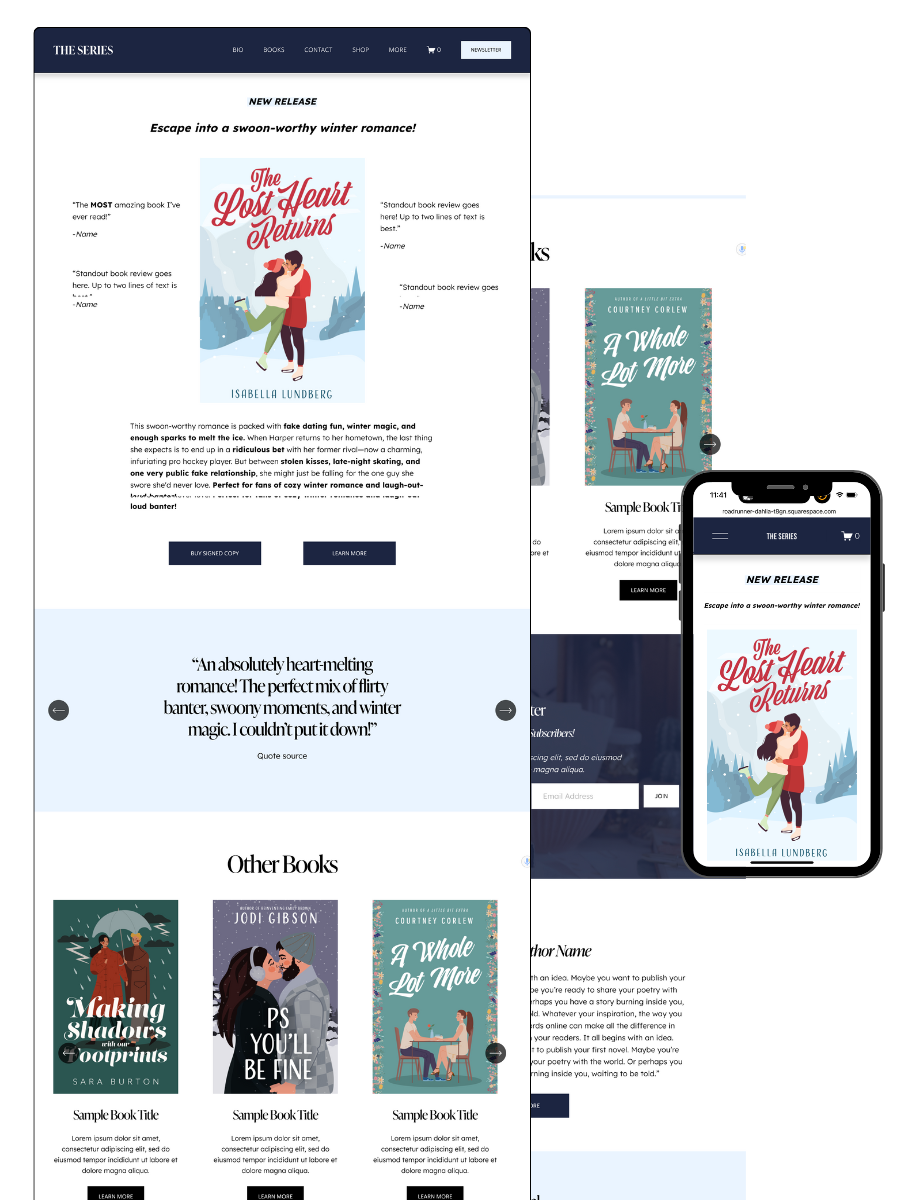
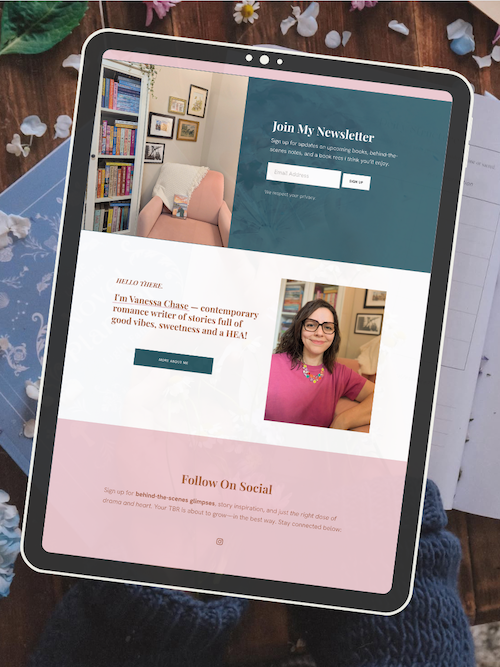
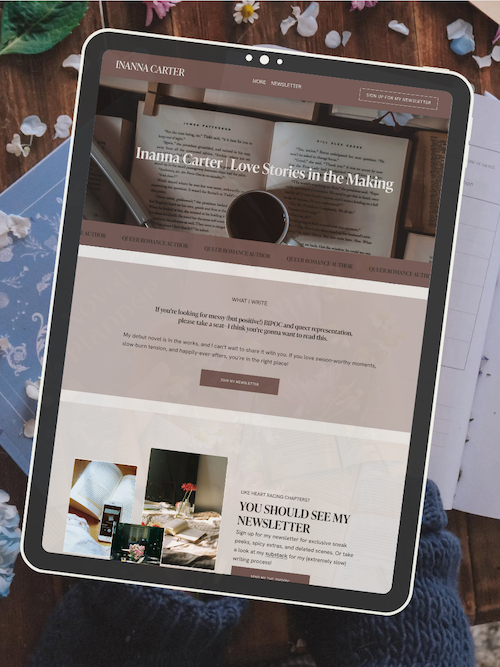
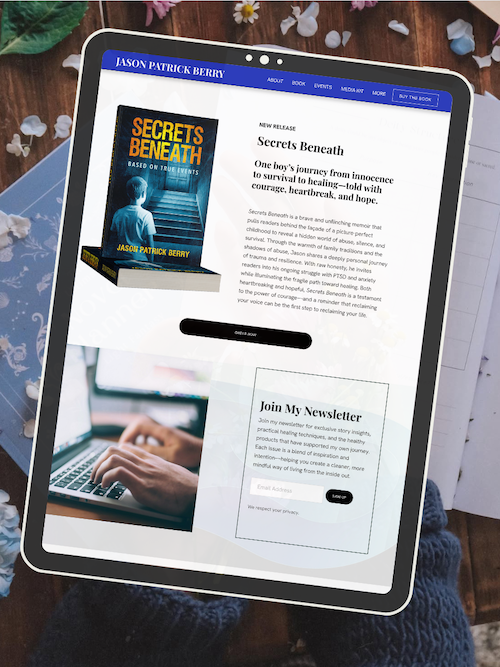
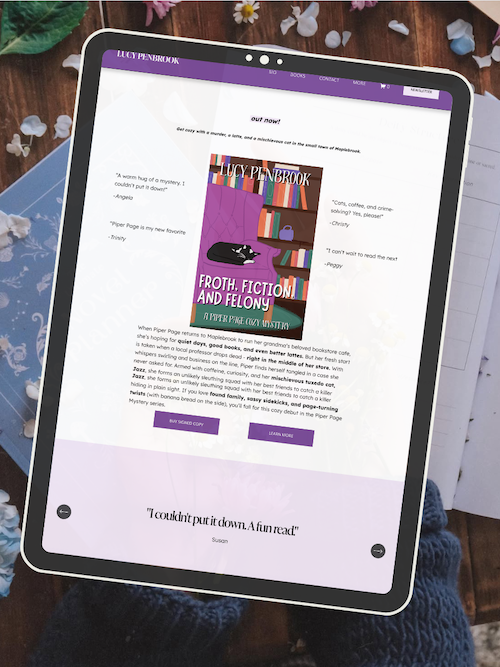
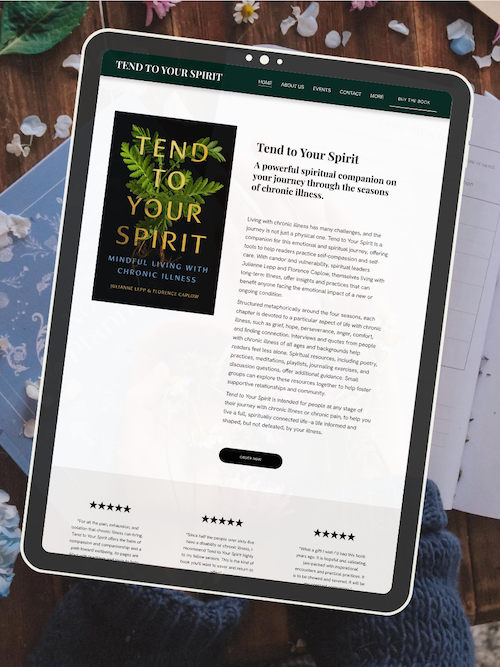
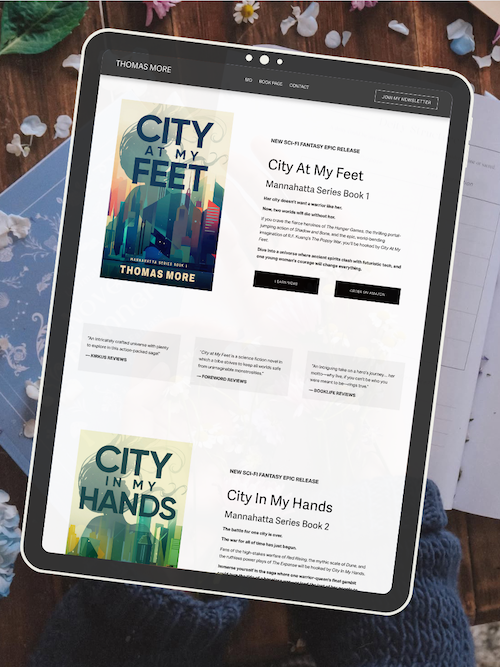
Here’s how real authors are using these Squarespace author website templates:
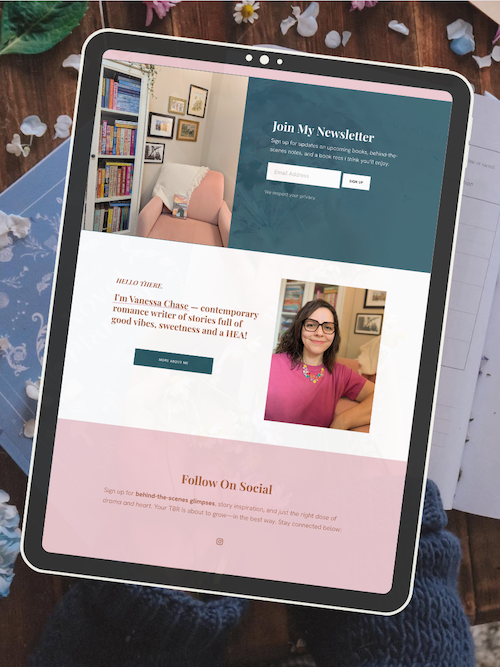
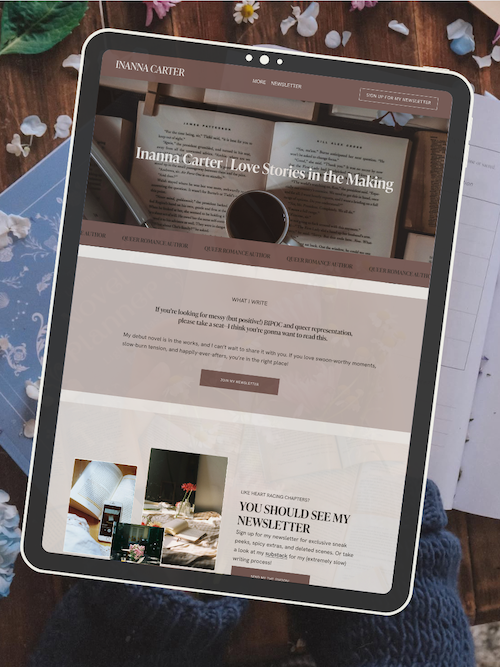
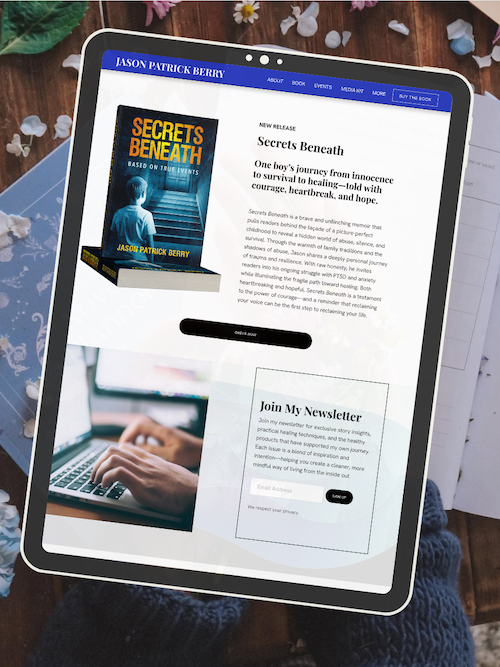
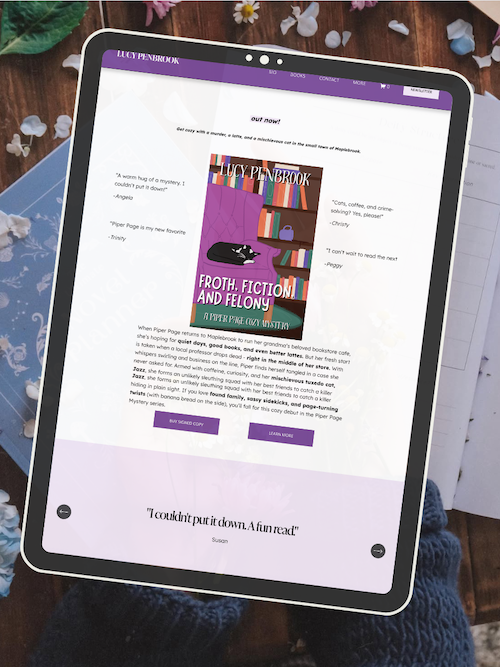
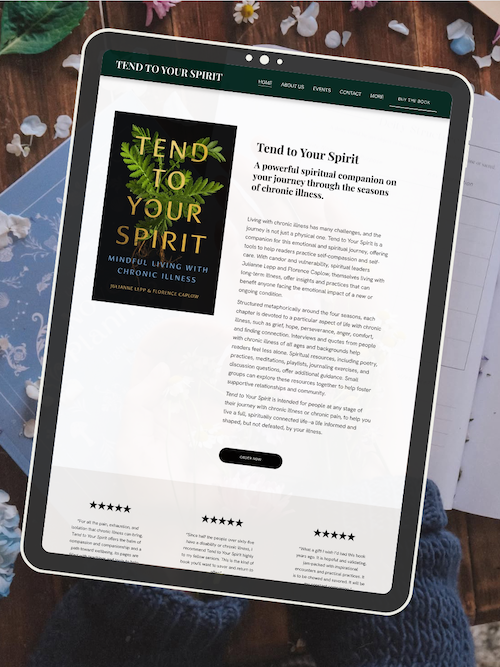
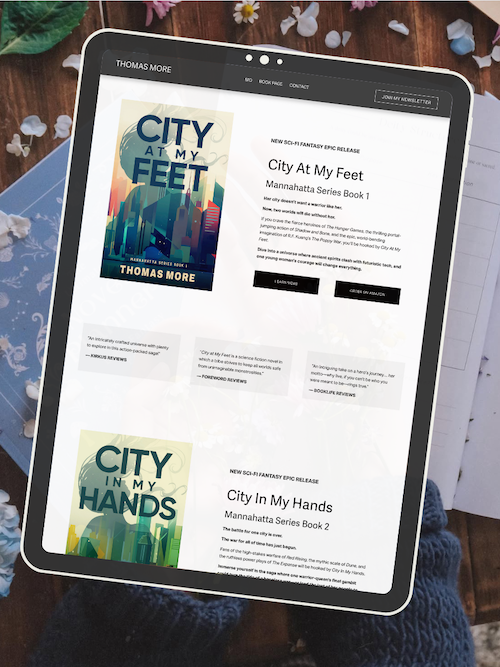
AUTHOR WEBSITE EXAMPLES
Step-By-Step Author Website Checklist for a High-Converting Freebie
Building an author website that attracts readers and grows your email list requires strategic planning and the right features in place. This checklist walks you through every step—from choosing your domain name to optimizing your lead magnets—so you can create a professional author platform that turns visitors into subscribers and readers into fans.
Clarify Your Author Brand and Website Goals
Before you pick a template or write your author bio, you need to get clear on what your author brand actually looks like. Think about your genre, your writing style, and the vibe you want readers to feel when they land on your site. Are you a cozy mystery writer? Your brand should feel warm and inviting. Do you write dark fantasy? Your visuals and tone should reflect that.
Write down three specific goals for your author website. Maybe you want to build an email list of 500 subscribers in six months. Maybe you need a professional home base before your book tour. Maybe you want to sell direct to readers without relying on retailers.
Your author brand includes your logo (even if it's just your name in a nice font), your color palette (2-3 colors that match your book covers), and the voice you use in your writing. Keep these consistent across your website, social media, and email campaigns. This makes you look professional and helps readers remember you.
Claim Your Perfect Domain Name and Web Hosting
Your domain name should be simple, memorable, and professional. Most authors use their name—like JaneDoeAuthor.com or JaneDoe.com. If your name is taken, try adding "author," "writes," or "books" to it. Avoid numbers, hyphens, and weird spellings that confuse readers.
You can register your domain through Namecheap, GoDaddy, Bluehost, SiteGround, or WP Engine. Namecheap typically offers the cheapest rates for domain registration. GoDaddy is widely recognized but watch for upsells during checkout.
If you're planning to use WordPress, consider Bluehost or SiteGround for hosting—they offer one-click WordPress installs and solid customer support for beginners. WP Engine is pricier but gives you managed WordPress hosting with better speed and security. If you're going with Squarespace, your hosting is already included in your monthly plan.
Register your domain for at least two years. This shows search engines you're committed and saves you from renewal price hikes. Set up auto-renewal so you never accidentally lose your domain.
Choose a Beginner-Friendly Platform and Template
Your platform choice affects everything from design flexibility to how easy it is to update your site. Squarespace works great for authors who want beautiful designs without touching code. The editor is clean, templates are modern, and email marketing is built right in.
WordPress gives you more control and customization options, but it has a steeper learning curve. If you choose WordPress, start with a beginner-friendly theme like Divi or Astra. Divi uses a visual builder that lets you drag and drop elements. Astra is lightweight and fast, which helps with site speed and SEO.
Pick a template that puts your book covers front and center. Look for designs with clear navigation, space for lead magnets, and mobile-friendly layouts. Squarespace templates like Bedford, Brine, or Pacific work well for authors. For WordPress, look at themes specifically designed for writers and creatives.
Don't overthink this step. You can always change templates later. Just pick something clean that lets readers find your books and signup forms easily.
Craft a Compelling Author Bio and Homepage
Your homepage needs to hook readers in under five seconds. Start with a clear headline that tells visitors exactly who you are and what you write. Instead of "Welcome to My Site," try "Award-Winning Mystery Author" or "Young Adult Fantasy Novels About Found Family."
Your author bio should be conversational, not stuffy. Write in second person when talking to readers: "If you love twisty thrillers that keep you up past midnight, you're in the right place." Keep it to 150-200 words on your homepage. Save the longer version for your About page.
Include a professional author photo. It doesn't need to be a $500 photoshoot—just a clear, friendly headshot with good lighting. Readers want to connect with you as a person.
Add social proof near your bio. Mention awards, bestseller status, or impressive publication credits. If you don't have those yet, share something interesting about your writing journey or what inspired your current book.
End your homepage with a clear call to action. This is usually your lead magnet—a free chapter, short story, or other digital freebie in exchange for an email address.
Feature Lead Magnets and Freebies to Grow Your Audience
Lead magnets are the fastest way to grow your email list. These are free downloads that give readers something valuable in exchange for their email address. Popular lead magnets for authors include the first three chapters of your book, exclusive short stories, character art, maps, or how-to guides related to your book's topic.
Create a dedicated landing page for each digital freebie. Don't just add a signup form to your sidebar and hope people notice. Use Leadpages or your platform's built-in tools to design a simple page with a headline, benefits, book cover or freebie image, and signup form.
Your lead magnet headline should focus on benefits, not features. Instead of "Download My Free Chapter," try "Start Reading the Mystery Everyone's Talking About—Free First Chapter Inside."
Place your lead magnet in multiple spots: a popup that appears after 10 seconds, a banner at the top of your site, a button on your homepage, and embedded in relevant blog posts. The more visibility, the more signups.
Make sure your free download is actually valuable. A single chapter might not be enough—consider offering a book sample of the first 20-30% of your novel. For nonfiction authors, create checklists, templates, or starter guides related to your book's topic.
Optimize Your Email Signup Flow
Getting someone to click your signup button is only half the battle. Your email signup flow needs to be smooth, fast, and clear. Use MailChimp, MailerLite, or ConvertKit to manage your email list and deliver your lead magnet automatically.
ConvertKit is built specifically for creators and makes automation easy (it offers a free version when you’re getting started). MailerLite offers similar features at a lower price point and that also includes a generous free tier.
Frequently Asked Questions
Most authors have similar questions when setting up their website—from what pages to include to how to make sure readers can find their books easily. The answers below cover the must-have elements, mobile design, SEO basics, and book showcase strategies that help turn visitors into readers.
What essential elements should I include on my author website to attract readers?
Your author website needs four main things: your bio, your books, a way to contact you, and an email signup form.
Start with a clear author bio that includes a professional photo and tells readers who you are in 2-3 short paragraphs. Don't write a novel—just share what makes you interesting and why you write what you write.
Your books page should show all your published work with covers, descriptions, and buy links. Make it easy for visitors to see what you've written and where to get it.
Add a contact form so readers, bloggers, and media can reach you. You can also include links to your social media if you're active there.
The most important element is an email signup form. Put it on every page, especially your homepage and blog. This is how you build a direct connection with readers that you own (not social media platforms).
How can I optimize my author website for search engines?
SEO for authors starts with writing clear page titles and descriptions that include your name and what you write.
Your homepage title should include your name and genre, like "Jane Smith – Romance Author" or "John Doe – Fantasy Novels and Short Stories." This helps people find you when they search your name or your type of books.
Write blog posts about topics your readers care about. If you write thrillers, blog about thriller recommendations, writing tips, or behind-the-scenes stories. Each post is a new chance for someone to find your site through search engines.
Use headings (H2s and H3s) to organize your content. Search engines like well-structured pages, and readers find them easier to scan.
Add alt text to your images. This is the text that describes what's in the image, and it helps search engines understand your content better.
Make sure your website loads fast. Compress your images before uploading them, and avoid adding too many heavy plugins or features that slow things down.
What are the best practices for designing a high-conversion author website?
A high-conversion website is simple, focused, and makes it obvious what you want visitors to do next.
Keep your design clean. Don't use five different fonts or every color in the rainbow. Stick to 2-3 fonts and a simple color scheme that matches your brand.
Your homepage should immediately tell visitors who you are and what you write. Put your biggest call-to-action (like "Download a free chapter" or "Join my newsletter") above the fold—that's the part people see before scrolling.
Make navigation simple. Your menu should have 4-6 main links at most: Home, Books, About, Blog, and Contact. If people can't find what they need in three clicks, they'll leave.
Use high-quality images, especially your book covers. Blurry or small images make your site look unprofessional.
Add trust signals like reviews, testimonials, or media mentions. Seeing that other readers loved your books makes new visitors more likely to check them out.
Every page should have one clear next step. If they're on your About page, where do you want them to go? Your books page? Your email list? Don't make them guess.
How can I effectively showcase my books on my website to encourage sales?
Your books page is your digital bookshelf, and it needs to do more than just list titles.
Show your book covers large and clear. Covers sell books, so make them the star of the page. Use professional images, not tiny thumbnails.
Write a short, compelling description for each book—2-3 paragraphs max. Focus on the hook and what makes readers want to pick it up, not a detailed plot summary.
Include buy buttons for every retailer where your book is available. Use text links or Universal Book Links that let readers choose their preferred store. Make these buttons stand out with color or size.
Add reader reviews or praise quotes under each book. Social proof helps convince new readers to take a chance on your work.
If you have a series, group the books together and make it clear what order to read them in. Readers hate guessing.
Consider featuring your newest or best-selling book at the top of the page with extra space and detail. This gives visitors a clear place to start.
What steps should I take to ensure my author website is mobile-friendly?
More than half of web traffic comes from phones and tablets, so your site needs to work perfectly on small screens.
Choose a responsive template. On Squarespace, all templates automatically adjust to mobile devices, but you should still check how yours looks.
Test your site on your phone regularly. Click through every page, try filling out forms, and make sure buttons are easy to tap with your thumb.
Keep your navigation simple on mobile. A clean menu with a few main options works better than a complicated dropdown that's hard to tap.
Make your text easy to read without zooming. Use a font size of at least 16 pixels for body text. Short paragraphs (1-3 sentences) work better on small screens than long blocks of text.
Compress your images so pages load fast on cellular data. Large image files slow down mobile loading times and frustrate visitors.
Make sure your email signup forms work on mobile. Test them yourself—fill out the form, submit it, and make sure it goes through.
Place your most important content at the top of mobile pages. People scroll less on phones, so don't bury your call-to-action at the bottom.
Can you suggest any Squarespace templates that work best for author websites?
Squarespace offers several templates that work well for authors, depending on your style and goals.
The Alameda template is clean and simple with a strong focus on content. It's great if you blog regularly or want your books front and center.
Bedford is a classic choice for authors. It has a traditional layout with a sidebar that works well for navigation and email signups.
The Bastion template has a modern, bold design that's perfect for authors who want to make a visual impact. It works especially well if you write in genres with strong visual branding like fantasy or thriller.
Montauk offers a minimalist design with plenty of white space. This template lets your book covers and words shine without distraction.
If you write multiple genres or have a complex body of work, consider Skye. It has a strong organizational structure that makes it easy for visitors to find what they're looking for.
All Squarespace templates are responsive and customizable. Pick one that matches your genre and brand vibe.
Ready to launch your author website?
Explore my Squarespace website templates designed specifically for authors — easy to customize, beautifully designed, and built to help you sell more books.

SHOP THE AUTHOR WEBSITE TEMPLATES
THE MANUSCRIPT AUTHOR WEBSITE TEMPLATE — perfect for authors launching their first professional website with a simple, polished layout
THE DEBUT AUTHOR WEBSITE TEMPLATE — designed to highlight your first book, build your email list, and grow an audience from day one
THE SERIES AUTHOR WEBSITE TEMPLATE — ideal for showcasing multiple books with clear series pages and strong reader flow
THE ONE-PAGE AUTHOR AUTHOR WEBSITE TEMPLATE — a streamlined one-page site for authors who want something beautiful, fast, and easy
THE DONE-FOR-YOU AUTHOR WEBSITE EXPERIENCE — your author website built for you so you can launch without touching design or tech
MOST POPULAR BLOG POSTS
Authors Guide to Website Design & Branding
Squarespace Email Campaigns: A Guide for Authors
How to Create an Author Website on Squarespace (Step-by-Step)

Launch Your Author Website in a Day (Without the Tech Overwhlem)
*No more starting from scratch.
A simple, done-for-you Squarespace template built specifically for authors with a WIP.