Best Author Website Examples (Updated for 2026): Inspiring Design Ideas to Build Your Brand
Your author website is your home base online. It's where readers discover your books, connect with you, and decide whether to join your email list or buy your next release. But building a site that looks professional and actually works can feel overwhelming, especially when you're trying to figure out what to include and how to organize it.
The best author websites in 2026 share common features: clean design, easy navigation, a clear book showcase, and a simple way for readers to subscribe or contact you. These sites don't try to do everything at once. Instead, they focus on guiding visitors toward one or two key actions, like buying a book or signing up for updates.
Looking at successful author websites can help you skip the guesswork. You'll see what works, what doesn't, and how to create a site that feels professional without needing to be a web designer. This guide walks you through real examples and shows you exactly what makes each one effective.
Key Takeaways
Strong author websites prioritize simple navigation and clear calls to action that guide readers
The best designs showcase books prominently while maintaining clean, uncluttered layouts
Successful author sites make it easy for visitors to subscribe, buy books, or connect directly
Want a beautiful author website without spending weeks designing it from scratch? These Squarespace website templates for authors are designed to showcase your books, grow your email list, and look professional instantly.

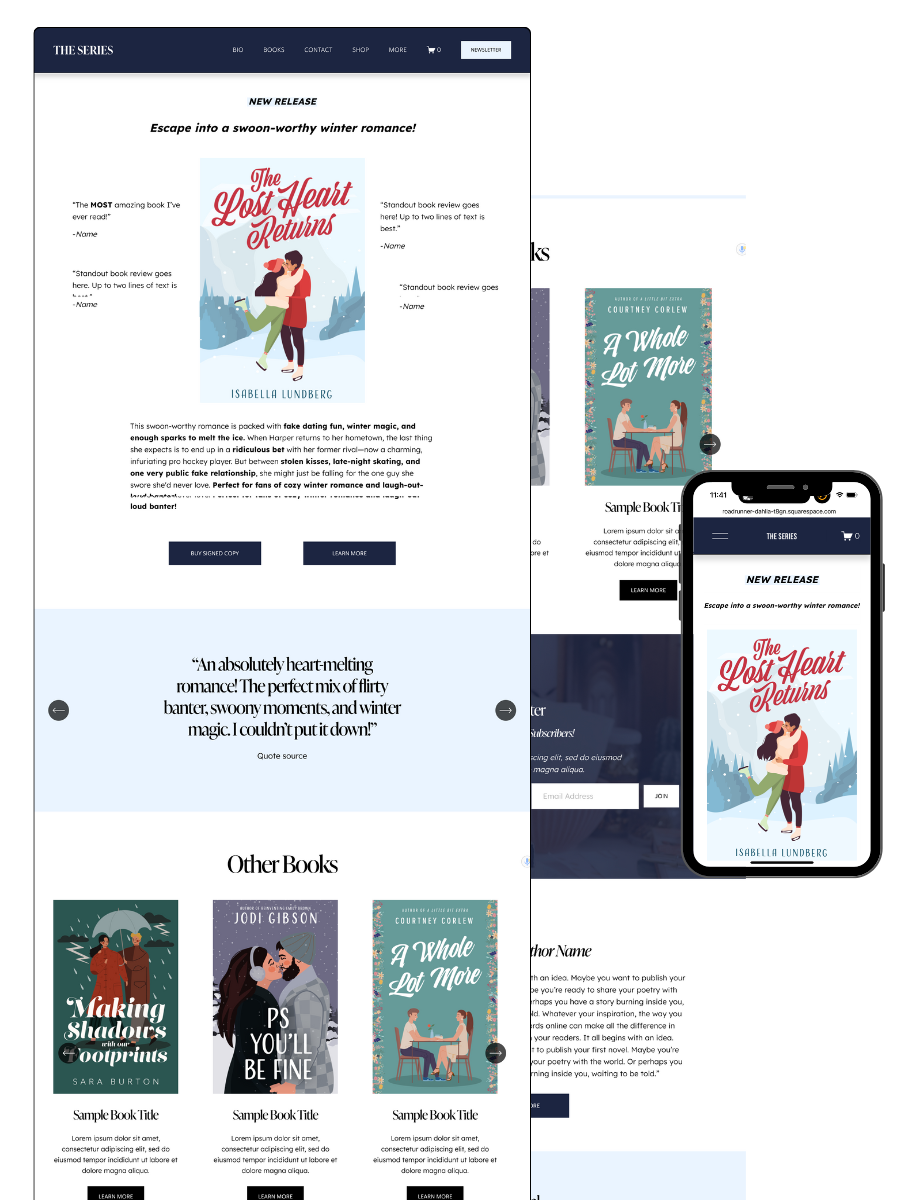
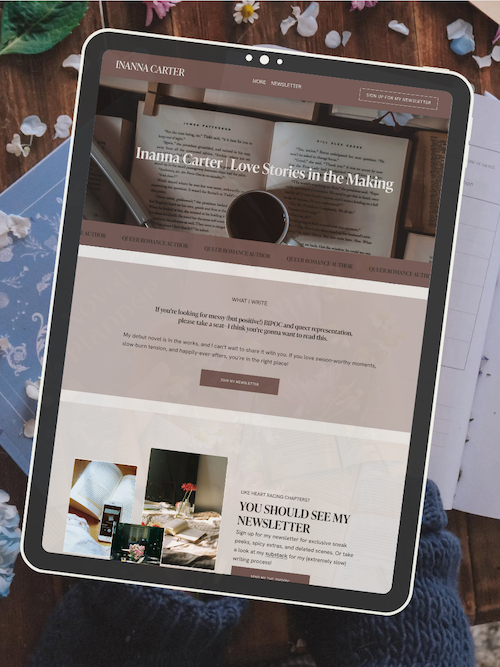
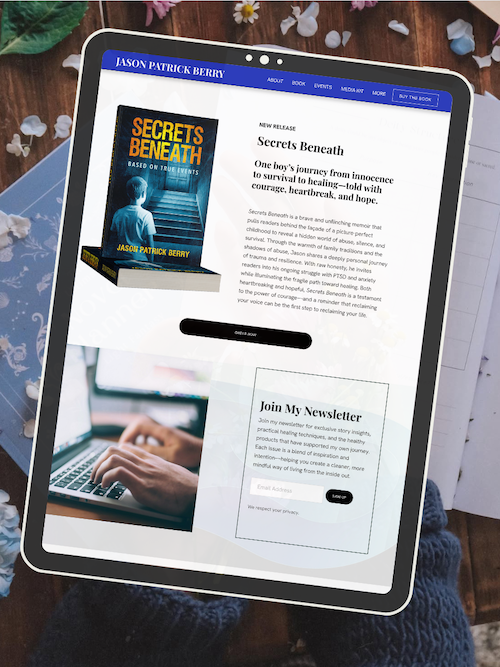
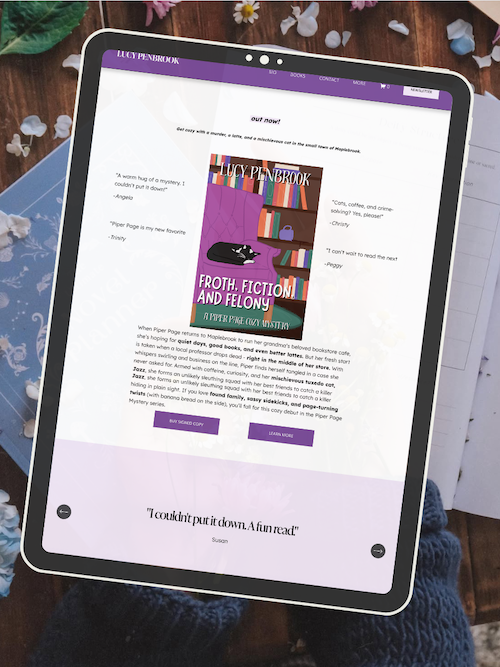
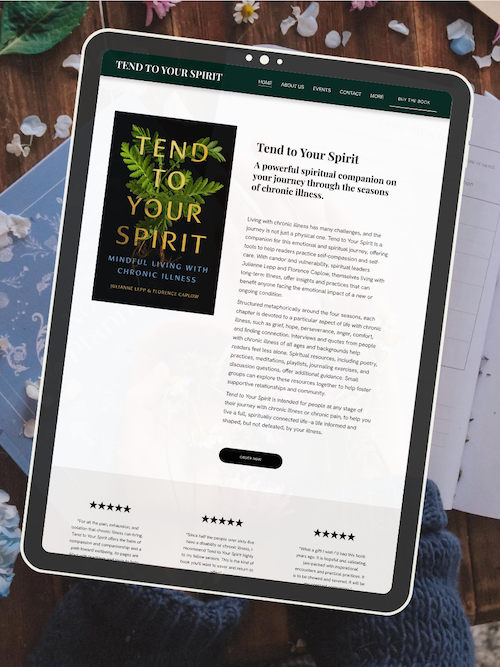
Here’s how real authors are using these Squarespace author website templates:
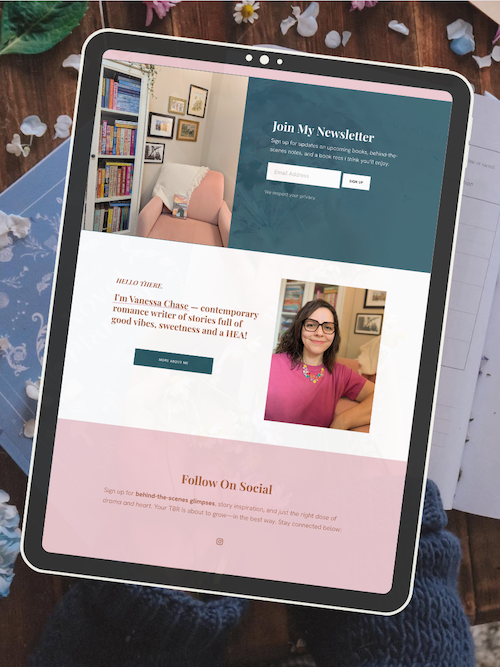
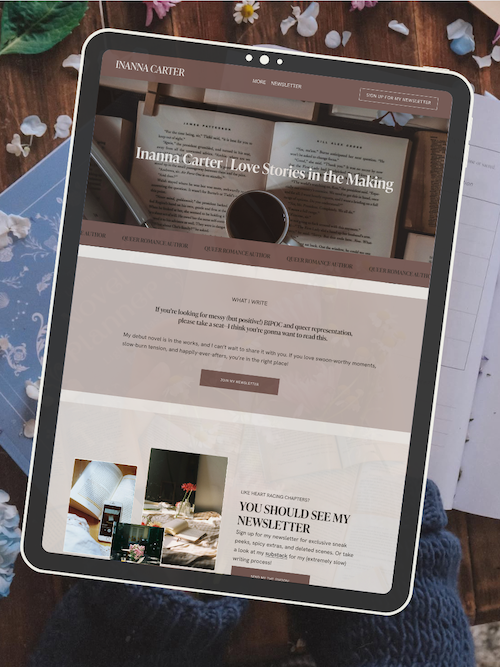
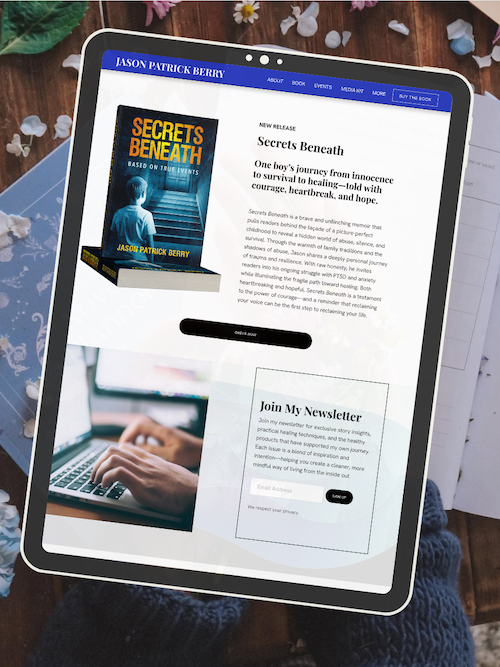
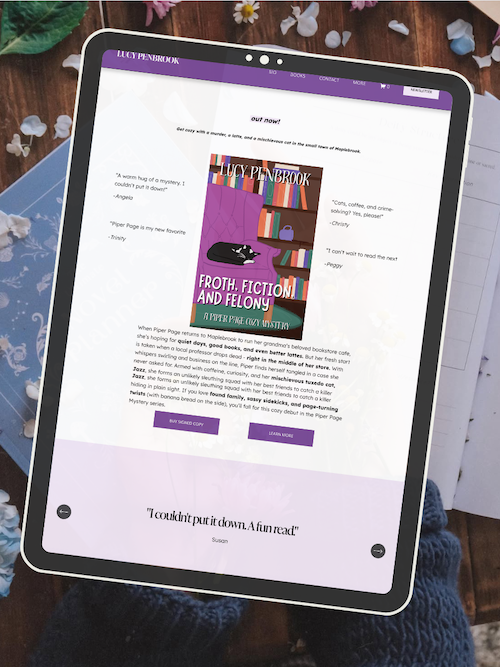
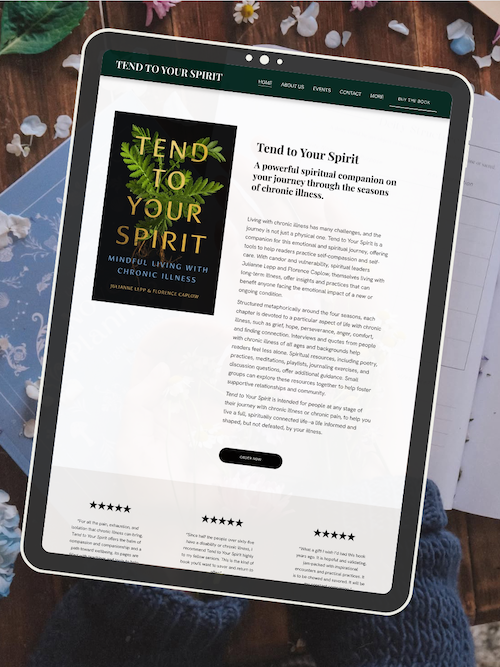
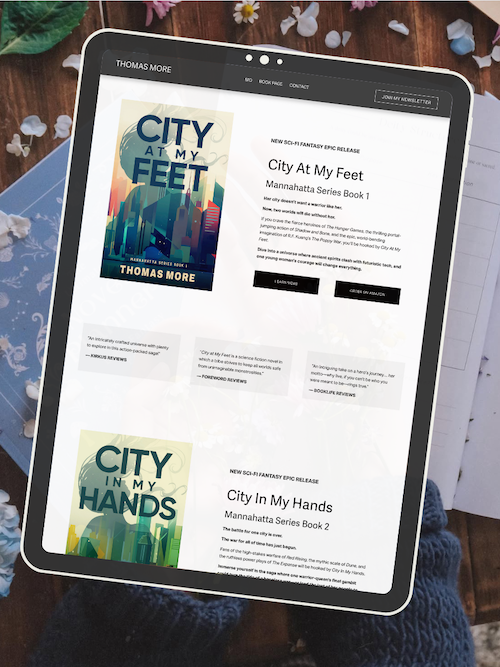
The Best Author Website Examples for 2026
Author websites in 2026 combine clean design with smart features that actually work. The best examples prioritize reader engagement, direct book sales, and SEO optimization—all while maintaining a professional look that builds trust.
What Makes a Great Author Website in 2026?
A professional author website starts with clear navigation and a strong author bio. Your bio should hook readers in the first sentence and tell them why your books matter. Pair it with a high-quality author photo that matches your book branding.
Newsletter signup forms need to be visible on every page. The best author websites place a call to action above the fold and again at the bottom. Your CTA should promise specific value—like sample chapters or exclusive content—not just "join my mailing list."
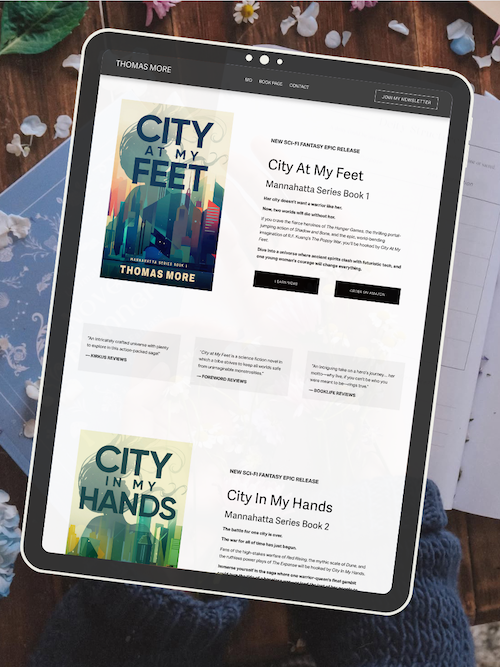
Book covers should be large, clickable, and lead directly to purchase options. Bestselling authors know that showing your covers prominently drives book sales. Include multiple buying options, including links to sell books directly from your site when possible.
Social media icons belong in your header or footer, but they shouldn't distract from your main goal: building your mailing list. A great author site balances discoverability with keeping readers on your own platform.
Standout Author Website Designs and Layouts
Minimalist design dominates the best author websites in 2026. Clean layouts with plenty of white space make book covers pop and keep readers focused on your call to action. Your website layout should guide visitors from your author bio to your books to your newsletter signup without confusion.
Key Design Elements:
Homepage hero section with your latest book cover and clear CTA
Dedicated book pages for each title with excerpts and testimonials
About page featuring your author bio, media coverage, and photos
Events page listing upcoming events and appearances
Professional author website designs use consistent book branding across all pages. Your fonts, colors, and imagery should match your book covers and create a cohesive experience. This consistency builds recognition and makes your author site memorable.
Engaging author websites include multimedia integration. Add character art, podcast episodes, or book trailers to keep readers on your site longer. These elements boost engagement without cluttering your design.
Mobile-responsive layouts are non-negotiable. Over 60% of readers browse author websites on phones. Test your site on multiple devices to ensure book covers, CTAs, and newsletter signups work perfectly everywhere.
AUTHOR WEBSITE EXAMPLES
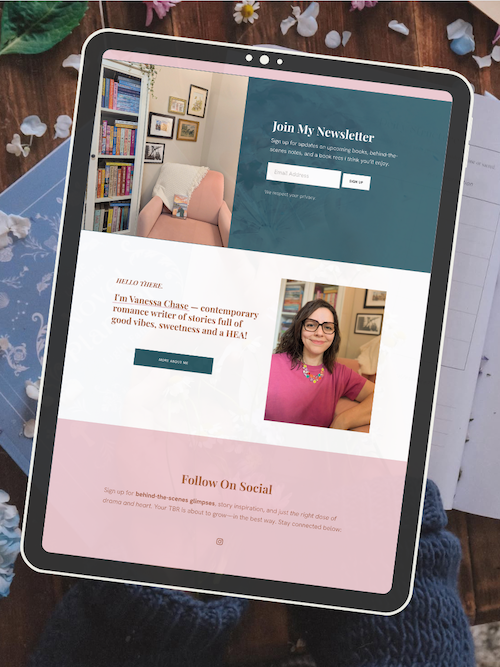
SEO-Optimized Features That Drive Book Sales
Your author website needs meta descriptions for every page. Write compelling 150-character summaries that include your book titles and key terms like "bestselling author" or specific genres. This helps readers find you through search engines.
Essential SEO Features:
Feature Purpose Impact Meta descriptions Search engine visibility Higher click-through rates Book page URLs Direct book discoverability Better Amazon and retailer ranking Blog content Long-term organic traffic Builds mailing list over time Alt text on book covers Image search optimization Additional discovery channels
Create individual pages for each book with testimonials and reviews, sample chapters, and links to all retailers. These book pages rank in search results when readers look for your titles. Include information about translated editions to reach international readers.
Your author newsletter should offer exclusive content that makes signing up worth it. Sample chapters, deleted scenes, or early access to book news convert casual visitors into subscribers. Mailing list integrations should be seamless and automatic.
Book marketing through your website means creating engaging content regularly. Blog posts, character interviews, and behind-the-scenes updates keep readers coming back. This consistent activity signals to search engines that your author site is active and relevant.
Actionable Steps to Create Your Own High-Converting Author Site
Start with a clear website layout plan. Sketch out your homepage, about page, books page, and contact page before you build anything. Decide where your newsletter signup and call to action will appear on each page.
Step-by-Step Setup:
Choose a domain name that matches your author name or most popular book series
Select a minimalist design template that showcases book covers effectively
Write your author bio focusing on reader benefits, not just credentials
Upload high-resolution book covers and create individual book pages
Add mailing list integrations with a compelling opt-in offer
Set up social media icons that open in new tabs
Write meta descriptions for all pages
Test your call to action placement on mobile and desktop
Add testimonials and reviews to every book page. Pull quotes from professional reviews, reader feedback, and media coverage. Real praise builds trust faster than any marketing copy you can write.
Create a clear path to sell books directly when possible. While Amazon links are necessary, offering signed copies or exclusive editions through your own site builds your author business. Direct book sales mean higher profit margins and stronger reader relationships.
Update your upcoming events section monthly. Even virtual events and podcast appearances belong here. This shows readers you're active and gives them reasons to return to your author website regularly.
Test your newsletter signup process yourself. Make sure confirmation emails arrive quickly and your welcome sequence delivers promised content. Your mailing list is your most valuable asset—protect it with a smooth signup experience.
Frequently Asked Questions
Author websites need to balance professional presentation with reader engagement, and these common questions address the practical decisions you'll face when building or updating your site in 2026.
What are the key elements of a successful author website in 2026?
Your author website needs five core elements to work effectively. First, a clean homepage that immediately tells visitors who you are and what you write. Second, an "About" page that connects with readers on a personal level while establishing your credentials.
Third, a dedicated books page that showcases your published works with covers, descriptions, and purchase links. You also need a way to capture email addresses—usually through a newsletter signup form with a compelling reason to subscribe. Finally, clear contact information or a contact form so readers, agents, or media can reach you.
Your site should load quickly and look professional without overwhelming visitors. Simple navigation matters more than fancy features. Most successful author sites in 2026 stick to straightforward layouts that put books and content front and center.
How can authors best showcase their published works on their websites?
Create a dedicated books page with high-quality cover images that catch the eye. Each book should have its own section with the cover displayed prominently, a compelling description, and clear buy buttons linking to major retailers.
Include reader reviews or endorsements when you have them. These build trust with potential readers who are deciding whether to buy. You can pull short quotes from reviews and display them near each book's description.
Consider adding bonus content like chapter previews, character artwork, or behind-the-scenes details about your writing process. This gives visitors more reasons to spend time on your site and builds anticipation for your work. If you write a series, group those books together so readers can easily find the reading order.
What are effective ways for authors to integrate social media into their websites?
Add simple social media icons in your website's header or footer that link to your active profiles. Don't include every platform—just the ones where you actually post and engage with readers. Quality matters more than quantity.
Embed your latest social media posts directly on your homepage or a dedicated page. This shows visitors that you're active online without requiring them to leave your site. Many website builders offer widgets that automatically display your recent Instagram posts or Twitter updates.
Avoid letting social media overshadow your website content. Your site should feel complete on its own, with social media serving as a supplement rather than the main attraction. Remember that you control your website, but social platforms can change their rules or algorithms anytime.
What strategies can authors use to grow their email lists through their websites?
Offer a reader magnet—something valuable that visitors can only get by subscribing. This could be a free short story, a deleted scene from your novel, exclusive character artwork, or early access to book announcements. Make sure it's something your target readers actually want.
Place signup forms in multiple locations without being pushy. Your homepage should have one, and you can add another in your website footer or sidebar. A popup that appears after someone's been browsing for 30 seconds can work well, but avoid immediate popups that interrupt visitors right away.
Be clear about what subscribers will receive and how often. Nobody wants mystery emails. Tell them they'll get updates about new releases, exclusive content, or writing news—and stick to that promise. Keep your signup form simple with just name and email address.
What website features should authors include to engage their audience?
A blog section lets you share writing updates, book news, and personal stories that help readers connect with you between releases. You don't need to post daily—consistency matters more than frequency. Even one quality post per month keeps your site active.
Add a media or press page if you've done interviews, podcasts, or received significant coverage. This builds credibility and gives journalists easy access to your bio, photos, and past features. Include downloadable press materials like high-resolution author photos and book covers.
Consider an events page if you do book signings, virtual readings, or speaking engagements. List upcoming appearances and include past events with photos or videos when possible. This shows you're actively connecting with readers and can encourage more people to attend future events.
How can authors optimize their website for both desktop and mobile users?
Choose a responsive website template that automatically adjusts to different screen sizes. Most modern website builders offer this by default, but always test your site on your phone before publishing. More than half of your visitors will likely browse on mobile devices.
Keep your navigation simple with clear menu labels. What works on desktop might feel cluttered on a small screen, so prioritize the most important pages. Your books, about page, and contact form should be easy to find regardless of device.
Optimize image sizes so your pages load quickly on mobile connections. Large, uncompressed images slow down your site and frustrate visitors. Most website platforms automatically handle this, but it's worth checking your load speed using free tools like Google PageSpeed Insights.
Make sure all buttons and links are easy to tap on touchscreens. Small text links placed close together create frustration on mobile devices. Leave enough space between clickable elements and use button styles for important actions like "Buy Now" or "Subscribe."
Ready to launch your author website?
Explore my Squarespace website templates designed specifically for authors — easy to customize, beautifully designed, and built to help you sell more books.

SHOP THE AUTHOR WEBSITE TEMPLATES
THE MANUSCRIPT AUTHOR WEBSITE TEMPLATE — perfect for authors launching their first professional website with a simple, polished layout
THE DEBUT AUTHOR WEBSITE TEMPLATE — designed to highlight your first book, build your email list, and grow an audience from day one
THE SERIES AUTHOR WEBSITE TEMPLATE — ideal for showcasing multiple books with clear series pages and strong reader flow
THE ONE-PAGE AUTHOR AUTHOR WEBSITE TEMPLATE — a streamlined one-page site for authors who want something beautiful, fast, and easy
THE DONE-FOR-YOU AUTHOR WEBSITE EXPERIENCE — your author website built for you so you can launch without touching design or tech
MOST POPULAR BLOG POSTS
Authors Guide to Website Design & Branding
Squarespace Email Campaigns: A Guide for Authors
How to Create an Author Website on Squarespace (Step-by-Step)

Launch Your Author Website in a Day (Without the Tech Overwhlem)
*No more starting from scratch.
A simple, done-for-you Squarespace template built specifically for authors with a WIP.