2026 Squarespace for Authors Complete Guide: Build a Professional Author Website That Sells Books
As an author, your website is more than just a digital business card. It's where readers discover your books, join your email list, and connect with your voice. Squarespace makes building a professional author website simple, even if you've never touched web design before.
You don't need to hire a developer or learn how to code. Squarespace gives you everything in one place: beautiful templates designed for authors, built-in email marketing, e-commerce for selling books, and tools to help readers find you online. It's made for people who want a polished site without the technical headache.
This guide walks you through the entire process of creating your author website on Squarespace. You'll learn how to pick the right template, set up your pages, connect your domain, and launch your site with confidence.
Key Takeaways
Squarespace offers all-in-one website building designed specifically for authors who want a professional online presence without technical skills
You can create a fully branded author website using drag-and-drop tools, customizable templates, and built-in marketing features
The platform includes everything from domain connection to email campaigns, making it easy to build and grow your author platform in one place
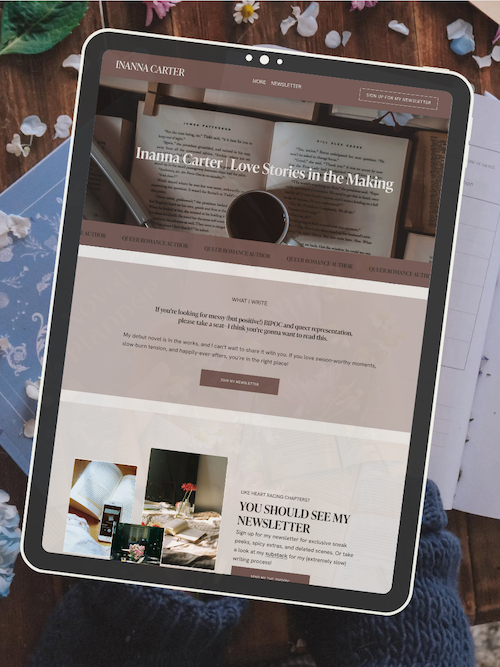
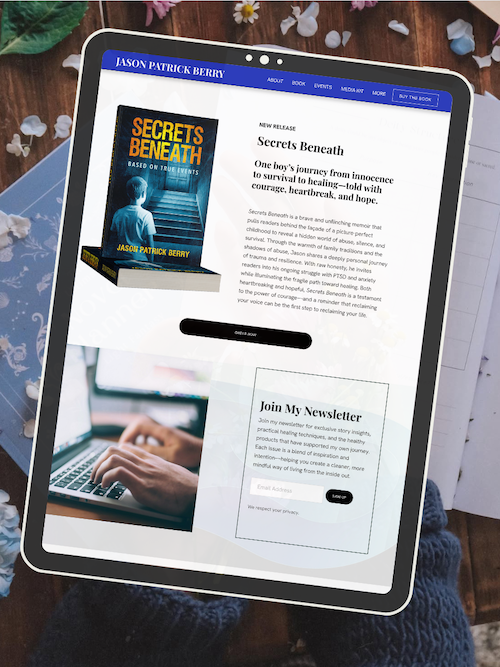
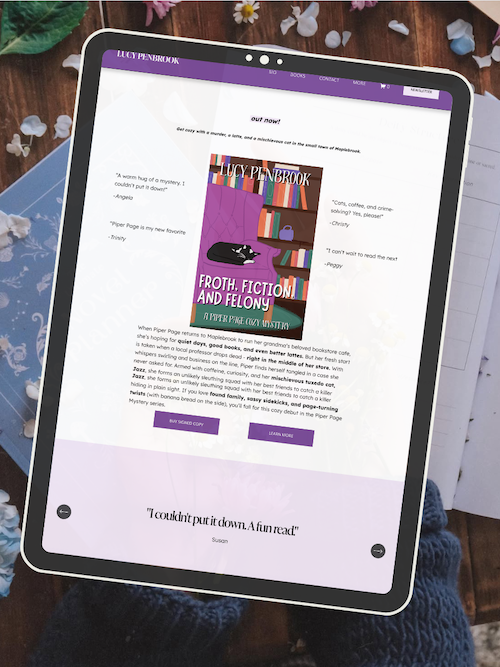
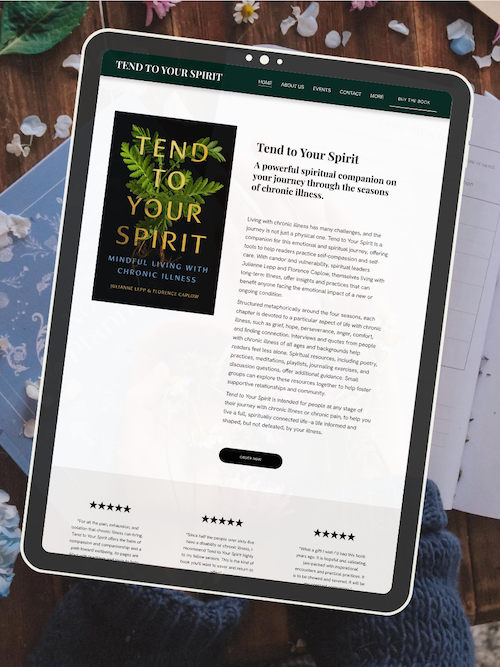
Want a beautiful author website without spending weeks designing it from scratch? These Squarespace website templates for authors are designed to showcase your books, grow your email list, and look professional instantly.

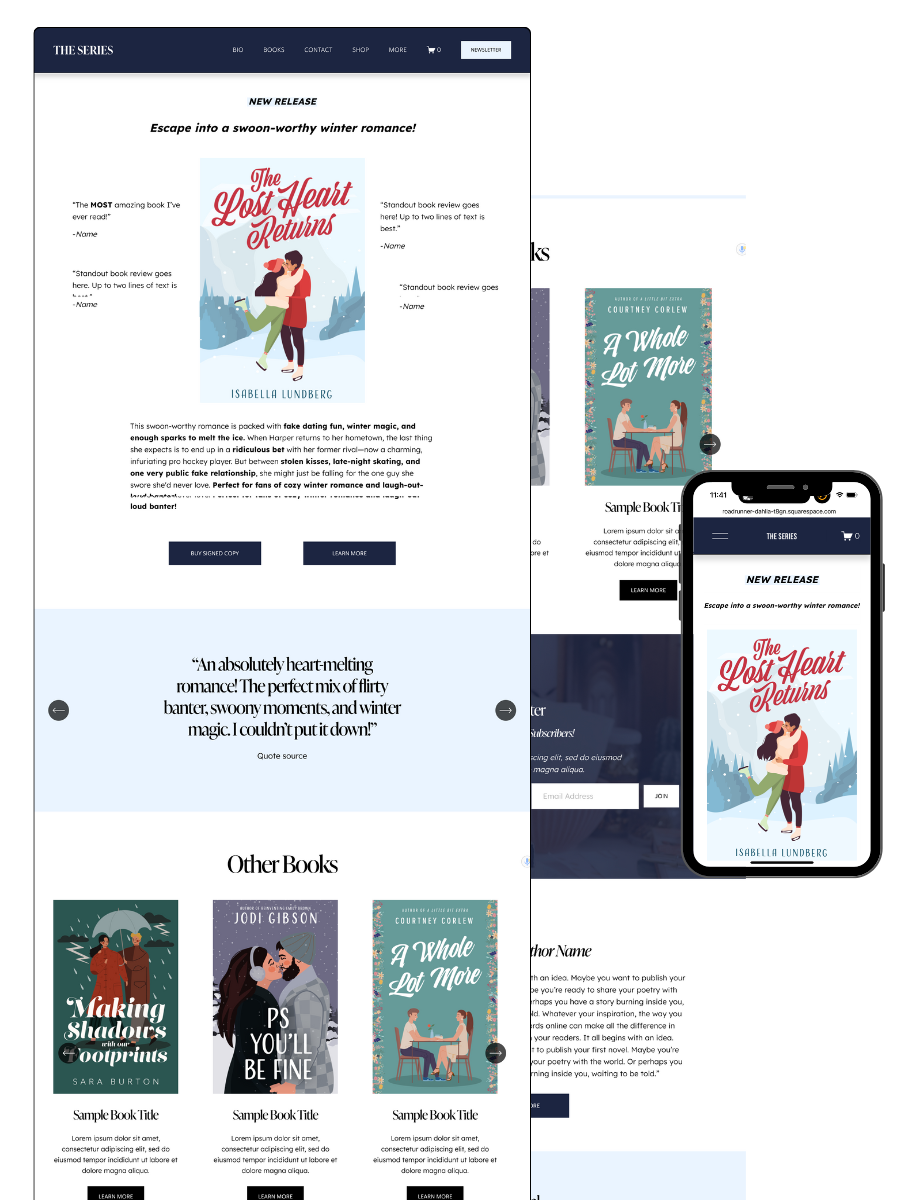
Here’s how real authors are using these Squarespace author website templates:
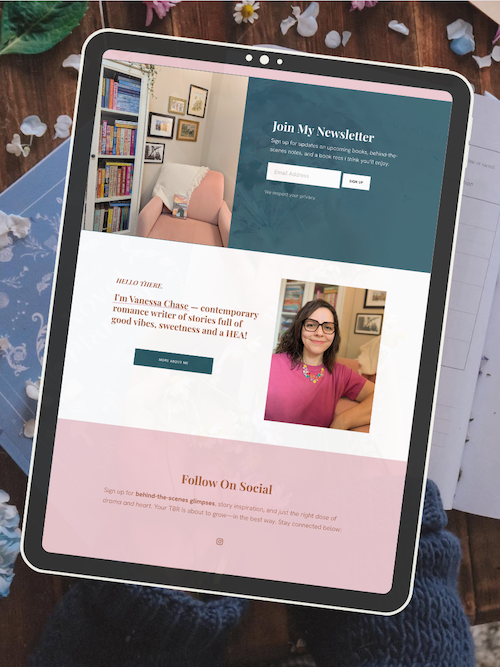
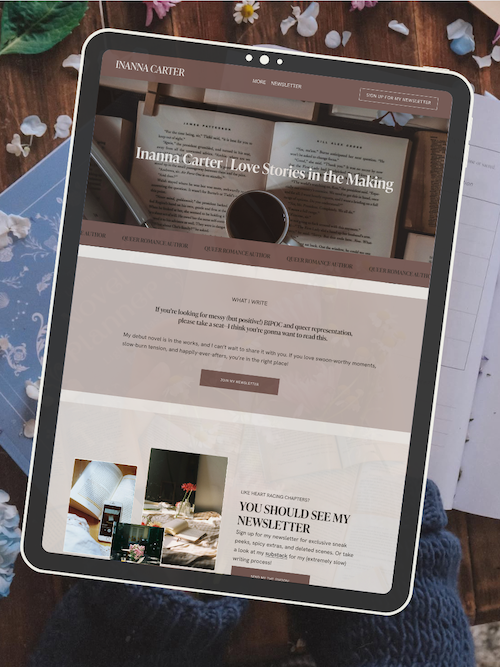
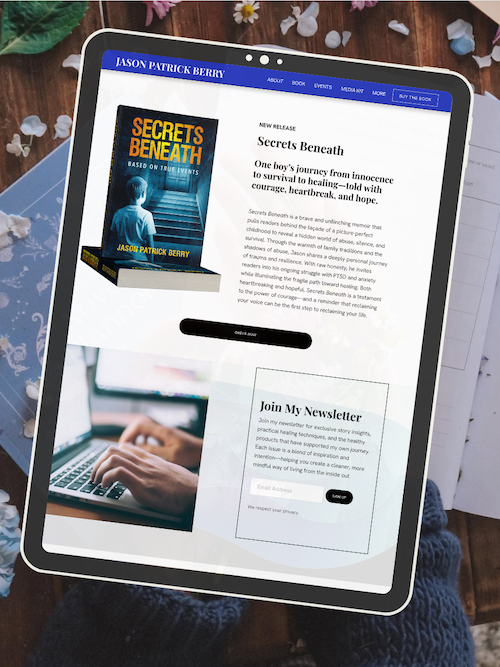
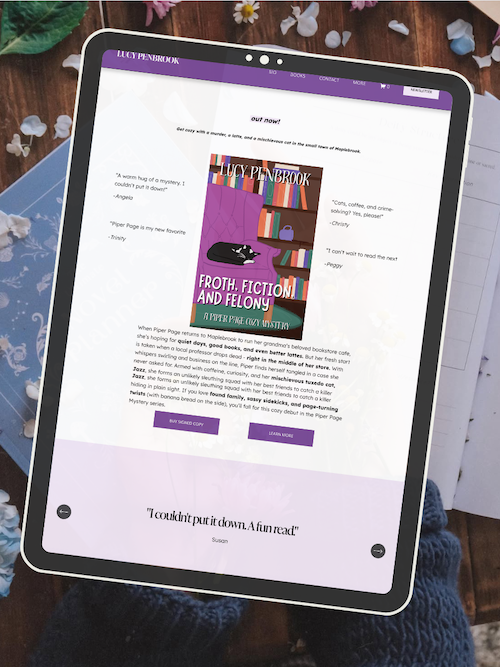
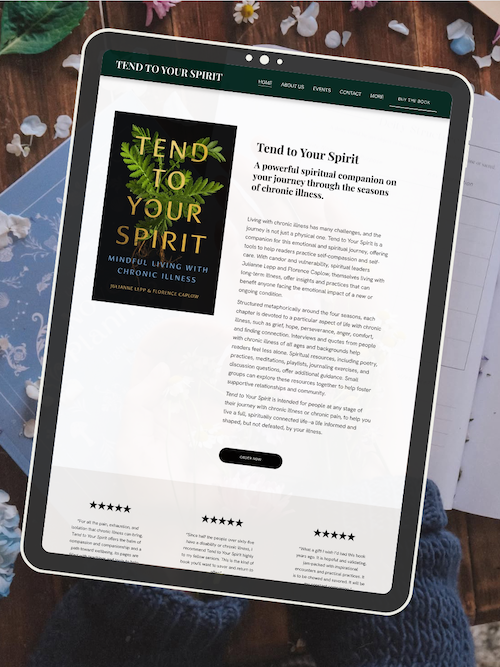
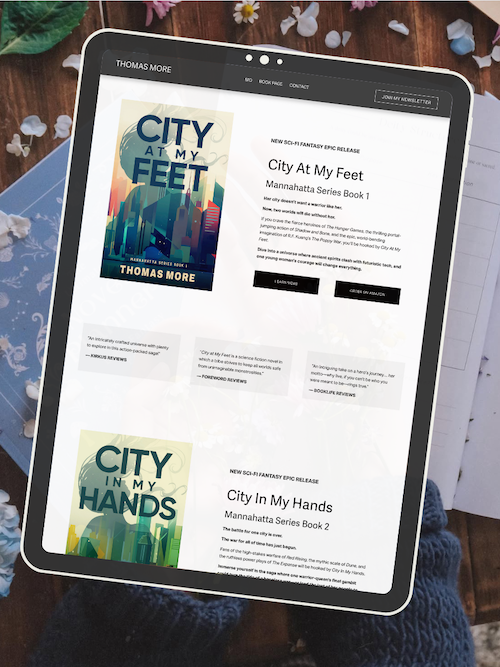
Squarespace for Authors: Building an Author Website from Start to Finish
Building an author website on Squarespace means working with a platform designed for ease and professional results. You'll move through setup, design, content creation, and launch with tools that handle the technical side while you focus on showcasing your work.
Why Choose Squarespace for Your Author Website
Squarespace gives you everything you need to build a professional author site without hiring a developer. The platform includes hosting, security, templates, and design tools in one monthly subscription.
You get SSL certificates included at no extra cost. This means your site shows "secure" in browsers and protects visitor data. Most authors need this for contact forms and newsletter signups.
The drag-and-drop editor lets you move text, images, and buttons around your pages visually. No coding required. You see exactly what your visitors will see as you build.
Squarespace templates are mobile-responsive by default. Your author website looks good on phones, tablets, and computers without extra work. Over half your visitors will likely view your site on mobile devices.
The platform also includes basic analytics, so you can see which pages get traffic and where visitors come from. This helps you understand what content connects with readers.
AUTHOR WEBSITE EXAMPLES
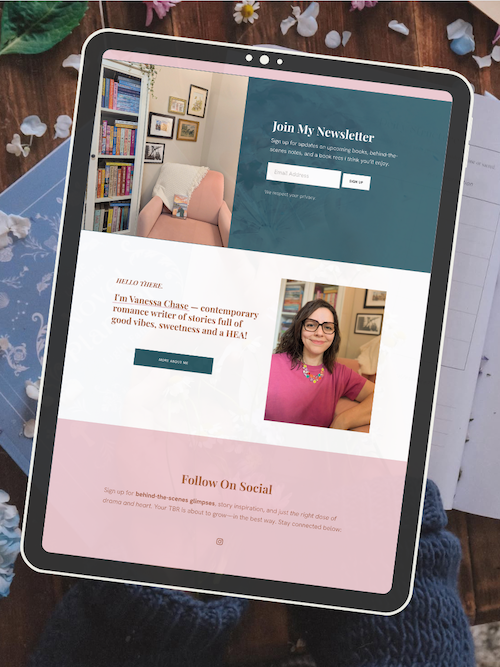
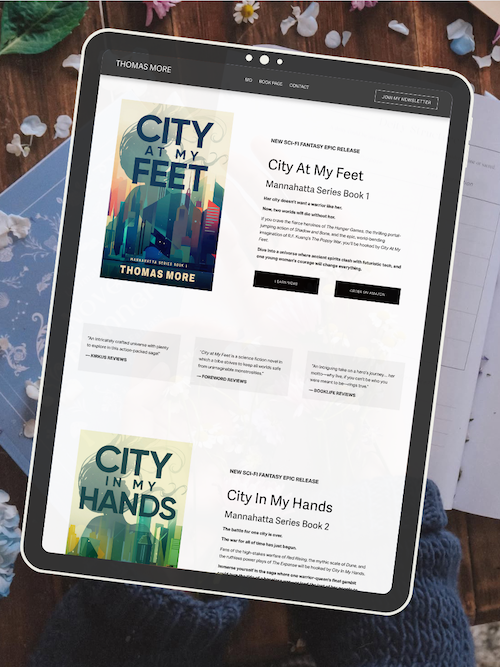
Step-by-Step: Setting Up Your Author Website on Squarespace
Start by visiting squarespace.com and clicking "Get Started." You'll create an account using your email address. Squarespace offers a 14-day free trial, so you can build before paying.
After creating your account, choose "Author" or "Portfolio" as your site type. This helps Squarespace suggest relevant templates for your author site.
Pick a template that matches your style. Don't worry too much—you can change templates later if needed. The content you add stays with your site.
Your dashboard becomes your control center. Here's where you'll access pages, design settings, domains, and analytics. Spend a few minutes clicking through each section to get familiar.
Add your site title in Settings > Business Information. This appears in search results and browser tabs. Use your author name or pen name.
Selecting the Right Squarespace Template for Authors
Squarespace templates fall into different categories, but authors typically do best with portfolio or blog-focused designs. Look for templates with strong visual hierarchy and clean typography.
Templates like Alameda, Cadence, and Bryant work well for fiction authors who want to showcase book covers prominently. These designs emphasize images and visual storytelling.
For nonfiction authors and writers who focus on articles or essays, templates like Basil, Skye, or Paloma put text content front and center. These include robust blogging features.
Test how the books page looks in each template. Some templates display products in grids, while others use lists or featured layouts. Your book covers should look professional and inviting.
Check the navigation style too. Some templates use top horizontal navigation, while others put it in a sidebar or footer. Choose what feels most natural for your content structure.
Establishing Your Author Brand and Platform
Your author brand includes your name, photo, bio, book covers, and the overall look and feel of your online presence. Consistency across all these elements builds recognition with readers.
Choose 2-3 main colors for your author website. Pull these from your book covers if possible. Use one as your primary color for buttons and headings, another as an accent.
Pick fonts that match your genre and style. Serif fonts (with little feet on letters) often work for literary fiction and historical writing. Sans-serif fonts (clean and modern) suit contemporary fiction and nonfiction.
Upload your author photo in high resolution. Use the same photo across your website, newsletter, and social media. Readers should recognize you instantly.
Your author platform extends beyond your website to include your email list, social media, and reader relationships. Your Squarespace author website serves as the hub that connects everything.
Securing a Custom Domain and Setting Up Professional Email
A custom domain means owning yourname.com instead of using yourname.squarespace.com. This looks professional and makes your author site easier to remember.
You can buy a domain directly through Squarespace or use a domain you already own from another registrar. Squarespace domains include privacy protection and easy setup.
To connect your custom domain: Go to Settings > Domains > Get a Domain or Use a Domain I Own. Follow the prompts to search for available domains or connect an existing one.
Common author domain options include your full name, pen name, or a branded phrase. Try to get a .com if available. Avoid hyphens and numbers that make domains harder to remember.
Once your domain is active, set up a professional email like hello@yourname.com or info@yourname.com. Squarespace partners with Google Workspace for email hosting. This keeps your communications looking professional and builds trust with readers, agents, and publishers.
Optimizing Site Structure: Main Navigation and Essential Pages
Your main navigation appears at the top or side of your author website. It should include 5-7 items maximum. Too many options overwhelm visitors.
Essential pages for authors include:
Home
Books
About/Bio
Blog (optional but recommended)
Contact
Press/Media (for published authors)
Create each page through Pages > Add Page. Choose the page type that fits your content (standard page, blog, or products page for books).
Order your navigation based on what matters most to your readers. Most authors put Books second after Home, since readers visit mainly to learn about their work.
Use clear, simple navigation labels. "Books" works better than "My Work" or "Bibliography." Readers shouldn't have to guess where to find information.
Keep your footer navigation lighter. Include links to your privacy policy, newsletter signup, and social media. The footer gives readers additional ways to connect without cluttering your main navigation.
Showcasing Your Books, Bio, and Media Kit
Your books page is the most important page on your author website. Readers visit specifically to learn about your published work and upcoming releases.
Create a dedicated books page using either a Products Page (if selling directly) or a standard page with book covers, descriptions, and buy links. Display your newest release prominently at the top.
For each book, include:
High-quality cover image
Book title and series information
Brief description (2-3 sentences)
Buy links to retailers (Amazon, Apple Books, Barnes & Noble, etc.)
Publication date
Your author bio should be on a separate About page. Write in third person for a professional tone. Include your background, writing focus, awards, and personal details that connect with readers.
Keep two versions of your bio ready: a long version (200-300 words) for
Frequently Asked Questions
Authors often wonder how to get the most out of Squarespace's platform features, from picking the right template to selling books directly on their site. These questions cover the core decisions and technical setup that will shape your author website's success.
How do I choose the best Squarespace template for my author website?
Start by browsing templates in the "Portfolio" and "Blog" categories. These designs highlight written content and visual storytelling better than business-focused layouts.
Look for templates with a clean reading experience. You want plenty of white space, readable fonts, and a layout that puts your book covers and bio front and center.
Test the mobile view before you commit. Most readers will visit your site on their phones, so make sure your template looks just as good on small screens as it does on desktop.
What are the key features to include on an author's website hosted on Squarespace?
Your homepage should feature your latest book with a clear call-to-action button. Add a short bio section and links to where readers can buy your books.
Include an email signup form above the fold on your homepage. Use Squarespace's newsletter block to capture reader emails without any coding.
Create an "About" page with your author photo, full bio, and writing journey. Add a "Books" page with cover images, descriptions, and buy links for each title.
Set up a blog for sharing writing updates, book news, and content that connects with your readers. Use Squarespace's built-in blogging features to schedule posts and organize by category.
How can authors best utilize Squarespace's blogging features for content marketing?
Post consistently on topics your readers actually care about. Write about your writing process, character inspiration, book research, or themes in your work.
Use blog categories to organize content by book series, topic, or post type. This helps readers find related posts and keeps your archive organized.
Enable comments on your blog posts to build community. You can moderate comments through your Squarespace dashboard before they go live.
Share each new post on social media with a custom image. Pull a quote from the post and create a simple graphic using Canva or another design tool.
Schedule posts in advance using Squarespace's scheduling feature. Write several posts at once when inspiration hits, then spread them out over weeks or months.
What steps are involved in setting up an online store for books on a Squarespace author website?
Upgrade to a Business or Commerce plan to access store features. You'll need at least the Business plan to accept payments and sell products.
Add a store page to your site and create product listings for each book. Upload high-quality cover images, write compelling descriptions, and set your prices.
Choose between physical products (for signed copies) or digital products (for ebooks). If you're shipping physical books, set up shipping zones and rates in your store settings.
Connect a payment processor like Stripe or PayPal. Squarespace walks you through the setup process and handles the secure checkout for you.
Add "Buy Now" buttons throughout your site that link directly to your store. Place these on your homepage, book pages, and in blog posts about your work.
Can authors integrate email marketing tools with their Squarespace website, and how?
Squarespace has built-in email campaigns that sync directly with your site's design and subscriber list. You can create and send newsletters without leaving your dashboard.
If you prefer third-party tools like Mailchimp or ConvertKit, Squarespace supports integrations. Add their signup forms using a code block or connect through Squarespace's extensions panel.
For deeper integrations, use Zapier to connect Squarespace to almost any email platform. This automatically adds new subscribers from your site to your email list.
The built-in option is easiest for beginners. Your email designs will match your website automatically, and you won't need to manage another login or subscription.
What are the SEO best practices for authors to increase visibility of their Squarespace site?
Write unique page titles and descriptions for every page on your site. Include your author name and book titles in these fields to help readers find you in search results.
Use heading tags correctly throughout your content. Your page title should be H1, and section headings should be H2 or H3.
Add alt text to every image on your site. Describe what's in the image using natural language that includes relevant keywords like your book titles or author name.
Create blog content around search terms your readers actually use. Think about questions they might ask or topics they search for related to your genre.
Build internal links between your pages. Link from blog posts to your books page, from your homepage to your about page, and between related blog posts.
Get backlinks from other author websites, book blogs, and writing communities. Guest post on relevant blogs and include a link back to your author site in your bio.
Ready to launch your author website?
Explore my Squarespace website templates designed specifically for authors — easy to customize, beautifully designed, and built to help you sell more books.

SHOP THE AUTHOR WEBSITE TEMPLATES
THE MANUSCRIPT AUTHOR WEBSITE TEMPLATE — perfect for authors launching their first professional website with a simple, polished layout
THE DEBUT AUTHOR WEBSITE TEMPLATE — designed to highlight your first book, build your email list, and grow an audience from day one
THE SERIES AUTHOR WEBSITE TEMPLATE — ideal for showcasing multiple books with clear series pages and strong reader flow
THE ONE-PAGE AUTHOR AUTHOR WEBSITE TEMPLATE — a streamlined one-page site for authors who want something beautiful, fast, and easy
THE DONE-FOR-YOU AUTHOR WEBSITE EXPERIENCE — your author website built for you so you can launch without touching design or tech
MOST POPULAR BLOG POSTS
Authors Guide to Website Design & Branding
Squarespace Email Campaigns: A Guide for Authors
How to Create an Author Website on Squarespace (Step-by-Step)

Launch Your Author Website in a Day (Without the Tech Overwhlem)
*No more starting from scratch.
A simple, done-for-you Squarespace template built specifically for authors with a WIP.