One-Page Author Websites — Are They Enough? What You Need to Know Before Launching
You've probably heard you need a website as an author. But maybe you're wondering if you really need multiple pages, or if something simpler would work just fine.
A one-page author website can be enough if you're just starting out, have a limited budget, or only need to share basic information about yourself and your books. It's a solid first step that gives readers a place to find you online without the complexity or cost of a full multi-page site. But whether it's truly enough depends on your goals, how many books you have, and how much you plan to grow your author platform.
The good news? You don't need to decide forever right now. Starting with a one-page site is better than having no website at all. And if you build it right, you can always expand later when you're ready.
Want a beautiful author website without spending weeks designing it from scratch? These Squarespace website templates for authors are designed to showcase your books, grow your email list, and look professional instantly.

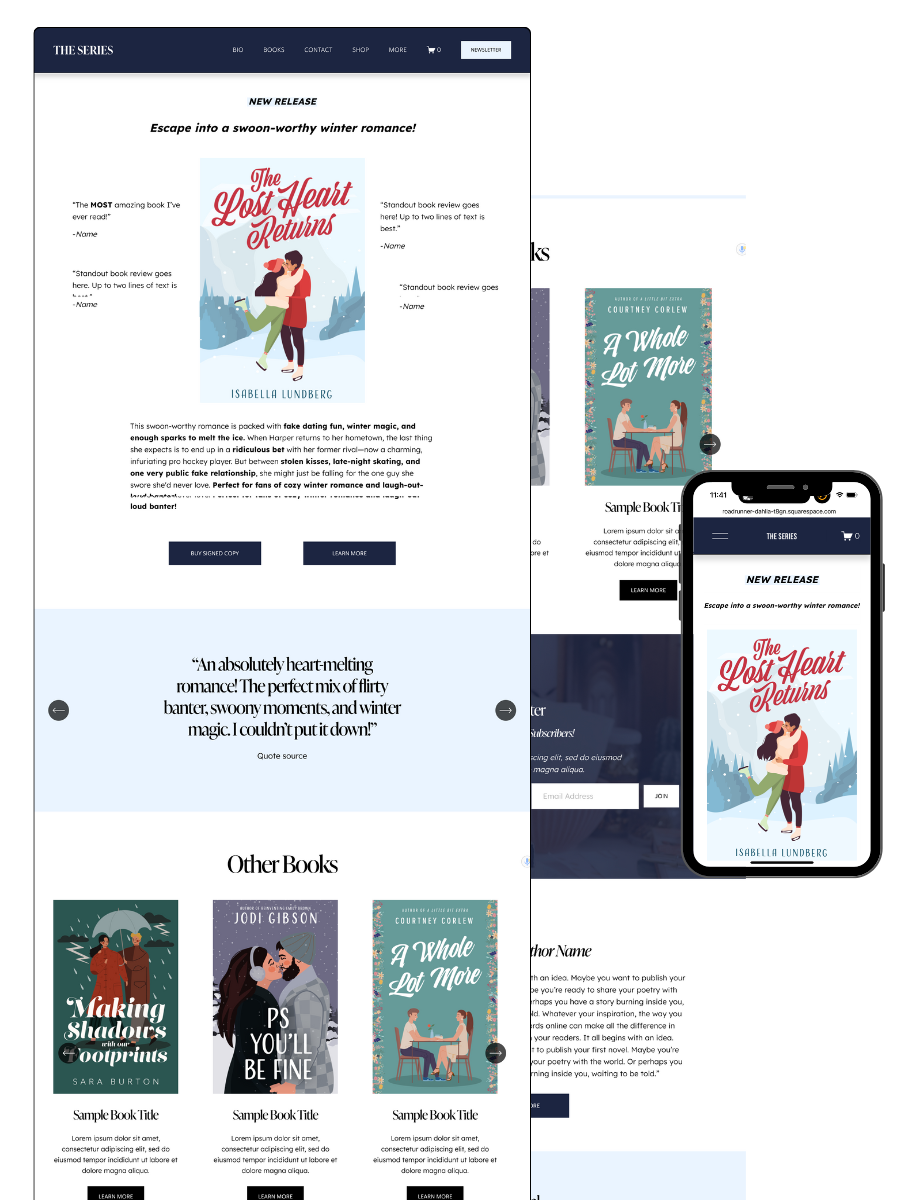
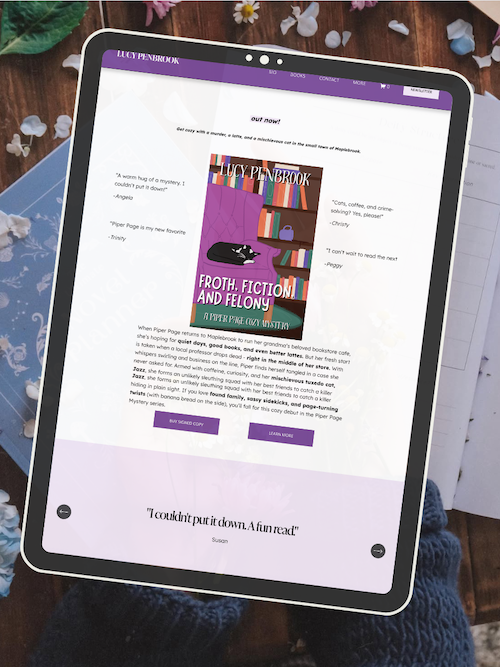
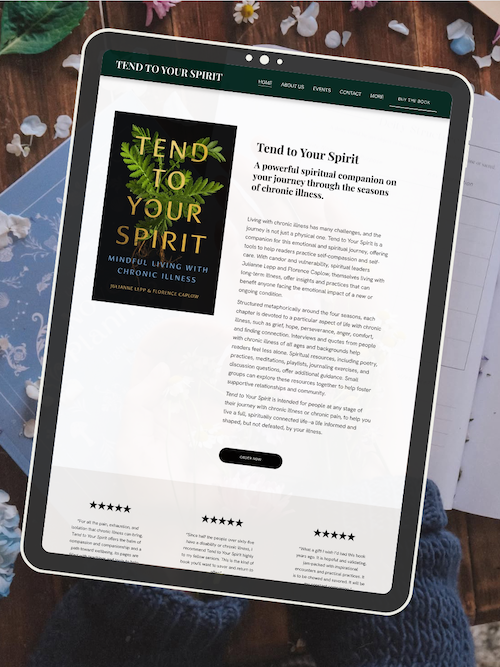
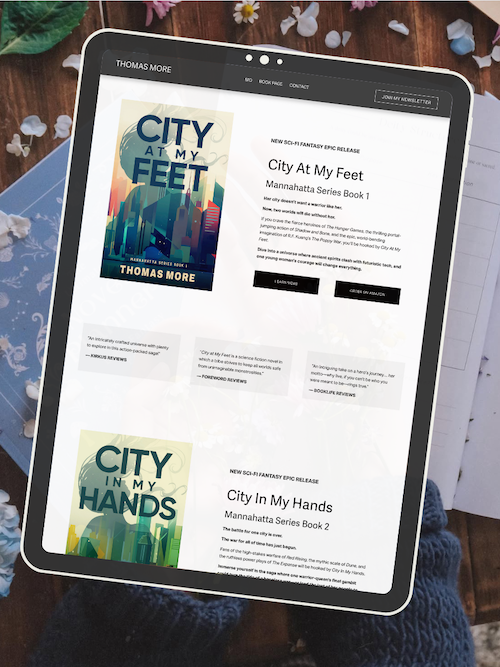
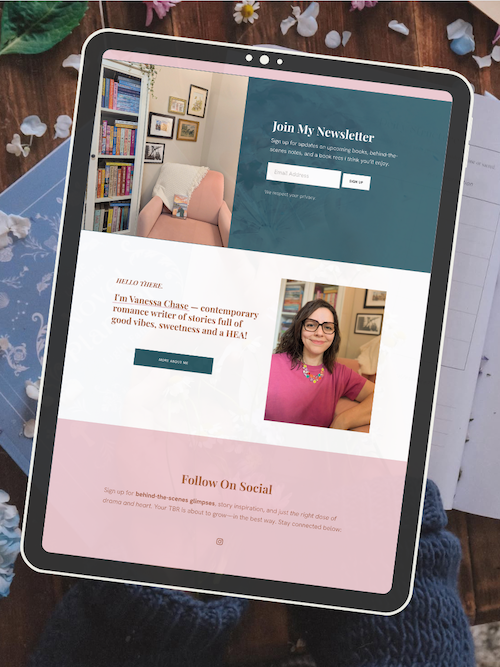
Here’s how real authors are using these Squarespace author website templates:
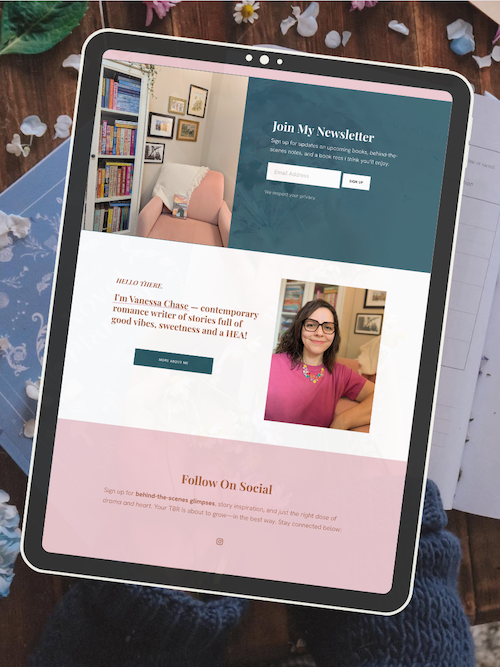
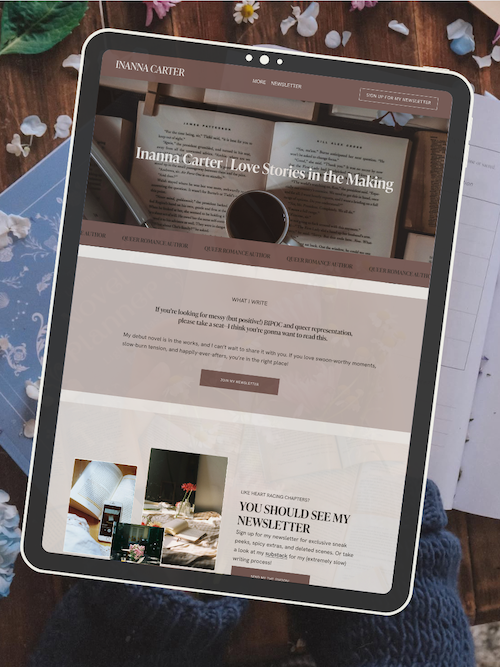
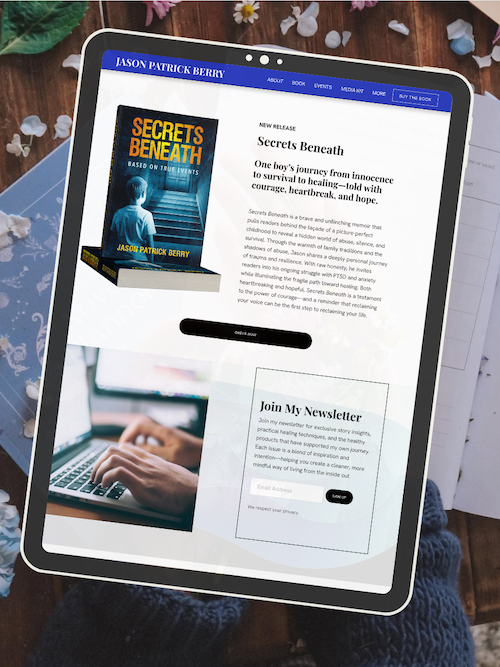
Key Takeaways
One-page author websites work well for beginners who need an affordable, simple online presence
They have limits when it comes to SEO, content depth, and growing your author platform long-term
You can start with one page and expand to multiple pages as your author career grows
AUTHOR WEBSITE EXAMPLES
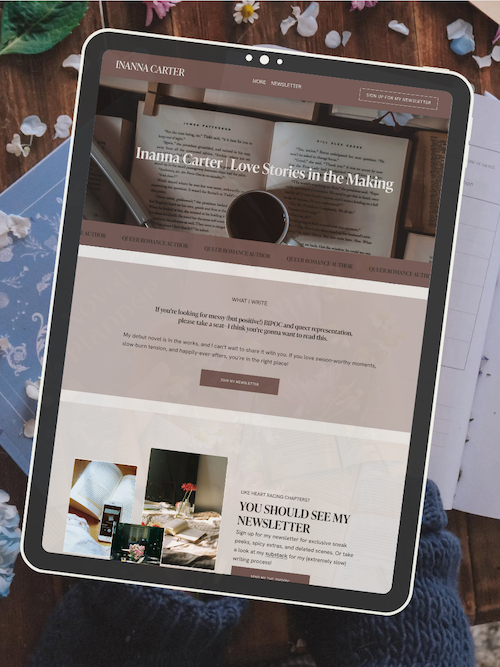
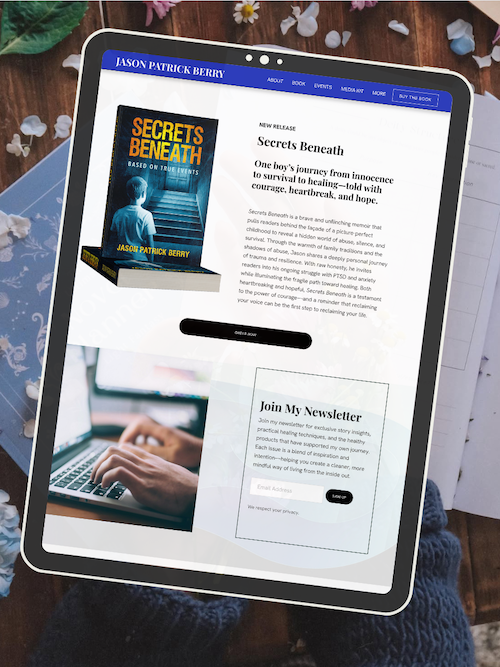
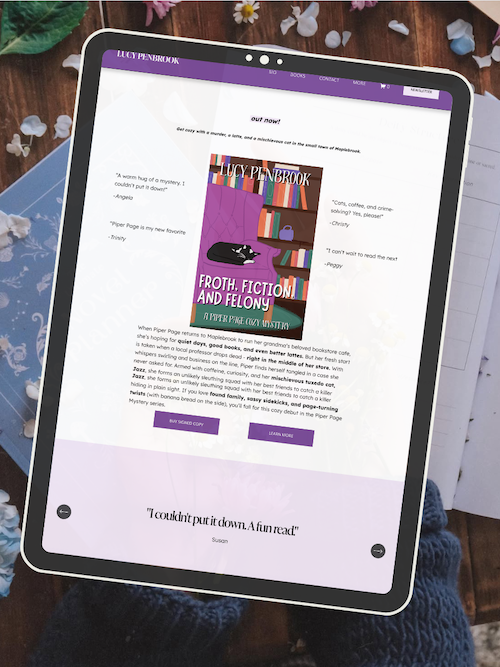
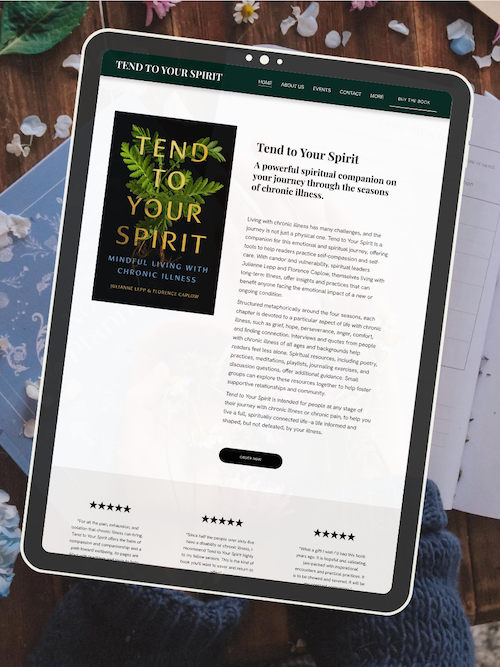
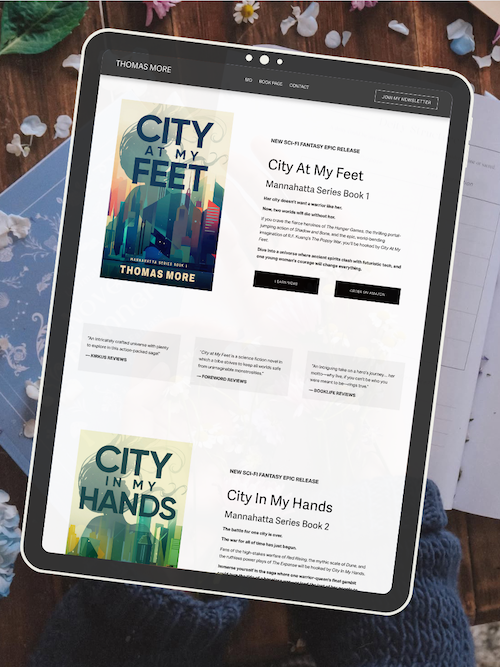
Are One-Page Author Websites Enough? (Benefits, Limitations & Key Elements)
A one-page author website can serve you well if you're just starting out or prefer a minimalist approach. But whether it's truly "enough" depends on your goals, the number of books you've published, and how you plan to grow your author brand over time.
Essential Elements of a One-Page Author Website
Your one-page author website needs to cover the basics without overwhelming visitors. Start with a clear author bio that tells readers who you are and what you write—keep it to 2-3 sentences at most. Include your book covers with call to action buttons that link directly to where readers can buy (Amazon, your local bookstore, etc.).
Add a simple contact form or sign-up box for your email list. This is your most important element because it's the only way to stay connected with readers if social media platforms change or disappear. If you use an email marketing tool like MailerLite or Squarespace Email Campaigns, you can embed the sign-up form directly on your page.
Don't forget a professional headshot and links to your social media accounts. If you have upcoming book signing events or speaking engagements, include a small section for those too. The key is to keep each element short—you don't have room for long descriptions or detailed behind-the-scenes content on a single page.
Advantages: Simplicity, Speed, and User Experience
One-page websites load fast and work great on mobile devices. Visitors can scroll through everything in seconds without clicking through multiple pages or getting lost in navigation menus. This smooth user experience keeps readers engaged instead of frustrated.
They're also affordable and easy to maintain. You can set one up with a free website builder or pay just $12 per year for a custom domain. You don't need to know how to code or design—most platforms offer templates you can customize in minutes.
Benefits at a glance:
Fast setup — Get online in hours, not weeks
Low cost — Minimal investment for domain and hosting
Mobile-friendly — Single-scroll design works perfectly on phones
Easy updates — Change one page instead of managing multiple sections
Clear focus — Visitors see your books and sign-up form immediately
For new authors or those with just one or two books, a one-page author website gives you an online presence without the overwhelm. It's better than having no website at all, and it gives readers a place to find you that you actually control.
Where One-Page Websites Fall Short for Authors
If you've published multiple books or want to build a deeper connection with readers, a single page gets limiting fast. You can't go into detail about each book's themes, characters, or inspiration. There's no space for book club questions, reading guides, or bonus content that keeps readers coming back.
Search engines also prefer multi-page websites. A one-page site gives you only one chance to rank in Google, while separate pages for each book, an about page, a blog, and other content create multiple opportunities for readers to discover you through search. This SEO limitation means fewer people will find you organically.
Where you'll feel the squeeze:
No room for detailed book content or series information
Limited SEO potential with only one page to optimize
Can't build out a blog or share regular updates
Hard to organize as you publish more books
No dedicated space for media kits, speaking topics, or press materials
Your author brand also suffers when everything's crammed onto one scrolling page. You can't create distinct experiences for different reader needs—like someone discovering you for the first time versus a fan looking for your latest release versus a book club searching for discussion guides.
Strategic Alternatives: When to Upgrade to a Multi-Page Website
Consider moving to a multi-page website once you've published three or more books. At that point, you need dedicated pages for each title so readers can explore them properly. A separate blog section also helps you show up in more Google searches and gives readers reasons to visit regularly.
Upgrade when you start getting interview requests, speaking invitations, or book club inquiries. These activities need their own pages with specific information—media kits, event calendars, discussion guides—that don't fit on a single scrolling page.
Signs it's time to expand:
Situation Why You Need More Pages Publishing book 3+ Each book needs its own dedicated space Starting a blog Regular content needs organized structure Booking events Event calendar and booking info requires separate page Getting press requests Media kit and press materials need dedicated section Building courses or products Digital products need their own sales pages
You can start with a one-page author website and upgrade later as your career grows. Most website builders make it easy to add pages without starting over. The important thing is getting online now—you can always expand when you're ready.
Frequently Asked Questions
Authors considering a one-page website often wonder about the practical details of making it work. The key is balancing simplicity with strategic content placement, SEO fundamentals, and smart conversion tactics that turn casual visitors into engaged readers.
What crucial elements should be included on an author's one-page website?
Your one-page author website needs six essential elements to be effective. Start with a clear bio that tells readers who you are and what you write—keep it to three or four sentences maximum.
Display your book covers prominently with direct buy links underneath each one. Include a short description for each title, just one or two sentences that hook the reader without overwhelming them.
Add a newsletter signup form above the fold if possible. This is your most important conversion tool, so make it visible and easy to find.
Include your professional author photo and contact information. End with links to your social media profiles and any upcoming events or speaking engagements.
How frequently should content be updated on an author's one-page website?
Update your one-page website whenever you have significant news to share. This includes new book releases, upcoming events, or major awards and recognition.
You should refresh your site at minimum every three to six months, even if it's just updating your bio or rotating which book appears first. Search engines favor sites that show recent activity.
If you're between books, update your newsletter signup copy or add a new author photo. Small changes signal that your site is active and professionally maintained.
Can a single-page author website effectively showcase a writer's portfolio?
Yes, but with limitations you need to understand. A one-page site works best if you have three books or fewer to display.
Use book covers as your primary visual showcase. Stack them vertically or display them in a grid, depending on your layout preference. Each cover should link directly to purchase pages on major retailers.
For short stories or essays published elsewhere, create a simple list with publication names and links. Keep this section concise—your goal is to highlight, not overwhelm.
If you have more than five published works, a one-page site starts to feel cramped. That's when you'll need to consider expanding to a multi-page structure.
What are the best practices for SEO optimization on a one-page author website?
Start with your page title and description tags. Include your name and genre in both—something like "Jane Smith | Fantasy Author & Novelist."
Use header tags strategically throughout your page. Your name should be an H1, and each major section (Books, About, Contact) should use H2 tags.
Write alt text for every image, especially your book covers. Describe what's in the image and include the book title.
Add structured data markup if your platform supports it. This helps search engines understand that you're an author and connects your books to your profile.
Keep your URL simple and clean. Use your author name as your domain if possible, like yourname.com.
Link out to your books on retailer sites and your social profiles. These external links help establish your credibility and build your web presence.
How can an author's one-page website convert visitors into newsletter subscribers?
Place your signup form in at least two locations on your page. The first should appear near the top, right after your main introduction.
Offer something valuable in exchange for an email address. This could be a free short story, the first chapter of your book, or exclusive content not available anywhere else.
Keep your signup form simple—just ask for an email address and maybe a first name. The more fields you add, the fewer people will complete it.
Write compelling copy above your form. Tell visitors exactly what they'll get and how often you'll email them. Be specific: "Get a free short story plus monthly updates on new releases" works better than "Join my newsletter."
Use a clear call-to-action button. "Get My Free Story" converts better than generic text like "Submit" or "Subscribe."
Test your form on mobile devices. Most of your visitors will access your site from their phones, so make sure the signup process works smoothly on smaller screens.
What strategies can authors use on a one-page website to promote their latest book?
Feature your newest release at the top of your books section. It should be the first thing readers see when they scroll to your work.
Add a banner or announcement bar at the very top of your page. Keep the message short: "New Release: [Book Title] — Available Now" with a direct buy link.
Include a short excerpt or book trailer if you have one. Embed it directly on the page so visitors don't have to click away to another site.
Create urgency with limited-time offers. If your book is on sale or you're running a preorder campaign, make that clear with specific dates.
Add reader reviews or blurbs from other authors near your book description. Social proof helps convert browsers into buyers.
Link your newsletter signup to your book launch. Promise subscribers early access, bonus content, or special pricing for your next release.
Ready to launch your author website?
Explore my Squarespace website templates designed specifically for authors — easy to customize, beautifully designed, and built to help you sell more books.

SHOP THE AUTHOR WEBSITE TEMPLATES
THE MANUSCRIPT AUTHOR WEBSITE TEMPLATE — perfect for authors launching their first professional website with a simple, polished layout
THE DEBUT AUTHOR WEBSITE TEMPLATE — designed to highlight your first book, build your email list, and grow an audience from day one
THE SERIES AUTHOR WEBSITE TEMPLATE — ideal for showcasing multiple books with clear series pages and strong reader flow
THE ONE-PAGE AUTHOR AUTHOR WEBSITE TEMPLATE — a streamlined one-page site for authors who want something beautiful, fast, and easy
THE DONE-FOR-YOU AUTHOR WEBSITE EXPERIENCE — your author website built for you so you can launch without touching design or tech
MOST POPULAR BLOG POSTS
Authors Guide to Website Design & Branding
Squarespace Email Campaigns: A Guide for Authors
How to Create an Author Website on Squarespace (Step-by-Step)

Launch Your Author Website in a Day (Without the Tech Overwhlem)
*No more starting from scratch.
A simple, done-for-you Squarespace template built specifically for authors with a WIP.