How to Build an Author Platform in 2026: A Step-by-Step Guide to Growing Your Online Presence
You've built a beautiful website, maybe even published a book or two—but without an author platform, your work isn't reaching the readers who need to find it. An author platform is your visible presence online that connects you directly with readers, builds your credibility as a writer, and gives you control over your audience without relying on publishers or algorithms. Think of it as your home base on the internet where readers can discover you, follow your journey, and buy your books.
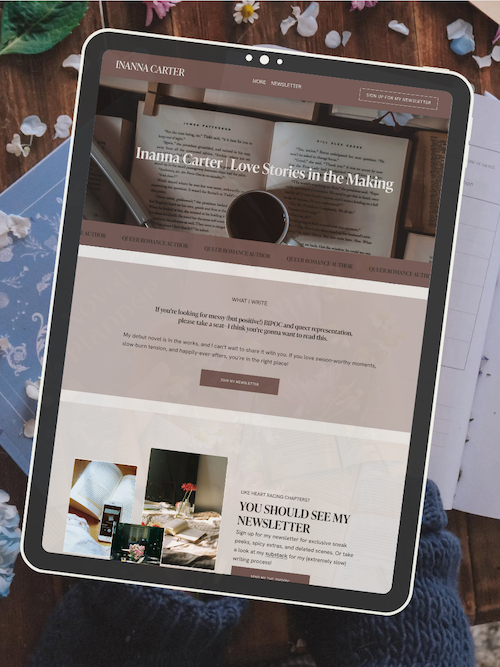
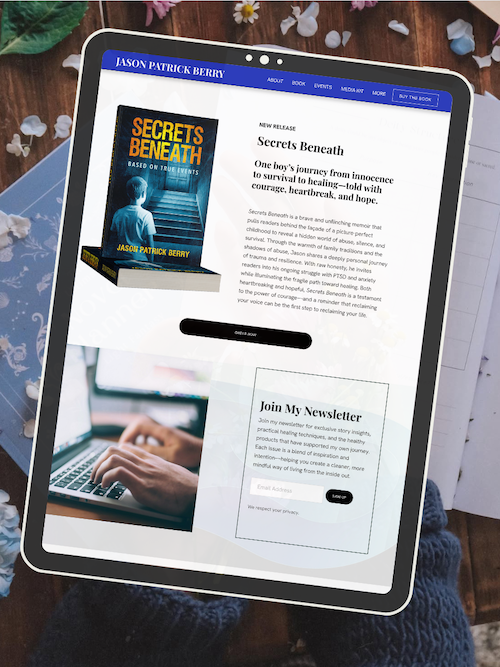
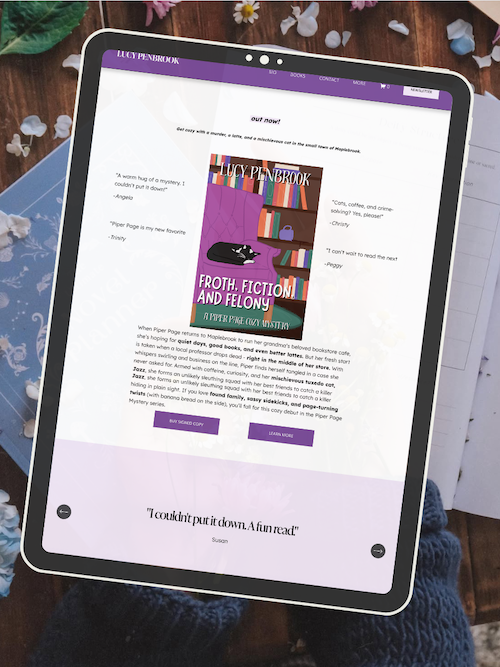
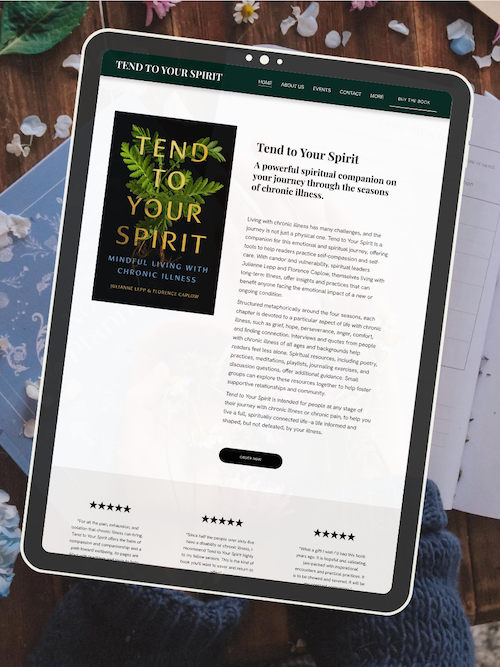
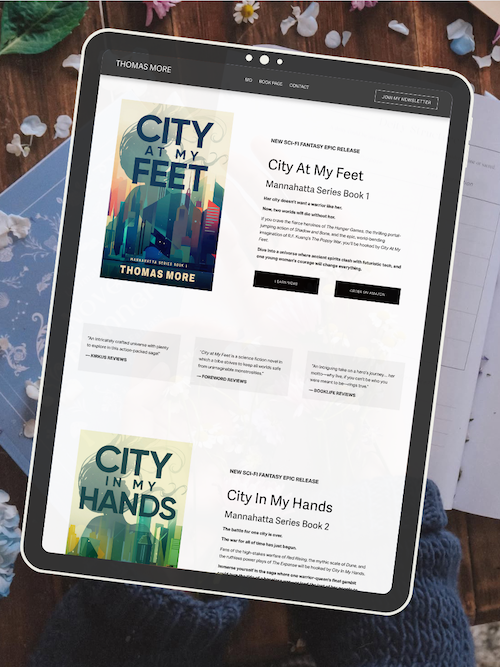
Want a beautiful author website without spending weeks designing it from scratch? These Squarespace website templates for authors are designed to showcase your books, grow your email list, and look professional instantly.

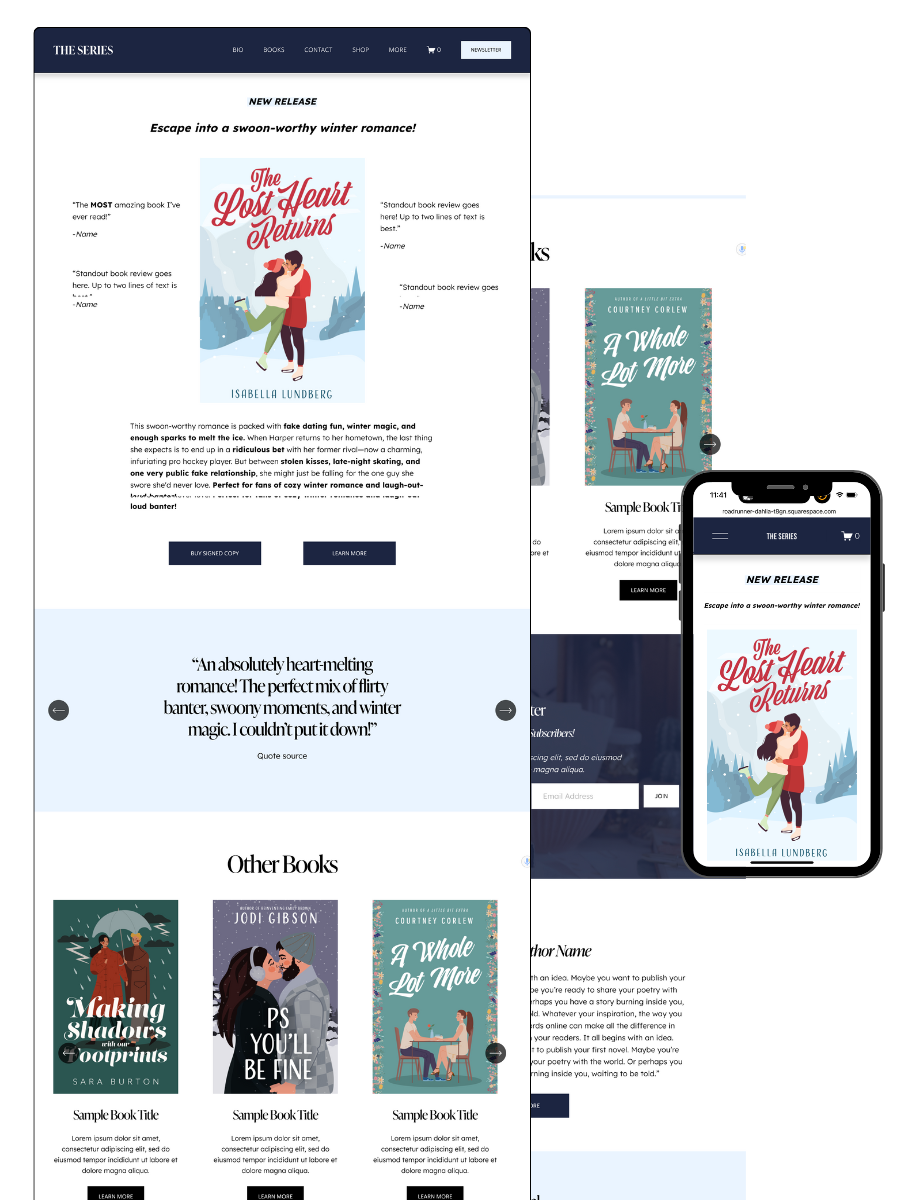
Here’s how real authors are using these Squarespace author website templates:
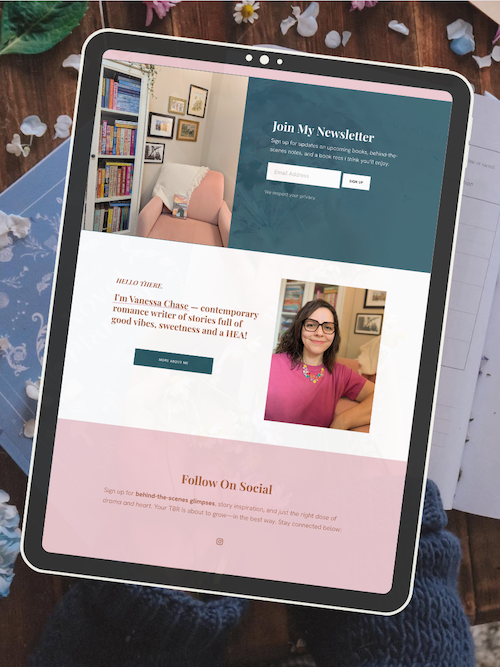
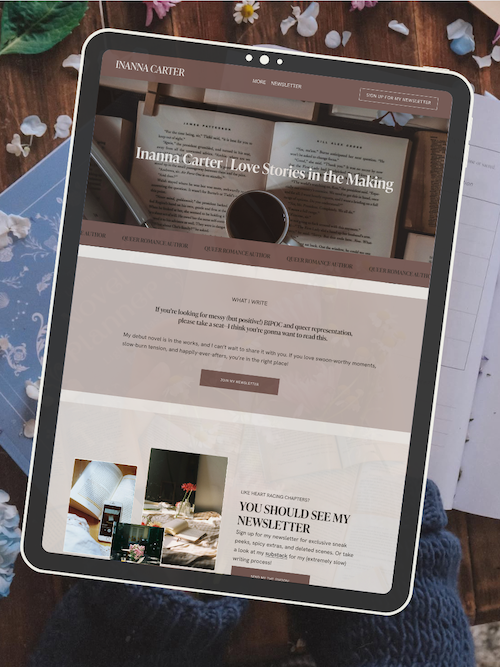
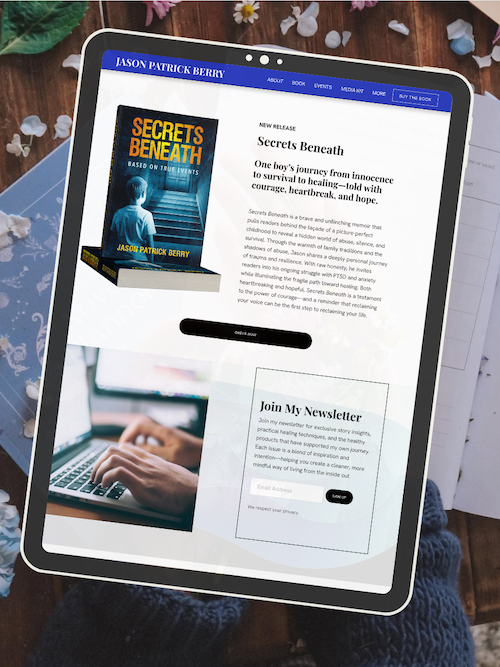
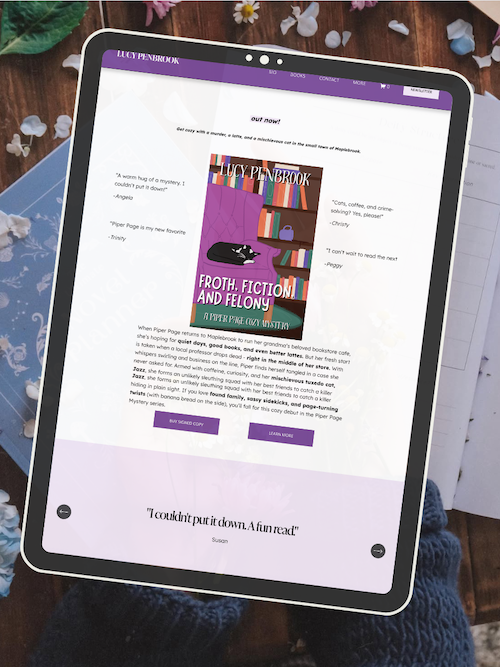
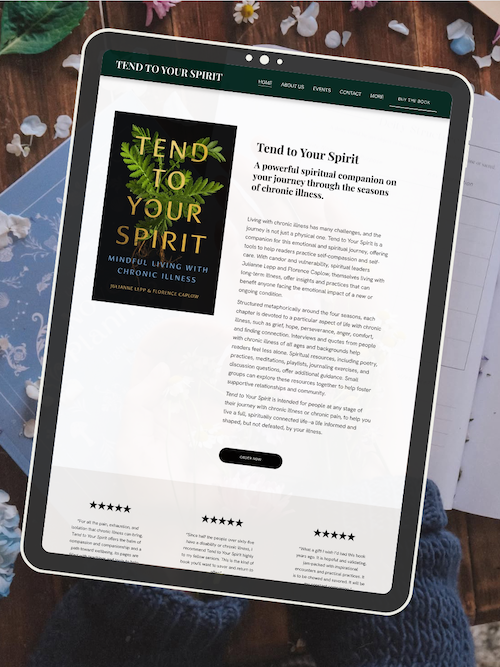
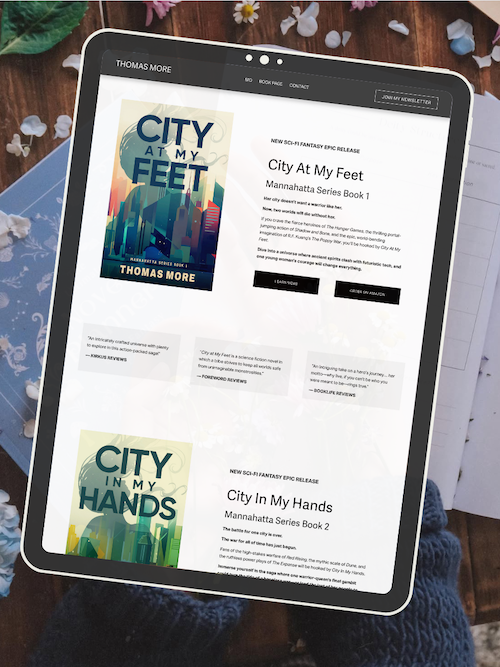
Building this platform doesn't have to be complicated or expensive. You don't need to be on every social media site or have a huge email list from day one. What you do need is a simple website that showcases your work, a way to collect email addresses, and a consistent presence that lets readers know who you are and what you write. The good news? You can start building your platform today, even if you haven't published your first book yet.
This guide will walk you through exactly how to build an author platform using Squarespace—from setting up your website to launching your first email campaign. You'll learn the essential steps that actually move the needle, without the overwhelm or the tech headaches.
AUTHOR WEBSITE EXAMPLES
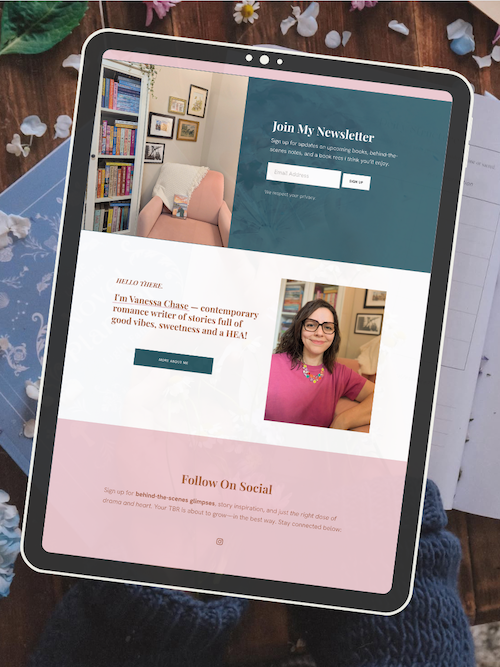
Key Takeaways
Building an author platform gives you direct access to readers and strengthens your credibility as a writer
You can create a professional author website and email system using simple step-by-step methods
Starting your platform before you publish helps you build an audience who's ready to buy your book when it launches
Step-By-Step Guide to Building an Author Platform on Squarespace
Building your author platform on Squarespace means choosing a website builder that handles both your site design and your growing reader base without making you learn code. You'll work through setting up your brand, claiming your domain, launching your site, and connecting the tools that help readers find and follow your work.
Define Your Author Brand and Audience
Your author brand is what makes you recognizable to readers. Start by identifying your writing voice and the type of books you write—whether you're a fantasy author, romance writer, or memoir specialist.
Think about who your ideal reader is. What age range? What books do they already love? Where do they spend time online—BookTok, Bookstagram, or writing communities?
Write down three words that describe your writing style. These become your brand foundation. If you write dark fantasy, your words might be "atmospheric," "complex," and "immersive." Your website colors, fonts, and tone should match.
Look at author platform examples in your genre. Notice what successful self-published authors include on their sites. You're not copying—you're learning what readers expect.
Secure Your Author Name and Domain
Your domain should be yournameauthor.com or a close variation. Go to Squarespace's domain page and search for your name. If yourname.com is taken, try yournameauthor.com, yournamewriter.com, or yournamebuks.com.
Buy your domain through Squarespace if you're building there. It connects automatically to your site—no technical setup required.
If you write under a pen name, secure that domain instead. Your domain becomes your email address too (like hello@yournameauthor.com), which looks more professional than Gmail.
Set Up and Optimize Your Author Website
Pick a Squarespace template designed for creatives. The Bedford, Pacific, or Bloom templates work well for authors. They're clean, mobile-friendly, and put your books front and center.
Your author website needs these pages:
Home: A clear headline stating what you write and a featured book or newsletter sign-up
Books: Cover images, descriptions, and buy links for each title
About: Your author bio and writing journey
Contact: A simple contact page with an email or form
Add your website to Google Analytics right away. Go to Settings > Analytics and paste your tracking code. This shows you where readers come from and which pages they visit.
Install Rank Math or a similar SEO tool if you're on WordPress. But on Squarespace, you'll optimize through built-in settings—add page descriptions, image alt text, and clear page titles.
Make sure your site loads fast on mobile. Over 60% of readers browse on phones. Squarespace handles this automatically, but test it yourself.
Start and Grow Your Email List
Your email list is your most valuable platform asset. Start collecting email subscribers from day one, even before you publish your first book.
Add an email sign-up form to your homepage, footer, and a pop-up (set to appear after 30 seconds). Use ConvertKit or MailerLite if you want advanced features. Both integrate with Squarespace and offer free plans for small lists.
Squarespace Email Campaigns work if you want everything in one place—your website and email tool share the same dashboard and branding automatically.
Write a simple opt-in message: "Join my reader list for updates, exclusive content, and book news." Don't overcomplicate it.
Build an email list by mentioning it on social media, in your author bio, and at book signings. Growing your audience happens through consistent invites, not just passive forms.
Create and Promote a Lead Magnet
A lead magnet is a free offer that convinces readers to join your newsletter. It should relate directly to your books and solve a small problem or satisfy curiosity.
Lead magnet ideas for authors:
First chapter of your upcoming book
Short story in your book's world
Character backstory or deleted scene
Reading list or book recommendations
Writing tips if you teach your craft
Create a simple PDF using Canva. Add a branded cover page with your author name and website. Upload it to Squarespace as a downloadable file.
Set up a welcome sequence in your email tool. When someone downloads your lead magnet, they automatically receive 3-5 emails introducing you, your books, and what they'll get from your author newsletter.
Promote your lead magnet everywhere—your website, Instagram bio, Twitter pinned post, and BookTok videos. This is how you grow your audience faster than a basic "subscribe" button.
Craft Your Author Bio and Contact Page
Your author bio should be 150-200 words and written in third person for professional use, with a first-person version for your website About page. Include what you write, published books, and one personal detail that makes you relatable.
Example structure: "Jane Smith writes atmospheric fantasy set in ancient forests. Her debut novel, Shadow Roots, releases in 2027. When she's not writing, she hikes with her dog and drinks too much tea. She lives in Portland, Oregon."
Your contact page needs a form or email address. Add a simple line: "I'd love to hear from you. Use the form below for interview requests, review inquiries, or just to say hi."
Include links to your social media profiles. Don't list every platform—just where you're actually active. If you're only on Instagram and Substack, list those.
Choose and Integrate the Right Newsletter Tool
You need an email newsletter tool that fits your author platform strategy. Here's how the main options compare:
Tool Best For Free Plan Squarespace Integration MailerLite Beginners, simple campaigns Up to 1,000 subscribers Yes, native ConvertKit Authors, automated sequences Up to 1,000 subscribers Yes, native Squarespace Email Campaigns All-in-one simplicity 250 emails/month Built-in Substack Newsletter-first authors Unlimited, takes 10% Manual export/import
ConvertKit is popular with authors because it handles complex welcome sequences and newsletter swaps easily. MailerLite costs less for growing lists. Squarespace Email Campaigns keep everything in your dashboard—no separate login, and your emails automatically match your website design.
Connect your chosen tool through Squarespace's Extensions panel. Your email sign-up forms will sync automatically, and new subscribers go straight to your list.
Frequently Asked Questions
Building an author platform involves choosing the right website builder, showcasing your work effectively, and connecting with readers through email marketing. These questions address the practical steps you need to take when setting up your author website and growing your audience.
What are the essential steps for creating an engaging author website on WordPress?
Start by choosing a hosting provider like Bluehost, SiteGround, or WP Engine. You'll need to purchase a domain name that matches your author name or brand.
Install WordPress through your hosting dashboard. Most hosts offer one-click installation that takes less than five minutes.
Pick a theme designed for authors or creatives. Free options like Astra or Kadence work well. Premium themes like Author Pro or Book Author offer more customization options.
Create your core pages first. You need a home page, about page, books page, and contact page at minimum.
Add a blog section where you can share writing updates and connect with readers. Your blog helps with visibility and gives readers a reason to return to your site.
Install essential plugins to extend functionality. Yoast SEO helps optimize your content for search engines. MonsterInsights tracks your visitor data. MailChimp or Mailpoet handles your email list.
Customize your site's colors, fonts, and layout to match your author brand. Use your headshot on the about page and include high-quality book cover images throughout the site.
Can you recommend some free tools or platforms to create my first author website?
WordPress.com offers a free plan with basic features and a WordPress.com subdomain. You can upgrade later when you're ready for a custom domain and more control.
Wix provides a free tier with drag-and-drop building and mobile-responsive templates. You'll see Wix ads on your site unless you upgrade.
Carrd lets you build simple one-page websites for free. It works well if you just need a landing page with links to your books and social media.
Google Sites gives you a no-frills website builder connected to your Google account. The templates are basic but the platform is reliable and truly free.
Weebly offers free website building with e-commerce options. You get a Weebly subdomain and can upgrade when needed.
For email marketing, MailerLite offers a free plan for up to 1,000 subscribers. Mailchimp gives you free access for up to 500 subscribers.
Canva helps you create graphics, social media images, and promotional materials for free. The free version includes thousands of templates and design elements.
How do I effectively showcase my work on my author website with examples as guidance?
Create a dedicated books page that displays all your published works with cover images, descriptions, and buy links. Place your newest or most popular book at the top.
Write compelling book descriptions that focus on the story and reader experience, not just plot summary. Include genre, page count, and publication date.
Add buy buttons that link directly to retailers like Amazon, Barnes & Noble, and your preferred bookstores. Use multiple buy links so readers can choose their favorite store.
Include sample chapters or excerpts for each book. A free preview helps readers decide if your writing style appeals to them.
Display reviews and testimonials from readers, book bloggers, or publications. Pull quotes that highlight what makes your book special or unique.
If you write short stories or articles, create a separate writing portfolio section. Link to published pieces or host them directly on your site.
Add media mentions, awards, or speaking engagements to build credibility. Include logos from publications or events where you've been featured.
Use high-resolution cover images that load quickly. Optimize file sizes so your page doesn't lag.
What are the best practices for a self-published author to optimize their website for higher visibility?
Install an SEO plugin like Yoast SEO or Rank Math. These tools guide you through optimizing each page and post for search engines.
Research keywords your target readers actually search for. Use tools like Google Keyword Planner, Ubersuggest, or Answer the Public to find relevant terms.
Write blog posts around topics your readers care about. If you write romance, create content about relationship themes, favorite tropes, or reading recommendations.
Optimize your page titles and meta descriptions. Include your author name and genre in your homepage title. Write unique descriptions for each page that encourage clicks.
Use header tags (H1, H2, H3) to structure your content. Search engines use these to understand your page hierarchy and main topics.
Add alt text to all images describing what they show. This helps search engines index your images and improves accessibility.
Build internal links between your pages and blog posts. Link from blog posts to your books page. Connect related content together.
Get backlinks from other author websites, book blogs, and writing communities. Guest post on relevant blogs with a link back to your site.
Make sure your site loads quickly on mobile devices. Most readers will visit from their phones.
Create author profiles on Goodreads, Amazon Author Central, and BookBub. Link back to your website from these platforms.
What are the key components to include when designing an author website on Squarespace?
Start with a template that fits your genre and style. Squarespace offers templates like Pazari, Bedford, or Fillmore that work well for authors.
Your homepage should immediately tell visitors who you are and what you write. Include a professional author photo, a one-sentence hook about your books, and a clear call-to-action.
Build an about page that connects with readers personally. Share your writing journey, what inspires you, and why you write what you write.
Design a books page using Squarespace's product or portfolio blocks. Display covers prominently with short descriptions and direct buy links.
Add a mailing list signup form on every page. Use Squarespace's newsletter block or integrate with your email service provider.
Include a blog section for updates, writing advice, or content related to your books. Regular posts keep readers engaged and improve your site's visibility.
Create a contact page so readers, media, and event organizers can reach you. Use Squarespace's built-in form block to collect messages.
Connect your social media accounts using Squarespace's social links block. Place these in your footer or header for easy access.
How can I integrate email marketing into my Squarespace author website to build my subscriber list?
Use Squarespace Email Campaigns if you want everything in one place. Your emails automatically match your website's branding without extra design work.
Add newsletter signup blocks to your homepage, blog sidebar, and footer. Make subscribing easy from any page visitors land on.
Create a dedicated landing page for newsletter signups. Explain what subscribers get—exclusive content, early book news, or free downloads.
Offer a reader magnet to encourage readres to sign up.
Ready to launch your author website?
Explore my Squarespace website templates designed specifically for authors — easy to customize, beautifully designed, and built to help you sell more books.

SHOP THE AUTHOR WEBSITE TEMPLATES
THE MANUSCRIPT AUTHOR WEBSITE TEMPLATE — perfect for authors launching their first professional website with a simple, polished layout
THE DEBUT AUTHOR WEBSITE TEMPLATE — designed to highlight your first book, build your email list, and grow an audience from day one
THE SERIES AUTHOR WEBSITE TEMPLATE — ideal for showcasing multiple books with clear series pages and strong reader flow
THE ONE-PAGE AUTHOR AUTHOR WEBSITE TEMPLATE — a streamlined one-page site for authors who want something beautiful, fast, and easy
THE DONE-FOR-YOU AUTHOR WEBSITE EXPERIENCE — your author website built for you so you can launch without touching design or tech
MOST POPULAR BLOG POSTS
Authors Guide to Website Design & Branding
Squarespace Email Campaigns: A Guide for Authors
How to Create an Author Website on Squarespace (Step-by-Step)

Launch Your Author Website in a Day (Without the Tech Overwhlem)
*No more starting from scratch.
A simple, done-for-you Squarespace template built specifically for authors with a WIP.